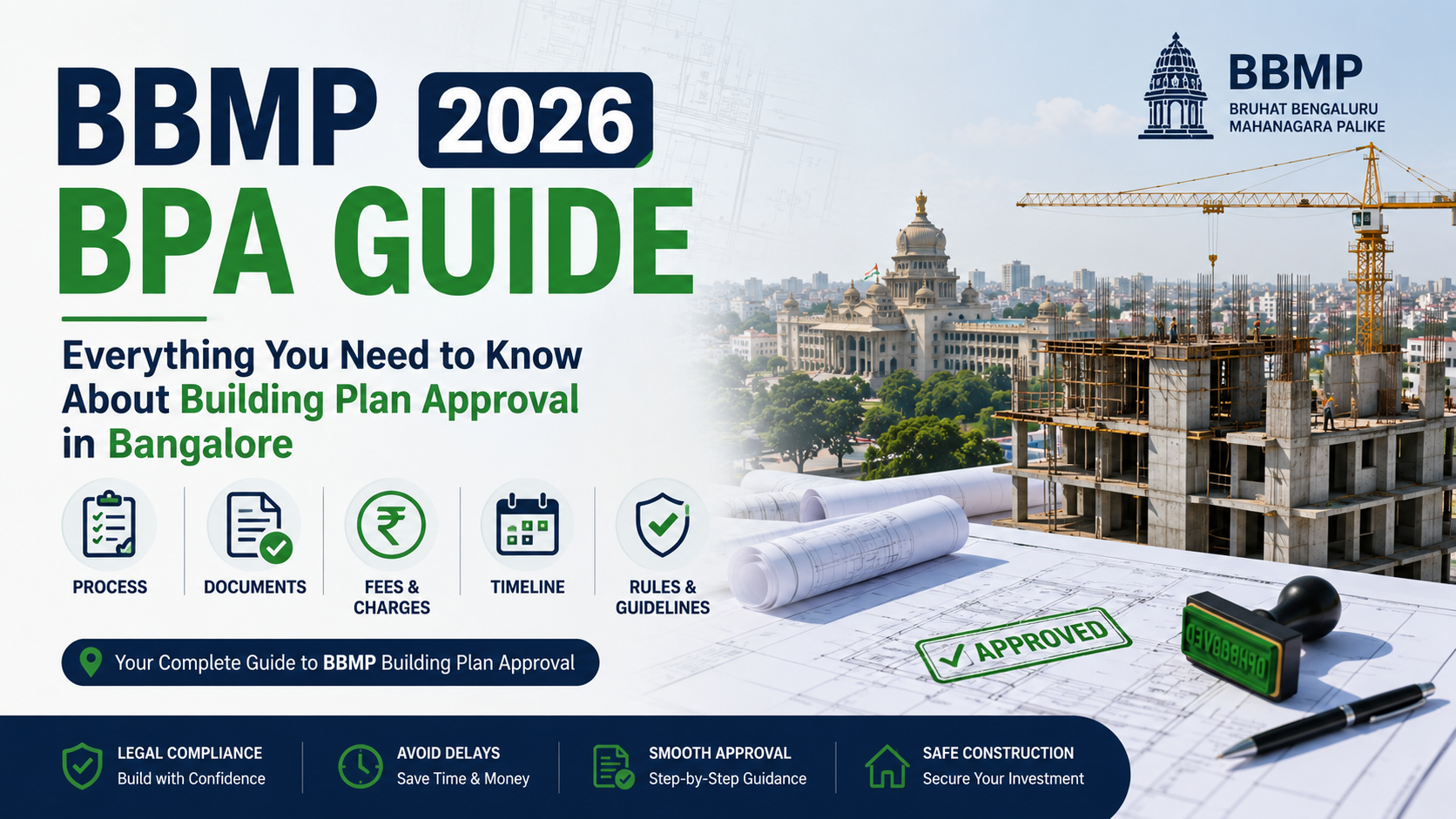


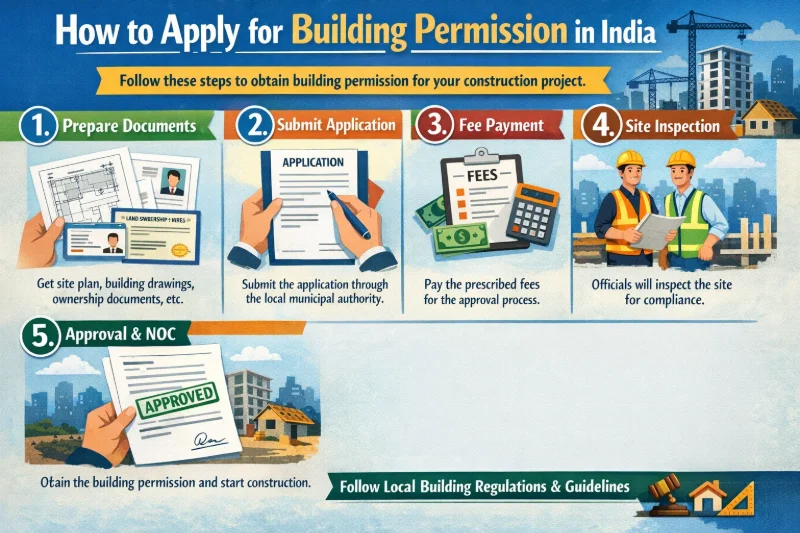
How to Apply for Building Permission in India 2026: A Complete Guide
Obtaining building permission in India is a critical step for any construction project, whether residential, commercial, or industrial. The process can seem complex and time-consuming, but with the right guidance and understanding of current regulations, you can navigate it smoothly. This comprehensive guide will walk you through the entire process of applying for building permission in India in 2026, including recent changes, documentation requirements, and practical tips to expedite your application.
Build cost · Bengaluru, May 2026
Understanding Building Permission in India
Building permission, also known as building approval or construction permission, is an official authorization granted by local municipal authorities that allows property owners to construct buildings according to approved plans. This permission ensures that your construction complies with local building codes, zoning regulations, safety standards, and environmental requirements.
In India, the process and requirements for building permission vary significantly depending on your location. Each state, municipal corporation, and local authority has its own set of rules, timelines, and procedures. However, the fundamental principles remain consistent across the country.
Pre-Application Preparation
Verify Land Ownership and Clearances
Before applying for building permission, you must ensure that you have clear ownership of the land. Obtain the following documents:
Title Deed or Sale Deed: Original documents proving your ownership
Property Tax Receipt: Latest property tax payment certificate from the municipal authority
Mutation Certificate: Proof that the property has been transferred in your name in the revenue records
No Objection Certificate (NOC): If the property is mortgaged with a bank, obtain NOC from the lender
Environmental Clearance: For projects in sensitive areas or those exceeding certain size thresholds
Frequently asked
Engage Professional Help
Most successful building permission applications involve collaboration with professionals. You'll need an architect to prepare detailed plans and an engineer to ensure structural compliance. Many property owners also hire consultants who specialize in navigating municipal processes. Platforms like AECORD can help you connect with qualified architects, engineers, and consultants in your city who understand local regulations and can streamline your application process.
Check Local Regulations and Zoning
Visit your local municipal corporation office or check their website to understand:
Zoning restrictions for your area
Floor Space Index (FSI) or Floor Area Ratio (FAR) limits
Height restrictions
Setback requirements (front, rear, and side)
Parking requirements
Green space or open space requirements
These regulations vary significantly. For example, in Mumbai, the FSI for residential buildings in central areas can be 2.0-2.5, while in peripheral areas it might be 1.5. In Bangalore, FSI regulations differ based on whether the property is in the city proper or the Outer Ring Road area. Always verify the specific requirements for your location.
Preparing Required Documents
Architectural Plans and Drawings
Your architect must prepare detailed plans including:
Site Plan: Showing the property boundaries, dimensions, and the building's location relative to the site
Floor Plans: Detailed layout of each floor showing room dimensions, areas, and uses
Elevation Drawings: Front, rear, and side views of the building
Section Drawings: Vertical cross-sections showing floor heights and building profile
Foundation and Structural Details: Prepared by a structural engineer
Plumbing and Electrical Layouts: Showing water supply, drainage, and electrical distribution
All plans must be prepared in compliance with the National Building Code of India (NBC) 2016 and local building bylaws.
Essential Application Documents
Prepare the following documents for your application:
Building Permission Application Form: Available from your municipal authority or their website
Identity Proof: Aadhar card, PAN card, or passport
Address Proof: Utility bills or rental agreement
Property Documents: Title deed, property tax receipts, mutation certificate
Authorized Signatory Details: If applying through a company or trust
Bank Details: For fee payment and correspondence
Affidavit: Stating that the information provided is true and the land is not under dispute
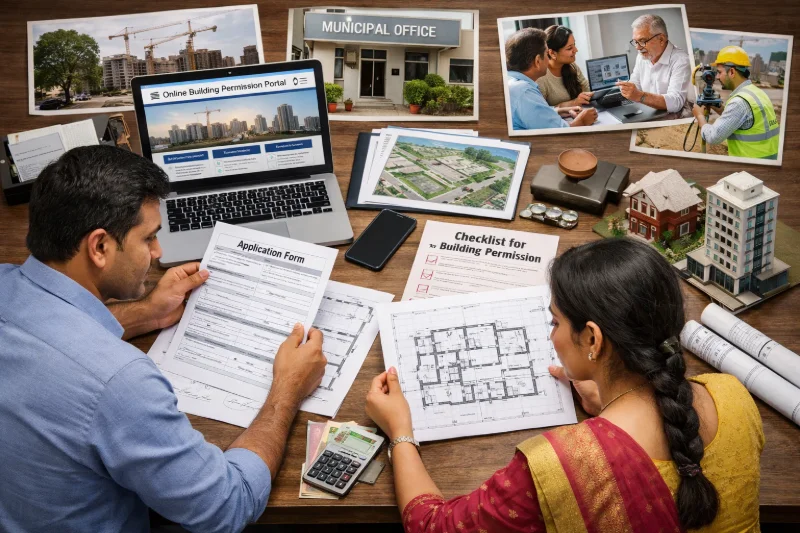
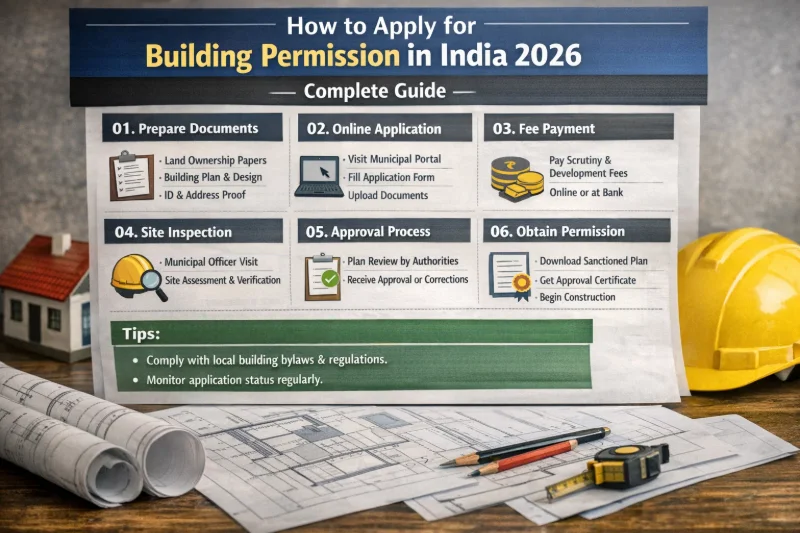
The Building Permission Application Process
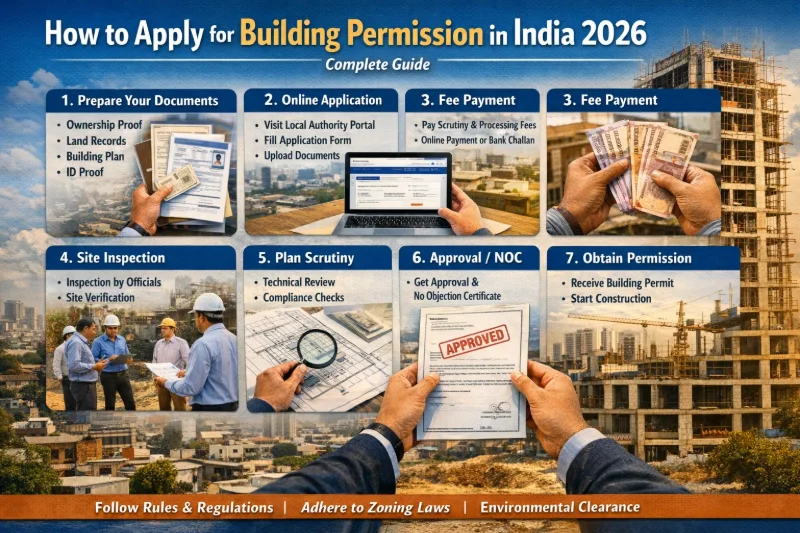
Step 1: Obtain the Application Form
Most municipal authorities now provide application forms online through their official websites. For example, the Brihanmumbai Municipal Corporation (BMC) provides forms on their website, while the Bangalore Development Authority (BDA) has a dedicated online portal. Download the form, fill it accurately, and ensure all required information is provided.
Step 2: Prepare and Compile Documents
Create a comprehensive document package with all required papers. Typically, you'll need to submit:
Multiple copies of all plans (usually 4-6 sets)
Original and photocopied versions of ownership documents
Affidavits and declarations
Certificates from your architect and engineer
Environmental clearance (if applicable)
Proof of payment of application fees
Step 3: Submit Your Application
Visit your local municipal corporation office with all documents. Most cities now have dedicated counters or online portals for building permission applications. Some municipalities, including those in Delhi and Bangalore, have implemented online submission systems that significantly reduce processing time. When submitting:
Ensure all documents are properly organized and indexed
Keep a checklist to verify nothing is missing
Obtain a receipt with your application number and date of submission
Note the expected timeline for approval
Step 4: Pay Application Fees
Building permission fees are calculated based on the built-up area and vary by location. In Mumbai, fees range from ₹500 to ₹5,000 depending on the project size. In Delhi, the fee structure is different, typically ranging from ₹200 to ₹2,000. In Bangalore, fees are calculated as a percentage of the estimated project cost. Always confirm the exact fee structure with your municipal authority.
Step 5: Track Your Application
After submission, you'll receive an application reference number. Use this to track your application status through the municipal authority's website or by visiting their office. Processing times vary:
Delhi: 30-45 days for online applications
Mumbai: 60-90 days for standard residential projects
Bangalore: 45-60 days for most applications
Hyderabad: 30-45 days with online portal
Pune: 45-60 days depending on project complexity
Step 6: Address Queries and Objections
The municipal authority may raise queries or objections regarding your plans or documentation. Common issues include:
Non-compliance with FSI or height restrictions
Inadequate parking or green space provisions
Structural design concerns
Missing or incomplete documentation
Work with your architect and engineer to address these issues promptly. Most authorities require responses within 15-30 days. Engaging professionals through platforms like AECORD ensures you have expert support to resolve technical objections efficiently.
Recent Changes and 2026 Updates
Digital Transformation
As of 2026, most major Indian cities have implemented or are implementing fully digital building permission systems. This includes:
Online submission of plans and documents
Digital payment gateways
Automated preliminary checks
Real-time status tracking
Digital approval certificates
Stricter Compliance Requirements
Building codes have become more stringent regarding:
Energy Efficiency: New buildings must meet minimum energy performance standards
Water Conservation: Mandatory rainwater harvesting and greywater recycling systems
Accessibility: Universal accessibility standards for persons with disabilities
Fire Safety: Enhanced fire safety measures and emergency evacuation systems
Waste Management: On-site waste segregation and management facilities
Environmental Clearance Integration
Many states now require environmental clearance to be integrated into the building permission process. Projects on sensitive sites or exceeding certain thresholds require clearance from the State Environmental Impact Assessment Authority (SEIAA) before building permission can be granted.
Common Challenges and Solutions
Lengthy Processing Times
Challenge: Despite stated timelines, approvals often take longer due to incomplete documentation or administrative delays.
Solution: Ensure all documents are complete and accurate before submission. Maintain regular follow-up with the municipal authority and consider hiring a consultant familiar with local processes.
Plan Rejections
Challenge: Plans may be rejected for non-compliance with local bylaws.
Solution: Work with an experienced architect who understands local regulations. AECORD connects you with architects who have proven expertise in your specific city and can ensure compliance from the start.
Unclear or Conflicting Regulations
Challenge: Local regulations can be ambiguous or seem contradictory.
Solution: Seek clarification directly from the municipal authority's planning department. Professional consultants can also help interpret regulations correctly.
Cost Considerations
The total cost of obtaining building permission includes:
Municipal Fees: ₹500-₹5,000 depending on location and project size
Architect Fees: 1-3% of estimated project cost
Engineer Fees: ₹5,000-₹50,000 depending on project complexity
Consultant/Agent Fees: ₹10,000-₹100,000 for professional assistance
Environmental Clearance: ₹1,00,000-₹5,00,000 if required
While these costs may seem significant, professional assistance often saves money by preventing costly rejections and rework.
Best Practices for Success
Start Early: Begin the process well before your intended construction start date
Hire Qualified Professionals: Work with experienced architects and engineers familiar with your local regulations
Verify All Requirements: Double-check municipal requirements before preparing plans
Maintain Documentation: Keep copies of all submitted documents and correspondence
Follow Up Regularly: Monitor your application status and respond promptly to queries
Understand Local Nuances: Each city has unique procedures and unofficial requirements; learn them early
Plan for Contingencies: Allow extra time for unexpected delays or objections
Conclusion
Obtaining building permission in India requires careful planning, accurate documentation, and professional expertise. While the process can seem daunting, following this comprehensive guide and engaging qualified professionals will significantly improve your chances of timely approval. The regulatory landscape continues to evolve toward greater digitalization and stricter compliance standards, making professional guidance more valuable than ever.
Whether you're building your dream home in Bangalore, a commercial complex in Mumbai, or an industrial facility in Hyderabad, the fundamental principles outlined in this guide apply. By understanding local regulations, preparing comprehensive documentation, and engaging experienced professionals, you can navigate the building permission process smoothly and confidently.
Ready to start your building permission journey? Connect with verified architects, structural engineers, and building consultants on AECORD, India's trusted B2B2C marketplace for AECO professionals. Our platform makes it easy to find and collaborate with experts who understand your local regulations and can guide you through the entire approval process. Visit AECORD today and find the right professionals for your project.
Frequently Asked Questions
What documents do I need to apply for building permission in India?
You'll need title/sale deed, property tax receipt, mutation certificate, NOC from lenders (if mortgaged), environmental clearance (if applicable), detailed architectural plans, structural drawings, site plans, and floor plans prepared by a qualified architect. Additional documents may be required based on your local municipal authority's specific requirements.
How do I check zoning regulations and building restrictions for my property?
Visit your local municipal corporation office or their website to verify zoning restrictions, Floor Space Index (FSI) limits, height restrictions, setback requirements, parking, and green space requirements. These regulations vary significantly by city and location, so it's essential to check your specific area's rules before applying.
Do I need to hire an architect and engineer for building permission in India?
Yes, most successful applications require collaboration with a qualified architect to prepare detailed plans and an engineer to ensure structural compliance. Many property owners also hire specialized consultants who understand local municipal processes and can streamline the application, ensuring compliance with all regulations.
What is the difference between building permission and environmental clearance in India?
Building permission is official authorization from local municipal authorities for construction compliance with building codes and regulations. Environmental clearance is a separate requirement for projects in sensitive areas or exceeding certain size thresholds, ensuring the project meets environmental standards.
Why does building permission vary by location in India?
Each state, municipal corporation, and local authority in India has its own set of rules, timelines, and procedures for building permission. While fundamental principles remain consistent, zoning laws, FSI limits, height restrictions, and other requirements differ significantly by city and region, requiring location-specific verification.