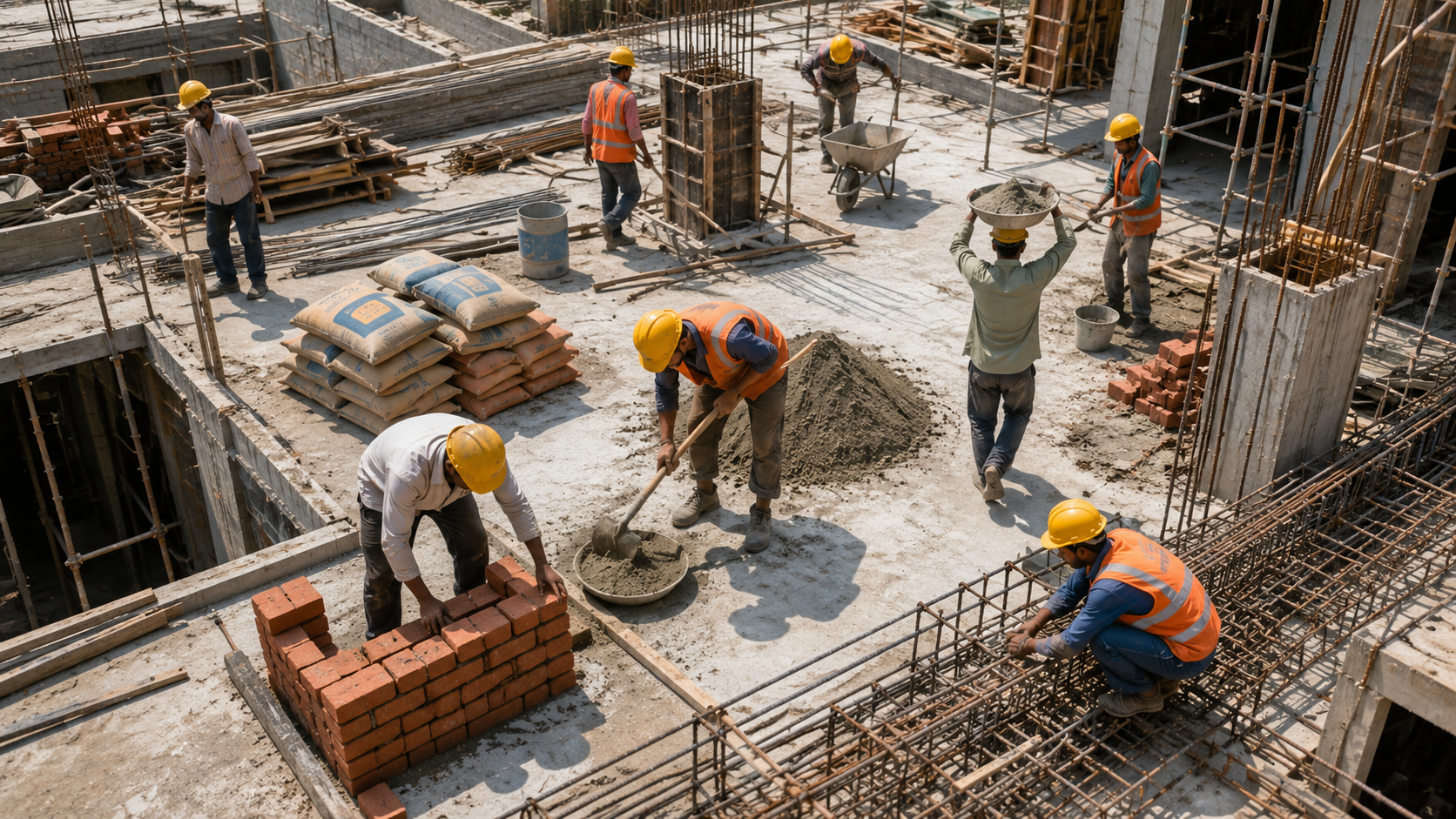
The construction industry in India has long grappled with a persistent challenge: structural clashes discovered during execution that lead to costly delays, material waste, and rework. In residential projects across major metros like Mumbai, Bangalore, Delhi, and Pune, these clashes can add weeks to timelines and inflate budgets by 10-15%. However, artificial intelligence is now fundamentally changing how architects, structural engineers, and contractors identify and resolve these conflicts—often before a single piece of steel is ordered. /blog/digital-twins-in-construction-how-they-build-client-trust-before-ground-is-broke
Understanding Structural Clashes in Residential Construction
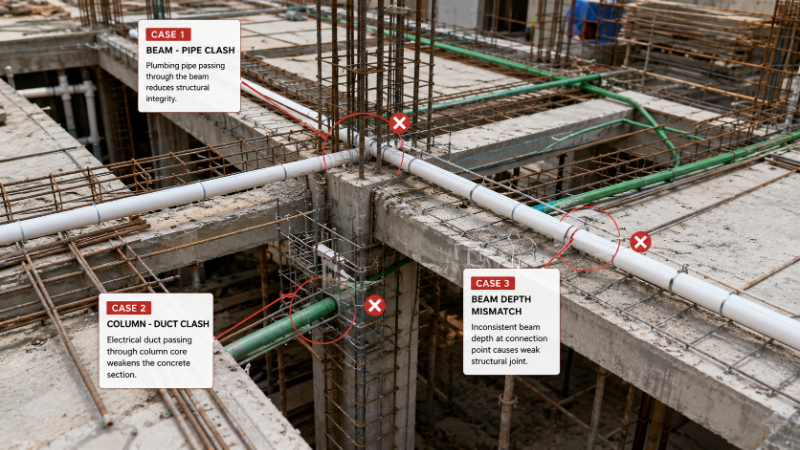
A structural clash occurs when different building systems—steel beams, concrete columns, MEP (mechanical, electrical, plumbing) systems, and architectural elements—occupy the same physical space or interfere with each other's functionality. In traditional workflows, these clashes are discovered during site inspections or, worse, during actual construction.
For a typical residential project in Bangalore or Hyderabad, discovering a clash between a steel beam and an HVAC duct after ordering can mean:
Returning materials and placing new orders (₹2-5 lakhs depending on complexity)
Halting work for 1-2 weeks while redesigns are finalized
Rework costs that quickly escalate to ₹10+ lakhs for major structural modifications
Project timeline delays that cascade across all dependent activities
The financial impact is significant, especially for developers managing multiple residential towers simultaneously. This is where AI-powered clash detection enters the picture, offering a proactive solution that identifies and resolves conflicts during the design phase.
Build cost · Bengaluru, May 2026
How AI Clash Detection Works
3D Model Integration and Data Processing
AI clash detection begins with integrating Building Information Models (BIM) from multiple disciplines. Architects, structural engineers, and MEP specialists each create detailed 3D models in software like Revit, ArchiCAD, or other BIM platforms. These models contain not just geometry but also material properties, specifications, and spatial relationships.
AI systems ingest these models and convert them into a unified digital environment. The technology processes millions of data points—beam dimensions, column locations, duct routes, pipe runs, electrical conduit paths—simultaneously. This processing capability is far beyond what manual coordination can achieve in reasonable timeframes.
Algorithmic Clash Identification
Once models are integrated, AI algorithms perform spatial analysis using several techniques:
Geometric Intersection Detection: The system checks every element against every other element to identify overlaps. For a 20-story residential tower in Mumbai with thousands of structural and MEP elements, this would take human coordinators weeks to complete manually. AI accomplishes it in minutes.
Proximity Analysis: Beyond direct overlaps, AI identifies elements that are dangerously close. For example, if a steel beam is only 50mm from an electrical conduit, the system flags this as a potential clash because installation tolerances make it problematic.
Interference Pattern Recognition: Machine learning models trained on thousands of previous projects can recognize patterns that indicate likely clashes. If a certain configuration of elements has historically caused problems, the AI alerts the team preemptively.
Spatial Relationship Validation: AI ensures that elements maintain required clearances per Indian building codes and standards (NBC, ASHRAE guidelines for MEP systems, etc.).
Frequently asked
Severity Classification and Prioritization
Not all clashes are equal. AI systems classify detected clashes by severity:
Critical: Direct physical overlaps that prevent construction (e.g., a steel beam occupying the same space as a concrete column). These require immediate resolution.
Major: Clashes that will cause significant rework or delays (e.g., a duct route blocked by a structural element that requires major redesign).
Minor: Issues that can be resolved with minor adjustments (e.g., shifting a pipe run by 100mm to clear a beam).
Warnings: Potential future issues based on construction sequencing or installation logistics.
This prioritization helps project teams focus on the most impactful issues first, optimizing the coordination effort.
AI Tools and Platforms Used in India
Several AI-powered clash detection platforms are gaining traction among Indian architects and contractors:
Specialized BIM Coordination Software
Platforms like Navisworks (by Autodesk), Solibri, and Revizto offer AI-enhanced clash detection. These tools integrate directly with BIM models and provide visual reports showing exactly where clashes occur. For projects in Delhi NCR or Pune, many structural firms now use these tools as standard practice before issuing shop drawings.
Cloud-Based Collaboration Platforms
AI-powered cloud platforms enable real-time model sharing and clash detection across distributed teams. This is particularly valuable for large residential developers managing multiple sites. Teams in Mumbai can coordinate with contractors in Bangalore instantly, with AI continuously monitoring for new clashes as models are updated.
Machine Learning-Enhanced Systems
Newer platforms use machine learning to improve detection accuracy over time. They learn from previous projects' clash patterns and become increasingly effective at identifying potential conflicts specific to Indian construction practices and regulatory requirements.
The Process: From Detection to Resolution
Stage 1: Model Preparation and Upload
The structural engineer, architect, and MEP consultant prepare their BIM models to a defined level of detail (typically LOD 300-350 per international standards, which Indian practices are increasingly adopting). These models are uploaded to the AI platform, which automatically checks file integrity and compatibility.
Stage 2: Automated Clash Detection
The AI system runs comprehensive analysis, typically completing a full-building scan within hours. For a residential complex with 500+ units spread across multiple towers, this analysis might identify 200-400 clashes of varying severity.
Stage 3: Report Generation and Visualization
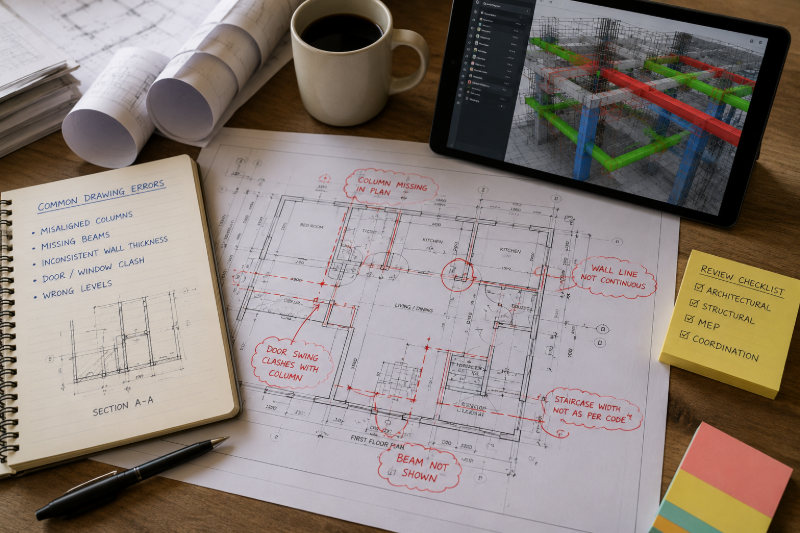
The system generates detailed reports with visual representations. Team members can view clashes in 3D, rotate models, zoom in on problem areas, and understand exactly what's conflicting. This visual clarity is crucial—it eliminates ambiguity that often arises from 2D drawings.
Stage 4: Collaborative Resolution
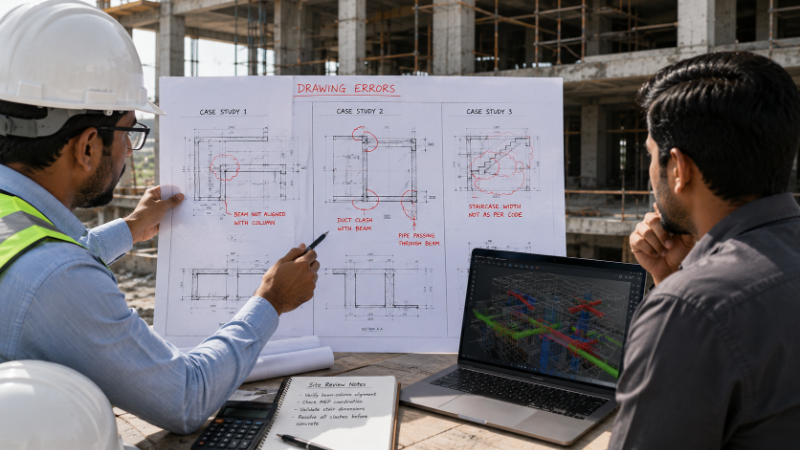
The structural engineer, architect, and MEP lead meet (increasingly, virtually) to discuss clash resolutions. AI systems now support collaborative workflows where team members can propose solutions, mark clashes as resolved, and track resolution status. For instance, if a clash between a steel beam and a duct is identified, the MEP engineer might propose rerouting the duct, the structural engineer might suggest shifting the beam slightly, or the architect might identify a design change that eliminates the conflict entirely.
Stage 5: Verification and Re-Analysis
Once proposed changes are made to the models, the AI system re-analyzes to confirm the clash is resolved and no new clashes were introduced. This iterative process continues until the model is clash-free.
Benefits Before Steel Is Ordered
Cost Savings
By identifying clashes before procurement, projects avoid the massive costs of rework. For a mid-size residential project in Hyderabad with a structural steel budget of ₹5 crores, avoiding even one major clash that would have required re-ordering can save ₹20-40 lakhs. Multiply this across multiple clashes detected in a typical project, and the savings become substantial.
Schedule Acceleration
Clash detection before ordering means construction can proceed without unexpected halts. In India's residential sector, where project delays often result in regulatory penalties and increased financing costs, this schedule certainty is invaluable. A project that would have faced 3-4 week delays due to clash discovery on-site can now maintain its planned timeline.
Quality Improvement
When clashes are resolved during design rather than construction, solutions are more thoughtful and less likely to compromise building quality. On-site emergency fixes are often suboptimal; design-phase resolutions allow for proper engineering consideration.
Reduced Material Waste
Avoiding rework means less material waste. For environmentally conscious developers in India's major metros, this aligns with sustainability goals and can support green building certifications (LEED, IGBC).
Improved Coordination Culture
Using AI clash detection tools fosters better collaboration between disciplines. Architects, structural engineers, and MEP specialists must work together more closely, leading to more integrated designs overall.
Real-World Application in Indian Residential Projects
Consider a typical scenario: a 25-story residential tower in Mumbai's western suburbs with 200 apartments. The structural system uses a combination of RCC core walls and steel beams. MEP systems are complex, with multiple HVAC zones, extensive plumbing networks, and electrical distribution throughout.
In a traditional workflow, this project might discover 15-20 significant clashes during construction. Using AI clash detection during design:
The system identifies 18 clashes before any steel is ordered
5 are critical and require substantial redesign (estimated resolution cost: ₹30 lakhs if done on-site vs. ₹5 lakhs during design)
7 are major but have straightforward solutions (estimated on-site cost: ₹15 lakhs vs. ₹2 lakhs during design)
6 are minor adjustments (estimated on-site cost: ₹5 lakhs vs. negligible cost during design)
The total potential savings from this single project: ₹43 lakhs, plus the immeasurable benefit of schedule certainty.
Challenges and Considerations
Model Quality Dependency
AI clash detection is only as good as the input models. If the architect's model lacks detail or the structural engineer's model contains errors, clash detection will be compromised. Indian firms are increasingly adopting BIM standards, but quality remains variable across the industry.
Coordination Discipline
The technology works best when all disciplines maintain updated models and participate in regular coordination meetings. Some traditional firms resist this level of collaboration and model maintenance.
Cost of Implementation
High-quality BIM software and AI-powered platforms require investment. For small residential projects, this cost might not be justified, though larger developers increasingly view it as essential infrastructure.
Skill Requirements
Effective use of these tools requires trained personnel. The shortage of BIM-skilled professionals in India remains a constraint, though this is improving as educational institutions and professional organizations increase training offerings.
Integration with AECORD's Professional Network
For residential developers and contractors seeking to implement AI clash detection, finding the right structural engineers, BIM coordinators, and MEP specialists is crucial. AECORD connects project teams with vetted professionals who specialize in clash detection and BIM coordination across India's major residential markets. Whether you're in Delhi, Mumbai, Bangalore, or Pune, AECORD helps you identify experts who understand both the technology and local construction practices.
Similarly, if you're a professional offering clash detection services, AECORD provides a platform to reach residential developers and contractors actively seeking these capabilities.
Future Trends in AI Clash Detection
Predictive Clash Analysis
Future AI systems will not just detect clashes but predict them based on preliminary designs. Machine learning models trained on thousands of Indian residential projects will identify clash-prone configurations before detailed design begins.
Automated Solution Recommendations
Rather than just flagging clashes, AI will propose solutions. "Reroute duct by 500mm" or "shift beam 300mm" recommendations will reduce the manual coordination burden.
Integration with Procurement Systems
As AI clash detection becomes standard, it will integrate directly with procurement systems. Structural steel orders, MEP equipment orders, and material schedules will automatically account for clash-driven design changes.
Real-Time Site Monitoring
AI will evolve to compare actual on-site conditions (via drones, photogrammetry, or laser scanning) against the clash-free design model, ensuring construction adheres to the coordinated design.
Conclusion
AI-powered structural clash detection represents a paradigm shift in how Indian residential projects manage coordination complexity. By identifying and resolving conflicts before steel is ordered, projects achieve significant cost savings, schedule certainty, and quality improvements.
For architects, structural engineers, and contractors in India's residential sector, adopting these technologies is no longer optional—it's becoming a competitive necessity. The firms that master AI clash detection will deliver projects faster, more economically, and with fewer surprises.
If you're planning a residential project or managing one currently, consider whether AI clash detection could benefit your coordination efforts. And if you're seeking professionals experienced in this technology, AECORD is your resource for connecting with the right expertise. Explore AECORD's network of BIM specialists, structural engineers, and MEP coordinators who are transforming residential construction in India through intelligent design coordination.