

Gate Design and Cost in India 2026: A Complete Guide for Homeowners and Businesses
Gates serve as the first point of contact for any property, whether residential, commercial, or industrial. In India, gate design has evolved significantly over the past decade, combining aesthetic appeal with security and functionality. As we move into 2026, understanding the latest trends, design options, and cost implications is crucial for property owners planning renovation or new construction projects.
The gate market in India has witnessed substantial growth, with homeowners and businesses increasingly investing in quality entrance solutions. Whether you're in Bangalore, Mumbai, Delhi, or Pune, the options available today range from traditional wrought iron designs to modern automated systems. This comprehensive guide will help you navigate gate design choices and understand the realistic costs involved in 2026.
Build cost · Bengaluru, May 2026
Understanding Modern Gate Design Trends in India
Contemporary Design Aesthetics
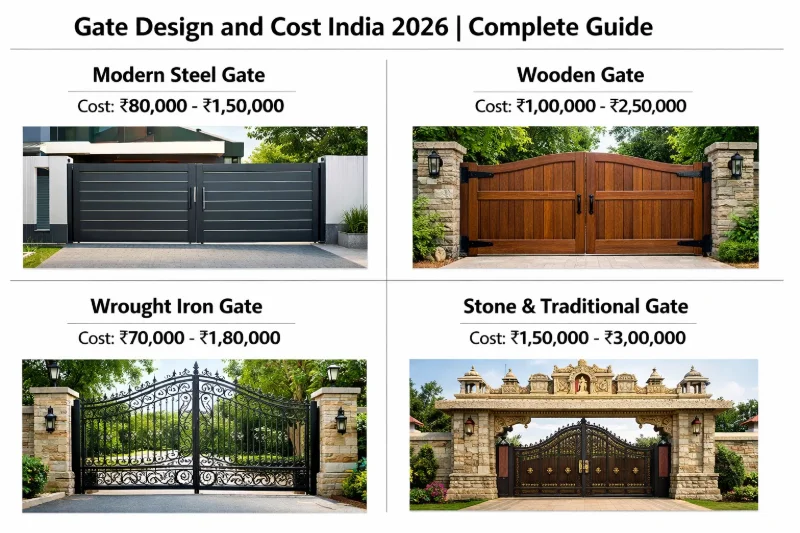
Modern gate design in India has shifted from purely functional structures to architectural features that enhance property value and curb appeal. Contemporary designs now emphasize clean lines, minimalist aesthetics, and integration with overall property architecture. Many homeowners in metropolitan areas like Mumbai and Bangalore are opting for sleek aluminum and steel designs that complement modern house architecture.
The shift toward contemporary design reflects changing lifestyle preferences and increased awareness about property aesthetics. Gates are no longer hidden behind walls but are now visible design elements that contribute to the overall property image. Professionals specializing in gate design on AECORD can help you create designs that balance modern aesthetics with practical security needs.
Traditional and Fusion Designs
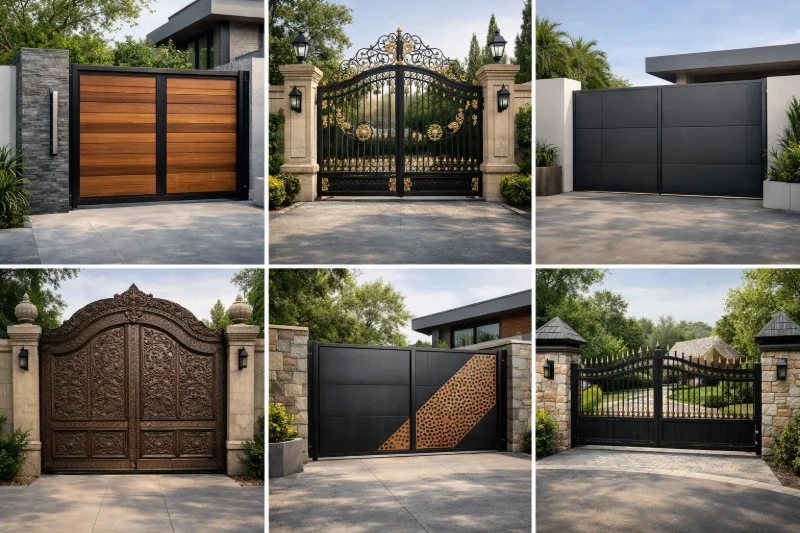
Despite the rise of modern designs, traditional gate styles remain popular, particularly in cities like Jaipur, Lucknow, and Hyderabad. Ornamental wrought iron gates with intricate patterns continue to be preferred by homeowners who value classical architecture. Additionally, fusion designs combining traditional patterns with modern materials have gained significant traction.
These fusion designs often incorporate:
Traditional jali patterns with stainless steel frames
Carved wooden elements combined with metal structures
Ornamental designs with automated opening systems
Heritage-inspired patterns in contemporary materials
Frequently asked
Smart and Automated Gate Systems
The adoption of smart gate technology has accelerated in India's major cities. Automated gates with access control systems, video intercoms, and smartphone integration are becoming increasingly common in residential complexes and commercial properties. These systems offer enhanced security and convenience, particularly in gated communities across Delhi, Pune, and Hyderabad.
Types of Gates and Their Characteristics
Swing Gates
Swing gates remain the most common choice for residential properties in India. They operate on a hinge mechanism and swing inward or outward. Swing gates are suitable for properties with adequate space on both sides of the entrance. They're particularly popular in villas and independent houses across suburban areas of major Indian cities.
Advantages: Simple mechanism, easy maintenance, aesthetic appeal, lower initial cost
Disadvantages: Requires space to swing, slower operation, not ideal for properties with space constraints
Sliding Gates
Sliding gates have gained popularity in urban areas where space is limited. These gates slide horizontally along a track, making them ideal for properties with restricted space. They're increasingly seen in apartment complexes and commercial establishments in Bangalore, Mumbai, and Delhi.
Advantages: Space-efficient, modern appearance, smooth operation, suitable for narrow entrances
Disadvantages: Higher maintenance requirements, more expensive than swing gates, requires regular track cleaning
Folding Gates
Folding gates, also known as accordion gates, fold back on themselves when opened. They're ideal for properties with limited space and provide a contemporary look. These gates are becoming popular in commercial establishments and modern residential complexes.
Advantages: Compact when open, elegant appearance, space-saving
Disadvantages: Complex mechanism, higher cost, requires professional installation and maintenance
Roller Shutter Gates
Roller shutter gates roll up vertically, similar to window shutters. They're popular for commercial properties, warehouses, and shops throughout India. In cities like Delhi and Pune, many small businesses use roller shutter gates for security.
Advantages: Maximum security, space-efficient, durable, low maintenance
Disadvantages: Industrial appearance, limited aesthetic options, noise during operation
Materials Used in Gate Construction
Wrought Iron
Wrought iron has been the traditional choice for gates in India for centuries. It offers excellent durability, aesthetic appeal, and can be crafted into intricate designs. However, wrought iron requires regular maintenance to prevent rust, particularly in coastal areas.
Typical cost range: ₹15,000 to ₹50,000 per square meter, depending on design complexity
Stainless Steel
Stainless steel has emerged as a preferred material for modern gate designs. It offers durability, corrosion resistance, and a contemporary appearance. Many professionals on AECORD recommend stainless steel for properties in coastal cities like Mumbai and Chennai.
Typical cost range: ₹20,000 to ₹60,000 per square meter
Aluminum
Aluminum gates are lightweight, corrosion-resistant, and relatively affordable. They're suitable for both residential and commercial applications. Aluminum can be powder-coated in various colors, making it versatile for different design preferences.
Typical cost range: ₹12,000 to ₹35,000 per square meter
Wood
Wooden gates offer warmth and aesthetic appeal, particularly for traditional and fusion designs. However, wood requires regular maintenance, including varnishing and protection against termites and weather damage. In Indian climate conditions, treated timber is essential for longevity.
Typical cost range: ₹10,000 to ₹40,000 per square meter
Composite Materials
Modern composite materials combining multiple substances are gaining popularity. These materials offer the aesthetic appeal of traditional materials with improved durability and lower maintenance requirements.
Typical cost range: ₹25,000 to ₹70,000 per square meter
Gate Design Cost Breakdown in India 2026
Residential Gate Costs
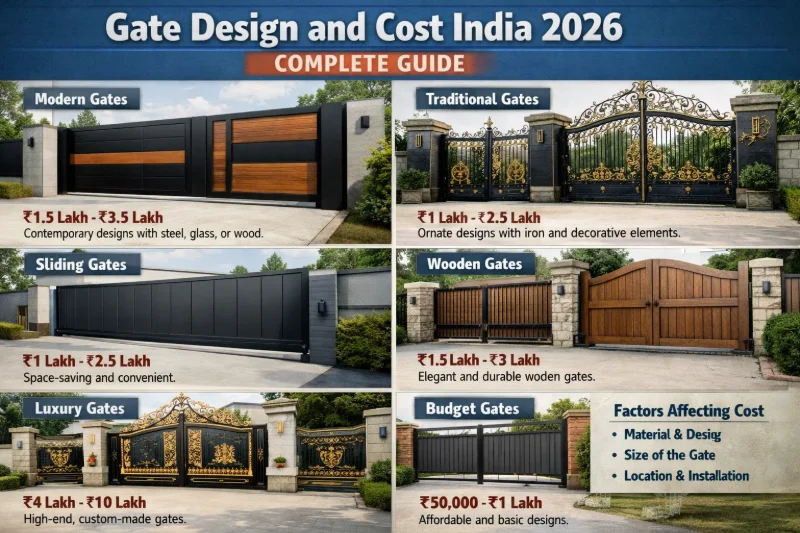
For typical residential properties in India, gate costs vary significantly based on size, material, and automation level. A standard 12-foot wide residential gate typically costs:
Basic swing gate (wrought iron): ₹40,000 to ₹80,000
Modern aluminum swing gate: ₹50,000 to ₹1,20,000
Stainless steel modern gate: ₹70,000 to ₹1,50,000
Automated sliding gate (stainless steel): ₹1,50,000 to ₹3,00,000
Smart gate with access control: ₹2,00,000 to ₹5,00,000
Commercial Gate Costs
Commercial properties typically require more robust and secure gates. For a standard 16-foot commercial entrance gate:
Heavy-duty swing gate: ₹1,00,000 to ₹2,00,000
Automated sliding gate system: ₹2,50,000 to ₹5,00,000
Roller shutter gate: ₹1,50,000 to ₹3,50,000
Integrated security system gate: ₹4,00,000 to ₹8,00,000
Installation and Labor Costs
Installation costs typically range from ₹10,000 to ₹50,000, depending on gate complexity and location. In metropolitan areas like Mumbai and Bangalore, labor costs tend to be higher than in smaller cities. Professional installation is crucial for automated systems and should never be compromised for cost savings.
Additional Components and Accessories
Beyond the gate itself, several additional components affect total project cost:
Gate pillars/posts: ₹5,000 to ₹25,000 per pillar
Automated opening system: ₹50,000 to ₹1,50,000
Video intercom system: ₹15,000 to ₹50,000
Access control system: ₹20,000 to ₹60,000
Foundation work: ₹10,000 to ₹40,000
Electrical wiring and connections: ₹5,000 to ₹20,000
Regional Cost Variations in India
Metropolitan Cities
In major cities like Mumbai, Delhi, Bangalore, and Pune, gate costs are generally 20-30% higher than national averages due to higher labor costs and increased demand for premium designs. A mid-range automated gate in Mumbai might cost ₹2,50,000, while the same gate in a tier-2 city could cost ₹1,80,000 to ₹2,00,000.
Tier-2 Cities
Cities like Hyderabad, Jaipur, Lucknow, and Chandigarh offer more competitive pricing while maintaining quality standards. Gate costs here are typically 15-20% lower than metropolitan areas.
Tier-3 Cities and Towns
Smaller cities and towns generally have the most affordable gate solutions, with costs being 25-35% lower than metropolitan areas. However, availability of specialized designs and automated systems may be limited.
Factors Affecting Gate Design and Costs
Property Size and Gate Dimensions
Gate size directly impacts cost. A 10-foot gate will cost significantly less than a 20-foot gate. Properties with multiple entrances will require proportional cost increases. When planning your gate, ensure dimensions align with your property's entrance requirements and local regulations.
Design Complexity
Intricate designs with ornamental elements, custom patterns, or artistic details increase costs substantially. Simple, minimalist designs are more economical but equally elegant. Consult with professionals on AECORD to balance aesthetic preferences with budget constraints.
Automation and Technology Integration
Smart features like automated opening, video intercoms, number plate recognition, and smartphone control significantly increase costs. However, they provide enhanced security and convenience, making them worthwhile investments for many property owners.
Maintenance Requirements
Different materials require varying maintenance levels. While stainless steel and aluminum require minimal maintenance, wrought iron and wood demand regular upkeep. Consider long-term maintenance costs when selecting materials.
Local Regulations and Compliance
Different Indian cities have specific regulations regarding gate height, design, and safety standards. Municipal corporations in cities like Bangalore and Pune have guidelines that must be followed. Non-compliance can result in penalties or mandatory modifications.
Choosing the Right Gate Design for Your Property
Assess Your Needs
Before finalizing a design, clearly identify your priorities: security, aesthetics, space efficiency, automation, and budget. Different properties have different requirements. A villa in Bangalore might prioritize aesthetic appeal, while a commercial property in Delhi might prioritize security and durability.
Consider Your Property's Architecture
Your gate should complement your property's architectural style. Modern houses benefit from contemporary gate designs, while traditional homes suit classical or fusion designs. Ensure the gate enhances rather than clashes with your property's overall appearance.
Evaluate Long-term Costs
While initial cost is important, consider maintenance expenses over 5-10 years. A slightly more expensive gate requiring minimal maintenance might be more economical than a cheaper option demanding regular upkeep.
Consult with Professionals
Engaging experienced gate designers and installers is crucial. AECORD connects you with qualified professionals who can provide expert advice tailored to your specific requirements and local conditions. Professional consultation ensures your investment delivers both aesthetic and functional value.
Current Market Trends for 2026
Sustainability and Eco-Friendly Designs
There's a growing trend toward sustainable gate materials and designs. Recycled metals, eco-friendly coatings, and energy-efficient automated systems are gaining popularity among environmentally conscious property owners.
Integration with Smart Home Systems
Gates are increasingly becoming part of integrated smart home ecosystems. Voice-controlled access, biometric authentication, and AI-powered security features are emerging as standard features in premium gate installations.
Minimalist and Sustainable Aesthetics
Clean lines, minimal ornamentation, and functional design continue to dominate modern gate aesthetics. This trend reflects broader design movements emphasizing simplicity and sustainability.
Tips for Budget-Conscious Gate Installation
Plan ahead: Budget for gate installation during property construction rather than retrofitting later, which increases costs
Choose appropriate materials: Aluminum and composite materials offer good value without compromising quality
Simplify design: Opt for clean, simple designs that are cost-effective and timeless
Phase automation: Install basic gates initially and add automation features later if needed
Get multiple quotes: Compare prices from different professionals to ensure competitive pricing
Invest in quality installation: Poor installation can lead to costly repairs; never compromise on this aspect
Conclusion
Gate design and installation in India in 2026 offers numerous options catering to different budgets, preferences, and requirements. Whether you're in Mumbai, Bangalore, Delhi, or any other Indian city, understanding the available options, cost implications, and regional variations helps in making informed decisions.
The key to successful gate installation lies in balancing aesthetic preferences with practical considerations like security, maintenance, and budget. Professional guidance is invaluable in navigating these decisions. Connect with experienced gate designers and installers on AECORD who understand local market conditions, regulations, and can deliver solutions tailored to your specific needs and budget.
Remember that your gate is an investment in both property security and curb appeal. Taking time to plan carefully and consulting with qualified professionals ensures you get the best value for your investment while creating an entrance that enhances your property's overall appeal and functionality.
Ready to design the perfect gate for your property? Browse qualified gate designers and installation professionals on AECORD today and get expert recommendations tailored to your specific location and requirements.
Frequently Asked Questions
What are the latest gate design trends in India for 2026?
Modern gate design in India is shifting toward contemporary aesthetics with clean lines and minimalist styles, while traditional wrought iron designs and fusion styles combining traditional patterns with modern materials remain popular. Smart automated gates with access control systems and smartphone integration are also becoming increasingly common in major Indian cities.
What is the difference between swing gates and sliding gates?
Swing gates operate on a hinge mechanism and require adequate space on both sides to open, making them ideal for villas and independent houses. Sliding gates move horizontally along a track and are better suited for properties with limited space, such as apartment complexes and commercial establishments.
How much do automated gate systems cost in India?
The article indicates that smart gate systems with access control, video intercoms, and smartphone integration are becoming increasingly common in major Indian cities, though specific pricing details are mentioned as part of the complete cost guide that would help readers understand realistic investment amounts for 2026.
Which gate design style is best for residential properties in India?
The choice depends on your property type and preferences: swing gates are popular for villas and independent houses due to their aesthetic appeal and lower cost, while sliding gates suit apartments with space constraints. Contemporary designs work well for modern homes, while traditional or fusion designs are preferred in cities like Jaipur and Hyderabad.
What materials are used in modern gate designs in India?
Modern gates use materials including aluminum, steel, and stainless steel for contemporary designs, while traditional styles incorporate wrought iron and carved wood. Fusion designs often combine traditional jali patterns with stainless steel frames or ornamental designs with modern materials for a balanced aesthetic.