

Starting a construction project is one of the most significant decisions for property owners, developers, and investors in India. Whether you're building a residential home in Bangalore, a commercial complex in Mumbai, or an industrial facility in Delhi, the pre-construction phase is critical. A comprehensive checklist before starting construction can save you from costly mistakes, legal complications, and project delays.
In this guide, we'll walk you through everything you need to verify and prepare before your first brick is laid. This checklist is designed specifically for the Indian construction landscape, considering local regulations, market practices, and common challenges faced by builders and property owners.
Legal and Regulatory Compliance
Build cost · Bengaluru, May 2026
Verify Land Ownership and Title Deed
The foundation of any construction project is clear land ownership. Before proceeding, ensure that:
The property title is registered with the local municipal authority
A recent title search (preferably within the last 6 months) confirms no disputes
All previous mortgages or liens have been cleared
The property is not part of any ongoing litigation
The land is not marked as "disputed" in revenue records
Obtain a certified copy of the title deed and have it verified by a qualified property lawyer. This step is non-negotiable, especially in metropolitan areas like Bangalore, Hyderabad, and Pune where land disputes are common.
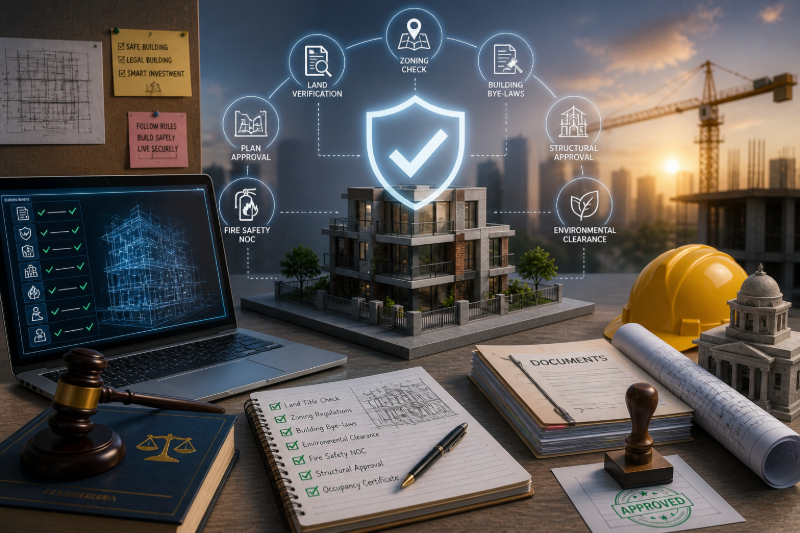
Obtain Necessary Approvals and Permits
Indian construction projects require multiple approvals from various government bodies:
Building Permission (BP): Issued by the local municipal corporation after reviewing architectural plans and ensuring compliance with building bylaws
Layout Approval: Required for layouts and subdivisions of land
Environmental Clearance: Mandatory for projects larger than 20,000 square meters or projects in environmentally sensitive areas
Water and Drainage Approval: Ensures proper water supply and sewage connection feasibility
Fire Safety Approval: For buildings exceeding certain heights or commercial establishments
Tree Clearance Certificate: If your project involves removing existing trees
The timeline for obtaining these approvals typically ranges from 2-6 months, depending on your location and project complexity. In cities like Delhi and Mumbai, processing times can be longer due to higher application volumes.
Zoning and Land Use Verification
Confirm that your intended use aligns with the land's zoning classification. Check the Master Plan or Development Plan for your area to ensure:
The land is zoned for your intended purpose (residential, commercial, industrial, etc.)
Floor Space Index (FSI) or Floor Area Ratio (FAR) limits are understood
Height restrictions are noted
Setback requirements are clearly defined
Frequently asked
Financial and Budget Planning
Detailed Cost Estimation
Prepare a comprehensive budget that includes:
Land cost: Already incurred, but document for reference
Construction cost: Typically ₹1,200-₹3,000 per square foot depending on location and specifications (higher in Tier-1 cities like Mumbai and Delhi)
Material costs: Steel, cement, brick, glass, and finishes
Labor costs: Skilled and unskilled worker wages
Permits and approvals: ₹50,000-₹5,00,000 depending on project size
Professional fees: Architect, engineer, and consultant charges (typically 3-5% of construction cost)
Contingency buffer: 10-15% for unforeseen expenses

Financing Arrangements
Secure your funding before construction begins. Options include:
Personal savings or equity
Construction loans from banks (typically covering 70-80% of project cost)
Investor partnerships or Joint Ventures (JVs)
Home loans (for residential projects)
Ensure funds are available in tranches aligned with project milestones to avoid cash flow disruptions.
Design and Technical Planning
Finalize Architectural and Structural Designs
Work with qualified architects and structural engineers to develop detailed designs that include:
Site plans and layout drawings
Architectural floor plans, elevations, and sections
Structural design calculations and drawings
MEP (Mechanical, Electrical, Plumbing) drawings
Specifications for materials and finishes
Compliance with Indian Standards (IS codes)
All designs must comply with the National Building Code of India (NBC) and local building bylaws specific to your city.
Geotechnical Investigation
For larger projects, conduct a geotechnical survey to determine:
Soil bearing capacity
Groundwater level and seasonal variations
Soil composition and stability
Appropriate foundation type and depth
This investigation costs ₹50,000-₹2,00,000 but prevents expensive foundation failures later.

Site Preparation and Infrastructure
Site Accessibility and Logistics
Verify that your site has:
Adequate road access for construction vehicles and material delivery
Space for a site office, worker accommodation, and material storage
Proximity to local suppliers for cement, steel, and other materials
Availability of skilled labor in the region
Utility Connections and Availability
Confirm the feasibility of connecting to essential utilities:
Water supply: Check with local water authority for connection availability and daily supply capacity
Electricity: Verify with the local electricity board about transformer capacity and connection timelines
Sewerage: Confirm connection to municipal sewage or plan for septic systems
Gas (if applicable): Check availability for residential or commercial kitchens
In cities like Pune and Hyderabad, water scarcity is a concern, so alternative water management systems may be necessary.
Site Clearance and Demolition
If the site has existing structures:
Obtain demolition permission from local authorities
Plan for safe removal of hazardous materials (asbestos, lead paint, etc.)
Arrange for proper waste disposal
Clear the site of debris and level the ground
Contractor and Team Selection
Hiring a Qualified Contractor
The contractor is central to your project's success. Ensure they have:
Valid GST registration and PAN
Proven track record with similar projects (request references)
Proper licensing and certifications
Adequate financial capacity and equipment
Experience with projects of similar scale and complexity
Clear understanding of local labor laws and safety regulations
Platforms like AECORD can help you identify and connect with verified contractors and construction professionals across India who meet these criteria.
Assembling Your Project Team
Beyond the contractor, you'll need:
Project Manager: Oversees day-to-day construction activities
Structural Engineer: Monitors structural integrity during construction
Site Supervisor: Manages on-site quality and safety
Quantity Surveyor: Tracks costs and material usage
Many professionals on AECORD specialize in these roles and can be engaged on a project basis.

Safety and Environmental Considerations
Develop a Safety Plan
Before construction begins, establish comprehensive safety protocols:
Identify potential hazards specific to your project
Provide safety training for all workers
Ensure availability of safety equipment (helmets, harnesses, first-aid kits)
Establish emergency procedures and evacuation plans
Designate a safety officer responsible for monitoring compliance
Conduct regular safety audits and inspections
Compliance with the Building and Other Construction Workers (Regulation of Employment and Conditions of Service) Act is mandatory.
Environmental and Waste Management
Plan for environmental responsibility:
Implement dust control measures (water spraying, barriers)
Manage construction waste through recycling and proper disposal
Protect nearby water sources from contamination
Control noise levels, especially in residential areas
Plan for green spaces and landscaping post-construction
Insurance and Risk Management
Obtain Necessary Insurance Coverage
Protect your project with appropriate insurance:
Contractor's All Risks (CAR) Insurance: Covers damage to the structure during construction
Employer's Liability Insurance: Covers worker injuries
Professional Indemnity Insurance: For architects and engineers
Public Liability Insurance: Covers third-party injuries or property damage
Contract and Agreement Finalization
Execute clear agreements with all parties:
Construction contract with the contractor specifying scope, timeline, and payment terms
Terms and conditions for material suppliers
Agreements with consultants and professionals
Clauses for dispute resolution and penalties for delays
Have all contracts reviewed by a legal professional familiar with Indian construction law.
Documentation and Record-Keeping
Maintain Comprehensive Project Records
From day one, maintain organized documentation:
Approved building plans and permits
Contractor and team contact information
Material purchase orders and invoices
Daily site reports and progress photographs
Testing and inspection certificates
Payment records and invoices
Correspondence with authorities and consultants
Digital record-keeping through cloud-based platforms can streamline this process and provide easy access to all stakeholders.
Final Pre-Construction Checklist
Before your contractor breaks ground, verify:
☑ All legal permissions and approvals are in hand
☑ Title deed is clear and verified
☑ Budget is finalized and funds are available
☑ Architectural and structural designs are approved
☑ Contractor is selected and contract is signed
☑ Insurance policies are active
☑ Utility connections are feasible
☑ Safety and environmental plans are in place
☑ Site is accessible and cleared
☑ Project team is assembled and briefed
☑ Record-keeping systems are established
☑ Contingency plans are documented
Conclusion
Thorough preparation before construction begins is the difference between a successful project and one plagued by delays, cost overruns, and legal issues. The Indian construction landscape presents unique challenges, from navigating multiple approval processes to managing seasonal variations and labor availability. However, with this comprehensive checklist and proper planning, you can mitigate risks and set your project up for success.
Remember that the professionals you choose—from architects to contractors to project managers—play a crucial role in your project's outcome. Platforms like AECORD connect you with verified, experienced professionals across the architecture, engineering, and construction sectors in India. Whether you need a structural engineer in Bangalore, a project manager in Mumbai, or a safety consultant in Hyderabad, AECORD makes it easy to find qualified professionals who understand local regulations and best practices.
Don't rush through the pre-construction phase. The time and resources you invest now will pay dividends throughout your project lifecycle. Start your project on solid ground by using this checklist and engaging the right professionals. Visit AECORD today to find the construction experts you need to bring your vision to life.
Frequently Asked Questions
What documents do I need to verify before starting construction in India?
You must verify the property title deed with the local municipal authority, conduct a recent title search to confirm no disputes exist, ensure all mortgages are cleared, and have a qualified property lawyer review the documentation. Additionally, confirm the land is not under litigation or marked as disputed in revenue records.
How long does it take to obtain construction permits and approvals in India?
The timeline for obtaining necessary approvals typically ranges from 2-6 months, depending on your location and project complexity. In major cities like Delhi and Mumbai, processing times can be longer due to higher application volumes.
What are the main permits required before starting construction?
Key permits include Building Permission from the municipal corporation, Layout Approval for subdivisions, Environmental Clearance for large projects, Water and Drainage Approval, Fire Safety Approval for tall or commercial buildings, and Tree Clearance Certificate if trees will be removed.
How do I verify zoning and land use compliance for my construction project?
Check your local Master Plan or Development Plan to confirm the land is zoned for your intended purpose, understand Floor Space Index (FSI) limits, note height restrictions, and verify setback requirements. This ensures your project aligns with municipal regulations.
What should be included in a construction budget?
A comprehensive budget should include construction costs (₹1,200-₹3,000 per sq ft), material and labor costs, permits and approvals (₹50,000-₹5,00,000), professional fees (3-5% of construction cost), and a contingency buffer of 10-15% for unforeseen expenses.