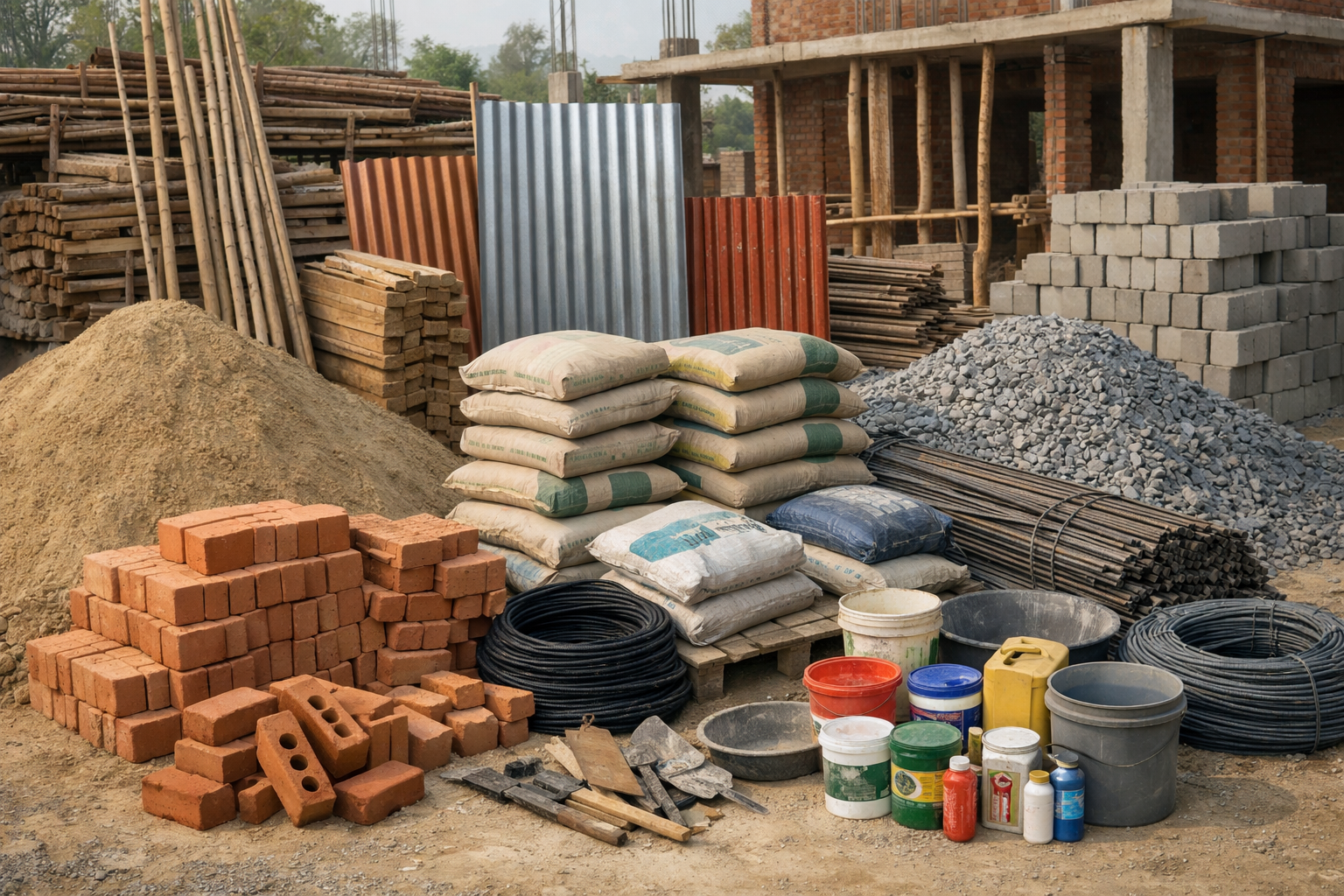
Building materials form the backbone of every construction project, from residential homes to commercial complexes and industrial facilities. Whether you're a homeowner planning renovations, a contractor managing large-scale projects, or an architect designing innovative structures, understanding the fundamentals of building materials is essential. In India, where construction practices vary significantly across regions and climate zones, selecting the right materials can make the difference between a durable structure and one prone to deterioration./blog/construction-material-list-for-house-building-india
This comprehensive guide covers the essential building materials used in Indian construction, their properties, applications, and how to source quality materials for your projects.
Understanding Building Materials: The Foundation of Construction
Building materials are substances used in construction that provide structural support, weatherproofing, insulation, and aesthetic appeal. The choice of materials depends on several factors including climate, budget, structural requirements, local availability, and regulatory compliance with Indian building codes.
In India, construction materials are broadly categorized into two types: traditional materials that have been used for centuries and modern engineered materials that offer enhanced performance. The Indian Standard Bureau (IS) provides specifications for most construction materials, ensuring quality and safety across projects.
Build cost · Bengaluru, May 2026
Cement: The Binding Agent of Modern Construction
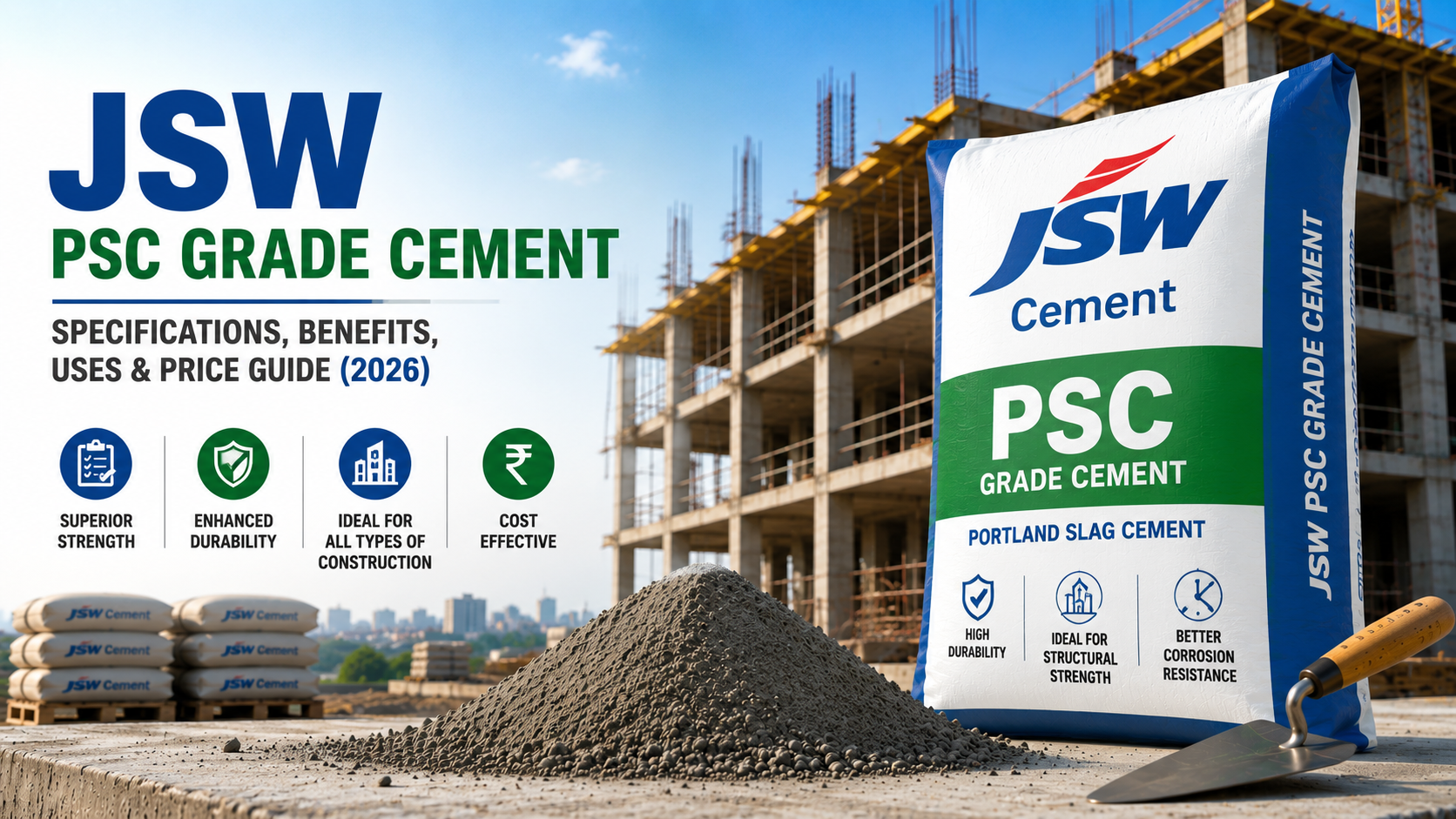
Ordinary Portland Cement (OPC) is the most commonly used binder in Indian construction. It acts as the adhesive that holds aggregates together in concrete and mortar. India is one of the world's largest cement producers, with major manufacturing facilities in states like Rajasthan, Madhya Pradesh, and Tamil Nadu.
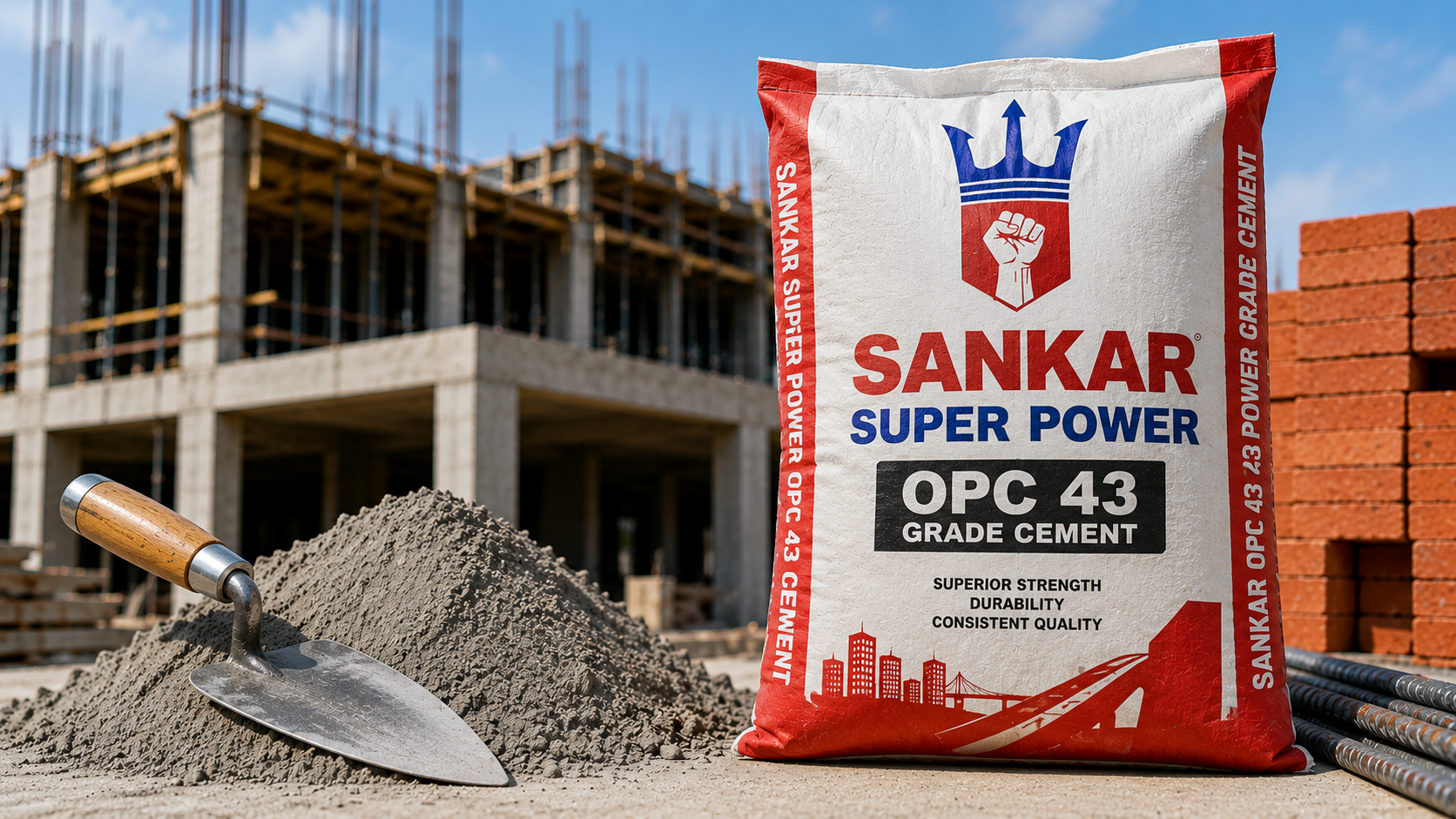
Types of Cement Used in India
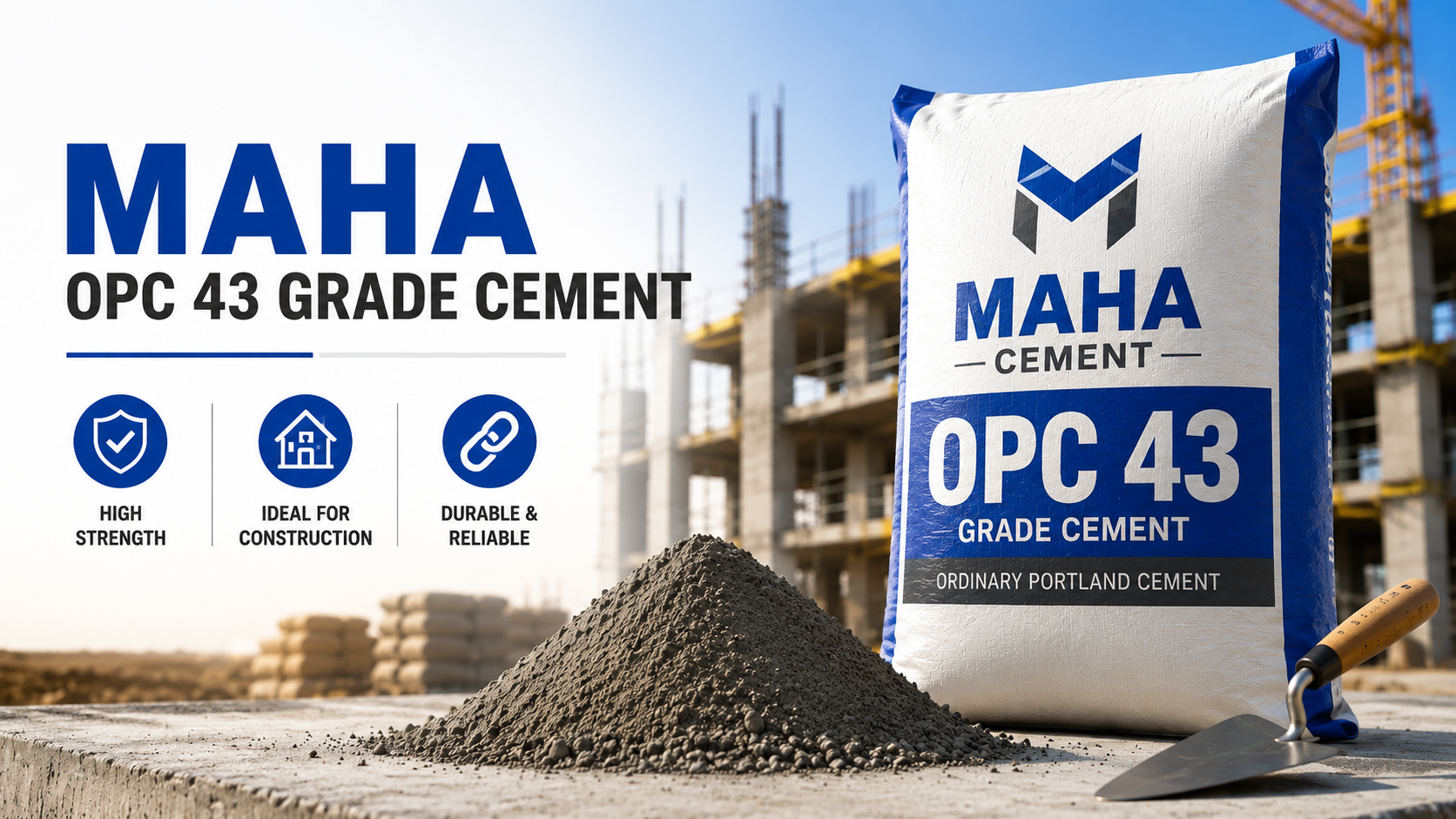
OPC 43 Grade: Suitable for general construction, provides strength after 28 days. Cost ranges from ₹350-450 per 50 kg bag.
OPC 53 Grade: Higher strength, faster setting, ideal for structural work. Costs ₹400-500 per bag.
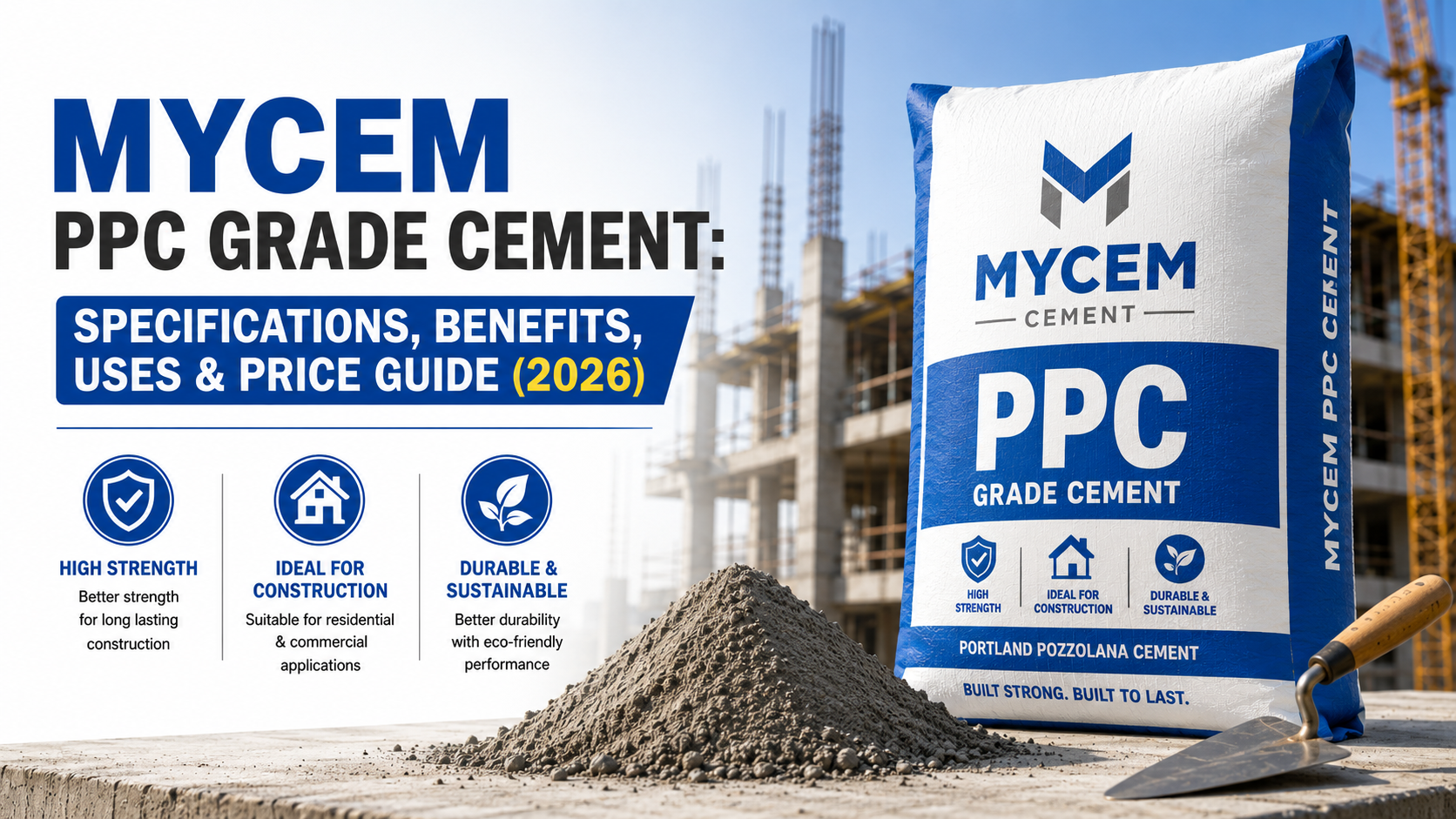
Portland Pozzolana Cement (PPC): Contains fly ash, more durable in humid climates, particularly beneficial for coastal cities like Mumbai and Chennai.
Sulphate Resistant Cement (SRC): Used in areas with high soil sulphate content, essential for projects in regions with saline groundwater./blog/foundation-types-for-houses-india-guide
When sourcing cement through suppliers, ensure it meets IS 269 specifications. On platforms like AECORD, you can connect with reliable cement suppliers across major Indian cities who provide quality-certified materials with proper documentation.
Aggregates: The Structural Skeleton
Aggregates constitute about 75-80% of concrete volume and significantly impact concrete strength and durability. They are classified into fine aggregates (sand) and coarse aggregates (gravel and crushed stone).
Frequently asked
Fine Aggregates (Sand)
Sand is essential for mortar and concrete production. In India, river sand has been traditionally preferred, but due to environmental concerns and depletion of natural resources, manufactured sand (M-sand) is increasingly used.
River Sand: Natural, well-graded, but availability is declining. Cost: ₹30-50 per cubic foot in most Indian cities.
Manufactured Sand (M-Sand): Produced from crushed rock, meets IS specifications, environmentally sustainable. Cost: ₹25-40 per cubic foot.
Desert Sand: Not recommended for construction due to smooth particles that reduce bonding.
Coarse Aggregates
Coarse aggregates provide the primary load-bearing structure in concrete. Standard sizes include 20mm and 40mm, though 12mm and 10mm sizes are also used for specific applications.
Crushed Stone: Angular shape provides better bonding, ideal for structural concrete. Cost: ₹40-70 per cubic foot depending on location.
Gravel: Rounded particles, suitable for non-structural applications. Slightly cheaper than crushed stone.
Recycled Aggregates: Increasingly popular in sustainable construction projects, made from demolished concrete.
Quality aggregates should be clean, free from organic matter, and meet IS 383 specifications. When procuring aggregates for major projects, connecting with verified suppliers on AECORD ensures consistent quality and timely delivery across Delhi, Bangalore, Mumbai, and other metropolitan areas.
Steel: The Strength Provider
Steel reinforcement is crucial for concrete structures, providing tensile strength that concrete cannot provide alone. India's steel industry is robust, producing high-quality reinforcement bars meeting IS 1786 standards.
Types of Steel Reinforcement
Mild Steel Bars: Lower strength, rarely used in modern construction. Cost: ₹45-55 per kg.
High Yield Strength Deformed (HYSD) Bars: Most common in Indian construction, available in grades Fe 415 and Fe 500. Cost: ₹50-70 per kg depending on market conditions.
Welded Wire Fabric: Pre-fabricated mesh used in slabs and pavements, offers faster construction.
Steel Fiber Reinforced Concrete: Used in specialized applications like industrial floors and tunnels.
Steel prices fluctuate based on international commodity markets. A typical 10x10 meter residential structure requires approximately 4-5 tons of steel reinforcement. Always verify ISI certification when purchasing steel to ensure compliance with Indian standards.
Bricks and Masonry Units: The Walls That Stand
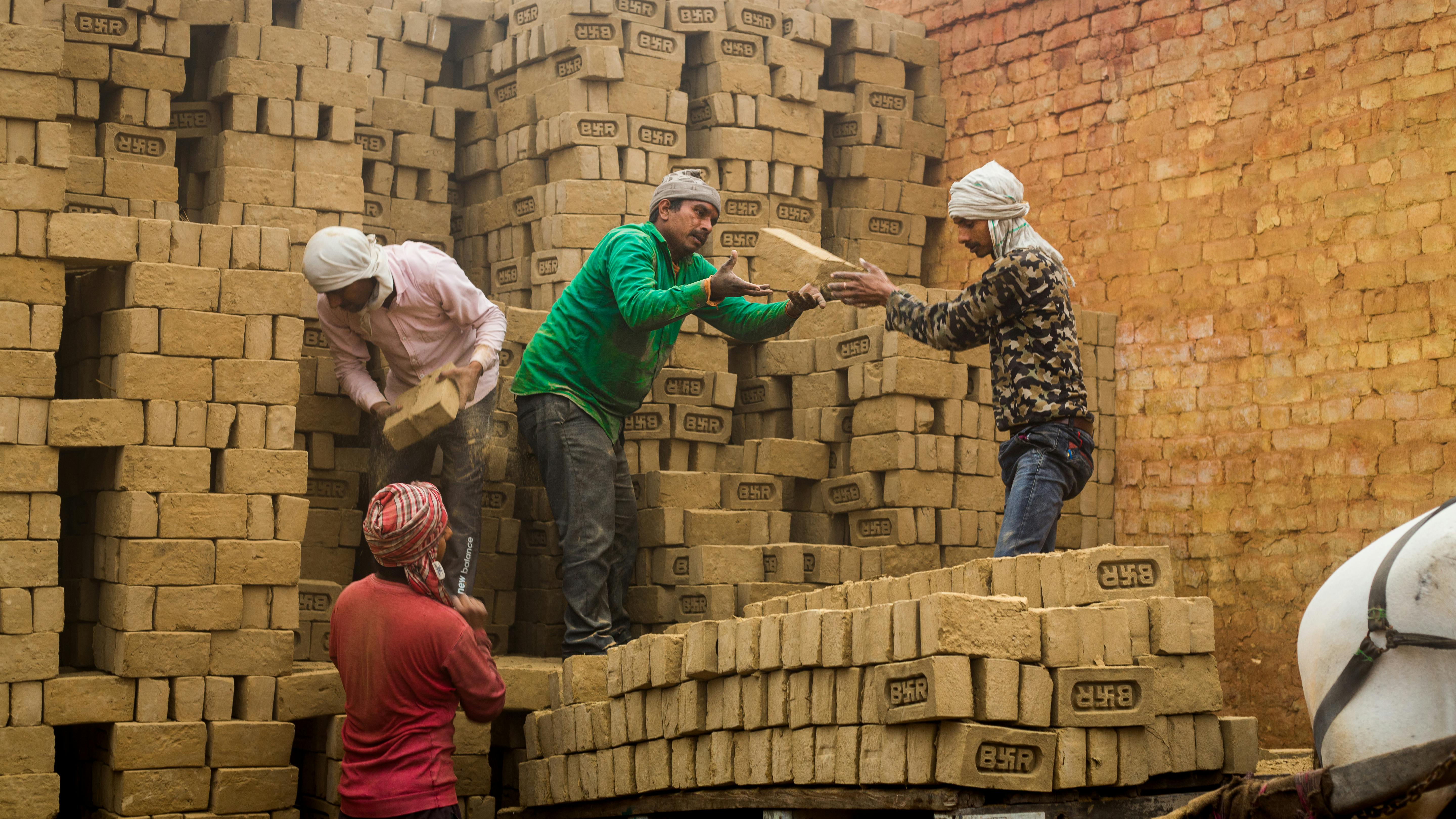
Bricks are fundamental building units used in load-bearing and non-load-bearing walls across India. The choice of brick type affects structural capacity, thermal properties, and aesthetic appeal.
Common Types of Bricks in India
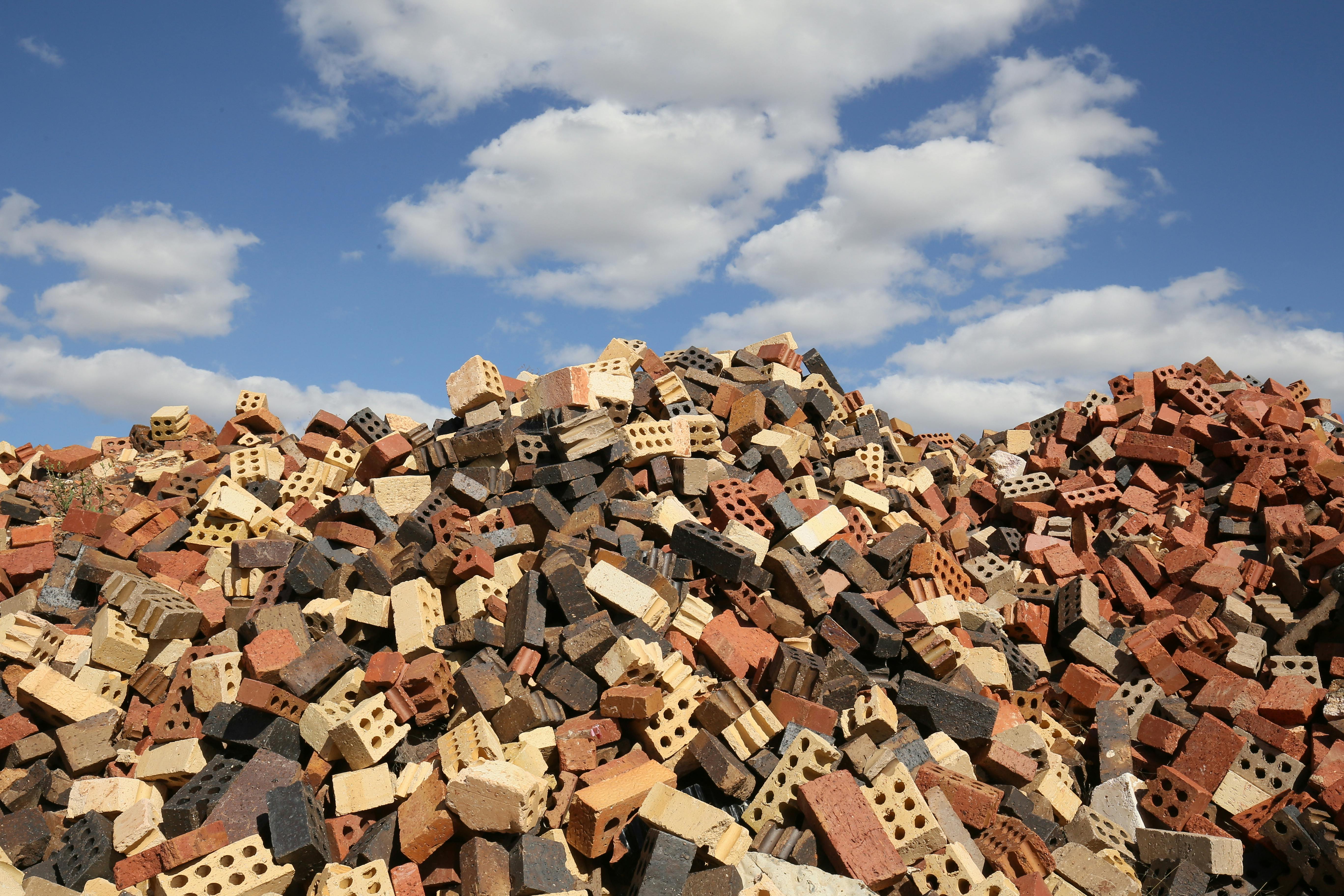
Burnt Clay Bricks: Traditional, widely available, cost ₹5-12 per piece. Meet IS 1077 standards. Available in different classes based on compressive strength.
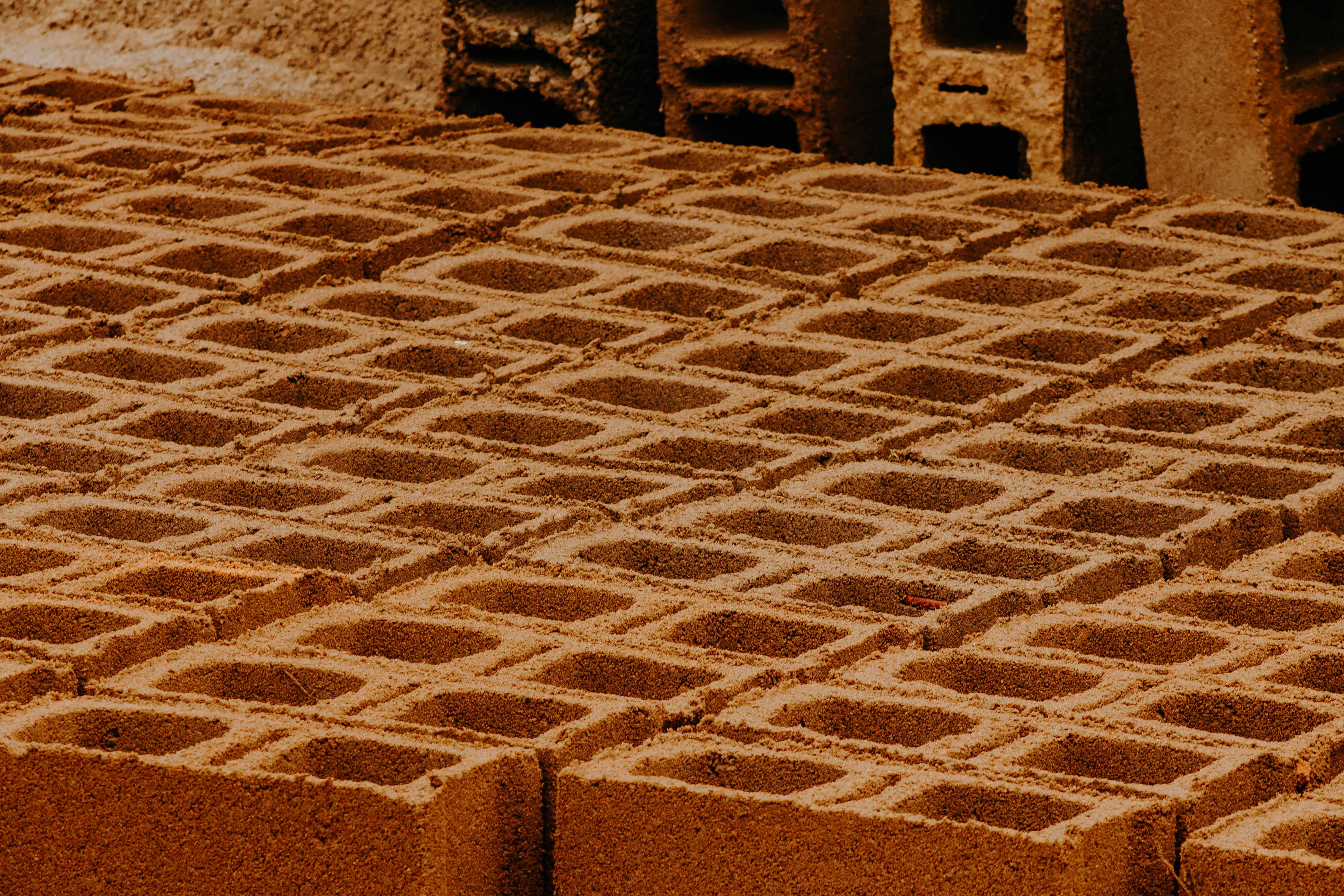
Concrete Blocks: Larger units (400x200x200mm), faster construction, cost ₹20-35 per block. Ideal for large-scale projects in cities like Hyderabad and Pune.
Fly Ash Bricks: Made from fly ash and lime, environmentally friendly, cost ₹6-10 per piece. Increasingly popular in sustainable construction.
Autoclaved Aerated Concrete (AAC) Blocks: Lightweight, excellent thermal insulation, cost ₹40-70 per block. Popular in metro cities due to superior insulation properties.
Interlocking Bricks: Self-aligning design, faster construction, commonly used in commercial projects.
For a typical 100 square meter residential area with 230mm thick walls, approximately 4,000-5,000 bricks are required. AAC blocks, while more expensive initially, reduce construction time and provide better thermal comfort, making them popular in cities with extreme temperatures.
Water: The Essential Ingredient
Often overlooked, water quality is critical for concrete and mortar production. Impure water can significantly reduce concrete strength and durability.
Water Quality Standards
According to IS 456, water used in concrete should be clean, free from organic matter, oils, and harmful salts. Groundwater in many Indian regions contains dissolved salts that can affect concrete durability, particularly in areas like Rajasthan and Gujarat.
Potable Water: Always safe for concrete production.
Groundwater: Should be tested for chloride and sulphate content before use.
Seawater: Not recommended for reinforced concrete due to chloride content that causes rebar corrosion.
Recycled Water: Can be used if properly filtered and tested.
In water-scarce regions, recycled water from construction sites can be used after proper settling and filtration, reducing both costs and environmental impact.
Finishing Materials: The Final Touch
Finishing materials provide weather protection, aesthetic appeal, and enhanced functionality to structures.
Plaster and Mortar
Cement mortar (1:4 or 1:5 ratio) is standard for plastering in India. For specialized applications, lime mortar is preferred in heritage buildings and areas with high humidity. Cost of plastering ranges from ₹150-300 per square meter depending on thickness and finish quality.
Paint and Coatings
Distemper: Budget-friendly, ₹50-100 per liter, suitable for interior walls in dry climates.
Acrylic Emulsion Paint: Most popular in India, cost ₹200-400 per liter, weather-resistant and easy to maintain.
Elastomeric Paint: Flexible coating, ideal for areas with high temperature variations, cost ₹400-600 per liter.
Epoxy Paint: Durable, chemical-resistant, used in industrial and commercial spaces.
Tiles and Flooring
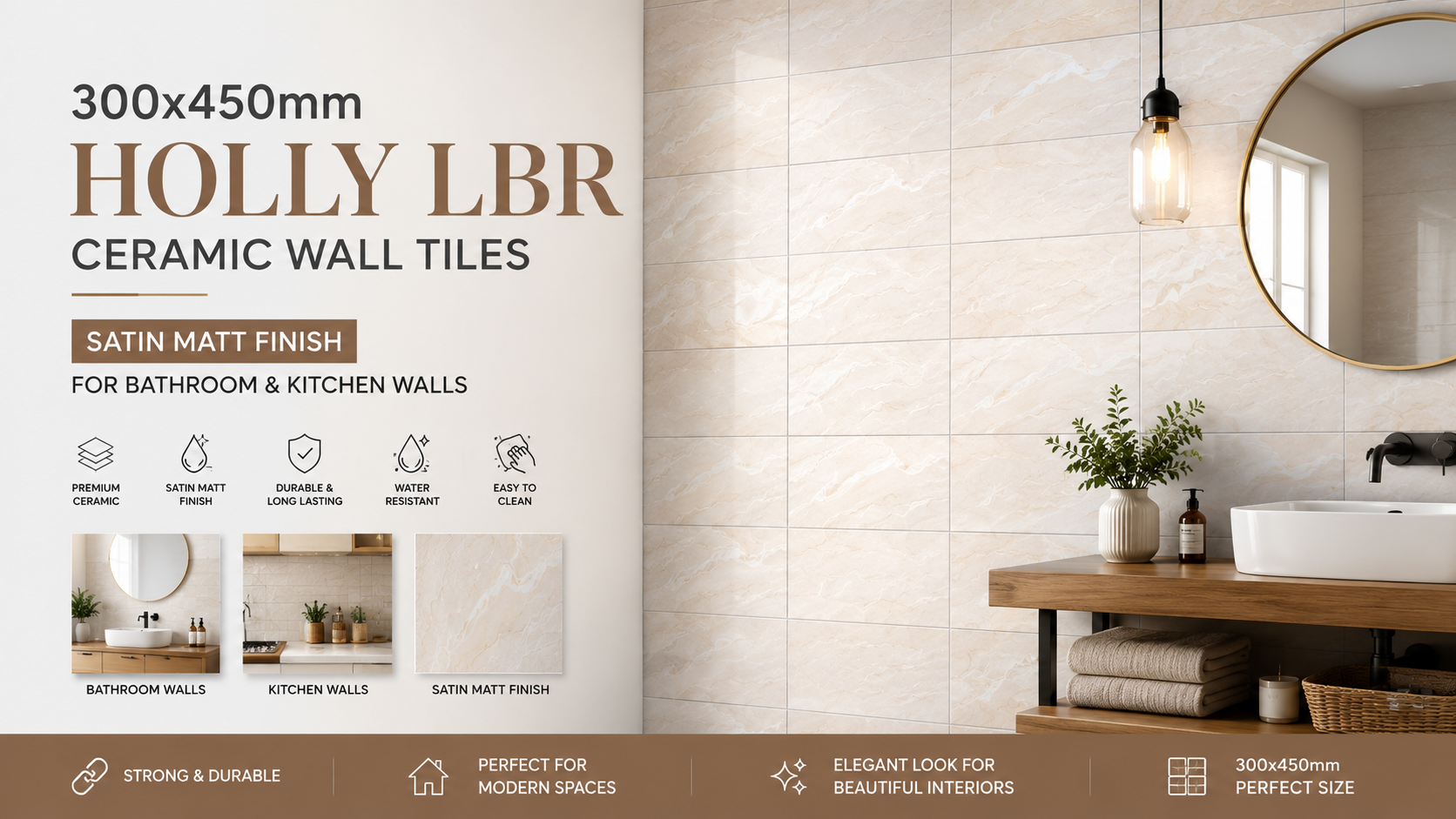
Ceramic and vitreous tiles are standard for wet areas in Indian homes. Costs range from ₹100-500 per square meter depending on quality and design. For commercial spaces, porcelain tiles and natural stone are preferred for durability.
Thermal and Acoustic Materials
With increasing focus on energy efficiency, thermal insulation materials are gaining importance in Indian construction, particularly in cities like Delhi and Bangalore with extreme climates.
Mineral Wool: Excellent thermal and acoustic insulation, cost ₹200-400 per square meter.
Expanded Polystyrene (EPS): Lightweight, affordable insulation, ₹80-150 per square meter.
Rock Wool: Fire-resistant, ideal for commercial buildings, ₹250-450 per square meter.
Sourcing Quality Materials: Best Practices
Selecting reliable suppliers is as important as choosing the right materials. Consider these factors:
Certifications: Ensure suppliers provide ISI-marked materials with proper documentation.
Quality Testing: Request third-party test reports for critical materials like cement and steel.
Local Availability: Source materials locally to reduce transportation costs and support regional suppliers.
Bulk Discounts: Negotiate prices for large quantities, but never compromise on quality.
Delivery Timeline: Ensure suppliers can meet your project schedule to avoid construction delays.
Platforms like AECORD connect you with verified material suppliers across India, offering transparency in pricing, quality assurance, and timely delivery. Whether you're sourcing materials for a small renovation in Chennai or a large commercial project in Bangalore, AECORD's network of suppliers ensures you get quality materials at competitive prices.
Environmental Considerations in Material Selection
Modern construction increasingly emphasizes sustainable material choices. Consider these eco-friendly alternatives:
Recycled Materials: Recycled steel and aggregates reduce environmental impact.
Local Materials: Reduces transportation emissions and supports local economies.
Low Carbon Cement: Portland Pozzolana Cement (PPC) has lower embodied carbon than OPC.
Manufactured Sand: Reduces pressure on natural river sand resources.
Cost Estimation and Budgeting
Understanding material costs helps in accurate project budgeting. For a typical 1000 square feet residential construction in major Indian cities:
Cement: ₹3,000-4,000
Aggregates: ₹8,000-12,000
Steel: ₹15,000-20,000
Bricks/Blocks: ₹8,000-15,000
Finishing Materials: ₹25,000-40,000
These are approximate figures and vary based on location, material quality, and market conditions. Material costs typically account for 30-40% of total construction costs.
Compliance with Indian Building Codes
All materials must comply with relevant Indian Standards and local building codes. Key standards include:
IS 456: Code of practice for plain and reinforced concrete
IS 1077: Common burnt clay building bricks
IS 1786: High strength deformed steel bars and wires for concrete reinforcement
IS 269: Specification for 33 grade ordinary Portland cement
National Building Code (NBC): General guidelines for construction across India
Always verify that your chosen materials meet these standards to ensure structural safety and longevity.
Conclusion: Making Informed Material Choices
Selecting the right building materials is fundamental to creating structures that are safe, durable, and cost-effective. In India's diverse construction landscape, where climate, soil conditions, and local practices vary significantly, understanding the properties and applications of basic building materials is essential for all stakeholders.
Whether you're building in the humid climate of Mumbai, the dry regions of Rajasthan, or the coastal areas of Tamil Nadu, choosing appropriate materials ensures your structure withstands local environmental challenges. Connect with experienced material suppliers and construction professionals on AECORD to access quality materials, expert advice, and reliable service for your projects across India. Start exploring verified suppliers today and build structures that last.
Frequently Asked Questions
What are the main types of cement used in construction in India?
The primary cement types used in India are OPC 43 Grade (general construction), OPC 53 Grade (structural work with faster setting), Portland Pozzolana Cement or PPC (better for humid coastal climates), and Sulphate Resistant Cement or SRC (for areas with saline groundwater). Each type meets Indian Standard Bureau specifications and serves different construction needs based on project requirements and environmental conditions.
Why is manufactured sand becoming more popular than river sand in India?
Manufactured sand (M-sand) is increasingly replacing river sand due to environmental concerns and depletion of natural river sand resources. M-sand is produced from crushed rock, meets IS specifications, is more sustainable, and is often more cost-effective (₹25-40 per cubic foot compared to ₹30-50 for river sand).
What percentage of concrete is made up of aggregates?
Aggregates constitute approximately 75-80% of concrete volume and play a crucial role in determining concrete strength and durability. They are classified into fine aggregates (sand) and coarse aggregates (gravel and crushed stone).
How do I choose between OPC 43 and OPC 53 cement for my construction project?
OPC 43 Grade is suitable for general construction and provides strength after 28 days at a lower cost (₹350-450 per bag), while OPC 53 Grade offers higher strength and faster setting, making it ideal for structural work (₹400-500 per bag). Choose based on your project's structural requirements and timeline.
What are the standard sizes of coarse aggregates used in Indian construction?
The standard sizes of coarse aggregates in India are 20mm and 40mm, though 12mm and 10mm sizes are also used for specific applications depending on the concrete mix design and structural requirements of the project.