

Construction Material List for House Building in India: A Complete Guide
Building a house in India requires careful planning and a detailed understanding of the materials needed at each stage of construction. Whether you're constructing a modest 2-bedroom home in tier-2 cities or a luxury villa in metropolitan areas, having a comprehensive material list ensures you don't miss critical components and can budget effectively. This guide covers all essential construction materials, their specifications, and approximate costs for Indian homebuilders.
Building material brand or wholesaler? Buyers from this article — homeowners, builders, contractors — land on AECORD ready to source. Claim your AECORD page free, list your catalogue, get matched to live house projects.
Updated 2026-05-28 with 2026 market rates and a phase-wise quantity table for 1000 sq.ft homes.
If you're weighing related decisions, our guide on TMT Steel Bars India: Best Brands Comparison breaks down the costs and trade-offs in detail.
Build cost · Bengaluru, May 2026
Understanding the Phases of House Construction
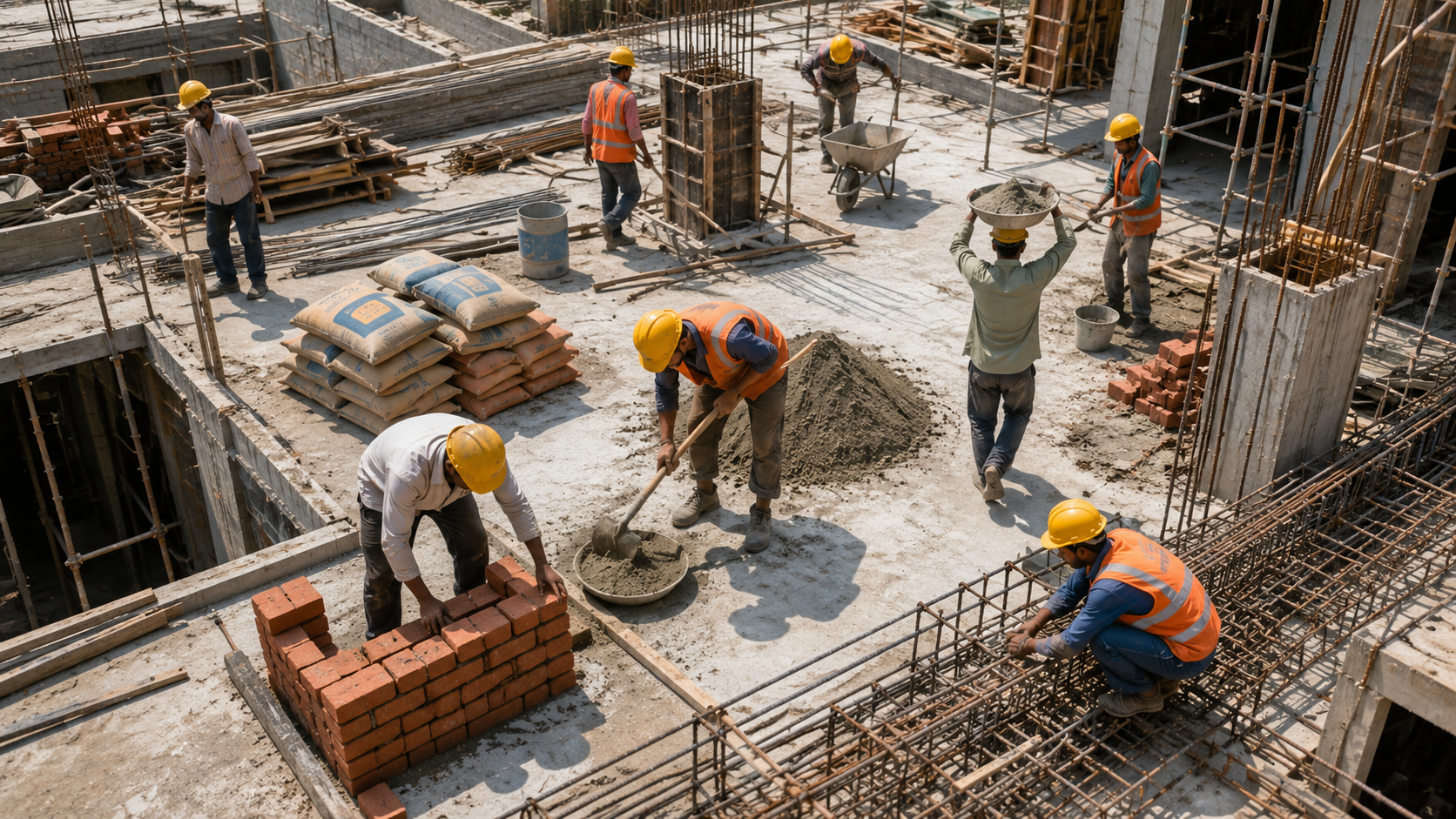
House construction in India typically progresses through five main phases: foundation and excavation, structural framework, masonry and walls, finishing, and final installation. Each phase requires specific materials, and understanding this sequence helps in procurement planning and cost management.
For a deeper look, see our guide on Best Exterior Paint Brands India 2026.
If you are planning this stage, our guide on AAC Blocks vs Red Bricks India covers it in more depth.
Why a Proper Material List Matters
A comprehensive construction material list serves multiple purposes:
Prevents cost overruns and budget surprises
Ensures materials are procured in the right quantities
Helps identify quality standards and specifications
Facilitates coordination between contractors and suppliers
Enables comparison shopping across different vendors
Phase-Wise Material Quantity and Cost Table (per 1000 sq.ft house)
This is what a typical 1000 sq.ft single-floor house consumes. Use it to forecast demand if you wholesale these categories.
| Phase | Material | Quantity per 1000 sq.ft | Approx ₹ (2026) |
|---|---|---|---|
| Foundation | Cement (foundation + plinth) | 40–50 bags (50 kg) | ₹14,000 – ₹22,500 |
| Sand (river / M-sand) | 1.5 – 2 cu.m | ₹2,500 – ₹5,500 | |
| Coarse aggregate | 2 – 3 cu.m | ₹3,500 – ₹10,500 | |
| Steel reinforcement (Fe500 / Fe500D) | 8 – 10 tons | ₹3,60,000 – ₹6,50,000 | |
| Walls | Clay bricks (first-class) | 8,000 – 10,000 nos | ₹24,000 – ₹60,000 |
| AAC blocks (600×200×200) | 1,200 – 1,500 nos | ₹72,000 – ₹1,80,000 | |
| Roof (RCC slab) | Cement | 20 – 25 bags | ₹7,000 – ₹11,250 |
| Steel | 1.5 – 2 tons | ₹67,500 – ₹1,30,000 | |
| Waterproofing | 1,000 sq.ft coverage | ₹30,000 – ₹1,00,000 | |
| Plumbing | PVC water pipes (20–50 mm) | 150 – 200 m | ₹4,500 – ₹16,000 |
| Sanitary ware (commodes, basins, sinks) | 3–4 toilets, 3–4 basins, 1 sink | ₹1,00,000 – ₹2,50,000 | |
| Electrical | Copper wiring (1.5–6 mm²) | 500 – 800 m | ₹30,000 – ₹1,20,000 |
| Switches, sockets, MCB, DB | ~40 points + 1 DB | ₹20,000 – ₹60,000 | |
| Finishing | Cement (plaster) | 90 – 100 bags | ₹31,500 – ₹45,000 |
| Paint (emulsion, 2 coats) | 40 – 50 litres | ₹8,000 – ₹40,000 | |
| Tiles / flooring (1000 sq.ft) | 1,000 sq.ft | ₹30,000 – ₹2,00,000 |
Procurement timeline callout: Foundation materials are needed in months 1–2. Walls and roof in months 3–6. Plumbing and electrical rough-ins in months 5–7. Finishing materials in months 7–12. Sellers who can pre-stock to a project timeline win repeat orders.
Frequently asked
Foundation and Excavation Materials
The foundation is the most critical part of any structure. Poor quality materials here can compromise the entire building's integrity.
Concrete and Cement
For a typical 1000 sq ft single-floor house, you'll need approximately 40-50 bags of cement for the foundation. Current market rates in India range from ₹350 to ₹450 per bag (50 kg), depending on the brand and location. Premium national cement brands command higher prices; regional brands offer budget options.
Cement requirements by component:
Foundation concrete: 15-20 bags per 100 sq ft plinth area
Plinth beam: 8-10 bags per 100 sq ft
Flooring: 5-8 bags per 100 sq ft
Sand and Aggregate
Sand is crucial for concrete and mortar. You'll need approximately 1.5 to 2 cubic meters of sand per 1000 sq ft of built-up area. Current prices range from ₹40 to ₹80 per cubic foot, depending on whether it's river sand or M-sand (manufactured sand). M-sand is increasingly preferred in metros like Bangalore, Mumbai, and Delhi due to environmental restrictions on river sand mining.
For a deeper look, see our guide on How to Get NOC for Construction.
Aggregate (coarse stone chips) costs approximately ₹50 to ₹100 per cubic foot. A typical house requires 2-3 cubic meters of aggregate.
Reinforcement Steel
Steel reinforcement is essential for structural strength. For a 1000 sq ft single-floor house, you'll typically need 8-10 tons of steel rods. Current market rates fluctuate between ₹45,000 to ₹65,000 per ton, depending on grade (Fe500, Fe500D) and market conditions.
Steel distribution:
Foundation and footings: 30-35% of total steel
Columns: 25-30%
Structural Materials: Bricks and Blocks
After the foundation is set, the superstructure requires masonry materials. This is typically the largest material expense after concrete.
Bricks
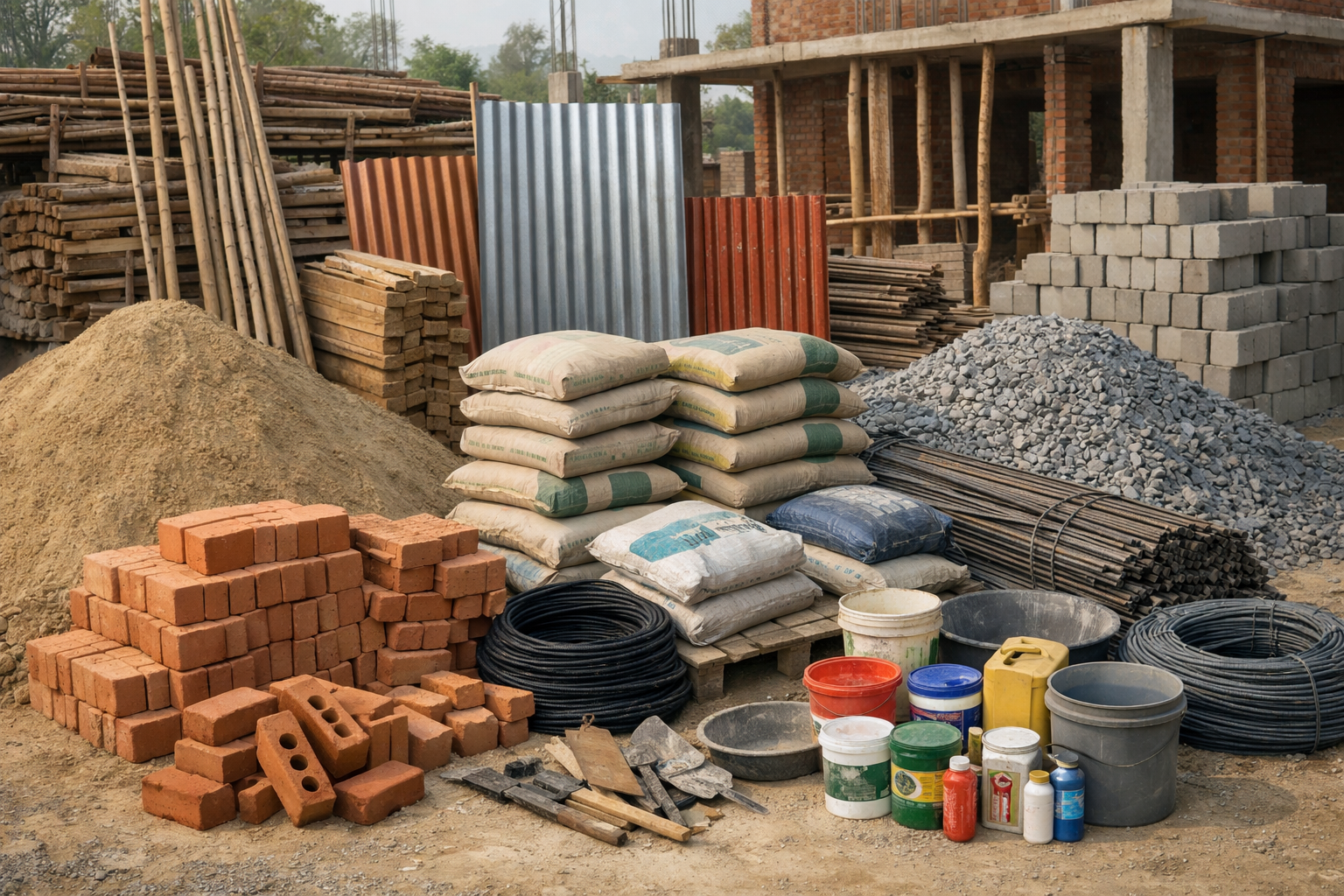
Traditional clay bricks remain the most common masonry unit in India. A 1000 sq ft house typically requires 8,000 to 10,000 bricks, depending on wall thickness and design. Prices vary significantly by region:
Delhi/NCR: ₹3.50 to ₹5 per brick
Mumbai: ₹4 to ₹6 per brick
Bangalore: ₹3 to ₹4.50 per brick
Hyderabad: ₹2.50 to ₹4 per brick
Quality variations include first-class bricks (superior quality, higher cost) and second-class bricks (acceptable for non-load-bearing walls, more economical). First-class bricks cost 20-30% more but offer better durability.
Concrete Blocks and AAC Blocks
AAC (Autoclaved Aerated Concrete) blocks are increasingly popular in urban areas due to faster construction, better insulation, and reduced weight. A 600mm x 200mm x 200mm AAC block costs ₹60 to ₹120, depending on the brand and location. They're more expensive than bricks but reduce overall construction time by 30-40%.
Hollow concrete blocks for non-load-bearing walls cost ₹15 to ₹30 per block and are useful for partition walls and reduces material costs.
Finishing Materials: Plaster, Paint, and Flooring
Finishing materials significantly impact both the aesthetics and durability of your home.
Cement Plaster
Interior and exterior plastering requires approximately 0.5-1 bag of cement per 10 sq meters of wall area. For a 1000 sq ft house with 1800-2000 sq ft of wall area, budget 90-100 bags of cement for plastering. Sand for plaster costs ₹40 to ₹80 per cubic foot.
Wall putty, applied before painting, costs ₹200 to ₹400 per 20 kg bag. A 1000 sq ft house typically needs 4-5 bags.
Paint
Paint selection affects both cost and durability. Premium emulsion paints cost ₹400 to ₹800 per liter, while economy options range from ₹200 to ₹400 per liter. For a 1000 sq ft house, budget 40-50 liters of paint (assuming two coats).
Paint segments in India:
Premium national brands: higher pricing, excellent coverage
Mid-range brands: good durability, mid pricing
Regional brands: budget-friendly, variable quality — check IS certifications
Flooring Materials
Flooring costs vary dramatically based on choice:
Ceramic tiles: ₹20 to ₹150 per sq ft (imported tiles cost significantly more)
Vitrified tiles: ₹30 to ₹200 per sq ft
Marble: ₹100 to ₹500+ per sq ft
Natural stone: ₹80 to ₹400 per sq ft
Laminate flooring: ₹40 to ₹150 per sq ft
Concrete polish: ₹15 to ₹40 per sq ft (most economical)
For a 1000 sq ft house, flooring typically accounts for ₹1.5 to ₹5 lakhs, depending on material selection.
Roofing Materials
The roof protects your entire structure and requires careful material selection based on climate and budget.
Concrete Roof Slab
Most Indian houses use RCC (Reinforced Cement Concrete) roofs. Material costs for an RCC roof of 1000 sq ft approximately:
Cement: 20-25 bags
Sand: 0.8-1 cubic meter
Aggregate: 1-1.2 cubic meters
Steel: 1.5-2 tons
Shuttering material: ₹50 to ₹100 per sq ft
Waterproofing
Essential in Indian climate, waterproofing costs ₹30 to ₹100 per sq ft. Quality waterproofing membranes and coatings prevent water seepage and extend roof life by 10+ years.
Tiles and Roofing Sheets
For sloped roofs or secondary structures, roofing sheets cost ₹80 to ₹250 per sq ft. Ceramic tiles range from ₹150 to ₹500+ per sq ft.
Door, Window, and Hardware Materials
These components significantly impact both aesthetics and functionality.
Doors and Windows
Wooden frames and doors remain popular but increasingly replaced by aluminum and uPVC options:
Teak wood doors: ₹800 to ₹2000 per sq ft
Plywood doors: ₹400 to ₹800 per sq ft
uPVC frames: ₹300 to ₹600 per sq ft
Aluminum frames: ₹400 to ₹700 per sq ft
A typical 1000 sq ft house requires 3-4 main doors and 8-12 windows. Budget ₹2 to ₹4 lakhs for all doors and windows combined.
Hardware and Fittings
Door locks, hinges, handles, and brackets cost ₹500 to ₹2000 per door. Window hardware costs ₹200 to ₹800 per window.
Sanitary and Plumbing Materials
Plumbing and sanitary fixtures are critical for functionality and hygiene.
Water Supply Pipes
PVC pipes (most common) cost ₹30 to ₹80 per meter, depending on diameter (20mm to 50mm). A 1000 sq ft house typically requires 150-200 meters of piping.
Copper pipes, preferred for durability, cost ₹200 to ₹400 per meter but are increasingly avoided due to cost.
Sanitary Ware
Toilet seats/commodes: ₹3,000 to ₹15,000 each
Wash basins: ₹2,000 to ₹8,000 each
Bathtubs: ₹5,000 to ₹30,000 each
Kitchen sinks: ₹3,000 to ₹12,000 each
Popular sanitary categories include premium imported, premium national, and regional brands. Budget ₹1 to ₹2.5 lakhs for complete sanitary ware in a 1000 sq ft house.
Drainage and Sewage
PVC drainage pipes cost ₹40 to ₹120 per meter. Septic tanks, if required, cost ₹15,000 to ₹50,000 depending on capacity.
Electrical Materials
Electrical safety and capacity planning are crucial aspects often overlooked by homebuilders.
Wiring and Cables
Copper wiring costs ₹60 to ₹150 per meter, depending on gauge (1.5mm² to 6mm²). A 1000 sq ft house typically requires 500-800 meters of various gauge wires.
Conduit pipes and ducts cost ₹20 to ₹50 per meter.
Switches, Outlets, and Panels
Modular switches: ₹100 to ₹400 per switch
Power outlets: ₹150 to ₹500 each
MCB (circuit breaker): ₹200 to ₹600 each
Main distribution board: ₹3,000 to ₹10,000
Premium electrical brands command higher prices but offer better reliability and BIS-certified safety.
Interior Finishing and Miscellaneous Materials
Gypsum and False Ceilings
Gypsum boards cost ₹200 to ₹400 per sq ft. False ceilings add aesthetic appeal and are increasingly popular in urban homes. Budget ₹100 to ₹300 per sq ft for false ceiling installation.
Adhesives and Sealants
Tile adhesive: ₹300 to ₹600 per 20 kg bag
Grout: ₹200 to ₹500 per 20 kg bag
Silicone sealant: ₹100 to ₹300 per cartridge
Glass and Glazing
Tinted glass costs ₹150 to ₹400 per sq ft. Tempered glass for safety-critical areas costs ₹200 to ₹500 per sq ft.
Estimated Total Material Cost for a 1000 Sq Ft House in India
Based on current market rates (2026), here's a breakdown for different budget categories:
Budget Construction (₹6,00,000 to ₹8,00,000)
Concrete and foundation: ₹1,20,000
Bricks and masonry: ₹1,00,000
Cement and plaster: ₹80,000
Paint and finishing: ₹60,000
Flooring (concrete polish): ₹50,000
Doors and windows: ₹80,000
Plumbing and sanitary: ₹80,000
Electrical: ₹50,000
Miscellaneous: ₹40,000
Mid-Range Construction (₹10,00,000 to ₹15,00,000)
Concrete and foundation: ₹1,50,000
AAC blocks and masonry: ₹1,50,000
Cement and plaster: ₹1,00,000
Paint and finishing: ₹1,00,000
Flooring (tiles/vitrified): ₹1,50,000
Doors and windows: ₹1,50,000
Plumbing and sanitary: ₹1,50,000
Electrical: ₹80,000
Miscellaneous: ₹70,000
Premium Construction (₹20,00,000+)
Premium constructions include marble flooring, high-end sanitary ware, designer doors and windows, advanced electrical systems, and premium finishes. Material costs can exceed ₹20 lakhs easily.
Regional Variations in Material Costs
Construction material costs vary significantly across Indian cities due to transportation, local availability, and demand.
Tier-1 cities (Delhi, Mumbai, Bangalore, Hyderabad): 15-25% higher costs due to higher demand and stricter regulations.
Tier-2 cities (Pune, Jaipur, Lucknow, Ahmedabad): Moderate costs, good availability of materials.
Tier-3 and smaller towns: Lower material costs but potentially limited variety and quality options.
Tips for Cost Optimization
Bulk Purchasing
Buying materials in bulk often attracts discounts of 5-15%. Coordinate with suppliers and contractors to consolidate orders.
Seasonal Buying
Steel and cement prices fluctuate seasonally. Purchasing during off-season (May-June) can save 10-20% compared to peak seasons.
Local Sourcing
Sourcing materials locally reduces transportation costs. Regional brick manufacturers and sand suppliers often offer better prices than pan-India brands.
Quality vs. Cost Balance
Prioritize spending on structural materials (cement, steel, bricks) and waterproofing. Economize on finishing materials, which can be upgraded later.
Using AECORD for Material Sourcing
AECORD connects homebuilders directly with verified material wholesalers and brand reps across India. Comparing quotes from multiple suppliers can reduce material costs by 10–20% and ensures quality standards are met without intermediary markups. Wholesalers and brand sales-heads: claim your AECORD page to receive direct enquiries from buyers reading guides like this one.
Quality Standards and Certifications
Ensure materials meet Indian Standards (IS codes):
IS 1489 for Portland cement
IS 2250 for cement mortar
IS 1077 for clay bricks
IS 2572 for concrete blocks
IS 1239 for steel tubes
Reputable suppliers provide test certificates confirming compliance with these standards.
Procurement Timeline
Plan material procurement according to construction phases:
Month 1-2: Foundation materials (cement, sand, aggregate, steel)
Month 3-4: Masonry materials (bricks/blocks)
Month 5-6: Roofing and structural materials
Month 7-8: Finishing materials (plaster, paint)
Month 9-10: Flooring and doors/windows
Month 11-12: Sanitary ware and electrical fittings
Ordering 2-3 weeks in advance prevents delays and allows price negotiations.
Common Mistakes to Avoid
Underestimating quantities: Always order 10-15% extra to account for wastage and breakage
Compromising on cement quality: Poor cement leads to structural issues years later
Ignoring waterproofing: Water seepage is the most common post-construction complaint
Mixing suppliers: Use consistent suppliers for similar materials to maintain quality standards
Not keeping receipts: Maintain documentation for warranty claims and quality disputes
Sustainability and Eco-Friendly Options
Increasingly, homebuilders are choosing sustainable materials:
Fly ash bricks: Cost-effective and environmentally friendly alternative to clay bricks
Recycled aggregate: Reduces environmental impact, slightly cheaper than virgin aggregate
Low-VOC paints: Healthier indoor air quality, 10-20% higher cost
Recycled plastic lumber: Emerging option for non-structural applications
Building material brand or wholesaler?
Every house in this guide consumes 40+ bags of cement, 8–10 tons of steel, 8,000+ bricks, ₹1–2.5 lakh of sanitary ware. Buyers find you on AECORD — no broker, no listing fee.
FAQ
What is the approximate cost of materials for a 1000 sq ft house in India?
Material costs range from ₹6 to ₹8 lakhs for budget construction, ₹10 to ₹15 lakhs for mid-range, and ₹20+ lakhs for premium construction. The exact cost depends on location, material choices, and quality standards. Tier-1 cities typically cost 15-25% more than tier-2 and tier-3 cities.
Which materials should I prioritize spending on?
Prioritize structural materials: cement, steel reinforcement, bricks/blocks, and waterproofing. These directly impact the building's longevity and safety. Finishing materials (paint, tiles, hardware) can be economized initially and upgraded later if needed. Quality foundation materials prevent expensive repairs later.
How much wastage should I account for when ordering materials?
Account for 10-15% wastage across all materials. Bricks and tiles typically see 8-10% wastage, cement and sand 5-8%, and steel 2-3%. Ordering extra quantities prevents construction delays caused by material shortages.
What are the best times to purchase construction materials for cost savings?
May-June (off-season) typically offers the best prices for steel and cement, with discounts of 10-20%. Avoid peak seasons (October-March) when prices are highest. Bulk purchasing and consolidating orders also attract supplier discounts of 5-15%.
Are regional brands of cement and paint reliable, or should I stick to national brands?
Both regional and national brands can be reliable if they have proper IS certifications. National brands offer consistency and warranty but cost 10–30% more. Regional brands are economical but verify their IS certifications and check for recent test reports. For critical structural materials like cement, national brands are recommended; for finishing materials, regional brands often provide good value.