The global architecture and construction industry is undergoing a profound transformation as environmental consciousness reshapes how we design and build our spaces. Eco-friendly buildings are no longer niche projects—they represent the future of sustainable development. From towering green skyscrapers to net-zero energy complexes, innovative eco-buildings demonstrate that environmental responsibility and architectural excellence can coexist beautifully.
In this article, we explore six of the world's most innovative eco-buildings, including a remarkable example from India that showcases how the country is contributing to global sustainable architecture standards.
1. The Bullitt Center – Seattle, USA
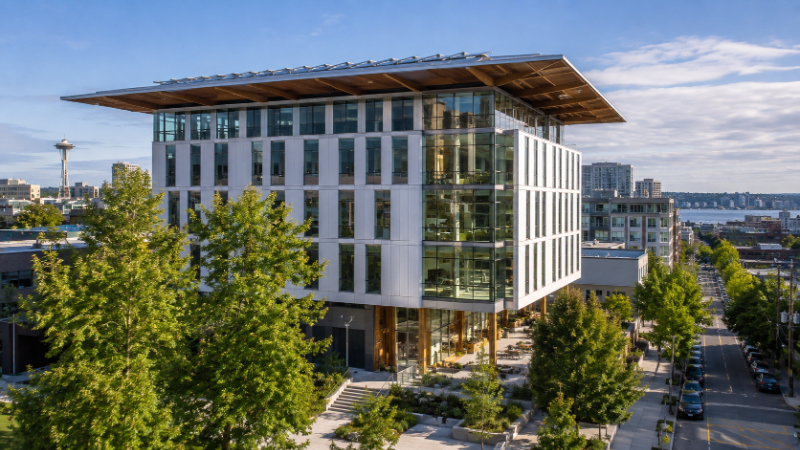
Located in Seattle, Washington, the Bullitt Center stands as one of North America's most ambitious green buildings. Completed in 2013, this six-story office building was designed by Miller Hull Partnership and has become a benchmark for sustainable urban architecture.
Build cost · Bengaluru, May 2026
Key Sustainable Features
Net-Zero Energy: The building produces as much energy as it consumes through 575 solar panels installed on its roof and facade
Water Independence: Collects all its water from rainfall and treats it on-site, reducing municipal water consumption by 100%
Non-Toxic Materials: Uses only materials that have been vetted for health and environmental impact
Passive Design: Strategic window placement and thermal mass reduce heating and cooling requirements by 60%
The Bullitt Center demonstrates that commercial buildings can operate completely independently from municipal utilities while maintaining full functionality and comfort. Its 50-year lifespan projection and material durability showcase long-term sustainability thinking.
2. Masdar Institute – Abu Dhabi, UAE
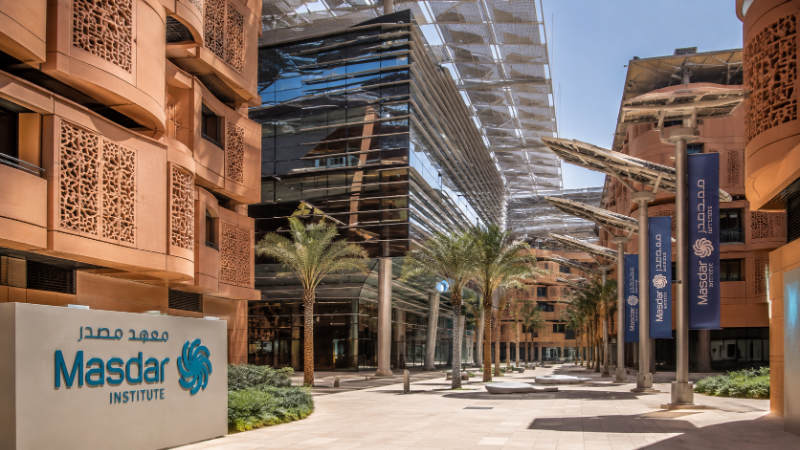
Masdar Institute, now part of Khalifa University, represents one of the world's most comprehensive attempts at creating a sustainable campus. Designed by Norman Foster, this Abu Dhabi facility opened in 2009 and has set new standards for educational infrastructure sustainability.
Innovative Sustainability Measures
Zero Waste Target: The campus aims for zero waste to landfill through comprehensive recycling and composting programs
Renewable Energy: Integrated solar panels and wind turbines provide majority of energy requirements
Climate-Responsive Design: Buildings are oriented to minimize solar heat gain in the desert climate
Water Conservation: Advanced desalination and greywater recycling systems reduce freshwater consumption
Biodiversity Integration: Despite being in a desert, the campus incorporates green spaces and native vegetation
The Masdar Institute proves that sustainable development is possible even in extreme climates. Its comprehensive approach to environmental management makes it a model for educational institutions worldwide.
Frequently asked
3. One Central Park – Sydney, Australia
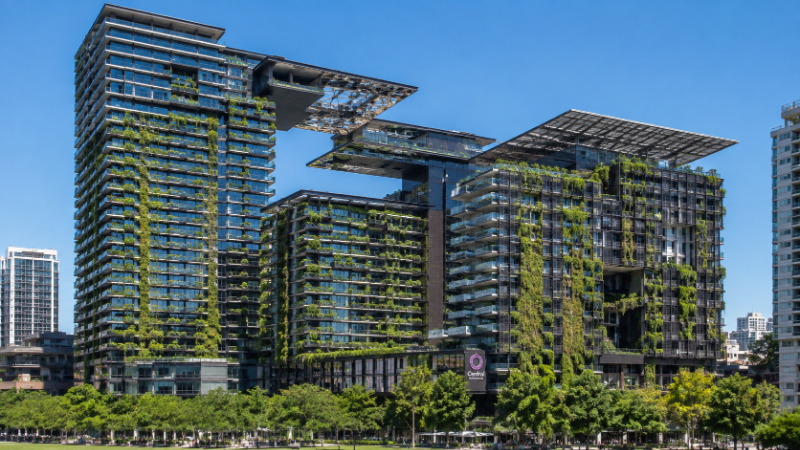
One Central Park in Sydney represents a stunning fusion of residential luxury and environmental innovation. Completed in 2014 and designed by Jean Nouvel and Ateliers Jean Nouvel, this 117-meter tall residential tower has become an icon of green urban living.
Distinctive Eco-Features
Vertical Gardens: Over 35,000 plants cascade down the building's facade, creating a living skin that regulates temperature
Heliostat Technology: A rotating mirror system reflects sunlight into shadowed areas, reducing artificial lighting needs
Cogeneration Plant: On-site energy generation provides heating, cooling, and electricity
Water Recycling: Greywater systems recycle 30% of water consumption
Mixed-Use Development: Combines residential, commercial, and retail spaces to reduce transportation needs
One Central Park demonstrates that eco-innovation can enhance aesthetic appeal. The vertical gardens don't just serve environmental purposes—they've become a defining visual characteristic that attracts residents and visitors alike.
4. The Edge – Amsterdam, Netherlands
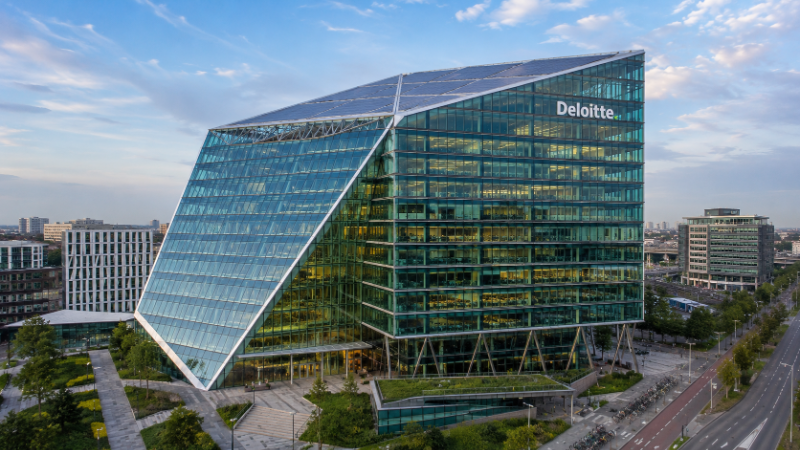
The Edge, completed in 2015 and designed by PLP Architecture, is often cited as the world's most sustainable office building. Located in Amsterdam's business district, this 40,000-square-meter facility has achieved the highest BREEAM rating ever awarded.
Revolutionary Green Technologies
Smart Building Systems: IoT sensors throughout the building optimize energy, lighting, and temperature in real-time
Solar Power: 4,000 solar panels generate 100% of the building's energy requirements
Thermal Storage: Underground thermal storage systems provide heating and cooling without traditional HVAC systems
Rainwater Harvesting: Collects and purifies rainwater for all non-potable uses
Flexible Workspace: Modular design allows for adaptive reuse and future modifications
Biodiversity: Green roofs and living walls support urban pollinator populations
The Edge's most innovative aspect is its integration of artificial intelligence and IoT technology to create a truly responsive building. The system learns occupant patterns and automatically adjusts environmental conditions, reducing energy waste significantly.
5. Chandigarh Eco-City – Chandigarh, India
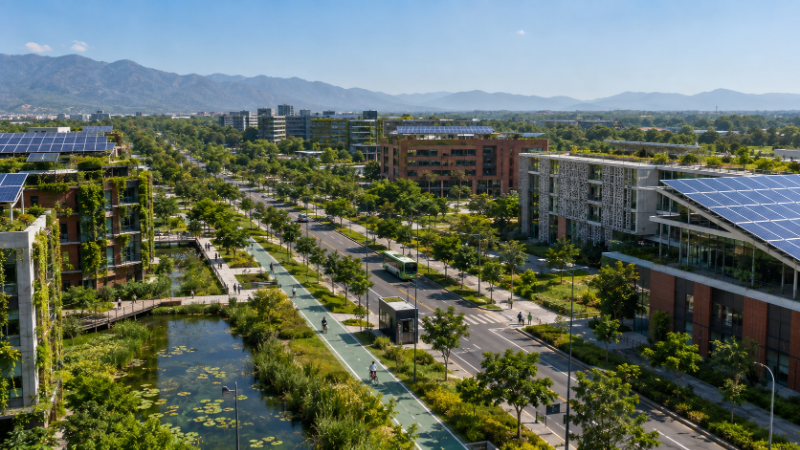
India's contribution to global sustainable architecture comes in the form of Chandigarh Eco-City, a pioneering mixed-use development in Punjab. This project represents India's commitment to creating environmentally responsible urban spaces while addressing the country's rapid urbanization challenges.
Indian Sustainable Innovation
Climate-Responsive Design: Buildings are designed considering India's tropical climate with deep overhangs and natural ventilation systems
Water Management: Rainwater harvesting systems and constructed wetlands manage stormwater, addressing India's water scarcity issues
Local Materials: Uses locally-sourced materials, reducing transportation costs and supporting Indian suppliers
Affordable Green Housing: Demonstrates that sustainable architecture can be economically accessible in the Indian market
Waste Management: Comprehensive waste segregation and composting facilities serve the community
Public Transportation Integration: Designed around transit hubs to reduce vehicle dependency
Chandigarh Eco-City is particularly significant for Indian architects and developers. It proves that sustainable building practices are not just feasible but economically viable in India. The project addresses local challenges like monsoon management, power scarcity, and water availability—issues that are critical for Indian construction professionals.
For developers and architects working on similar projects in India, platforms like AECORD can connect you with specialized consultants who understand both international sustainability standards and Indian regulatory requirements. The project's success has inspired similar initiatives in Bangalore, Pune, and Hyderabad.
Cost Implications for Indian Developers
Chandigarh Eco-City demonstrates that sustainable buildings in India typically cost 10-15% more than conventional construction initially, but operational savings of 30-40% over 20 years justify the investment. This financial model is increasingly attractive to Indian real estate developers.
6. Pixel Building – Melbourne, Australia
The Pixel Building, completed in 2010 and designed by Hayball, stands as Australia's first carbon-neutral office building. Located in Melbourne's inner-west, this five-story structure has become a case study in adaptive reuse and sustainable retrofitting.
Carbon-Neutral Innovation
Renewable Energy: 100% powered by renewable energy sources, with excess generation sold back to the grid
Adaptive Reuse: Built within the shell of a 1960s warehouse, reducing embodied carbon significantly
Passive Design: Natural ventilation, thermal mass, and daylighting minimize mechanical systems
Stormwater Management: On-site retention and treatment of stormwater prevents contamination of local waterways
Green Procurement: All materials selected based on environmental credentials and lifecycle assessment
Occupant Engagement: Real-time energy monitoring displays encourage sustainable behavior
The Pixel Building's approach to adaptive reuse is particularly relevant for Indian cities where retrofitting older commercial buildings is increasingly common. This strategy reduces construction waste and preserves architectural heritage while meeting modern sustainability standards.
Common Themes in Innovative Eco-Buildings
Analyzing these six projects reveals several consistent principles that define the most successful sustainable buildings globally:
1. Integration of Renewable Energy
All six buildings incorporate on-site renewable energy generation, typically through solar panels. This reduces dependence on grid electricity and provides energy independence. In India, where solar energy costs have dropped significantly—now among the lowest globally—this approach is increasingly economically attractive for new construction and retrofitting projects.
2. Water Independence and Recycling
Each project implements comprehensive water management systems including rainwater harvesting, greywater recycling, and in some cases, wastewater treatment. Given India's water scarcity challenges, particularly in cities like Delhi, Bangalore, and Mumbai, these technologies are becoming essential rather than optional.
3. Climate-Responsive Architecture
Rather than relying entirely on mechanical systems, these buildings use passive design strategies—orientation, natural ventilation, thermal mass, and shading—to reduce energy consumption. This approach is particularly relevant for Indian architecture, where traditional building methods already incorporated many climate-responsive principles.
4. Smart Building Technology
Modern eco-buildings increasingly employ IoT sensors, AI systems, and real-time monitoring to optimize resource consumption. This technological integration ensures that sustainability features perform at maximum efficiency.
5. Biodiversity and Green Spaces
Urban gardens, green roofs, and living walls serve both aesthetic and ecological functions. They improve air quality, reduce urban heat island effects, and support local ecosystems—benefits that are particularly valuable in densely populated Indian cities.
6. Circular Economy Principles
These buildings consider their entire lifecycle—from material sourcing through end-of-life. They prioritize durable materials, adaptable designs, and waste reduction strategies that align with circular economy principles.
Implications for Indian Architecture and Construction
The success of Chandigarh Eco-City alongside these international examples provides valuable lessons for India's construction industry. As India urbanizes rapidly, with cities expected to house 40% of the nation's population by 2030, sustainable building practices are critical.
Regulatory Framework
India's LEED and GRIHA (Green Rating for Integrated Habitat Assessment) certifications have made sustainable building a measurable standard. Major Indian cities including Delhi, Bangalore, Mumbai, and Hyderabad now require green building compliance for new commercial projects above certain sizes.
Economic Opportunity
The sustainable building sector in India represents a significant economic opportunity. Green building materials suppliers, renewable energy installers, and sustainability consultants are in high demand. Professionals seeking to specialize in this field can find clients and collaborators through platforms like AECORD, which connects architects, engineers, and construction professionals with relevant expertise.
Skills Development
Indian architecture and engineering professionals need specialized knowledge in renewable energy integration, water management systems, green materials, and building performance simulation. Many international firms are establishing Indian offices to support the growing demand for sustainable design expertise.
Challenges and Future Directions
While these six buildings represent remarkable achievements, scaling sustainable architecture globally and in India presents ongoing challenges:
Cost Barriers: Initial capital requirements remain higher than conventional construction, though operational savings increasingly justify the investment
Regulatory Inconsistency: Building codes and sustainability standards vary significantly across Indian states and municipalities
Supply Chain Development: India needs more local suppliers of sustainable materials and green technologies to reduce costs
Professional Expertise: Shortage of architects and engineers trained in sustainable design principles
Performance Monitoring: Many buildings lack long-term monitoring systems to verify sustainability claims
Conclusion
The six eco-buildings featured in this article—from the Bullitt Center's energy independence to Chandigarh Eco-City's climate-responsive design—demonstrate that innovative sustainable architecture is achievable across diverse geographies, climates, and building types. These projects prove that environmental responsibility, architectural excellence, and economic viability are not mutually exclusive.
For Indian architects, engineers, and developers, the success of projects like Chandigarh Eco-City provides both inspiration and practical guidance. As India continues its rapid urbanization, sustainable building practices will become increasingly essential—not just for environmental reasons, but for economic and social resilience.
If you're involved in architecture, engineering, or construction in India and want to develop expertise in sustainable design, or if you're seeking professionals with green building experience, AECORD connects you with qualified specialists across the AECO sector. Whether you're planning a new eco-building project or retrofitting existing structures, finding the right team is crucial for success.
Ready to build sustainably? Explore AECORD's network of architects, engineers, and construction professionals who specialize in eco-friendly design and green building practices. Connect with experts who understand both international sustainability standards and India's unique environmental challenges.