

The luxury real estate market in India has long been synonymous with grandeur, premium finishes, and cutting-edge amenities. However, a significant paradigm shift is underway. Today's discerning homeowners—particularly in metropolitan areas like Mumbai, Bangalore, Delhi, and Pune—are increasingly demanding that their luxury homes reflect not just their affluent lifestyle, but also their environmental consciousness. The question is no longer whether sustainable luxury homes are possible in India, but rather how to design them thoughtfully.
The convergence of sustainability and luxury is not a contradiction; it's an evolution. Premium design and eco-friendly practices can coexist beautifully, creating homes that are as responsible as they are refined. This comprehensive guide explores how sustainable luxury homes are reshaping India's high-end residential landscape.
Understanding Sustainable Luxury in the Indian Context
Sustainable luxury is fundamentally about creating high-quality living spaces that minimize environmental impact without compromising on comfort, aesthetics, or performance. In India's context, this is particularly relevant given our diverse climate zones, rapid urbanization, and increasing water scarcity.
The luxury segment in India has traditionally focused on ostentatious displays of wealth—sprawling villas, marble facades, and energy-intensive climate control systems. However, a growing segment of affluent buyers is recognizing that true luxury lies in intelligent design, superior quality, and responsible living. Sustainable luxury homes command premium prices, not just because of their location or size, but because of the sophisticated systems and materials they incorporate.
According to industry reports, the sustainable real estate segment in India is growing at 15-20% annually, with luxury sustainable homes leading this growth in metros. Developers and architects are increasingly partnering with sustainability experts to create homes that appeal to environmentally conscious high-net-worth individuals (HNWIs).
Build cost · Bengaluru, May 2026
Energy Efficiency: The Foundation of Sustainable Luxury
Solar Power Integration
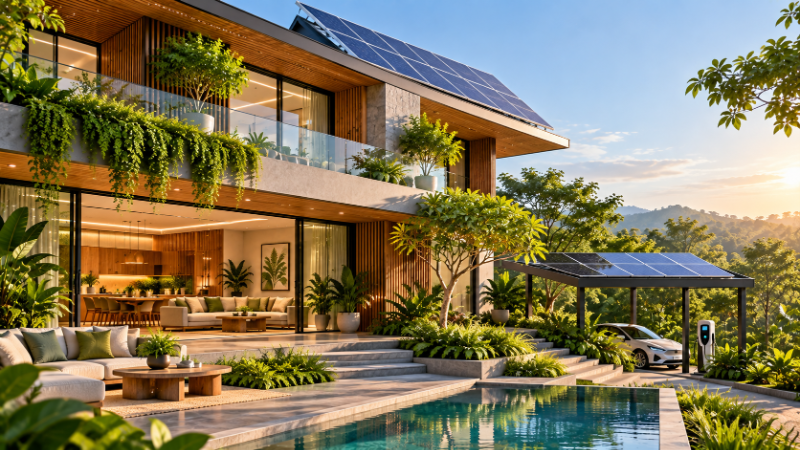
Solar energy is perhaps the most visible sustainable feature in luxury homes across India. However, modern sustainable luxury goes beyond basic rooftop solar panels. Premium homes now feature sophisticated solar solutions including:
Integrated solar facades: Solar panels seamlessly integrated into architectural elements, maintaining aesthetic appeal while generating power
Battery storage systems: Tesla Powerwall or Indian alternatives like Luminous or Sukam systems that store excess energy for 24/7 availability
Solar water heating: Evacuated tube collectors that provide hot water efficiently, reducing electricity consumption by 40-50%
A luxury villa in Bangalore with a 10 kW solar system can generate approximately 40-50 units of electricity daily, translating to annual savings of ₹60,000-80,000 while reducing carbon footprint by 50-60 tons annually.
Smart Climate Control
Traditional air conditioning systems are energy hogs, accounting for 40-50% of residential electricity consumption in Indian metros. Sustainable luxury homes employ intelligent alternatives:
Passive cooling design: Strategic window placement, cross-ventilation, and thermal mass that naturally regulate temperature
Smart HVAC systems: AI-powered systems that learn occupancy patterns and adjust cooling accordingly, reducing energy use by 30-40%
Radiant cooling/heating: Thermally active surfaces that provide comfort with minimal energy expenditure
Heat recovery ventilation: Systems that recycle conditioned air, crucial for maintaining indoor air quality in sealed, energy-efficient homes
Frequently asked
Lighting and Electrical Efficiency
Premium sustainable homes eliminate traditional incandescent and CFL lighting entirely, opting instead for:
LED lighting systems with color temperature control for ambiance
Occupancy sensors and daylight harvesting systems
Smart lighting that integrates with home automation for optimal energy management
These systems can reduce lighting energy consumption by 70-80% compared to conventional homes.
Water Management: A Critical Luxury Amenity
Water scarcity is increasingly challenging Indian cities. Sustainable luxury homes treat water management as a premium feature, not merely an environmental obligation.
Rainwater Harvesting Systems
Luxury homes in cities like Bangalore, Chennai, and Pune are implementing sophisticated rainwater harvesting:
Automated collection systems that direct roof runoff to underground storage tanks
Multi-stage filtration systems that purify rainwater for non-potable uses (gardens, toilets, washing)
Integration with landscape design, where water features double as storage and aesthetic elements
A well-designed system in a 5,000 sq ft villa can harvest 50,000-100,000 liters annually, significantly reducing municipal water dependency.
Greywater Recycling
Sophisticated homes separate greywater (from sinks, showers, washing machines) from blackwater (toilets), treating and reusing greywater for:
Landscape irrigation
Toilet flushing
Car washing and cleaning
This can reduce freshwater consumption by 30-40% in a typical household.
Water-Efficient Fixtures
Premium sustainable homes feature:
Low-flow showerheads and faucets (reducing consumption by 50% without sacrificing water pressure)
Dual-flush toilets with sensor technology
Waterless urinals in guest facilities
Smart irrigation systems that adjust watering based on soil moisture and weather
Premium Materials: Sustainability Meets Luxury
The aesthetic appeal of luxury homes depends significantly on materials. Sustainable luxury redefines premium through environmentally responsible choices.
Eco-Friendly Flooring
Rather than energy-intensive marble or granite, sustainable luxury homes feature:
Reclaimed wood: Salvaged from old buildings or forests, offering unique character and heritage appeal
Bamboo: A rapidly renewable resource that's harder than many hardwoods, increasingly popular in Indian luxury homes
Cork: Harvested from tree bark without felling, providing natural insulation and acoustic benefits
Polished concrete: With decorative finishes, offering industrial-chic aesthetics with minimal environmental impact
Recycled glass or porcelain: Manufactured from waste materials but offering luxury aesthetics
Sustainable Wall Finishes
Luxury sustainable homes move beyond conventional paint:
Natural clay plasters: Breathable, non-toxic, with excellent thermal properties
Lime-based finishes: Traditional in Indian architecture, offering durability and aesthetic warmth
Low-VOC paints: Premium brands like Godrej and Asian Paints now offer luxury finishes with minimal volatile organic compounds
Reclaimed brick and stone: Salvaged materials that add authenticity and character
Sustainable Furnishings
Luxury interiors increasingly feature:
Furniture from certified sustainable forestry
Upholstery from organic or recycled fabrics
Artisan-crafted pieces supporting local communities
Modular designs that adapt to changing needs, reducing replacement waste
Smart Home Technology: Intelligent Sustainability
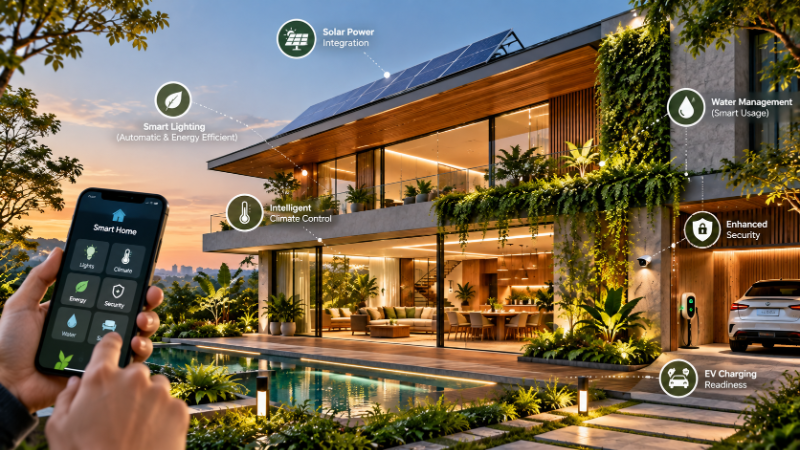
Technology is integral to modern luxury, and smart home systems are revolutionizing how sustainable homes operate.
Integrated Home Automation
Premium systems (often starting at ₹10-20 lakhs for a complete installation) manage:
Energy consumption monitoring in real-time, providing insights into usage patterns
Automated control of lighting, HVAC, and appliances based on occupancy and preferences
Integration of renewable energy sources, optimizing use of solar power
Water usage tracking and alerts for leaks
IoT Devices and Sensors
Luxury sustainable homes employ sophisticated sensors for:
Indoor air quality monitoring (CO2, particulates, humidity)
Temperature and humidity optimization
Automated window operation for natural ventilation
Soil moisture sensors for intelligent irrigation
Data Analytics and AI
Advanced systems learn household patterns, predicting energy and water needs, and adjusting systems proactively. Some homes now feature AI that can predict maintenance needs before failures occur.
Architectural Design: Form Follows Function and Ecology
Sustainable luxury architecture in India is increasingly influenced by vernacular design principles adapted for contemporary comfort.
Biophilic Design
Luxury sustainable homes integrate nature extensively:
Generous indoor plants and green walls that improve air quality and provide psychological benefits
Natural light maximization through strategic window placement and skylights
Indoor water features that enhance humidity and create calming environments
Direct views of landscaping and gardens from primary living spaces
Thermal Design and Orientation
Premium sustainable homes are designed with climate in mind:
Optimal building orientation to minimize heat gain in hot climates (particularly important in Delhi, Mumbai, and Chennai)
Strategic placement of thermal mass to moderate temperature fluctuations
Overhangs and shading devices that reduce solar heat while allowing winter sun penetration
Ventilation strategies that work with local climate patterns
Space Efficiency
Luxury doesn't require excess. Sustainable homes often feature:
Flexible spaces that adapt to multiple uses
Efficient layouts that minimize circulation areas
Multi-functional furniture and built-ins
Smaller overall footprints that reduce material and energy needs
Certifications and Standards for Sustainable Luxury Homes
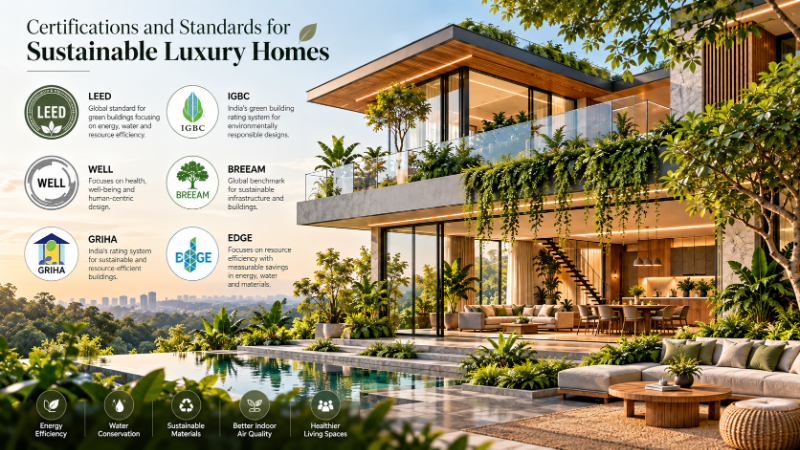
Several frameworks validate sustainable luxury homes in India:
LEED Certification
The Leadership in Energy and Environmental Design (LEED) rating system is widely recognized. Platinum-rated homes (the highest level) demonstrate exceptional sustainability but require significant investment—typically adding 5-10% to construction costs.
IGBC Green Homes
The Indian Green Building Council's rating system is specifically designed for Indian climate and building practices. It's increasingly popular for luxury residential projects.
GRIHA Rating
The Green Rating for Integrated Habitat Assessment is India's own green building rating system, developed by the Ministry of New and Renewable Energy. It's particularly suited to Indian conditions and has gained traction among premium developers.
WELL Building Standard
Focusing on occupant health and wellness, WELL certification is increasingly sought by luxury homeowners prioritizing indoor environmental quality.
Cost Considerations: Investing in Sustainable Luxury
A critical question for potential buyers: how much does sustainable luxury cost?
A conventional luxury villa in Bangalore or Mumbai might cost ₹2-4 crores. A comparably sized sustainable luxury home typically costs 10-20% more, or ₹2.2-4.8 crores. However, this premium is offset by:
Energy savings: ₹30,000-60,000 annually through reduced electricity consumption
Water savings: ₹15,000-30,000 annually through efficient fixtures and recycling
Maintenance costs: Often lower due to high-quality materials and systems
Resale value: Sustainable homes appreciate faster and attract premium buyers
Health benefits: Superior indoor air quality and lighting reduce healthcare costs
Over a 20-year ownership period, the initial premium is typically recovered, with additional long-term financial and health benefits.
Real-World Examples in India
Several developments demonstrate successful sustainable luxury in India:
Bangalore: Projects incorporating passive cooling, rainwater harvesting, and solar power are increasingly common in premium developments
Mumbai: Luxury homes in Worli and Bandra are adopting green terraces, solar systems, and smart water management
Delhi: High-end residential projects in Gurugram are incorporating extensive landscaping and renewable energy systems
Pune: Several LEED-certified luxury developments showcase integration of heritage architecture with modern sustainability
Challenges and Considerations
While sustainable luxury homes offer tremendous benefits, challenges remain:
Initial cost premium: Higher upfront investment requires buyer education and long-term perspective
Maintenance expertise: Complex systems require skilled professionals for maintenance and operation
Supply chain: Sourcing premium sustainable materials can be challenging in India
Regulatory framework: Building codes and regulations are evolving, sometimes creating uncertainty
The Future of Sustainable Luxury in India
The trajectory is clear: sustainable luxury is not a niche trend but the future direction of premium residential development in India. As environmental awareness grows, regulatory frameworks strengthen, and technology becomes more accessible and affordable, sustainable luxury will become increasingly mainstream.
The next generation of affluent homeowners views sustainability as a marker of sophistication and responsibility, not sacrifice. They recognize that true luxury encompasses not just personal comfort but also environmental stewardship.
Finding Expert Partners for Your Sustainable Luxury Home
Creating a sustainable luxury home requires expertise across multiple disciplines—architecture, engineering, interior design, and sustainability consulting. The complexity of integrating advanced systems while maintaining aesthetic excellence demands professionals with specialized knowledge.
When planning your sustainable luxury home, consider working with architects, engineers, and designers who specialize in eco-friendly residential design. Look for professionals with certifications in green building standards and proven experience with luxury projects.
AECORD connects you with vetted professionals specializing in sustainable luxury residential design. Whether you need architects experienced in passive design, engineers skilled in renewable energy systems, or interior designers focused on sustainable materials, AECORD's marketplace features specialists across India who understand both luxury aesthetics and environmental responsibility.
The professionals available on AECORD can help you navigate the complexities of sustainable luxury—from initial concept through final execution. They bring expertise in local regulations, climate-specific design strategies, and cost-effective solutions tailored to Indian conditions.
Conclusion
Sustainable luxury homes in India represent a maturation of the premium residential market. They prove that environmental responsibility and aesthetic excellence are not mutually exclusive but rather complementary. These homes offer the best of both worlds: the comfort, beauty, and sophistication that luxury demands, coupled with the efficiency, health benefits, and environmental consciousness that modern homeowners increasingly value.
As India's cities grow and resources become more precious, sustainable luxury homes will define the next generation of premium living. They're not just beautiful and comfortable—they're intelligent, responsible, and ultimately, the truest expression of luxury in our contemporary world.
Ready to explore sustainable luxury for your next home? Connect with experienced architects, engineers, and designers on AECORD who specialize in creating premium eco-friendly residences tailored to your vision and India's diverse climate zones.
Frequently Asked Questions
Can luxury homes in India be both premium and sustainable?
Yes, sustainable luxury is an evolution in India's high-end residential market where premium design and eco-friendly practices coexist beautifully. Today's affluent homeowners increasingly demand homes that reflect both their refined lifestyle and environmental consciousness, with the sustainable real estate segment growing at 15-20% annually in Indian metros.
What are the most effective energy-efficient solutions for luxury homes in India?
Solar power integration with battery storage systems, smart HVAC systems that reduce energy use by 30-40%, and passive cooling design through strategic window placement are leading solutions. A 10 kW solar system in a luxury villa can generate 40-50 units daily and reduce carbon footprint by 50-60 tons annually.
How much can sustainable luxury homes save on electricity costs?
A luxury villa with integrated solar solutions and smart climate control can save ₹60,000-80,000 annually while significantly reducing energy consumption. Smart HVAC systems alone can reduce cooling energy use by 30-40%, as traditional air conditioning typically accounts for 40-50% of residential electricity consumption in Indian metros.
What makes sustainable luxury homes more expensive than conventional luxury properties?
Sustainable luxury homes command premium prices due to sophisticated integrated systems and high-quality materials, not just location or size. These include integrated solar facades, advanced battery storage, smart climate control systems, and premium eco-friendly finishes that provide long-term value and performance benefits.
Which Indian cities are leading the sustainable luxury home market?
Metropolitan areas like Mumbai, Bangalore, Delhi, and Pune are spearheading India's sustainable luxury residential market. These cities have the highest concentration of environmentally conscious high-net-worth individuals (HNWIs) driving demand for premium eco-friendly homes.