

Understanding Biophilic Interior Design
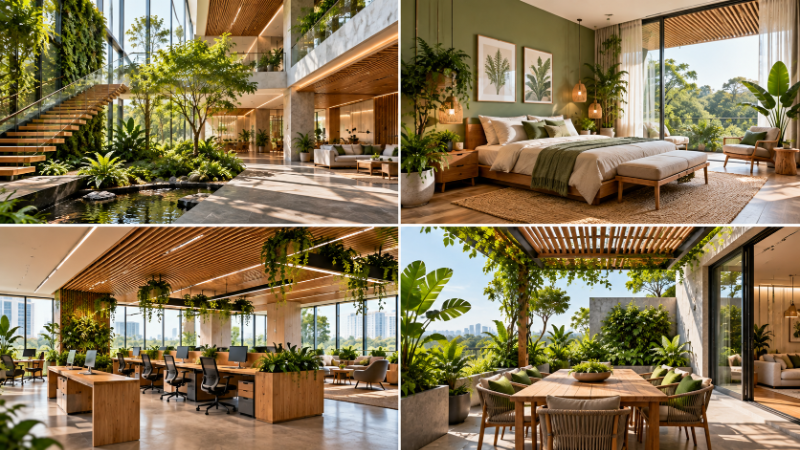
Biophilic design is more than just a trend—it's a scientifically-backed approach to creating spaces that reconnect humans with nature. The term "biophilia," coined by biologist E.O. Wilson, refers to our innate desire to connect with living things and natural environments. In the context of interior design, biophilic principles transform modern buildings into spaces that promote well-being, productivity, and mental health.
In India's rapidly urbanizing landscape—from the bustling streets of Mumbai and Bangalore to the expanding metros of Delhi and Hyderabad—professionals spend an average of 8-10 hours daily in office buildings. The disconnect from nature in these concrete jungles has led to increased stress, reduced productivity, and health concerns. Biophilic interior design addresses this challenge by integrating natural elements into workplaces, homes, and commercial spaces.
The beauty of biophilic design lies in its versatility. Whether you're designing a corporate office in Gurgaon, a retail space in Pune, or a residential apartment in Bangalore, biophilic principles can be adapted to suit any environment and budget. This comprehensive guide explores how to bring nature into modern buildings effectively.
Build cost · Bengaluru, May 2026
The Science Behind Biophilic Design
Research consistently demonstrates that exposure to natural elements significantly impacts human psychology and physiology. Studies show that:
Employees in biophilic spaces experience 15% higher productivity levels
Mental stress reduces by up to 37% when natural elements are present
Presence of plants improves air quality and reduces airborne toxins by 60%
Spaces with natural light improve sleep quality and regulate circadian rhythms
For Indian businesses operating in competitive markets, these benefits translate directly to improved employee performance, reduced absenteeism, and enhanced client satisfaction. A tech startup in Bangalore investing in biophilic office design may see measurable improvements in team morale and retention rates within months.
Key Elements of Biophilic Interior Design
1. Indoor Plants and Living Walls
The most visible component of biophilic design is the integration of plants. However, effective plant integration goes beyond placing a potted fern in the corner.
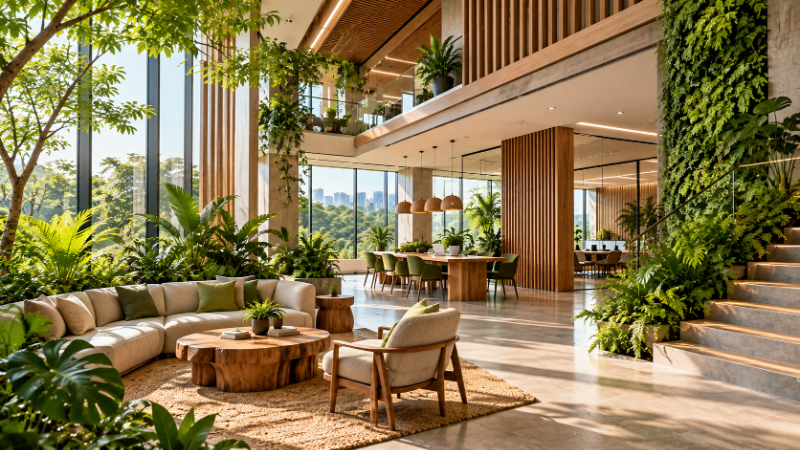
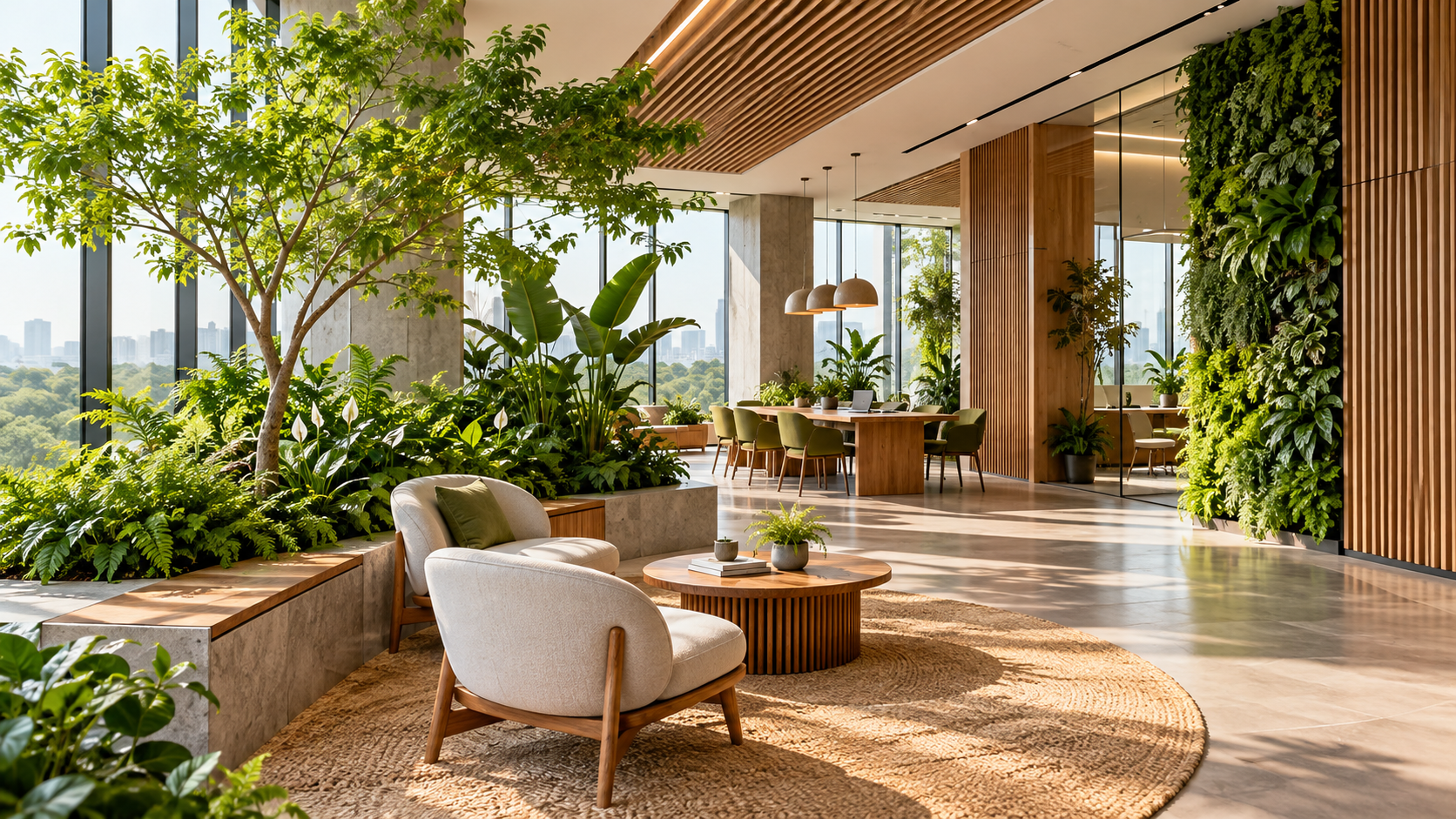
Vertical Gardens and Living Walls: These are increasingly popular in Indian urban spaces. A living wall in a Mumbai office building not only improves aesthetics but also provides natural air filtration. Living walls can be installed in lobbies, conference rooms, or break areas. The cost ranges from ₹2,000 to ₹5,000 per square foot, depending on plant selection and maintenance systems.
Strategic Plant Placement: Place plants near workstations, meeting areas, and entryways. Low-maintenance plants suitable for Indian climates include:
Snake plants (Sansevieria) – excellent air purifiers
Pothos – thrives in various lighting conditions
Rubber plants – statement pieces with large, glossy leaves
Philodendrons – adaptable and visually appealing
ZZ plants – drought-tolerant and stylish
In Delhi's dry climate, choose drought-resistant varieties. In Kolkata's humid environment, ensure proper drainage systems. The key is selecting plants that match your local climate and maintenance capacity.
Frequently asked
2. Natural Light and Windows
Daylight is a cornerstone of biophilic design. Natural light regulates our circadian rhythm, improves mood, and reduces dependency on artificial lighting—lowering energy costs by 20-30%.
Maximizing Natural Light:
Position workstations near windows whenever possible
Use light-colored, translucent window treatments that filter light without blocking it
Install skylights in interior spaces (particularly effective in ground-floor commercial spaces in Hyderabad and Pune)
Paint walls in light, neutral tones to reflect and distribute natural light
Remove unnecessary partitions that block daylight penetration
For buildings in high-pollution areas like Delhi-NCR, consider installing smart glass technology that filters pollutants while maintaining transparency. Though the initial investment is higher (₹8,000-₹12,000 per square meter), the long-term health benefits justify the cost.
3. Natural Materials and Textures
Incorporating natural materials creates a tactile connection with nature. These materials also age beautifully and often have lower environmental impact compared to synthetic alternatives.
Recommended Natural Materials:
Wood: Use in flooring, wall paneling, furniture, and ceiling elements. Locally-sourced wood from Indian suppliers reduces costs and supports sustainability. Teak, sal, and sheesham are durable options.
Stone: Incorporate through flooring, accent walls, or decorative elements. Natural stone like granite, slate, and limestone adds texture and permanence.
Cork: Excellent for flooring in spaces requiring acoustic dampening, such as recording studios or meditation rooms.
Jute and Natural Fibers: Use in rugs, wall coverings, and upholstery. These materials are affordable in India and support local artisans.
Exposed Brick: In renovation projects, exposing original brick walls creates warmth and authenticity.
In Jaipur's heritage buildings, combining traditional stone work with modern biophilic elements creates unique spaces that honor local architecture while meeting contemporary wellness standards.
4. Water Features
The sound and presence of water create a calming effect. Water features range from simple tabletop fountains to elaborate installations.
Indoor Fountains: Cost ₹3,000-₹15,000 depending on size and material. Place in lobbies or relaxation areas.
Water Walls: Create visual and auditory interest. Installation costs range from ₹50,000-₹2,00,000.
Aquariums: Provide both biophilic benefits and therapeutic effects. Studies show that viewing aquariums reduces blood pressure and anxiety.
Reflecting Pools: In larger commercial spaces, reflecting pools create visual depth and connection to nature.
In humid Indian climates, ensure proper drainage and maintenance systems to prevent mold and water damage.
Implementing Biophilic Design Across Different Spaces
Corporate Offices
Modern corporate spaces in India's business hubs are increasingly adopting biophilic design. Companies in Bangalore's tech corridor and Mumbai's financial district report improved employee satisfaction and reduced turnover after implementing these strategies.
Implementation Strategy:
Create a "green lobby" with living walls and natural materials as the first impression
Design break rooms with plants, natural light, and water features for stress relief
Incorporate green corridors connecting different office areas
Install biophilic elements in conference rooms to enhance creativity during meetings
Create dedicated quiet spaces with natural elements for meditation and focus
Budget Consideration: A 10,000 sq ft corporate office in Gurgaon might allocate ₹15-₹25 lakhs for comprehensive biophilic design implementation.
Retail and Hospitality Spaces
Restaurants, hotels, and retail stores leverage biophilic design to create memorable customer experiences. A boutique hotel in Udaipur or a café in Pune with biophilic design elements sees higher customer dwell time and increased spending.
Key Applications:
Restaurant entrances with living walls and natural materials
Hotel lobbies featuring water features and indoor gardens
Retail spaces with natural lighting and wooden fixtures
Spa and wellness centers integrating plants, stone, and water
Residential Spaces
Apartments and homes in Indian cities benefit significantly from biophilic design. In Mumbai's high-rise apartments or Bangalore's residential complexes, bringing nature indoors improves quality of life.
Budget-Friendly Options:
Install window boxes with herbs and flowers (₹2,000-₹5,000)
Add potted plants to living areas (₹500-₹2,000 per plant)
Use natural wood furniture and stone accents
Install skylights or maximize existing windows
Create a small indoor herb garden in the kitchen
Practical Tips for Implementation
Step 1: Assess Your Space
Begin by evaluating your building's characteristics: natural light availability, climate conditions, maintenance capacity, and budget. A space in Kolkata with high humidity requires different plant selections than a Delhi office in a dry climate.
Step 2: Start Small
You don't need to transform your entire space at once. Begin with a single area—perhaps a reception area or break room—and expand gradually. This allows you to understand maintenance requirements and adjust your approach.
Step 3: Choose Appropriate Plants
Select plants based on:
Available natural light in your space
Local climate and humidity levels
Maintenance requirements and available staff
Aesthetic alignment with your design vision
Consider hiring a biophilic design consultant from AECORD who can provide expert guidance tailored to your specific location and requirements.
Step 4: Integrate Multiple Elements
Effective biophilic design combines several elements. A space with only plants but poor natural light won't achieve optimal results. Combine natural light, plants, natural materials, and water features for maximum impact.
Step 5: Establish Maintenance Systems
Plants require consistent care. Establish clear maintenance protocols, assign responsibilities, or hire professional plant maintenance services (available in most Indian metros at ₹3,000-₹8,000 monthly for office spaces).
Overcoming Common Challenges
Limited Natural Light
If your space lacks windows, use grow lights designed to mimic natural sunlight. LED grow lights are energy-efficient and can sustain plant growth in interior spaces. Combine with light-colored walls to maximize light distribution.
Space Constraints
Even small spaces can incorporate biophilic elements. Vertical gardens, wall-mounted plants, and compact water features work well in apartments and small offices. In Mumbai's compact apartments, a living wall in the bedroom provides nature connection without consuming floor space.
Maintenance Concerns
Choose hardy, low-maintenance plants suitable for your climate. Automated watering systems (₹5,000-₹15,000) reduce maintenance burden while ensuring plant health.
Budget Limitations
Biophilic design scales to any budget. Start with affordable potted plants, maximize natural light, and incorporate natural materials gradually. Even ₹50,000-₹1,00,000 can significantly transform a small office or residential space.
Measuring the Impact
Track the effectiveness of your biophilic design implementation through:
Employee Surveys: Measure satisfaction and stress levels before and after implementation
Productivity Metrics: Monitor output, project completion rates, and quality of work
Absenteeism Rates: Track sick days and overall attendance
Customer Feedback: In retail or hospitality, gather customer experience data
Energy Consumption: Monitor reductions in artificial lighting and HVAC costs
Working with Design Professionals
While DIY biophilic design is possible, working with experienced architects and interior designers ensures optimal results. Professionals understand local regulations, climate considerations, and can create cohesive designs that align with your space's function and aesthetic.
On AECORD, you can connect with specialized biophilic design professionals, interior architects, and landscape designers across Indian cities. Whether you're in Delhi, Bangalore, Mumbai, or Pune, AECORD's network includes experts who understand implementing biophilic principles in Indian buildings. These professionals can assess your space, recommend appropriate elements, manage budgets, and oversee implementation.
Future Trends in Biophilic Design
The biophilic design movement continues evolving with emerging technologies:
Smart Plant Systems: IoT-enabled plant care systems monitor moisture, light, and nutrients
Biophilic AI: Artificial intelligence optimizes plant placement and care
Lab-Grown Plants: Sustainable alternatives requiring minimal maintenance
Acoustic Nature: Integration of nature sounds with visual elements
Conclusion
Biophilic interior design represents a fundamental shift in how we approach modern buildings. By incorporating natural elements—plants, light, materials, and water—we create spaces that support human well-being while maintaining aesthetic appeal and functionality.
For Indian professionals and businesses, biophilic design offers measurable benefits: improved productivity, enhanced mental health, reduced energy costs, and stronger connections with nature. Whether you're designing a corporate office in Gurgaon, a retail space in Bangalore, or a residential apartment in Mumbai, biophilic principles can be adapted to your specific needs and budget.
The journey toward biophilic spaces doesn't require complete renovation. Start with strategic plant placement, maximize natural light, incorporate natural materials, and expand gradually. Every step brings you closer to creating healthier, more inspiring environments.
Ready to transform your space with biophilic design? Connect with experienced architects, interior designers, and biophilic design specialists on AECORD. Browse profiles of professionals across India who specialize in bringing nature into modern buildings. Post your project requirements on AECORD and receive tailored proposals from qualified designers who understand your local market and can deliver results within your budget