

When it comes to protecting and beautifying wooden and metallic surfaces, choosing the right paint is crucial. Whether you're working on residential interiors, commercial projects, or industrial applications across Indian cities like Mumbai, Delhi, Bangalore, or Pune, understanding the differences between paints designed for wood and metal can make a significant difference in project outcomes and longevity.
Understanding Wooden Paints
Wooden paints are specifically formulated to adhere to timber surfaces and provide protection against moisture, UV rays, and weathering. In India's diverse climate—from humid coastal regions to dry inland areas—selecting the appropriate wooden paint is essential for durability and aesthetic appeal.
Build cost · Bengaluru, May 2026
Types of Wooden Paints
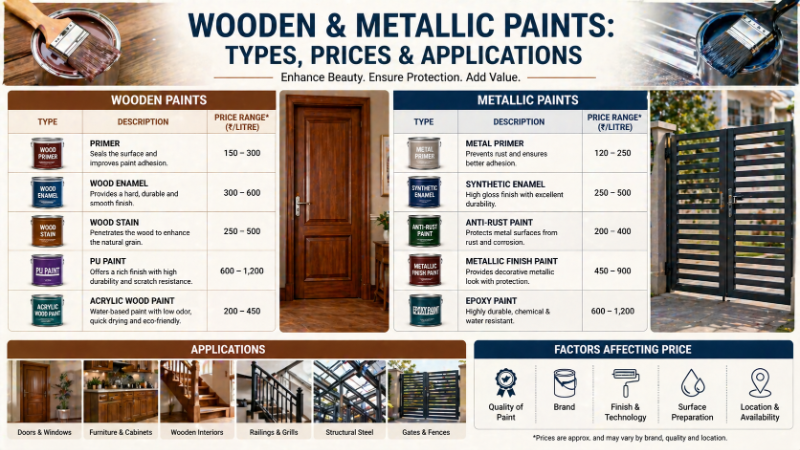
Enamel Paints for Wood: These are traditional options that create a hard, glossy finish. Enamel paints for wood typically contain resins and solvents that allow them to cure to a tough, durable coating. They're excellent for doors, windows, and furniture. Prices in India range from ₹400 to ₹1,500 per liter depending on quality and brand.
Acrylic Wood Paints: Water-based acrylic paints have gained popularity due to their low VOC (volatile organic compound) content and quick drying time. They're environmentally friendly and ideal for interior wooden surfaces. Costs typically range from ₹600 to ₹2,000 per liter.
Polyurethane Coatings: These provide superior protection and durability, making them ideal for high-traffic areas and exterior wooden surfaces. Polyurethane paints offer excellent adhesion and flexibility. Prices range from ₹1,500 to ₹4,000 per liter in the Indian market.
Wood Stains and Varnishes: While not technically paints, these products enhance the natural grain of wood while providing protection. They're popular for decorative wooden elements and furniture restoration projects.
Key Properties of Quality Wooden Paints
When selecting wooden paints, look for these essential characteristics:
Adhesion: The paint must bond well to wood surfaces, whether treated or untreated. Poor adhesion leads to peeling and flaking.
Flexibility: Wood expands and contracts with temperature and humidity changes. Paints must have sufficient flexibility to accommodate movement without cracking.
Moisture Resistance: In India's humid climate, especially in coastal areas like Mumbai and Goa, moisture resistance is critical to prevent rot and mold growth.
UV Protection: Quality wooden paints contain UV filters to prevent color fading and degradation from sun exposure.
Coverage: A good wooden paint typically covers 80-100 square feet per liter, depending on the wood's porosity and surface condition.
Application Tips for Wooden Surfaces
Proper preparation and application are crucial for achieving professional results with wooden paints. Start by sanding the wood surface to remove old paint, dirt, and imperfections. Use 120-150 grit sandpaper for initial smoothing, followed by 220 grit for finishing. This step ensures better paint adhesion and a smoother final surface.
Apply a wood primer before painting, especially on bare or previously stained wood. Primers improve adhesion and provide better coverage, reducing the number of paint coats needed. For wooden surfaces in high-moisture areas, use a moisture-resistant primer.
Apply paint in thin, even coats rather than one thick coat. Most wooden paints require two coats for optimal coverage and durability. Maintain proper ventilation during application and allow adequate drying time between coats—typically 4-8 hours for water-based paints and 12-24 hours for oil-based formulations.
Frequently asked
Understanding Metallic Paints
Metallic paints are engineered to protect metal surfaces from corrosion, rust, and environmental degradation. Given India's varying climate conditions and industrial growth, metallic paints play a vital role in construction and manufacturing sectors across cities like Hyderabad, Chennai, and Kolkata.
Types of Metallic Paints
Epoxy Paints: These two-component paints offer exceptional adhesion and chemical resistance. Epoxy paints create a hard, durable coating ideal for steel structures, industrial equipment, and metal doors. They're particularly popular in manufacturing facilities and infrastructure projects. Costs range from ₹800 to ₹2,500 per liter.
Polyurethane Metallic Paints: Known for their flexibility and UV resistance, polyurethane paints are excellent for both interior and exterior metal surfaces. They maintain their gloss and color longer than many alternatives. Prices typically range from ₹1,200 to ₹3,500 per liter.
Alkyd Paints: Traditional oil-based paints that provide good adhesion to metal surfaces and offer a smooth, attractive finish. While they take longer to dry, they offer excellent durability. Alkyd paints cost between ₹500 and ₹1,800 per liter.
Acrylic Latex Metallic Paints: Water-based options that are becoming increasingly popular for their low toxicity and easy cleanup. However, they may not provide the same level of rust protection as solvent-based alternatives for severe environments.
Rust-Inhibiting Primers: These specialized primers contain compounds that prevent rust formation on metal surfaces. They're essential for protecting bare steel and iron before applying finish coats.
Critical Properties of Metallic Paints
When choosing metallic paints, consider these important factors:
Rust Prevention: The primary function of metallic paint is preventing rust and corrosion. Look for paints with rust-inhibiting additives and excellent barrier properties.
Adhesion to Metal: Strong adhesion prevents peeling and ensures long-term protection. This is particularly important in high-humidity environments like coastal Indian cities.
Chemical Resistance: Industrial applications require paints that resist exposure to oils, solvents, and other chemicals.
Impact Resistance: Quality metallic paints should resist chipping and damage from physical impact, especially in high-traffic areas.
Corrosion Protection Duration: Premium metallic paints can provide protection for 5-10 years or more, depending on environmental conditions.
Application Techniques for Metallic Surfaces
Surface preparation is absolutely critical when painting metal. Begin by removing rust, scale, and old paint using wire brushes, grinding, or sandblasting. For severe rust, mechanical removal methods are more effective than chemical strippers. The cleaner the surface, the better the paint adhesion.
Apply a rust-inhibiting primer as the first coat. This creates a protective barrier and improves adhesion of the finish coat. Allow the primer to dry completely—typically 24 hours for oil-based primers and 4-8 hours for water-based versions.
Apply finish coats of metallic paint using a brush, roller, or spray application. Spray application provides superior coverage and finish quality, particularly for large metal surfaces. Maintain proper ventilation and follow manufacturer's drying time recommendations between coats.
Comparing Wooden and Metallic Paints
Key Differences
Substrate Interaction: Wooden paints are formulated to penetrate slightly into wood fibers, providing internal protection. Metallic paints create a protective barrier on the surface without penetration, as metal doesn't absorb paint like wood does.
Flexibility Requirements: Wooden paints need more flexibility to accommodate wood movement. Metallic paints can be more rigid since metal doesn't expand and contract significantly with temperature changes.
Adhesion Mechanisms: Wooden paints rely on mechanical interlocking with wood fibers, while metallic paints depend on chemical adhesion to the metal surface.
Environmental Protection: Wooden paints primarily protect against moisture and UV damage. Metallic paints focus on preventing rust and corrosion while also providing UV protection.
Cost Considerations in India
Budget planning for painting projects requires understanding the cost structure of different paint types. High-quality wooden paints in India typically cost ₹1,000-₹2,500 per liter, while premium metallic paints range from ₹1,500-₹4,000 per liter. Prices vary by brand, quality, and regional availability.
For a typical residential project in Bangalore or Delhi, painting 500 square feet of wooden surfaces might require 5-6 liters of paint, costing ₹5,000-₹15,000. Similar metal surface painting could cost ₹7,500-₹20,000 depending on the paint type and surface condition.
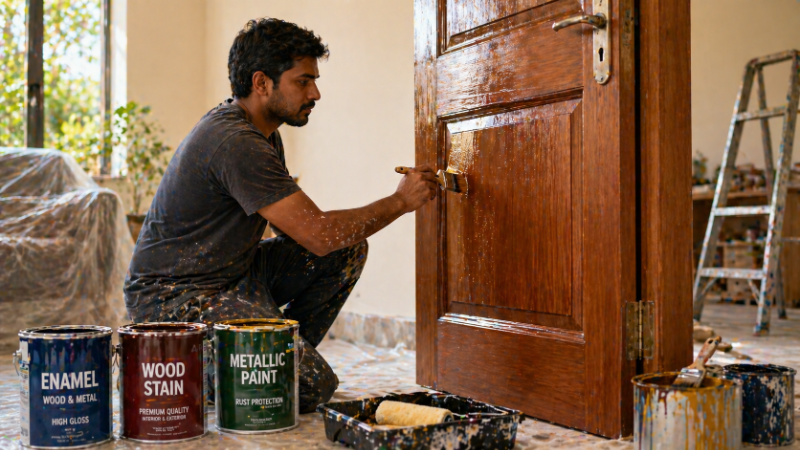
Specialized Applications and Considerations
Coastal and High-Humidity Environments
In coastal Indian cities like Mumbai, Goa, and Kochi, both wooden and metallic surfaces face accelerated degradation due to salt spray and high humidity. For wooden surfaces, use marine-grade paints with superior moisture resistance and UV protection. For metal, specify paints with enhanced corrosion inhibitors and thicker dry film thickness (DFT) requirements—typically 150-200 microns for coastal applications.
Industrial and Commercial Applications
Industrial facilities in manufacturing hubs like Pune, Ahmedabad, and Surat require paints that withstand harsh chemicals, temperature fluctuations, and heavy machinery vibrations. Epoxy and polyurethane paints are preferred for metal surfaces in these environments. For wooden structural elements, polyurethane coatings offer superior durability and chemical resistance.
Residential Interior Applications
For homes across Indian cities, water-based acrylic paints for wood and latex-based paints for metal are increasingly popular due to low VOC content and health benefits. These options are particularly suitable for bedrooms, children's rooms, and living spaces where air quality is a concern.
Environmental and Health Considerations
Modern paint formulations increasingly focus on sustainability and health safety. Low-VOC and zero-VOC paints reduce indoor air pollution and are safer for application in residential settings. In India, regulatory bodies are promoting environmentally friendly paint options, making them more readily available and competitively priced.
When selecting paints, look for certifications such as Green Label Plus or equivalent Indian standards. These certifications ensure the paint meets strict environmental and health safety requirements.
Maintenance and Longevity
Proper maintenance extends the life of painted wooden and metallic surfaces. For wooden surfaces, inspect annually for signs of peeling, cracking, or moisture damage. Touch up damaged areas promptly and consider repainting every 3-5 years depending on exposure conditions.
For metallic surfaces, monitor for rust spots and address them immediately. Regular cleaning and inspection can significantly extend paint life. In harsh environments, repainting may be necessary every 5-7 years.
Finding the Right Professionals
Selecting quality paints is only part of the equation; professional application is equally important. Whether you're undertaking a residential renovation in Delhi, a commercial project in Bangalore, or an industrial application in Mumbai, working with experienced painters and contractors ensures optimal results.
AECORD connects you with vetted painting professionals across India who specialize in wooden and metallic surface preparation and application. These experts understand regional climate challenges, local material availability, and can recommend the most suitable paint types for your specific project requirements. Through AECORD's platform, you can compare multiple professionals, review their portfolios, and make informed decisions based on verified credentials and customer feedback.
Whether you need consultation on paint selection, application techniques, or project execution, AECORD's network of architecture, engineering, and construction professionals can guide you through every step of the process.
Conclusion
Choosing between wooden and metallic paints requires understanding the unique properties, applications, and environmental factors specific to your project. In India's diverse climate and across different regions—from the humid coasts to dry interiors—proper paint selection and application directly impact project longevity and aesthetic outcomes.
By understanding the characteristics of different paint types, considering your specific application requirements, and working with qualified professionals, you can ensure your wooden and metallic surfaces receive protection that lasts for years. Whether you're planning a home renovation, commercial project, or industrial application, investing time in proper paint selection and professional application delivers superior results and better value for your investment.
Ready to start your painting project? Browse AECORD's directory of experienced painting contractors, architects, and construction professionals who can help you select and apply the perfect paint solutions for your wooden and metallic surfaces across India.
Frequently Asked Questions
What is the difference between enamel and acrylic wood paints?
Enamel paints create a hard, glossy finish using resins and solvents, making them ideal for doors and windows, while acrylic wood paints are water-based with low VOC content and quick drying times, making them more environmentally friendly for interior surfaces. Acrylic paints typically cost ₹600-₹2,000 per liter compared to enamel's ₹400-₹1,500 per liter.
How much coverage can you expect from wooden paint?
A quality wooden paint typically covers 80-100 square feet per liter, though coverage varies depending on the wood's porosity and surface condition. This coverage estimate helps in calculating the amount of paint needed for your project.
Why is flexibility important in wooden paints?
Wood naturally expands and contracts with temperature and humidity changes, so flexible paints can accommodate this movement without cracking or peeling. In India's diverse climate, this property is especially critical for maintaining paint durability.
What surface preparation is needed before applying wooden paint?
Sand the wood surface using 120-150 grit sandpaper initially, then 220 grit for finishing to remove old paint and imperfections. Apply a moisture-resistant primer before painting to improve adhesion and reduce the number of coats needed.
How long should you wait between coats of wooden paint?
Allow 4-8 hours drying time between coats for water-based paints and 12-24 hours for oil-based formulations. Most wooden paints require two coats for optimal coverage and durability.