

A well-designed wardrobe is more than just a place to store clothes—it's a personal sanctuary that reflects your style, organizes your life, and sets the tone for your daily routine. Whether you're designing a walk-in closet in your Mumbai apartment, a compact wardrobe in a Bangalore bedroom, or a luxurious dressing room in a Delhi penthouse, thoughtful interior design can transform this functional space into an elegant and efficient area. This comprehensive guide explores wardrobe interior design ideas tailored for Indian homes, helping you create a space that's both beautiful and practical.
Understanding Wardrobe Interior Design
Wardrobe interior design goes beyond aesthetics—it's about creating a system that works for your lifestyle. In India, where space is often at a premium, especially in metropolitan areas like Bangalore, Hyderabad, and Pune, maximizing every inch of your wardrobe is crucial. The right design can increase storage capacity by up to 40%, reduce the time spent searching for clothes, and make your morning routine significantly smoother.
When planning your wardrobe design, consider factors such as available space, your clothing collection size, daily routines, and budget. A typical wardrobe renovation in Indian cities can range from ₹50,000 for basic modifications to ₹5,00,000 or more for premium custom designs with high-end materials and professional installation.
Build cost · Bengaluru, May 2026
Space Assessment and Planning
Measuring Your Space Accurately
Before diving into design ideas, accurate measurements are essential. Measure the height, width, and depth of your wardrobe space, noting any architectural features like windows, doors, or sloped ceilings that might affect layout. In Indian homes, standard wardrobe depths range from 60cm to 65cm, though some luxury designs extend to 75cm.
Document the location of electrical outlets, light switches, and ventilation. If your wardrobe is in a humid climate—common in coastal cities like Mumbai and Goa—you'll need to account for moisture management in your design.
Categorizing Your Clothing
Before designing storage solutions, audit your clothing collection. Categorize items into:
Daily wear: Casual clothes, everyday shirts, and basic garments
Work attire: Formal shirts, trousers, blazers
Occasion wear: Sarees, lehengas, formal dresses, and ethnic wear
Seasonal wear: Winter clothes, summer fabrics
Accessories: Scarves, belts, ties, jewelry
Footwear: Shoes, sandals, formal wear
This categorization helps determine the types of storage solutions you'll need. For instance, if you have a large collection of sarees and ethnic wear—common in Indian wardrobes—you'll need dedicated hanging space or specialized storage solutions.
Frequently asked
Layout and Configuration Options
Walk-In Wardrobe Design
Walk-in wardrobes are increasingly popular in Indian metropolitan homes. A typical walk-in wardrobe requires a minimum space of 1.5m x 1.5m. The ideal configuration includes:
Hanging rails: Double-hanging sections for shirts, blouses, and trousers (approximately 1.2m height each)
Shelving: Open shelves for folded items, typically 30-40cm deep
Drawers: For undergarments, accessories, and delicate items
Island or dresser: Central unit for jewelry, belts, and a mirror for outfit selection
Seating: A small bench or chair for trying on clothes
In cities like Delhi and Noida, where space is increasingly premium, L-shaped or U-shaped walk-in wardrobes maximize corner utilization effectively.
Fitted Wardrobe Design
For bedrooms with limited space, fitted wardrobes are ideal. These custom-built units utilize every available inch from floor to ceiling. Modern fitted wardrobes in Indian homes typically feature:
Sliding doors (more space-efficient than swing doors)
Adjustable shelving for flexibility
Integrated lighting for visibility
Soft-close mechanisms to prevent slamming
Mirrored doors to create an illusion of larger space
The cost of a fitted wardrobe in Indian cities ranges from ₹1,50,000 to ₹4,00,000, depending on materials and customization level.
Material Selection for Indian Climates
Wood and Finishes
The choice of materials significantly impacts durability and aesthetics. In India's diverse climate zones:
Plywood: Most popular for Indian wardrobes, offering good durability at reasonable cost (₹400-800 per sq. ft.)
MDF: Budget-friendly option, though less resistant to moisture in humid regions
Solid wood: Premium choice, ideal for coastal areas where moisture resistance is crucial
Laminate finishes: Practical for Indian kitchens, wardrobes benefit from matte or semi-gloss finishes that hide fingerprints
In humid cities like Kolkata, Mumbai, and Kochi, opt for moisture-resistant materials and ensure proper ventilation within the wardrobe. Teak and other hardwoods are excellent choices but come at a premium cost of ₹1,500-3,000 per sq. ft.
Hardware and Accessories
Quality hardware is crucial for a wardrobe's longevity. Invest in:
Soft-close hinges: Prevent slamming and wear (₹200-500 per hinge)
Smooth-gliding drawers: Ball-bearing slides for durability
Stainless steel or brass fixtures: Resist corrosion in humid climates
Quality locks: For security, especially in shared living spaces
Premium hardware can add 15-20% to your overall wardrobe cost but significantly enhances functionality and lifespan.
Storage Solutions and Organization
Hanging Solutions
Proper hanging storage is essential for preserving clothes and maximizing space:
Double hanging rods: Ideal for shirts, blouses, and trousers, doubling vertical space
Specialized hangers: Wooden hangers for delicate items, clip hangers for trousers and sarees
Pull-down rods: Useful for accessing high-hanging clothes in tall wardrobes
Saree racks: Dedicated solutions for ethnic wear, preventing creasing
Tie and scarf organizers: Rotating or hanging systems for easy selection
In Indian homes with large collections of traditional wear, allocate 40-50% of hanging space for sarees, lehengas, and kurtas. Saree organizers with multiple hooks can store 50+ sarees vertically, ideal for space-conscious homes in cities like Hyderabad and Pune.
Shelving and Folded Storage
Open shelving works well for frequently worn, folded items. Consider:
Adjustable shelves: Allow flexibility as your wardrobe evolves
Shelf dividers: Prevent stacks from toppling (₹300-800 per set)
Fabric storage boxes: Organize off-season clothes while maintaining visibility
Vacuum storage bags: Compress seasonal wear, reducing space by 70%
For folded storage, shelves should be 30-40cm deep and spaced 25-30cm apart vertically. This spacing accommodates most folded garments comfortably.
Drawer Organization
Drawers are perfect for undergarments, socks, accessories, and delicate items. Optimize drawer space with:
Dividers and organizers: Create compartments for different item types
Drawer liners: Protect contents and add a luxurious feel
Transparent organizers: Allow quick identification of contents
Tiered storage: Maximize vertical space within drawers
Invest in quality drawer slides—soft-close mechanisms prevent damage and are especially important in Indian homes where dust accumulation is common.
Lighting Design
Natural and Artificial Lighting
Proper lighting is crucial for wardrobe functionality and aesthetics. A well-lit wardrobe helps with color matching and reduces the time spent selecting outfits.
LED strip lights: Energy-efficient, available in warm (2700K) or cool (4000K) tones. Cost: ₹1,500-4,000 per installation
Recessed ceiling lights: Clean look, suitable for walk-in wardrobes
Motion-sensor lights: Activate when doors open, saving electricity
Vanity lighting: Dedicated lighting around mirrors for accurate makeup and outfit assessment
For Indian homes, warm lighting (2700K) is generally preferred as it creates a welcoming atmosphere. However, ensure adequate brightness—at least 300-500 lumens for general wardrobe areas and 750+ lumens for dressing mirrors.
Mirror Placement
Mirrors serve both functional and aesthetic purposes:
Full-length mirrors: Essential for outfit visualization
Mirrored doors: Reflect light and create spaciousness in compact wardrobes
Angled mirrors: Allow viewing from multiple angles
Jewelry mirrors: Smaller mirrors for detailed accessory viewing
Position mirrors opposite or adjacent to light sources to maximize brightness and create an illusion of larger space—particularly valuable in Mumbai and Bangalore apartments where space is limited.
Color and Aesthetic Choices
Color Schemes for Indian Homes
Wardrobe colors should complement your bedroom while creating a calming environment:
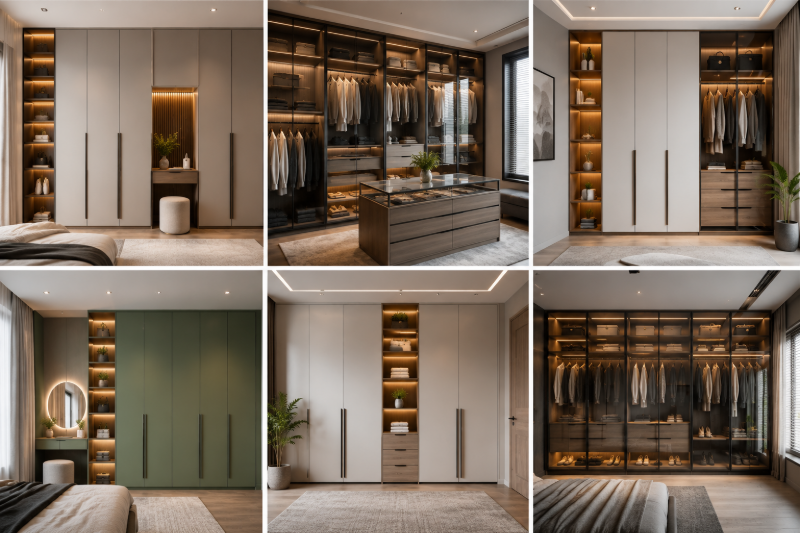
Neutral tones: White, cream, beige, and gray are timeless and work with any bedroom décor
Warm woods: Honey, walnut, and oak finishes add warmth and sophistication
Bold accents: Consider colored interiors (soft blues, greens) if your bedroom supports it
Two-tone designs: Combine light exteriors with darker interiors for visual interest
In Indian homes, light colors are popular as they reflect heat and make spaces feel larger. However, ensure the finish is durable and easy to maintain—matte finishes hide fingerprints better than glossy ones.
Design Styles
Choose a design style that resonates with your home's aesthetic:
Modern minimalist: Clean lines, handleless doors, integrated lighting
Contemporary: Mix of materials, bold hardware, geometric patterns
Traditional: Wooden frames, ornate handles, classic proportions
Transitional: Blend of modern and traditional elements, versatile and timeless
Many Indian homeowners prefer transitional designs as they adapt well to evolving personal styles and home renovations.
Climate Considerations for Indian Wardrobes
Humidity Management
India's diverse climate zones require specific design considerations:
Ventilation: Include perforated backing or ventilation holes to allow air circulation
Moisture control: Use silica gel packets or electronic dehumidifiers in humid regions
Material selection: Choose moisture-resistant materials in coastal areas
Drainage: Ensure proper drainage in basement or ground-floor wardrobes
In cities like Kochi and Thiruvananthapuram, where humidity levels are consistently high (70-90%), incorporate active ventilation systems costing ₹5,000-15,000.
Temperature Fluctuations
Extreme temperature variations, common in Delhi and northern India, can affect material integrity. Consider:
Expansion gaps in wooden frames
Quality finishes that resist warping
Appropriate insulation if the wardrobe is external-facing
Budget Planning and Cost Breakdown
Understanding cost components helps in budget allocation:
Materials (40-50%): Plywood, hardware, finishes
Labor (25-35%): Design, fabrication, installation
Accessories (10-15%): Organizers, lighting, mirrors
Contingency (5-10%): Unforeseen expenses
A basic wardrobe renovation in Indian cities costs ₹50,000-1,50,000, while premium custom designs range from ₹2,00,000-5,00,000+. Always get detailed quotes from multiple vendors and ensure they provide warranty (typically 1-3 years for materials and labor).
Working with Professionals
Hiring experienced interior designers and carpenters is crucial for a successful wardrobe project. When selecting professionals, consider:
Portfolio of previous wardrobe projects
Understanding of local climate and building regulations
Warranty and after-sales service
Ability to work within your budget and timeline
Communication skills and responsiveness
Platforms like AECORD connect homeowners with verified interior designers, architects, and contractors specializing in wardrobe design across Indian cities. Whether you're in Bangalore, Delhi, Mumbai, or Hyderabad, finding the right professional through AECORD ensures quality workmanship and transparent pricing.
Maintenance and Long-Term Care
Proper maintenance extends your wardrobe's lifespan:
Regular cleaning: Dust shelves and rails monthly
Moisture control: Replace silica gel packets every 2-3 months
Hardware maintenance: Lubricate hinges and drawer slides annually
Seasonal checks: Inspect for signs of wear or damage
Professional servicing: Annual maintenance by professionals, costing ₹2,000-5,000
Well-maintained wardrobes can last 15-20 years, making regular care a worthwhile investment.
Conclusion
Designing an effective wardrobe interior is a combination of aesthetics, functionality, and practical planning. By considering your space, climate, lifestyle, and budget, you can create a wardrobe that's both beautiful and highly functional. Whether you're designing a compact fitted wardrobe in a Bangalore apartment or a luxurious walk-in closet in a Delhi villa, the principles of good design remain consistent: maximize space, ensure proper organization, incorporate appropriate lighting, and choose durable materials suited to your local climate.
The investment in a well-designed wardrobe pays dividends through improved daily routines, better clothing preservation, and the satisfaction of having a personal space that reflects your style. If you're ready to transform your wardrobe, AECORD is your go-to platform for connecting with experienced interior designers and contractors who understand the unique requirements of Indian homes. Browse verified professionals, compare portfolios, and find the perfect match for your wardrobe design project today.
Frequently Asked Questions
How much can wardrobe interior design increase storage capacity?
A well-planned wardrobe interior design can increase storage capacity by up to 40% through strategic organization and space optimization. This is especially beneficial in Indian homes where space is often at a premium, particularly in metropolitan areas.
What is the minimum space required for a walk-in wardrobe?
A functional walk-in wardrobe requires a minimum space of 1.5m x 1.5m. This allows for adequate hanging rails, shelving, drawers, and potentially a central island or dresser with seating for outfit selection.
How much does wardrobe renovation cost in India?
Wardrobe renovation costs in Indian cities typically range from ₹50,000 for basic modifications to ₹5,00,000 or more for premium custom designs with high-end materials and professional installation, depending on your requirements and location.
What are the standard dimensions for wardrobe depth in Indian homes?
Standard wardrobe depths in Indian homes typically range from 60cm to 65cm, though some luxury designs extend to 75cm. The depth you choose depends on your space availability and storage needs.
What clothing categories should I consider when designing a wardrobe?
Key clothing categories include daily wear, work attire, occasion wear, seasonal wear, accessories, and footwear. Proper categorization helps determine the types of storage solutions needed, such as dedicated hanging space for sarees and ethnic wear common in Indian wardrobes.