Modern Indian Facade Design: 15 Ideas for Homes in 2026
The Indian residential architecture landscape is undergoing a significant transformation. Homeowners are moving beyond traditional designs and embracing modern facades that balance aesthetic appeal with practical functionality. Whether you're planning a new home in Bangalore, Mumbai, Delhi, or any other metropolitan area, the facade is the first impression your home makes. In 2026, the focus is on creating exteriors that are not just visually stunning but also climate-responsive, sustainable, and culturally rooted.
This comprehensive guide explores 15 innovative facade design ideas specifically tailored for Indian homes, incorporating local materials, climate considerations, and contemporary design principles.
Build cost · Bengaluru, May 2026
Understanding Modern Facade Design in the Indian Context
Before diving into specific ideas, it's essential to understand what makes a facade design truly "modern" for Indian homes. Modern Indian facade design is characterized by:
Climate responsiveness: Designs that address India's diverse climate zones—from the humid coasts to the arid deserts
Material authenticity: Use of locally available materials like laterite, sandstone, and regional timber
Sustainable practices: Energy-efficient designs that reduce cooling and heating requirements
Cultural integration: Contemporary interpretations of traditional architectural elements
Practical functionality: Designs that work with India's construction costs, maintenance requirements, and lifestyle patterns
When searching for architects and designers who specialize in modern Indian facade design, platforms like AECORD offer access to verified professionals who understand these nuances and can deliver designs tailored to your specific location and requirements.
15 Modern Facade Design Ideas for Indian Homes in 2026
1. Ventilated Brick Screens with Geometric Patterns
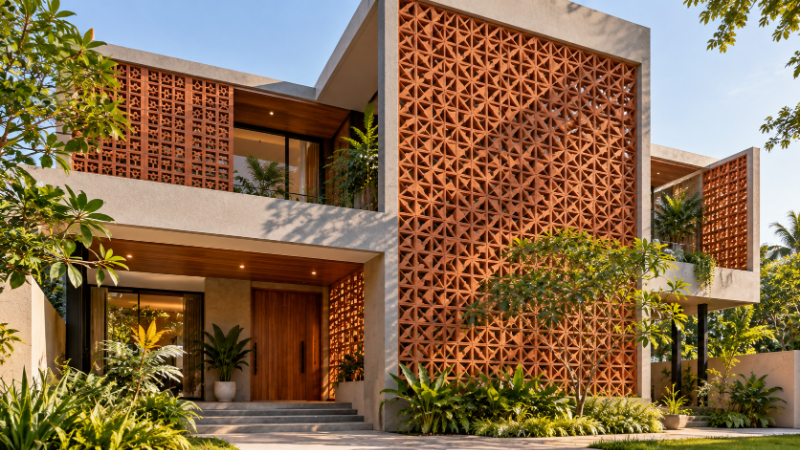
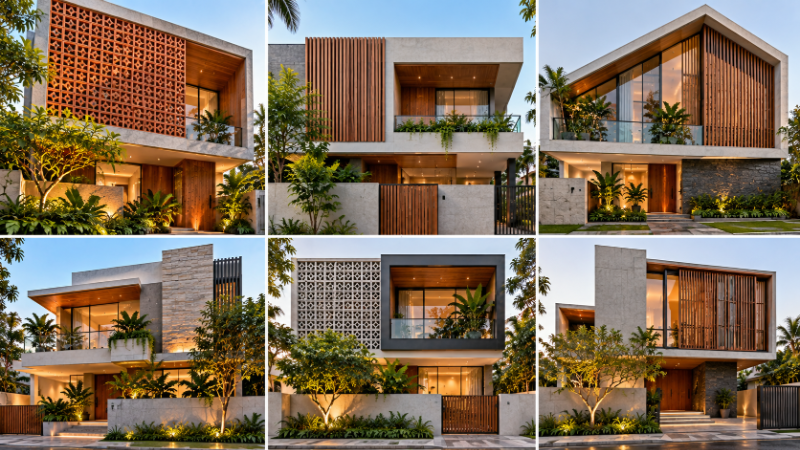
Ventilated brick screens, inspired by traditional jali designs, are experiencing a renaissance in modern Indian architecture. These screens serve dual purposes: they provide privacy and security while allowing natural ventilation. The geometric patterns can be customized to create striking visual effects, especially during sunrise and sunset when shadows dance across the facade.
In cities like Jaipur and Udaipur, architects are using local sandstone in these screens, reducing material costs (approximately ₹2,500-4,000 per square meter) while maintaining cultural authenticity. These screens are particularly effective in reducing indoor temperatures by 3-5 degrees Celsius, resulting in significant air conditioning savings.
Frequently asked
2. Mixed Material Facades: Timber and Concrete
Combining timber cladding with exposed concrete creates a sophisticated, contemporary look that's gaining popularity in metropolitan areas like Bangalore and Pune. Timber provides warmth and texture, while concrete offers structural honesty and durability. This combination is cost-effective when using locally sourced timber (₹3,000-6,000 per square meter) and reduces the overall facade budget compared to all-natural stone options.
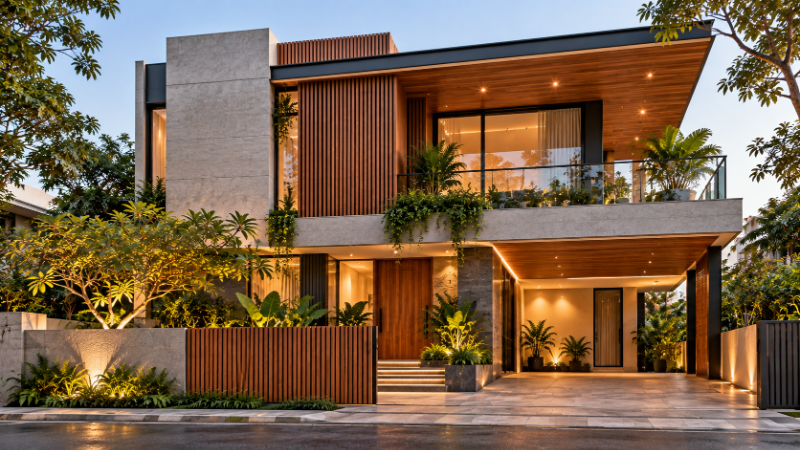
The key to success is selecting weather-resistant timber species like teak or sal that can withstand India's monsoon seasons without extensive maintenance.
3. Green Facades with Vertical Gardens
Living walls and vertical gardens are transforming Indian home facades into vibrant, eco-friendly statements. Beyond aesthetics, these green facades improve air quality, provide natural insulation, and create a cooling effect around the building. In Delhi and NCR, green facades can reduce surface temperatures by up to 8 degrees Celsius during summer.
Modern irrigation systems make maintenance manageable, and the initial investment of ₹5,000-8,000 per square meter is offset by reduced energy consumption and improved property value. Species like Pothos, Creeping Fig, and Jasmine thrive in Indian climates.
4. Perforated Metal Screens
Perforated aluminum or steel screens offer a contemporary industrial aesthetic while providing functional benefits. These screens can be customized with various perforation patterns and can be powder-coated in any color. They're excellent for creating shaded outdoor spaces like verandas and courtyards.
Cost-effective at ₹1,500-3,500 per square meter, perforated screens are increasingly popular in Mumbai and Hyderabad, where they're used to create privacy from neighboring buildings while maintaining visual lightness and airflow.
5. Locally Sourced Stone with Modern Detailing
Using regional stones—laterite in Kerala, granite in South India, and sandstone in Rajasthan—creates facades that are both modern and rooted in local identity. Modern detailing involves clean lines, minimalist patterns, and strategic use of stone to create visual interest without ornamentation.
This approach costs ₹4,000-7,000 per square meter but offers exceptional durability and requires minimal maintenance. The stone weathers beautifully, developing a patina that enhances character over time.
6. Double-Skin Facades for Climate Control
Double-skin facades consist of an outer protective layer and an inner structural layer, with an air cavity between them. This design is particularly effective in hot climates like Ahmedabad, Surat, and Pune. The air cavity acts as insulation, reducing heat transmission and lowering cooling costs significantly.
While the initial investment is higher (₹8,000-12,000 per square meter), the energy savings justify the expense in the long term. These facades also improve acoustic insulation, beneficial in urban areas.
7. Minimalist Plaster Facades with Accent Features
Clean, minimalist plaster facades with carefully placed accent features create a contemporary look that's both elegant and cost-effective. Accent features might include textured panels, wood cladding sections, or stone bands that break up the monotony of plain walls.
At just ₹1,500-2,500 per square meter for quality plaster work, this approach is accessible to most homeowners. The simplicity of the design also means lower maintenance costs and easier repairs.
8. Recessed and Protruding Elements
Creating depth through recessed balconies, protruding sunshades, and varied wall planes adds visual interest and functionality. These elements provide natural shading, reducing heat gain, and create interesting shadow patterns throughout the day. This design strategy is particularly effective in cities like Chennai and Bangalore.
The cost depends on the complexity but typically ranges from ₹2,000-5,000 per square meter. Beyond aesthetics, these elements improve the building's thermal performance.
9. Transparent and Translucent Elements
Incorporating glass, polycarbonate panels, or frosted acrylic creates facades that play with transparency and light. These materials can be used strategically to showcase interior spaces, create visual drama, and allow natural light penetration. This approach is particularly popular in Gurgaon and Bangalore's premium residential projects.
Costs vary widely (₹3,000-10,000 per square meter) depending on the material quality and design complexity. High-performance glass can also provide thermal and acoustic benefits.
10. Textured Concrete Finishes
Board-marked concrete, exposed aggregate, and acid-washed finishes offer modern, industrial aesthetics while being cost-effective. These finishes showcase the raw beauty of concrete and age gracefully. They're increasingly popular in Delhi, Pune, and Mumbai among architects favoring brutalist and contemporary styles.
Costs range from ₹1,500-3,500 per square meter, making this an economical choice for large facade areas. The durability of concrete requires minimal maintenance beyond occasional cleaning.
11. Modular Facade Systems
Prefabricated modular facade elements allow for faster construction and greater design flexibility. Modules can be customized, combined in various ways, and replaced easily if damaged. This system is gaining traction in metro cities where construction timelines are critical.
While initial costs are comparable to traditional methods (₹3,000-6,000 per square meter), the reduced construction time and potential for customization offer significant advantages. Platforms like AECORD can connect you with architects experienced in modular facade systems.
12. Color as a Design Element
Moving beyond the standard white and beige, modern Indian facades are embracing bold colors that reflect local culture and climate. Warm terracottas, deep ochres, and muted blues are being used to create distinctive identities while remaining visually harmonious with surroundings.
Quality exterior paint costs ₹800-1,500 per liter, and a well-executed color scheme can dramatically transform a home's appearance. The key is choosing colors that complement the neighborhood while expressing individuality.
13. Water Features and Facade Integration
Integrating water features—cascading walls, reflecting pools, or water channels—into facade design adds dynamism and cooling effects. In cities like Hyderabad and Bangalore, water features create microclimates that reduce surrounding temperatures. These features also provide psychological benefits and visual interest.
Costs range from ₹5,000-10,000 per square meter for integrated water features. Maintenance is manageable with modern circulation systems, and the investment enhances property value significantly.
14. Sustainable Material Facades: Recycled and Reclaimed
Using recycled materials, reclaimed wood, or salvaged bricks creates unique facades with environmental credentials. This approach resonates with eco-conscious homeowners and creates distinctive, character-filled exteriors. Reclaimed materials cost ₹2,500-6,000 per square meter depending on availability and sourcing.
Beyond aesthetics, using recycled materials reduces environmental impact and often tells a story, adding emotional value to the home.
15. Smart Facade Technologies
Emerging in 2026, smart facades incorporate responsive technologies—photochromic materials that change with sunlight, thermochromic coatings that reflect heat, and integrated solar panels. While currently premium options (₹8,000-15,000 per square meter), these technologies are rapidly becoming more affordable.
Smart facades offer significant long-term energy savings and position homes as future-ready. Cities like Bangalore and Gurgaon are seeing increased adoption among tech-savvy homeowners.
Climate-Specific Recommendations
For Hot and Dry Climates (Rajasthan, Gujarat)
Prioritize heat-reflective materials, ventilated screens, and double-skin facades. Local sandstone and limestone work beautifully while providing natural thermal mass. Colors should be light to reflect heat.
For Humid Climates (Kerala, Goa, Coastal Areas)
Focus on moisture-resistant materials like treated timber, powder-coated metals, and stone that won't deteriorate. Ensure proper drainage and ventilation. Green facades help manage humidity and provide cooling.
For Moderate Climates (Bangalore, Pune, Hyderabad)
These regions offer flexibility to experiment with various materials and designs. The moderate climate allows for both heavy and light materials without extreme performance concerns.
Budget Considerations for Modern Facades
Facade costs in India vary significantly based on materials and complexity:
Budget-conscious: ₹1,500-2,500 per square meter (plaster, basic finishes)
Mid-range: ₹3,000-6,000 per square meter (mixed materials, quality finishes)
Premium: ₹8,000-15,000+ per square meter (natural stone, smart technologies, complex designs)
Remember that facade investment directly impacts property value, energy efficiency, and maintenance costs. Working with experienced professionals ensures optimal value for your budget.
Maintenance and Longevity
Modern facades should be designed with maintenance in mind. Choose materials appropriate for your climate, ensure proper drainage systems, and plan for regular cleaning and inspections. Quality materials may cost more initially but significantly reduce long-term maintenance expenses.
Working with Design Professionals
Creating a stunning modern facade requires expertise in design, materials, climate science, and local building regulations. AECORD connects homeowners with verified architects, facade designers, and contractors who specialize in modern Indian residential design. These professionals understand local building codes, material availability, and climate-specific requirements, ensuring your facade project succeeds.
Whether you're in Delhi, Mumbai, Bangalore, or any other Indian city, finding the right professional is crucial. Look for designers with portfolio experience in your specific region and climate zone.
Future Trends for 2026 and Beyond
The trajectory of modern Indian facade design points toward increased sustainability, smart technologies, and cultural expression. Expect to see more integration of local materials with global design trends, increased adoption of green technologies, and designs that respond dynamically to environmental conditions.
Homeowners are increasingly viewing facades as investments in both aesthetics and functionality, driving innovation in materials and techniques. The best modern facades balance all these elements: beauty, sustainability, climate responsiveness, and practicality.
Conclusion
Modern Indian facade design in 2026 offers exciting possibilities for homeowners seeking to create distinctive, functional, and beautiful exteriors. Whether you choose ventilated screens inspired by traditional jali, sustainable recycled materials, or cutting-edge smart technologies, the key is selecting designs that align with your climate, budget, and personal aesthetic.
The 15 ideas presented here provide a foundation for exploration. Each can be adapted to your specific context, combined with other elements, and customized to reflect your vision. Start by identifying your priorities—climate control, sustainability, aesthetic impact, or budget—and build your facade design around these foundations.
Ready to bring your modern facade vision to life? AECORD makes it easy to connect with experienced architects and designers who specialize in contemporary Indian residential design. Browse our platform to find verified professionals in your city, review their portfolios, and start your facade design journey today. Your home's exterior is too important to leave to chance—partner with experts who understand modern Indian design.
Frequently Asked Questions
What makes a facade design modern for Indian homes?
Modern Indian facade design combines climate responsiveness, locally available materials, sustainable practices, cultural integration, and practical functionality. It addresses India's diverse climate zones while incorporating contemporary interpretations of traditional architectural elements and energy-efficient designs that reduce cooling requirements.
How much do ventilated brick screens cost for Indian home facades?
Ventilated brick screens using local sandstone typically cost approximately ₹2,500-4,000 per square meter in Indian cities. These screens provide dual benefits of privacy and natural ventilation while reducing indoor temperatures by 3-5 degrees Celsius, resulting in significant air conditioning savings.
What are the best timber materials for Indian facade cladding?
Weather-resistant timber species like teak or sal are ideal for Indian facade cladding as they can withstand monsoon seasons without extensive maintenance. When sourced locally, timber cladding costs ₹3,000-6,000 per square meter and works well when combined with concrete for a contemporary look.
How much can green facades reduce building temperatures in India?
Green facades with vertical gardens can reduce surface temperatures by up to 8 degrees Celsius during summer in cities like Delhi and NCR. They also improve air quality, provide natural insulation, and create a cooling effect around the building while enhancing aesthetic appeal.
Where can I find architects specializing in modern Indian facade design?
Platforms like AECORD offer access to verified professionals who specialize in modern Indian facade design and understand local climate considerations, material availability, and cultural integration. These experts can deliver designs tailored to your specific location and requirements.