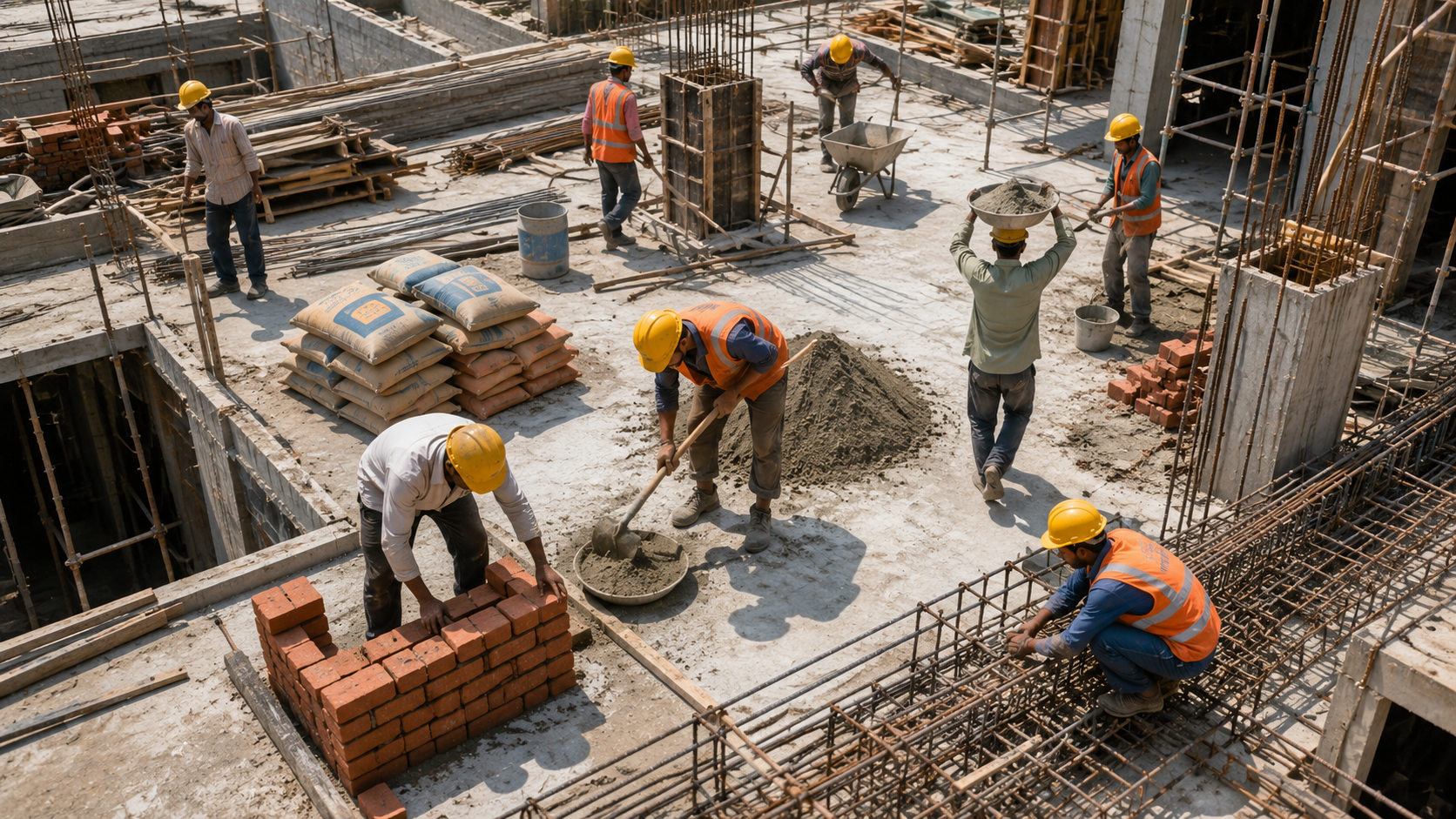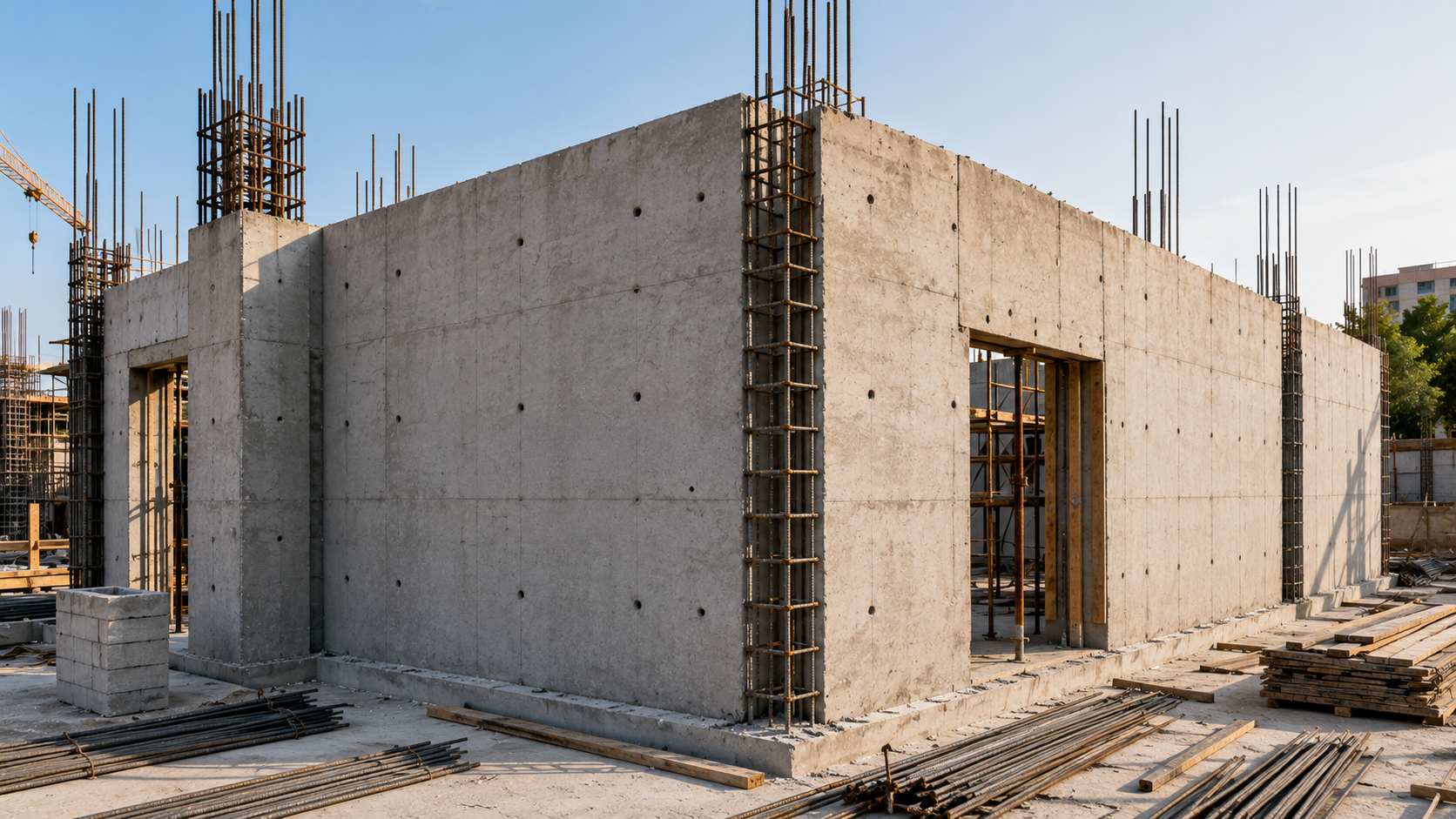


The dream of owning a sustainable home no longer has to remain out of reach for most Indians. With rising construction costs and growing environmental concerns, the demand for affordable yet eco-friendly housing solutions has never been higher. Building a sustainable home doesn't necessarily mean expensive solar panels and cutting-edge technology—it's about making smart choices with materials, design, and construction methods that work within your budget while minimizing environmental impact.
India's diverse climate zones, from the humid coastal regions to the arid deserts and temperate hill stations, offer unique opportunities for sustainable building practices tailored to local conditions. Whether you're planning to build in Delhi, Bangalore, Mumbai, or smaller tier-2 cities, understanding how to leverage low-cost sustainable materials and design strategies can help you create a home that's both economical and environmentally responsible.
Understanding the True Cost of Sustainable Building
Before diving into specific materials and strategies, it's crucial to understand what "low-cost sustainable" actually means. Sustainability isn't just about environmental impact—it's also about long-term economic savings. A sustainable home may have a slightly higher upfront cost than a conventional structure, but operational expenses over 20-30 years are significantly lower due to reduced energy consumption, minimal maintenance, and lower utility bills.
In India, the average cost of construction ranges from ₹500 to ₹1,500 per square foot, depending on the location and finish quality. Sustainable homes can be built at the lower end of this spectrum by making intelligent material choices and adopting passive design strategies that don't require expensive technological interventions.
Build cost · Bengaluru, May 2026
Low-Cost Eco-Friendly Materials for Indian Construction
Rammed Earth and Stabilized Soil Blocks
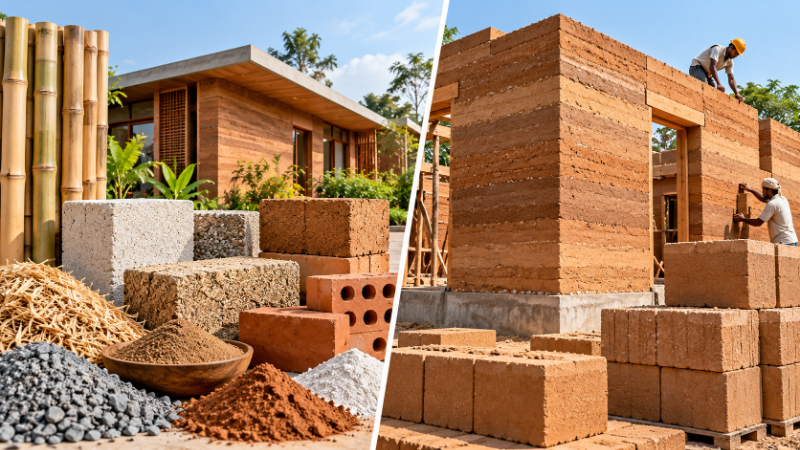
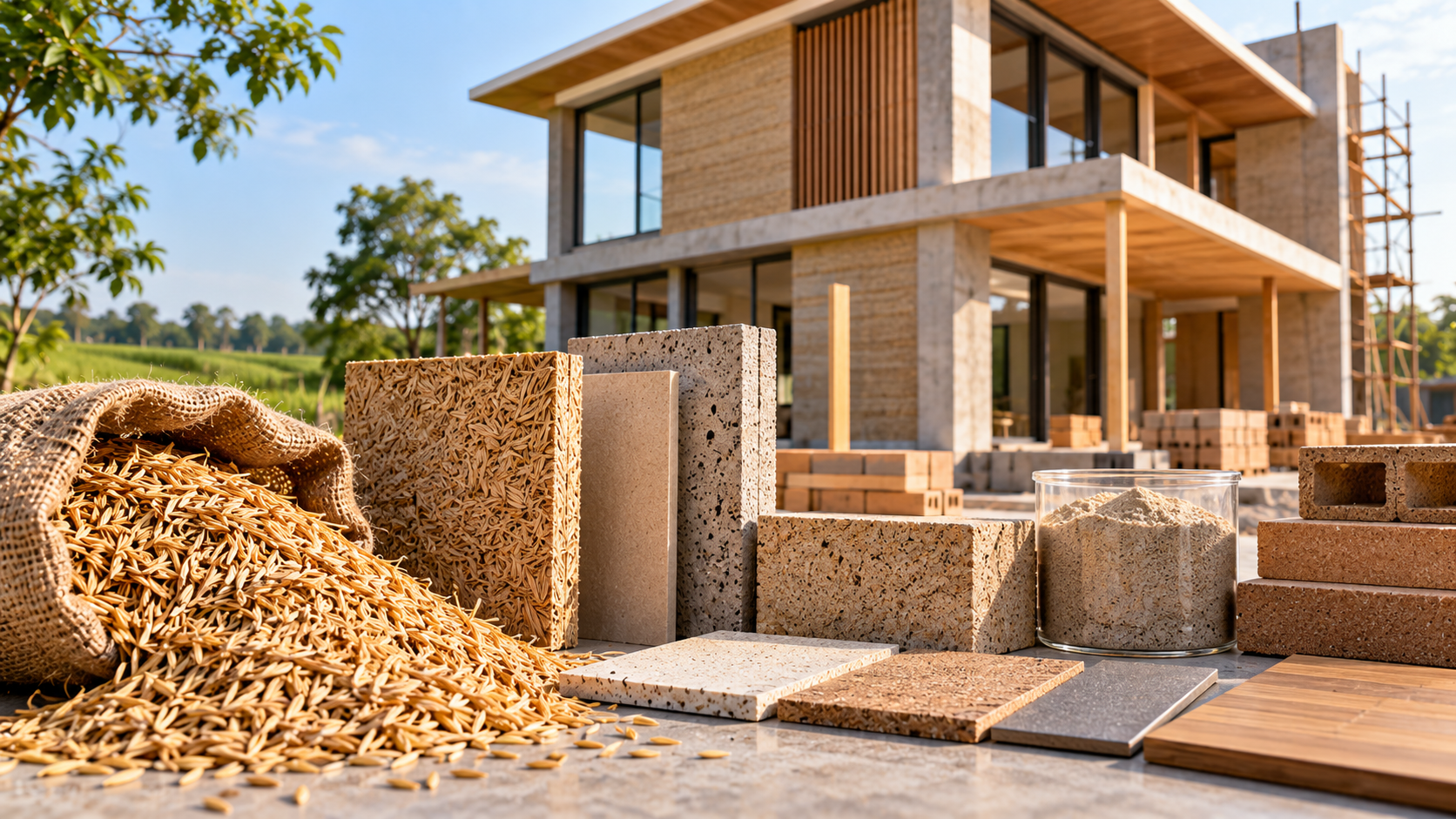
Rammed earth construction is one of India's oldest building techniques, and it's experiencing a revival among sustainable builders. This method involves compacting soil, sand, and a small percentage of cement into wooden or metal formwork, creating solid walls. The material costs approximately ₹200-400 per square foot, making it significantly cheaper than conventional brick and mortar construction.
Rammed earth offers excellent thermal mass, which helps regulate indoor temperatures naturally—a critical feature for regions like Rajasthan and Gujarat where temperature fluctuations are extreme. The material also requires minimal processing, reducing embodied energy compared to fired bricks.
Stabilized soil blocks (SSBs) are another excellent alternative. These compressed blocks made from local soil, sand, and a small cement binder can be produced locally, reducing transportation costs. They're particularly popular in rural areas of Maharashtra, Karnataka, and Telangana.
Recycled and Reclaimed Materials
Using recycled materials not only reduces costs but also diverts waste from landfills. Recycled brick, sourced from demolished structures, costs 30-40% less than new bricks and performs equally well. Many cities like Delhi, Bangalore, and Pune have suppliers specializing in reclaimed materials.
Reclaimed timber from old warehouses and industrial structures can be used for structural elements, doors, and window frames. While sourcing requires effort, the aesthetic and sustainability benefits are substantial. In Mumbai and Kolkata, several architectural salvage companies have emerged to meet this growing demand.
Frequently asked
Bamboo for Structural Elements
Bamboo is a rapidly renewable resource that grows abundantly in India, particularly in the Northeast and Western Ghats regions. It's stronger than many timber species and costs only ₹50-150 per piece depending on quality and diameter. Bamboo can be used for scaffolding, temporary structures, and even permanent elements like roof trusses when properly treated.
For structural applications, bamboo should be treated against insects and fungal decay using natural methods like borax solution or lime coating. This approach maintains sustainability while ensuring durability.
Compressed Earth Blocks (CEBs)
CEBs are manufactured blocks made from subsoil, sand, and minimal cement, compressed using mechanical presses. They're stronger than rammed earth and more uniform than SSBs, costing around ₹3-5 per block. These blocks reduce mortar requirements and provide excellent thermal properties, making them ideal for regions with high cooling demands like Chennai, Hyderabad, and Ahmedabad.
Design Strategies That Reduce Costs and Improve Sustainability
Passive Solar Design and Orientation
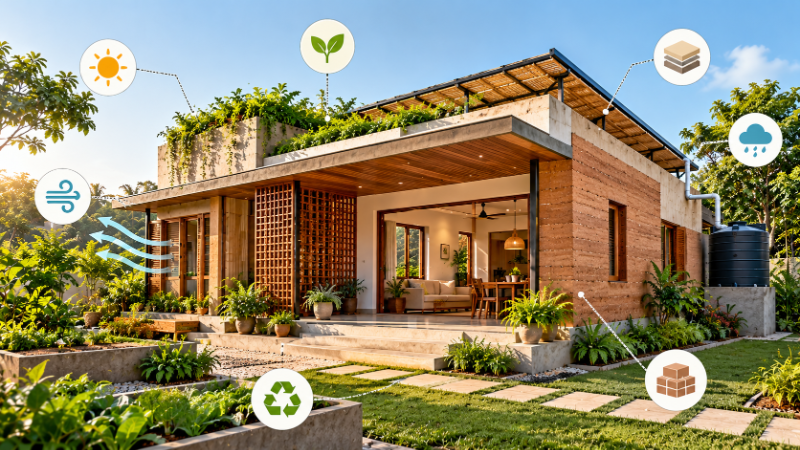
Before investing in active cooling systems, optimize your home's orientation and design for passive temperature regulation. In India's Northern regions, orienting the building's longer axis East-West allows for better solar heat gain in winter while minimizing it in summer through proper overhang design.
For Southern regions like Bangalore and Chennai, North-facing orientation is preferable to minimize solar heat gain. Strategic window placement and sizing can reduce air conditioning needs by 30-40%, translating to significant long-term savings without additional construction costs.
The cost of proper orientation and overhang design is essentially zero—it's about smart planning during the architectural phase. This is where consulting with experienced professionals through platforms like AECORD can prove invaluable, as they can help optimize your design for your specific location.
Natural Ventilation and Cross-Ventilation
Designing for natural ventilation is one of the most cost-effective sustainability strategies. In Indian homes, traditional designs like courtyards, ventilation shafts, and strategically placed windows can create air circulation without mechanical systems.
For homes in cities like Delhi and Jaipur with moderate humidity, proper cross-ventilation can eliminate the need for air conditioning during spring and autumn months. Even in humid regions like Mumbai and Kolkata, well-designed ventilation can reduce AC usage by 50%.
Creating cross-ventilation involves minimal additional cost—it's primarily a design consideration. Positioning windows on opposite walls, using clerestory windows, and incorporating wind catchers (traditional in Middle Eastern and Indian architecture) cost nothing extra but provide substantial benefits.
Thermal Mass and Insulation
Materials with high thermal mass—such as rammed earth, stone, and brick—absorb heat during the day and release it slowly at night, stabilizing indoor temperatures. This is particularly effective in regions with significant day-night temperature variations like Pune, Lucknow, and Jaipur.
For insulation, locally sourced materials like rice husk, coconut coir, and jute are excellent alternatives to synthetic foam. These materials cost ₹30-80 per square foot and provide comparable insulation values while being completely biodegradable. Agricultural waste materials are abundant and often available at minimal cost in rural areas.
Green Roofs and Living Walls
Implementing green roofs using local vegetation can reduce roof surface temperatures by 20-30°C, significantly reducing cooling loads. The cost of a basic green roof in India ranges from ₹300-600 per square foot, which is often offset by energy savings within 5-7 years.
For apartments and urban homes in cities like Bangalore and Pune, vertical gardens and living walls on South-facing walls provide both insulation and aesthetic benefits. These can be established using simple soil-filled planter systems costing as little as ₹100-200 per square meter.
Water Management and Conservation Strategies
Rainwater Harvesting Systems
India receives significant rainfall in most regions, making rainwater harvesting a practical investment. A basic system with underground tanks costs ₹30,000-80,000 depending on capacity, but can reduce municipal water dependence by 50-70% annually.
In cities like Bangalore, Mumbai, and Delhi where water scarcity is increasingly common, rainwater harvesting isn't just sustainable—it's becoming economically essential. The payback period through reduced water bills is typically 3-5 years.
Greywater Recycling
Greywater from sinks, showers, and washing machines can be recycled for toilet flushing and garden irrigation. Simple filtration systems using sand and gravel cost minimal amounts to construct and can reduce water consumption by 30-40%.
Energy Efficiency Without High Technology
Natural Lighting
Maximizing natural light through strategic window placement, skylights, and light wells reduces electricity consumption for lighting by 40-60%. Light shelves—simple reflective surfaces that bounce light deeper into rooms—cost almost nothing to install but provide substantial benefits.
Efficient Appliances and Fixtures
Investing in BEE (Bureau of Energy Efficiency) rated appliances costs slightly more upfront but results in 30-50% energy savings. LED lighting throughout the home costs 15-20% more than incandescent but lasts 25 times longer and uses 75% less energy.
Solar Water Heating
Solar water heaters are among the most cost-effective renewable energy investments in India. A basic 100-liter system costs ₹15,000-25,000 and pays for itself within 3-4 years through reduced electricity or gas bills. Given India's abundant sunshine, this is a practical investment even in Northern regions.
Construction Practices That Reduce Costs and Waste
Local Sourcing of Materials
Transportation accounts for 10-15% of material costs. Sourcing materials locally—whether it's stone from nearby quarries, timber from regional forests, or earth blocks from local manufacturers—significantly reduces expenses while supporting local economies.
In regions like Rajasthan, locally quarried sandstone is abundant and affordable. Similarly, Kerala's timber resources make wood construction economical there, while brick production is localized in most states, keeping costs low.
Modular and Prefabricated Components
Prefabricated elements like door and window frames, roof trusses, and even wall panels can be manufactured off-site with less waste and faster on-site assembly. This reduces labor costs and construction timelines by 20-30%.
Waste Reduction During Construction
Planning construction carefully to minimize waste is both economical and sustainable. Using standard dimensions that align with material sizes (like brick and block dimensions) reduces cutting waste. Reusing formwork and scaffolding materials across different areas of the site further reduces costs.
Climate-Specific Strategies for Different Indian Regions
Hot and Arid Regions (Rajasthan, Gujarat)
In these regions, prioritize thermal mass materials like rammed earth and stone, deep overhangs for shading, and minimal windows on East and West faces. Courtyards with water features provide evaporative cooling at minimal cost.
Humid Tropical Regions (Mumbai, Kerala, Goa)
Focus on excellent ventilation, elevated structures to allow air circulation beneath, and sloped roofs for rapid water runoff. Bamboo construction is particularly suitable here due to its natural resistance properties and local availability.
Temperate Regions (Himachal Pradesh, Uttarakhand)
Design for solar heat gain in winter with proper insulation and thermal mass. Local stone and timber are abundant and cost-effective. Green roofs with hardy alpine vegetation provide excellent insulation.
Semi-Arid Regions (Delhi, Jaipur, Lucknow)
Combine strategies from both arid and temperate regions. Emphasis on natural ventilation during spring and autumn, with proper shading in summer and thermal mass for winter heat retention.
Getting Professional Guidance for Your Sustainable Home
While these strategies are implementable independently, consulting with experienced architects and engineers ensures optimal results. Professionals understand local building codes, climate patterns, material availability, and cost-effective solutions specific to your region.
On AECORD, India's premier B2B2C marketplace for AECO professionals, you can connect with architects, structural engineers, and sustainable design specialists who have experience building low-cost sustainable homes in your area. Whether you're in Pune, Hyderabad, or Kolkata, AECORD helps you find vetted professionals who understand both sustainability principles and local market realities.
These professionals can help you navigate trade-offs between cost and sustainability, identify local material suppliers, and ensure your design complies with local regulations while maximizing efficiency.
Calculating Your Return on Investment
A sustainable home built using these strategies typically costs 5-10% more than conventional construction but generates returns through:
Energy savings: 40-60% reduction in electricity bills
Water savings: 30-50% reduction in water consumption
Maintenance costs: 30-40% lower due to durable materials and better construction
Health benefits: Improved indoor air quality and natural lighting reduce medical expenses
Property value: Sustainable homes command 10-15% premiums in resale
For a ₹20 lakh home, investing an additional ₹1-2 lakh in sustainable features generates returns within 5-7 years, with benefits continuing throughout the building's lifetime.
Conclusion
Building a low-cost sustainable home in India is entirely achievable with proper planning and smart material choices. By leveraging locally available materials, understanding passive design principles, and implementing water and energy conservation strategies, you can create a home that's economical, comfortable, and environmentally responsible.
The key is to think holistically about your design, considering orientation, ventilation, thermal properties, and local climate before selecting materials and systems. This approach ensures that sustainability isn't an afterthought but an integral part of your home's foundation.
Ready to turn your sustainable home dream into reality? Connect with experienced architects and engineers on AECORD who specialize in low-cost sustainable construction in your region. Browse through their portfolios, read client reviews, and find the perfect professional to guide your project from concept to completion. Your sustainable, affordable home is just a few clicks away.
Frequently Asked Questions
What is the actual cost difference between sustainable and conventional homes in India?
Sustainable homes may have a slightly higher upfront cost than conventional structures, but they offer significant long-term savings through reduced energy consumption, minimal maintenance, and lower utility bills over 20-30 years. In India, sustainable homes can be built at ₹500-1,500 per square foot by making intelligent material choices and adopting passive design strategies.
What are the best low-cost sustainable building materials available in India?
Top affordable eco-friendly materials include rammed earth (₹200-400 per sq ft), stabilized soil blocks (locally produced), recycled bricks (30-40% cheaper than new), reclaimed timber, and bamboo (₹50-150 per piece). These materials reduce costs while minimizing environmental impact and are well-suited to India's diverse climate zones.
How does rammed earth construction help with temperature control in Indian homes?
Rammed earth has excellent thermal mass properties that naturally regulate indoor temperatures by absorbing heat during the day and releasing it at night. This passive cooling and heating mechanism is particularly valuable in extreme climate regions like Rajasthan and Gujarat, reducing the need for expensive air conditioning systems.
Where can I find recycled and reclaimed building materials in India?
Major cities like Delhi, Bangalore, Pune, Mumbai, and Kolkata have suppliers and architectural salvage companies specializing in reclaimed materials such as recycled bricks, reclaimed timber, and other salvaged construction elements. These materials cost 30-40% less than new alternatives while offering sustainability benefits.
Can bamboo be used as a structural element in sustainable Indian homes?
Yes, bamboo is an excellent structural material for sustainable construction in India. It's stronger than many timber species, costs only ₹50-150 per piece, grows abundantly in the Northeast and Western Ghats regions, and is rapidly renewable. It can be used for scaffolding, temporary structures, and permanent building elements.