



Complete Guide to Building Permits and Approvals in India: Everything AECO Professionals Need to Know
Building permits and approvals represent one of the most critical yet complex aspects of construction projects in India. Whether you're an architect, engineer, contractor, or project manager, understanding the permit process can mean the difference between a project that launches on schedule and one that faces costly delays. This comprehensive guide walks you through every step of obtaining building permits across India's diverse regulatory landscape.
Build cost · Bengaluru, May 2026
Understanding the Building Permit Landscape in India
India's building permit system operates under a decentralized framework where both central and state governments establish guidelines, but individual municipal corporations and local authorities have significant authority over implementation. This means that while core principles remain consistent, the specific requirements, timelines, and costs can vary considerably between cities like Mumbai, Delhi, Bangalore, and Hyderabad.
The primary objective of building permits is to ensure that construction projects comply with safety standards, zoning regulations, environmental requirements, and municipal bylaws. Before breaking ground on any project, you'll need to navigate multiple approval stages, each with its own documentation requirements and processing timelines.
Key Regulatory Bodies and Their Roles
Municipal Corporations and Local Authorities
Your local municipal corporation is typically your first point of contact for building permits. In metropolitan areas like Mumbai, the Brihanmumbai Municipal Corporation (BMC) handles all building approvals. Similarly, Delhi has the Municipal Corporation of Delhi (MCD), Bangalore has the Bruhat Bengaluru Mahanagara Palike (BBMP), and Hyderabad has the Greater Hyderabad Municipal Corporation (GHMC). These bodies issue occupancy certificates and building permits after verifying that your project meets local bylaws.
Frequently asked
Town Planning and Development Authorities
State-level development authorities like the Maharashtra Housing and Area Development Authority (MHADA) or the Bangalore Development Authority (BDA) often have jurisdiction over certain areas and may require separate approvals. These organizations ensure that projects align with regional development plans and infrastructure capacity.
Environmental and Pollution Control Boards
The Central Pollution Control Board (CPCB) and state-level Pollution Control Boards oversee environmental compliance. Depending on your project's scale and nature, you may need Environmental Clearance (EC) or Environmental Impact Assessment (EIA) approvals. Projects involving significant construction activity, particularly those in ecologically sensitive areas, typically require these clearances.
Pre-Application Requirements and Documentation
Architectural and Engineering Plans
Before submitting your permit application, you'll need comprehensive architectural and engineering drawings prepared by registered professionals. These should include site plans, floor plans, elevation drawings, and structural details. All drawings must comply with the National Building Code of India (NBC) 2016 and local municipal bylaws.
The cost of preparing these plans varies by project complexity. For a typical 10,000 square meter commercial project in Bangalore, architectural and engineering plans might cost between ₹3-8 lakhs, depending on the consultant's experience and project complexity.
Land Ownership and Title Documents
You'll need to provide proof of ownership or authorization to construct. This includes the property deed, latest property tax receipts, and in some cases, a No Objection Certificate (NOC) from the property owner if you're not the owner. For leased properties, the lease deed and landlord's NOC are essential.
Site Survey and Demarcation
A professional site survey establishing exact property boundaries is mandatory. This survey should be conducted by a licensed surveyor and must include boundary demarcation and measurements. The survey report typically costs ₹10,000-50,000 depending on property size and location.
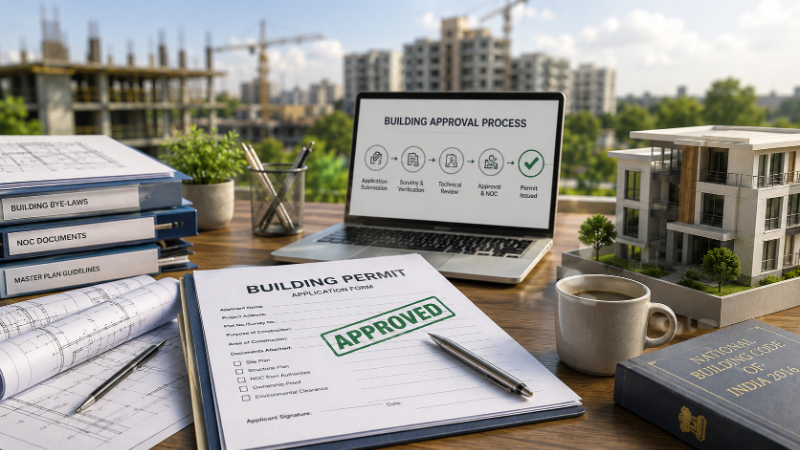
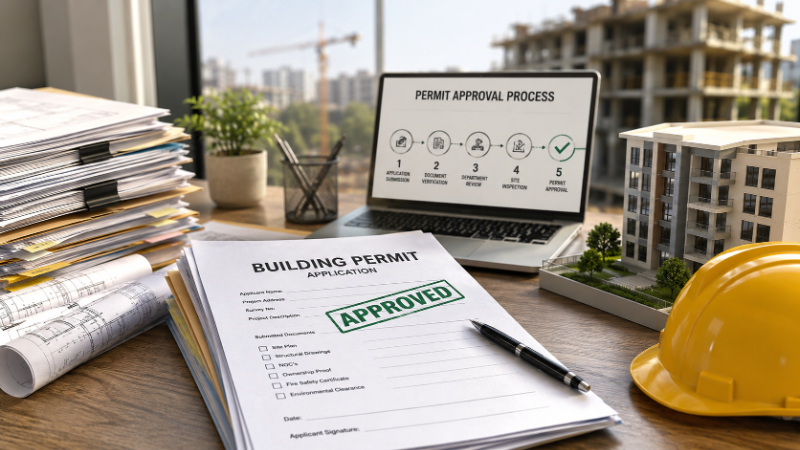
The Building Permit Application Process
Stage 1: Pre-Submission Consultation
Before formally applying, many professionals recommend consulting with the local municipal authority's planning department. This informal consultation helps you understand specific local requirements, zoning restrictions, and any unique considerations for your plot. Many cities now offer online portals where you can check zoning classifications and preliminary requirements without visiting the office.
Stage 2: Formal Application Submission
The formal building permit application includes your architectural plans, engineering drawings, environmental compliance documents, and a completed application form. In major cities like Mumbai and Delhi, most municipalities now accept online submissions through their respective portals. The application fee typically ranges from ₹5,000-50,000 depending on project cost and built-up area.
For example, in Mumbai, the BMC charges application fees based on the built-up area, with rates ranging from approximately ₹2 per square meter for residential projects to ₹5 per square meter for commercial projects. A 50,000 square meter commercial project would incur an application fee of around ₹2.5 lakhs.
Stage 3: Technical Review and Verification
Municipal engineers and planners review your submission for compliance with building codes, zoning regulations, and safety standards. This stage typically takes 15-30 days, though timelines vary by city and project complexity. The municipality may request clarifications or modifications to your plans during this phase.
Stage 4: Approval and Permit Issuance
Upon approval, the municipality issues a building permit, which authorizes you to commence construction. This permit remains valid for a specified period, typically 12-24 months. If construction doesn't begin within this timeframe, you may need to renew or reapply for the permit.
Environmental and Pollution Compliance
Environmental Impact Assessment (EIA)
Large construction projects, particularly those exceeding 20,000 square meters of built-up area or involving significant earth movement, typically require EIA approval from the Ministry of Environment, Forest and Climate Change. The EIA process involves detailed environmental studies, public consultations, and can take 6-12 months to complete.
EIA costs vary significantly but typically range from ₹5-20 lakhs for comprehensive assessments. This investment is crucial as projects without proper environmental clearance face legal challenges and work stoppages.
Pollution Control Board Clearance
The State Pollution Control Board issues Consent to Establish (CTE) for new projects and Consent to Operate (CTO) before operations begin. These clearances ensure that your construction activities and operational emissions comply with pollution standards. Processing typically takes 30-60 days after application.
Specialized Approvals for Different Project Types
Residential Projects
Residential projects require standard building permits plus compliance with residential building codes. In many cities, projects with more than four units must also comply with fire safety regulations and obtain Fire Department NOC. The cost of fire safety compliance typically ranges from ₹1-3 lakhs depending on building height and unit count.
Commercial and Mixed-Use Projects
Commercial projects involve additional complexity, including parking requirements, loading/unloading zones, and commercial activity approvals. Many cities mandate a minimum parking ratio (typically 1 space per 100 square meters of commercial space), which can significantly impact project design and costs. In Bangalore, for instance, commercial projects must provide 1 parking space per 100 square meters, adding substantial infrastructure costs.
Industrial and Special-Purpose Projects
Industrial projects require environmental clearance, hazardous materials compliance, and often separate approvals from state industrial development authorities. Special-purpose structures like hospitals, schools, or entertainment venues have additional requirements specific to their function.
Timeline and Cost Considerations
Realistic Project Timelines
The complete permit approval process typically takes 2-6 months from application to final approval, though this varies significantly:
Simple residential projects in tier-2 cities: 4-8 weeks
Standard commercial projects in metropolitan areas: 8-12 weeks
Large projects requiring environmental clearance: 6-12 months
Projects with complications or objections: 6+ months
Budget Planning for Approvals
Beyond application fees, budget for professional consulting services. Hiring experienced architectural and engineering consultants familiar with local regulations can cost ₹2-5 lakhs but often saves time and prevents costly rejections. Many firms specializing in building approvals charge 1-2% of project value as consulting fees.
For a ₹10 crore commercial project, comprehensive permit consulting might cost ₹10-20 lakhs but prevents expensive delays and rework.
Common Challenges and How to Avoid Them
Plan Rejections and Revisions
The most common reason for permit delays is incomplete or non-compliant documentation. Ensure all plans are prepared by registered professionals and reviewed against current building codes before submission. Many rejections stem from overlooked local bylaws specific to your municipality.
Zoning and Land-Use Conflicts
Before purchasing property or committing to a project concept, verify the land's zoning classification. Some plots designated as residential may have restrictions on commercial use or limitations on building height. Checking zoning classifications on your municipal authority's website typically takes an hour and prevents months of delays later.
Neighbor Objections and Public Hearings
Many projects require public notice periods where neighbors can lodge objections. Projects in sensitive areas may require public hearings. Maintaining good community relations and addressing legitimate concerns early can expedite approvals significantly.
Leveraging Technology and Professional Networks
The AECO industry in India is increasingly adopting digital solutions for permit management. Platforms like AECORD connect architects, engineers, and contractors with experienced consultants who specialize in building approvals across different cities. Using such platforms can help you quickly identify professionals familiar with your specific municipal requirements.
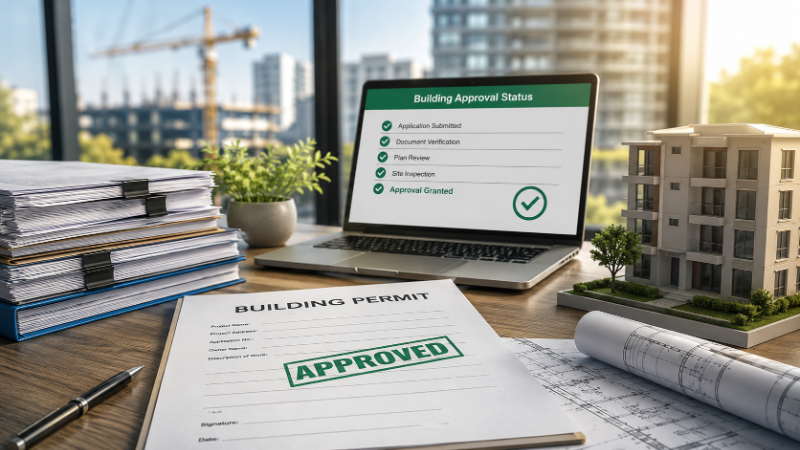
Many municipalities now offer online portals for permit tracking, allowing you to monitor application status in real-time. Familiarizing yourself with these portals and maintaining organized digital records of all submissions and correspondences significantly streamlines the process.
Post-Approval Responsibilities
Commencement Certificate
Before starting construction, obtain a Commencement Certificate from the municipal authority. This confirms that you've paid all required fees and are authorized to begin work. Construction without this certificate can result in penalties and work stoppage orders.
Regular Inspections and Compliance
During construction, the municipal authority conducts periodic inspections at key stages: foundation, structural completion, and pre-occupancy. Ensure your project manager maintains compliance with approved plans and building codes throughout construction to pass these inspections smoothly.
Occupancy Certificate
Upon project completion, apply for the Occupancy Certificate, which certifies that the building is safe for use and complies with all approved specifications. This certificate is essential for property registration and obtaining utility connections.
City-Specific Considerations
Mumbai (BMC Jurisdiction)
Mumbai's building regulations are among India's most stringent. The BMC requires detailed structural designs, environmental compliance, and fire safety approvals. Processing timelines typically range from 8-12 weeks. The city also has specific regulations for heritage structures and coastal zone projects.
Delhi (MCD Jurisdiction)
Delhi's approval process involves the MCD, Delhi Development Authority (DDA), and various state departments depending on location. Projects in certain areas may require DDA approval before municipal permits. Timelines are typically 10-14 weeks.
Bangalore (BBMP Jurisdiction)
Bangalore's BBMP has implemented a relatively efficient online system for building approvals. The city's rapid growth has created clearer guidelines, though environmental compliance remains stringent. Average processing time is 6-10 weeks for standard projects.
Hyderabad (GHMC Jurisdiction)
Hyderabad's GHMC has been progressive in digitizing approval processes. The city offers relatively quick turnaround times (6-8 weeks) for standard projects and has clear guidelines for various project types.
Conclusion and Next Steps
Building permits and approvals represent a significant investment of time and resources, but proper planning and professional guidance can substantially reduce delays and costs. The key to success is understanding your specific municipal requirements, preparing comprehensive documentation, and engaging experienced professionals early in the process.
Whether you're a seasoned architect or a first-time developer, connecting with the right professionals makes this complex process manageable. AECORD provides a platform where you can discover experienced consultants, architects, and engineers who specialize in building approvals across different Indian cities. These professionals understand local nuances and can guide you through the entire approval journey efficiently.
Start your project right by researching your local requirements, preparing detailed plans, and engaging qualified professionals. The time invested upfront in getting approvals correct prevents costly rework and project delays down the line.
Ready to navigate the building approval process? Connect with experienced AECO professionals on AECORD today and get your project approvals on track.
Frequently Asked Questions
What are the main regulatory bodies responsible for building permits in India?
India's building permit system involves multiple authorities: local municipal corporations (like BMC, MCD, BBMP, GHMC) issue permits and occupancy certificates, state-level development authorities ensure alignment with regional plans, and Pollution Control Boards handle environmental clearances. The specific authority depends on your project location and nature.
Do building permit requirements vary between Indian cities?
Yes, while core principles remain consistent across India, specific requirements, timelines, and costs vary significantly between cities like Mumbai, Delhi, Bangalore, and Hyderabad due to India's decentralized framework where local authorities have considerable implementation authority.
What documents do I need to submit for a building permit in India?
Essential documents include comprehensive architectural and engineering drawings (compliant with NBC 2016), land ownership proof or authorization documents, property deed, latest property tax receipts, and a No Objection Certificate from the property owner if applicable. Environmental clearances may also be required depending on project scale and location.
When do I need Environmental Clearance for construction projects in India?
Projects involving significant construction activity, particularly those in ecologically sensitive areas, typically require Environmental Clearance (EC) or Environmental Impact Assessment (EIA) approvals from the Central Pollution Control Board or state-level Pollution Control Boards.
How much does it cost to prepare architectural and engineering plans for building permits?
Costs vary by project complexity and consultant experience, but for a typical 10,000 square meter commercial project in Bangalore, architectural and engineering plans might cost between ₹3-8 lakhs. Larger or more complex projects will have higher costs.