

India's rapidly urbanizing landscape faces a critical challenge: rising temperatures and increasing energy demands in major cities. As climate change intensifies heat waves across metropolitan areas like Delhi, Mumbai, Bangalore, and Hyderabad, the construction industry must evolve to create homes that work with the climate, not against it. Climate-responsive design is no longer a luxury—it's a necessity for comfort, sustainability, and affordability.
This comprehensive guide explores evidence-based design strategies that help homeowners and builders create resilient, comfortable homes while reducing energy consumption and operational costs in India's hotter cities.
Understanding India's Diverse Climate Zones
Before implementing climate-responsive strategies, it's essential to understand India's varied climatic conditions. The Indian Meteorological Department categorizes the country into several climate zones, each with unique challenges:
Hot and Dry Zone: Cities like Jaipur, Jodhpur, and parts of Delhi experience extreme temperatures (45°C+) with low humidity and minimal rainfall.
Warm and Humid Zone: Coastal cities including Mumbai, Chennai, and Kolkata face high temperatures combined with high humidity levels.
Composite Zone: Cities like Bangalore and Hyderabad experience moderate temperatures but significant seasonal variations.
Temperate Zone: Hill stations and northern regions require strategies for cooler climates.
Understanding your specific climate zone is the foundation of effective climate-responsive design. Each zone requires tailored solutions to maximize comfort while minimizing energy waste.
Build cost · Bengaluru, May 2026
Strategic Orientation and Site Planning
Optimizing Building Orientation
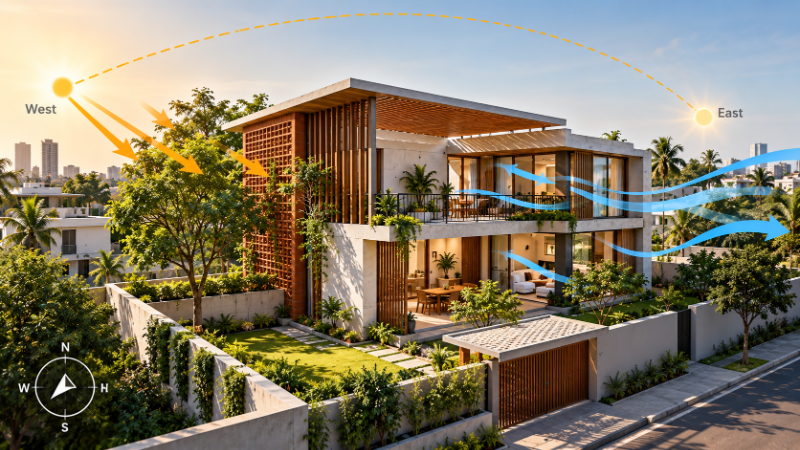
The orientation of your home significantly impacts its thermal performance. In India's Northern Hemisphere, the sun's path creates distinct thermal challenges:
East-West Axis: Positioning the long axis of your building along the east-west direction reduces heat gain on the primary facades. This is particularly effective in hot and dry zones.
North-South Axis: This orientation works better in warm and humid climates where cross-ventilation is crucial for natural cooling.
Window Placement: Minimize large windows on the west and south facades, where afternoon sun is most intense. Prioritize north-facing windows for consistent, non-thermal light.
Studies show that proper orientation can reduce cooling loads by 15-25%, translating to significant savings in cities like Delhi where summer air conditioning costs can exceed ₹5,000-8,000 monthly for average households.
Landscape and Vegetation Strategy
Strategic landscaping is a cost-effective cooling tool often overlooked in urban design:
Deciduous Trees: Plant large deciduous trees on the south and west sides. They provide shade during summer while allowing winter sunlight penetration. Species like Neem, Peepal, and Ashoka are excellent choices for Indian climates.
Green Buffers: Create vegetation buffers around the building perimeter to reduce ambient temperature through evapotranspiration. Research shows green areas can lower surrounding air temperatures by 2-5°C.
Vertical Greening: Living walls and climbing vines on external walls reduce surface temperatures and provide insulation benefits.
In cities like Bangalore and Hyderabad, incorporating native vegetation reduces landscape maintenance costs while supporting local ecosystems.
Frequently asked
Thermal Mass and Building Envelope Design
Effective Use of Thermal Mass
Thermal mass—the ability of materials to absorb and release heat—is crucial for temperature regulation. In India's hot climates, proper thermal mass management prevents rapid temperature fluctuations:
Material Selection: Use materials with high thermal mass such as brick, stone, and concrete. These materials absorb heat during the day and release it slowly at night when external temperatures drop.
Wall Construction: Traditional Indian architecture used thick masonry walls (300-400mm) for good reason. Modern construction should maintain substantial wall thickness to maximize thermal lag—the time delay between external and internal temperature peaks.
Placement Strategy: Position thermal mass on interior surfaces where it can absorb cooler night air and moderate daytime temperatures.
In cities like Jaipur and Jodhpur, where temperature swings between day and night can exceed 15°C, proper thermal mass can reduce peak indoor temperatures by 3-7°C without active cooling.
Insulation Requirements
While insulation is often associated with cold climates, it's equally important in hot regions to prevent heat infiltration:
Roof Insulation: Roofs receive the most intense solar radiation. Insulation materials like mineral wool, expanded polystyrene (EPS), or aerogel reduce heat transfer by 40-60%. Budget approximately ₹150-300 per square meter for quality roof insulation.
Wall Insulation: External wall insulation systems (EWIS) create a protective layer, reducing heat transmission by 30-40%.
Reflective Surfaces: Use cool roof coatings and light-colored external finishes to reflect solar radiation. White or light gray surfaces can reduce roof surface temperatures by 20-30°C compared to dark surfaces.
The National Building Code of India (NBC) now recommends specific U-values (thermal transmittance) for different climate zones. Compliance not only improves comfort but may qualify homes for energy efficiency certifications.
Natural Ventilation and Air Movement
Cross-Ventilation Design
Natural ventilation is one of the most effective passive cooling strategies, particularly in warm and humid zones like Mumbai and Chennai:
Window Placement: Position windows on opposite or adjacent walls to create cross-ventilation. Ensure openings are sized appropriately—typically 5-15% of floor area depending on climate.
Stack Effect: Design vertical air movement by creating height differences between inlet and outlet openings. Warm air naturally rises and exits through higher openings while cooler air enters through lower openings.
Wind Catchers: Traditional wind towers (badgirs) used in Rajasthan and Gujarat capture prevailing breezes and direct them into living spaces. Modern interpretations of this ancient technology are gaining popularity.
Effective natural ventilation can reduce air conditioning usage by 30-50% during moderate weather periods, significantly lowering electricity bills.
Night Cooling Strategies
In hot and dry zones, nighttime temperatures often drop significantly. Capturing this cooling potential is crucial:
Night Ventilation: Open windows and doors during cooler nighttime hours to flush warm air from the building. This precools the thermal mass for the following day.
Automated Controls: Install smart ventilation systems that automatically open/close based on temperature sensors, optimizing night cooling without manual intervention.
Evaporative Cooling: In dry climates, fountains, water features, and wet surfaces near ventilation openings enhance cooling through evaporation.
Water Management and Evaporative Cooling
Strategic Water Features
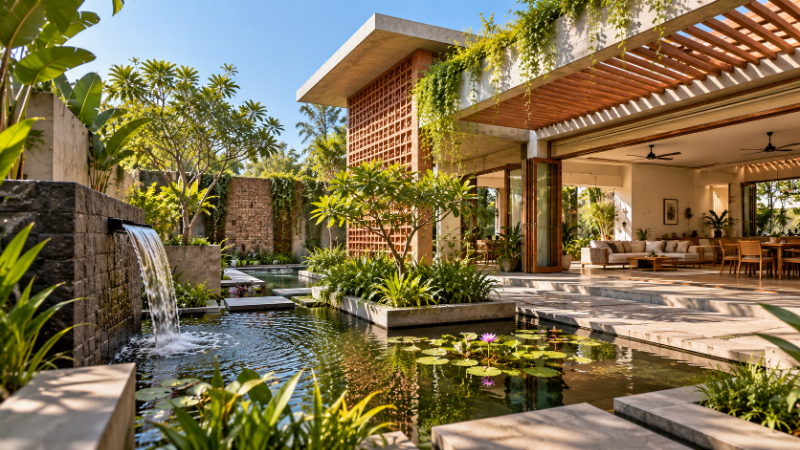
Water's high heat capacity makes it an excellent cooling medium. In Indian architecture, courtyards with water features have long been used for temperature regulation:
Courtyards and Atriums: Central courtyards with water features create microclimates that cool surrounding spaces through evaporation and radiation. This design is particularly effective in composite climate zones like Bangalore.
Fountains and Pools: Even small water features reduce ambient temperature by 2-3°C in their vicinity. Budget ₹50,000-200,000 for a functional courtyard water feature.
Rainwater Harvesting: Integrate rainwater harvesting systems that provide water for cooling features while addressing water scarcity issues common in Indian cities.
Evaporative Cooling Systems
In dry climates, evaporative coolers (desert coolers) are highly effective and economical:
Operating Costs: Evaporative coolers consume 75-80% less electricity than air conditioners, costing approximately ₹200-400 monthly versus ₹2,000-5,000 for AC units.
Climate Suitability: Most effective in areas with relative humidity below 50%. Cities like Delhi, Jaipur, and Lucknow are ideal for this technology.
Hybrid Approach: Combine evaporative cooling with conventional AC, using coolers during dry seasons and AC only during peak humidity periods.
Window Design and Shading Systems
Advanced Window Solutions
Windows are critical thermal weak points. Modern solutions significantly improve performance:
Double Glazing: Reduces heat transfer by 40-50% compared to single-pane windows. Low-emissivity (Low-E) coatings further reduce solar heat gain by 25-30%.
Window-to-Wall Ratio: Limit glazing to 20-30% of wall area in hot climates. Each square meter of west-facing glass can add 200-300W of heat load during peak hours.
Electrochromic Glass: Smart glass that adjusts tint based on solar intensity is emerging in premium developments. While currently expensive (₹3,000-5,000 per square meter), prices are declining.
External Shading Strategies
External shading is more effective than internal solutions because it blocks heat before it enters the building:
Overhangs and Louvers: Properly sized overhangs block high-angle summer sun while allowing low-angle winter sun penetration. Calculate overhang depth using your latitude and desired solar angles.
Vertical Fins: Particularly effective for east and west-facing windows, vertical fins block low-angle morning and afternoon sun.
Retractable Systems: Motorized blinds and shutters offer flexibility, adapting to seasonal and daily changes. Costs range from ₹500-1,500 per square meter.
Traditional Solutions: Jali screens and wooden lattice work not only provide cultural continuity but offer excellent shading while maintaining aesthetic appeal.
Active Cooling Systems and Energy Efficiency
High-Efficiency Air Conditioning
Despite passive strategies, active cooling remains necessary in India's hottest cities. Selecting efficient systems is crucial:
SEER Ratings: Choose air conditioners with high Seasonal Energy Efficiency Ratios (SEER). 5-star rated units consume 30-40% less electricity than 3-star models.
Variable Refrigerant Flow (VRF): These systems adjust cooling output based on demand, reducing energy waste. Increasingly popular in premium residential projects.
Maintenance Importance: Regular servicing can improve AC efficiency by 15-20%. Budget ₹500-1,000 annually for professional maintenance.
Renewable Energy Integration
Combine climate-responsive design with renewable energy for optimal sustainability:
Solar Panels: Rooftop solar installations offset cooling loads. A 5kW system can generate ₹60,000-80,000 annual savings in cities like Delhi and Bangalore.
Solar Thermal Systems: Solar water heaters reduce electricity consumption for hot water, indirectly lowering overall energy demand.
Government Incentives: Many Indian states offer subsidies for solar installations. Check with your state renewable energy agency for current programs.
Indoor Environmental Quality
Moisture and Humidity Control
In warm and humid climates, managing humidity is as important as managing temperature:
Ventilation Rates: Ensure adequate air changes per hour (typically 4-6 ACH) to prevent moisture accumulation and mold growth.
Dehumidification: Some modern AC systems include dehumidification modes that remove moisture without excessive cooling.
Material Selection: Use breathable materials like clay tiles and lime plaster that naturally regulate humidity.
Air Quality Considerations
Climate-responsive design must not compromise indoor air quality:
Pollutant Filtering: In cities with poor outdoor air quality (Delhi, Mumbai), integrate high-efficiency particulate air (HEPA) filters in ventilation systems.
Indoor Plants: Strategic placement of air-purifying plants like Areca palms and snake plants provides natural filtration.
VOC Reduction: Use low-VOC paints, adhesives, and finishes to minimize indoor air pollutants.
Case Studies: Climate-Responsive Homes in Indian Cities
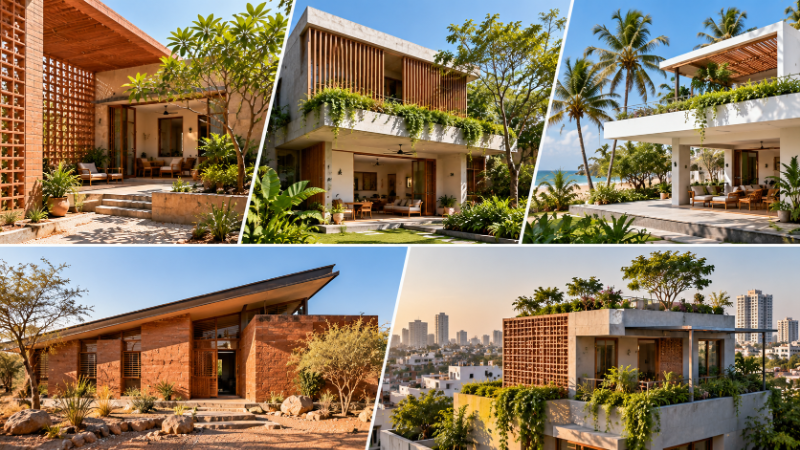
Hot and Dry Climate: Jaipur Example
A residential project in Jaipur implemented thick masonry walls (400mm), strategic overhangs, and evaporative cooling. Results: 35% reduction in peak indoor temperature and 60% lower cooling energy consumption compared to conventional design.
Warm and Humid Climate: Mumbai Example
A Mumbai apartment building featured cross-ventilation design, double-glazed windows with external shading, and a central atrium with water features. Residents reported 40% reduction in AC usage during monsoon and transitional seasons.
Composite Climate: Bangalore Example
A Bangalore residence combined moderate insulation, natural ventilation, and modest solar panels. Annual energy consumption was 30% below comparable conventional homes.
Implementation Costs and ROI
Climate-responsive design requires upfront investment but delivers substantial returns:
Passive Strategies: Improved orientation, shading, and insulation typically add 5-10% to construction costs but reduce operational expenses by 30-50%.
Payback Period: Most climate-responsive investments pay for themselves within 5-8 years through energy savings.
Property Value: Energy-efficient homes command 10-15% premium in resale value in major Indian cities.
Working with AECORD Professionals
Implementing climate-responsive design requires expertise across multiple disciplines. AECORD connects you with specialized professionals including climate consultants, passive design architects, and energy efficiency engineers who understand India's diverse climatic conditions and local building practices.
Whether you're designing a new home or retrofitting an existing structure, AECORD's network of AECO professionals can help you navigate climate-responsive strategies specific to your city and climate zone. From initial design consultation through construction oversight, finding the right expertise ensures your home achieves optimal comfort and efficiency.
Conclusion
Climate-responsive design is not a one-size-fits-all approach. India's diverse climates demand tailored solutions that consider local conditions, materials, and cultural practices. By implementing strategic orientation, thermal mass management, natural ventilation, intelligent shading, and efficient active systems, homeowners can create comfortable, sustainable homes that reduce energy consumption by 30-60% while improving indoor environmental quality.
The investment in climate-responsive design pays dividends through lower utility bills, enhanced comfort, and increased property value. As India's cities grow hotter and more crowded, climate-responsive homes represent not just a smart financial decision, but a necessary step toward sustainable urban development.
Ready to design your climate-responsive home? Explore AECORD's directory of experienced architects, engineers, and sustainability consultants who specialize in climate-responsive design for Indian cities. Find the right professional for your project and start building a home that works with your climate, not against it.