17 Famous Historic Buildings in India | Architecture Guide
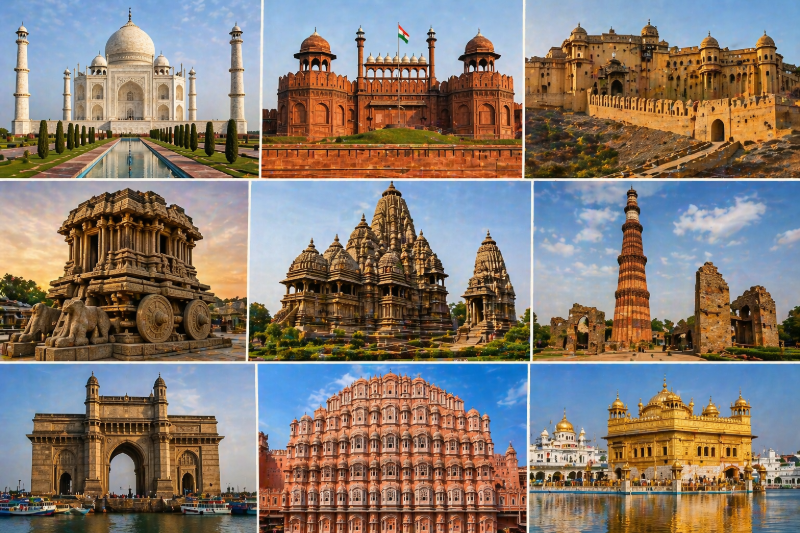
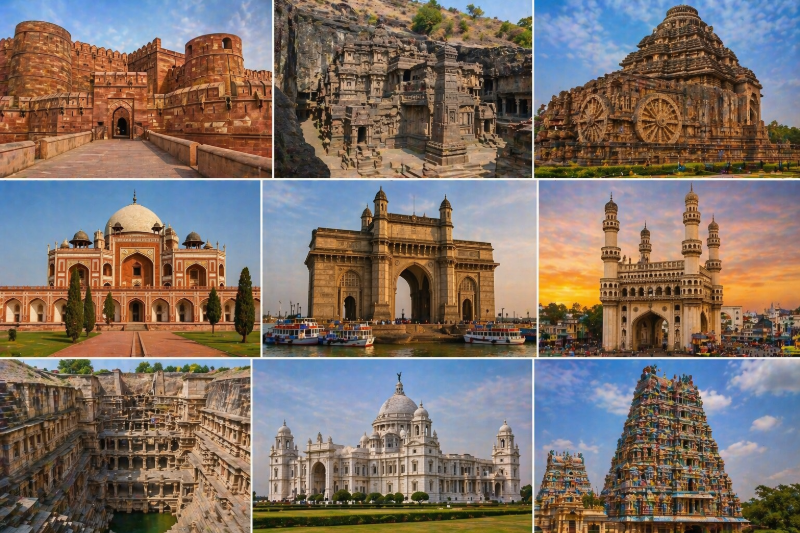
India's architectural heritage spans centuries of design innovation, from the iconic white marble Taj Mahal and the imposing Red Fort to countless other landmarks that reflect Persian, Islamic, and Indian influences. This guide explores 17 must-see buildings across the country, each offering unique insights into different periods and styles of construction that shaped Indian civilization. Whether you're an architecture enthusiast or casual traveler, these iconic structures showcase the remarkable diversity and craftsmanship that define India's built heritage.
Explore India's most iconic historic buildings from Taj Mahal to Red Fort. Complete architecture guide with visitor info and heritage sites.
Travelling through India? Bookmark these 17 famous and historic buildings to see
India's architectural heritage is as diverse and vibrant as its culture. From ancient temples carved into mountainsides to colonial-era palaces and modern marvels, the country offers an extraordinary journey through centuries of design innovation and craftsmanship. Whether you're an architecture enthusiast, a history buff, or simply a curious traveller, India's iconic buildings provide insights into the evolution of design, construction techniques, and the values of different civilizations.
This comprehensive guide explores 17 must-see architectural landmarks across India, each representing a unique period, style, or cultural significance. Whether you're planning a dedicated architecture tour or incorporating these sites into a broader Indian travel itinerary, these buildings showcase the remarkable diversity of Indian construction heritage.
Northern India's Architectural Treasures
1. Taj Mahal, Agra
No architectural tour of India is complete without visiting the Taj Mahal in Agra, Uttar Pradesh. Built between 1632-1653 by Mughal Emperor Shah Jahan as a mausoleum for his beloved wife Mumtaz Mahal, this white marble masterpiece is recognized as one of the world's most beautiful buildings.
The Taj Mahal exemplifies Mughal architecture at its finest, combining Persian, Islamic, and Indian architectural elements. The structure spans 73.5 meters on each side, with four minarets positioned at the corners. The intricate inlay work featuring semi-precious stones creates stunning floral patterns that seem to glow differently depending on the time of day.
Visitor Information: Open sunrise to sunset (closed Fridays). Best visited during October-March. Entry fee: ₹250 for Indian nationals, ₹650 for foreign nationals.
2. Red Fort, Delhi
The Red Fort (Lal Qila) in Old Delhi stands as a testament to Mughal power and architectural prowess. Constructed by Emperor Shah Jahan in 1638, this massive fortified palace served as the residence of Mughal emperors for nearly 200 years.
The fort's distinctive red sandstone walls span 2.4 kilometers and enclose several palaces, gardens, and administrative buildings. Key structures within include the Diwan-i-Aam (Hall of Public Audience), Diwan-i-Khas (Hall of Private Audience), and the Moti Masjid (Pearl Mosque). The intricate marble inlay work and architectural proportions demonstrate the sophisticated understanding of design principles during the Mughal period.
Visitor Information: Open 9:30 AM to 4:30 PM (closed Mondays). Entry fee: ₹300 for Indian nationals, ₹500 for foreign nationals.
3. Jama Masjid, Delhi
Completed in 1656, the Jama Masjid is one of India's largest mosques and represents a pinnacle of Mughal architectural achievement. Also commissioned by Shah Jahan, this structure can accommodate up to 25,000 worshippers.
The mosque features a spacious courtyard, two minarets standing 40 meters high, and three domes. The use of marble and red sandstone, combined with intricate calligraphic inscriptions, creates a serene and spiritually uplifting environment. The architectural design demonstrates sophisticated understanding of acoustics and crowd management.
4. India Gate, Delhi
Designed by architect Sir Edwin Lutyens and completed in 1931, India Gate represents the transition between colonial and modern Indian architecture. This 42-meter high archway was built to commemorate Indian soldiers who died in World War I.
The structure combines classical architectural elements with Art Deco influences. The red and buff sandstone construction, decorative arches, and inscriptions create a landmark that has become iconic in Delhi's landscape. The surrounding lawns and the monument's scale make it a popular gathering place and photography destination.
Eastern India's Architectural Gems
5. Jagannath Temple, Puri
The Jagannath Temple in Puri, Odisha, stands as one of India's most significant Hindu pilgrimage sites and a masterpiece of Odishan temple architecture. Built in the 12th century by King Anantavarman Chodaganga, the temple's main structure rises to approximately 65 meters.
The temple exemplifies the distinctive features of Odishan architecture: the curved shikhara (spire), intricate stone carving, and elaborate sculptural decorations. The Jagamohana (assembly hall) and sanctum sanctorum showcase remarkable craftsmanship, with every stone precisely fitted without mortar. The temple's annual Rath Yatra (chariot festival) attracts millions of devotees and showcases the building's cultural significance.
6. Konark Sun Temple, Odisha
Built in the 13th century by King Narasimhadeva I, the Konark Sun Temple near Puri is an architectural marvel that represents the zenith of Odishan temple design. Dedicated to the Sun God, the entire structure is designed as a gigantic chariot with 24 wheels.
The temple's intricate stone carvings depict scenes from daily life, mythology, and celestial bodies. Each wheel is approximately 10 meters in diameter and features detailed sculptures. The temple's engineering brilliance is evident in its structural design, which has allowed it to withstand centuries of weathering. The UNESCO World Heritage Site status reflects its global architectural significance.
Southern India's Architectural Wonders
7. Meenakshi Temple, Madurai
The Meenakshi Amman Temple in Madurai, Tamil Nadu, is one of South India's most important Hindu temples and a stunning example of Dravidian architecture. The temple's history spans over 2,500 years, with significant construction and renovation occurring during the Nayak period (16th-18th centuries).
The temple complex spans 17 acres and features four towering gopurams (gateway towers) reaching heights of 46-52 meters. These structures are covered with thousands of colorful sculptures depicting deities, celestial beings, and mythological scenes. The intricate stone carving, with every surface adorned with detailed sculptures, demonstrates the exceptional craftsmanship of South Indian artisans.
8. Brihadeeswarar Temple, Thanjavur
Built in the 11th century by Chola Emperor Rajaraja I, the Brihadeeswarar Temple in Thanjavur, Tamil Nadu, represents the peak of Chola architecture. The temple's main tower (vimana) rises to 66 meters, making it one of the tallest structures built during its era.
The temple's copper-covered roof reflects sunlight dramatically, and the capstone (amalaka) weighs approximately 216 tons—remarkable considering the construction techniques available in the 11th century. The temple's interior features intricate murals, detailed stone carvings, and a sophisticated water management system that still functions effectively.
9. Virupaksha Temple, Hampi
Located in Hampi, Karnataka, the Virupaksha Temple dates back to the 7th century but was significantly expanded during the Vijayanagara Empire (14th-16th centuries). The temple showcases the architectural brilliance of the Deccan region.
The temple complex features impressive stone carvings, elaborate pillared halls, and a sacred tank. The intricate relief work on pillars depicts scenes from Hindu epics, demonstrating the narrative capabilities of stone sculpture. The temple's layout reflects sophisticated understanding of sacred geometry and spatial planning.
Western India's Architectural Heritage
10. Gateway of India, Mumbai
Completed in 1924, the Gateway of India in Mumbai represents the pinnacle of Indo-Saracenic architecture. Designed by British architect George Wittet, this 26-meter high structure combines elements of Indian and European architectural styles.
The gateway's distinctive features include its central dome, intricate stone carvings, and detailed tilework. Built using yellow and blue basalt stone, the structure has become Mumbai's most iconic landmark. The monument commemorates King George V's visit to India and stands as a symbol of Mumbai's historical importance as a colonial port city.
11. Hawa Mahal, Jaipur
The Hawa Mahal (Palace of Winds) in Jaipur, Rajasthan, is one of India's most recognizable structures. Built in 1799 by Maharaja Sawai Pratap Singh, this five-story pink sandstone structure features 953 small windows (jharokhas).
The building's unique honeycomb-like design served a practical purpose: it allowed royal women to observe street festivities and public life without being seen. The intricate latticed windows create stunning light patterns throughout the day. The structure stands as a masterpiece of Rajasthani architecture, blending Hindu and Mughal design elements.
12. City Palace, Jaipur
Built between 1729-1732 by Maharaja Sawai Jai Singh II, the City Palace in Jaipur represents a harmonious blend of Mughal and Western architecture. The palace complex continues to serve as the residence of the royal family while portions remain open to the public.
The palace features elaborate courtyards, detailed stone carving, and sophisticated spatial planning. The Chandra Mahal (Moon Palace), the main residential structure, rises seven stories and showcases intricate architectural details. The palace's design demonstrates how traditional Indian architecture adapted to incorporate Western influences during the colonial period.
13. Umaid Bhawan Palace, Jodhpur
Completed in 1943, the Umaid Bhawan Palace in Jodhpur, Rajasthan, represents one of the world's largest private residences and a masterpiece of Art Deco architecture combined with Indian design elements. Built by Maharaja Umaid Singh, the palace required 3,000 workers and 15 years to complete.
The palace covers 2.5 acres and features 347 rooms. The use of local sandstone, intricate tilework, and sophisticated engineering systems demonstrate the architectural capabilities of early 20th-century India. The palace's design influenced modern palace architecture across India.
Central India's Architectural Splendors
14. Khajuraho Temples, Madhya Pradesh
The Khajuraho temple complex in Madhya Pradesh comprises 85 temples built between the 10th-12th centuries during the Chandela dynasty. These temples represent the finest examples of medieval Hindu and Jain temple architecture.
The temples feature intricate stone carving with elaborate sculptures depicting celestial beings, dancers, and mythological scenes. The architectural design demonstrates sophisticated understanding of structural engineering, with towers rising to heights of 30 meters. The temples' layout follows sacred geometric principles, creating a harmonious spatial arrangement.
15. Sanchi Stupa, Madhya Pradesh
The Great Stupa at Sanchi, built during the reign of Emperor Ashoka in the 3rd century BCE, represents one of India's most important Buddhist architectural monuments. The hemispherical stone structure stands 21.3 meters high and exemplifies ancient Indian construction techniques.
The stupa features four ornate gateways (toranas) decorated with intricate stone carvings depicting scenes from Buddha's life. The architectural design demonstrates the evolution of Buddhist temple architecture and the sophisticated craftsmanship of ancient Indian artisans. The site's UNESCO World Heritage status reflects its global architectural and cultural significance.
Himalayan Region's Unique Architecture
16. Kangra Fort, Himachal Pradesh
Perched on a hilltop overlooking the Kangra Valley, Kangra Fort in Himachal Pradesh represents centuries of architectural evolution. The fort dates back to the 4th century, with significant construction during the Mughal and Sikh periods.
The fort's architecture reflects the defensive requirements of its mountain location, with thick stone walls and strategic positioning. The interior features palaces, temples, and administrative structures showcasing various architectural styles accumulated over centuries. The fort's strategic location and architectural design demonstrate sophisticated understanding of mountain fortification.
17. Lamayuru Monastery, Ladakh
Located in Ladakh, the Lamayuru Monastery represents the distinctive Buddhist architecture of the Himalayan region. Built in the 11th century, the monastery showcases Tibetan and Central Asian architectural influences.
The complex features multiple buildings with characteristic sloped roofs, ornate woodwork, and colorful decorative elements. The monastery's location on a mountainside demonstrates adaptation to challenging terrain. The architectural style reflects the cultural exchange between India, Tibet, and Central Asia along the historic Silk Road.
Planning Your Architectural Journey
Best Time to Visit
The optimal time to visit these architectural landmarks depends on your location preferences. For northern sites like the Taj Mahal and Delhi monuments, October through March offers pleasant weather. For southern temples, November through February provides comfortable conditions. Monsoon season (June-September) should generally be avoided due to heavy rainfall.
Practical Considerations
When planning your architectural tour, consider hiring local guides who can provide detailed historical context and architectural insights. Many monuments offer audio guides in multiple languages. Photography policies vary by site—always check restrictions before visiting. Allow sufficient time at each location to appreciate architectural details and take photographs.
Budget considerations vary significantly. Entry fees range from ₹250 to ₹500 for major monuments, while some temples and forts charge minimal fees. Transportation costs depend on your starting location and chosen itinerary. Consider hiring professional architects or heritage consultants through platforms like AECORD, India's B2B2C marketplace for architecture and construction professionals, if you want deeper technical insights into building design and construction methods.
Documentation and Preparation
Carry appropriate identification documents, comfortable walking shoes, and sun protection. Many sites require climbing stairs or walking on uneven surfaces. Respect local customs, especially at active temples and religious sites. Dress modestly and remove footwear where required. Photography etiquette is crucial—always ask permission before photographing people and respect any photography restrictions.
The Significance of India's Architectural Heritage
These 17 buildings represent more than just impressive structures—they embody the cultural values, technological capabilities, and artistic vision of different periods in Indian history. Each monument tells stories of empires, religions, and the craftspeople who created them.
India's architectural heritage demonstrates continuous innovation and adaptation. From ancient stupas to medieval temples, from Mughal palaces to colonial structures, Indian architecture reflects the synthesis of diverse influences while maintaining distinctive regional characteristics. The precision of stone carving, the sophistication of structural engineering, and the attention to aesthetic details showcase the exceptional capabilities of Indian builders across centuries.
Whether you're an architecture student, a heritage enthusiast, or a casual traveller, visiting these landmarks provides invaluable insights into Indian history, culture, and construction techniques. Each building offers lessons in design principles, material science, and spatial planning that remain relevant to contemporary architecture.
Conclusion
India's architectural landscape offers an unparalleled journey through time and culture. From the ethereal beauty of the Taj Mahal to the intricate carvings of Khajuraho temples, from the majestic gopurams of Meenakshi Temple to the innovative design of Hawa Mahal, these 17 landmarks showcase the extraordinary diversity and sophistication of Indian architecture.
Planning a comprehensive architectural tour requires careful consideration of geography, climate, and available time. Whether you choose to explore all 17 sites or select specific regions, each monument offers unique insights into Indian design heritage.
For those interested in understanding the technical and design aspects of these structures, consider connecting with architecture and heritage professionals through AECORD, where you can find experts specializing in heritage conservation, architectural documentation, and historical preservation. Whether you're conducting academic research, planning a heritage tour, or developing conservation projects, AECORD connects you with qualified professionals who understand India's architectural heritage deeply.
Start planning your architectural journey today. Bookmark these landmarks, research their histories, and prepare for an enriching experience exploring some of the world's most remarkable buildings. India's architectural treasures await your discovery.
Frequently Asked Questions
What are the most famous historic buildings to visit in India?
India's most iconic historic buildings include the Taj Mahal in Agra, the Red Fort in Delhi, the Jama Masjid, and India Gate. These landmarks represent different architectural periods including Mughal, colonial, and modern styles, each showcasing unique construction techniques and cultural significance across centuries of Indian design heritage.
When is the best time to visit the Taj Mahal?
The best time to visit the Taj Mahal is during October-March when the weather is cooler and more pleasant for sightseeing. The monument is open from sunrise to sunset daily except Fridays, and the marble's appearance changes beautifully throughout the day depending on lighting conditions.
What architectural styles are represented in India's historic buildings?
India's historic buildings showcase diverse architectural styles including Mughal architecture (combining Persian, Islamic, and Indian elements), colonial architecture, and modern designs. These styles reflect the country's rich cultural heritage and the evolution of construction techniques across different civilizations and time periods.
How large is the Red Fort in Delhi?
The Red Fort's distinctive red sandstone walls span 2.4 kilometers and enclose several palaces, gardens, and administrative buildings. Built by Emperor Shah Jahan in 1638, it served as the residence of Mughal emperors for nearly 200 years and demonstrates sophisticated architectural design principles.
What is the capacity of the Jama Masjid in Delhi?
The Jama Masjid, completed in 1656, can accommodate up to 25,000 worshippers and is one of India's largest mosques. It features two 40-meter high minarets, three domes, and intricate calligraphic inscriptions, demonstrating sophisticated understanding of acoustics and crowd management in its architectural design.
Frequently Asked Questions
What is the Taj Mahal and why is it famous?
The Taj Mahal is a white marble mausoleum built between 1632-1653 by Mughal Emperor Shah Jahan in Agra, Uttar Pradesh, as a tribute to his wife Mumtaz Mahal. It is recognized as one of the world's most beautiful buildings and exemplifies Mughal architecture, combining Persian, Islamic, and Indian architectural elements with intricate semi-precious stone inlay work.
When was the Red Fort in Delhi built and who constructed it?
The Red Fort (Lal Qila) was constructed by Mughal Emperor Shah Jahan in 1638 and served as the residence of Mughal emperors for nearly 200 years. The fort's distinctive red sandstone walls span 2.4 kilometers and enclose several palaces, gardens, and administrative buildings showcasing sophisticated Mughal architectural design.
How many people can the Jama Masjid in Delhi accommodate?
The Jama Masjid, completed in 1656, can accommodate up to 25,000 worshippers, making it one of India's largest mosques. It features two 40-meter high minarets, three domes, and demonstrates sophisticated architectural understanding of acoustics and crowd management through its marble and red sandstone construction.
What architectural style does India Gate represent?
India Gate, designed by Sir Edwin Lutyens and completed in 1931, represents a transition between colonial and modern Indian architecture, combining classical architectural elements with Art Deco influences. The 42-meter high archway was built to commemorate Indian soldiers who died in World War I.
What is the best time to visit the Taj Mahal?
The best time to visit the Taj Mahal is during October-March when the weather is pleasant. The monument is open from sunrise to sunset and closed on Fridays, with entry fees of ₹250 for Indian nationals and ₹650 for foreign nationals.