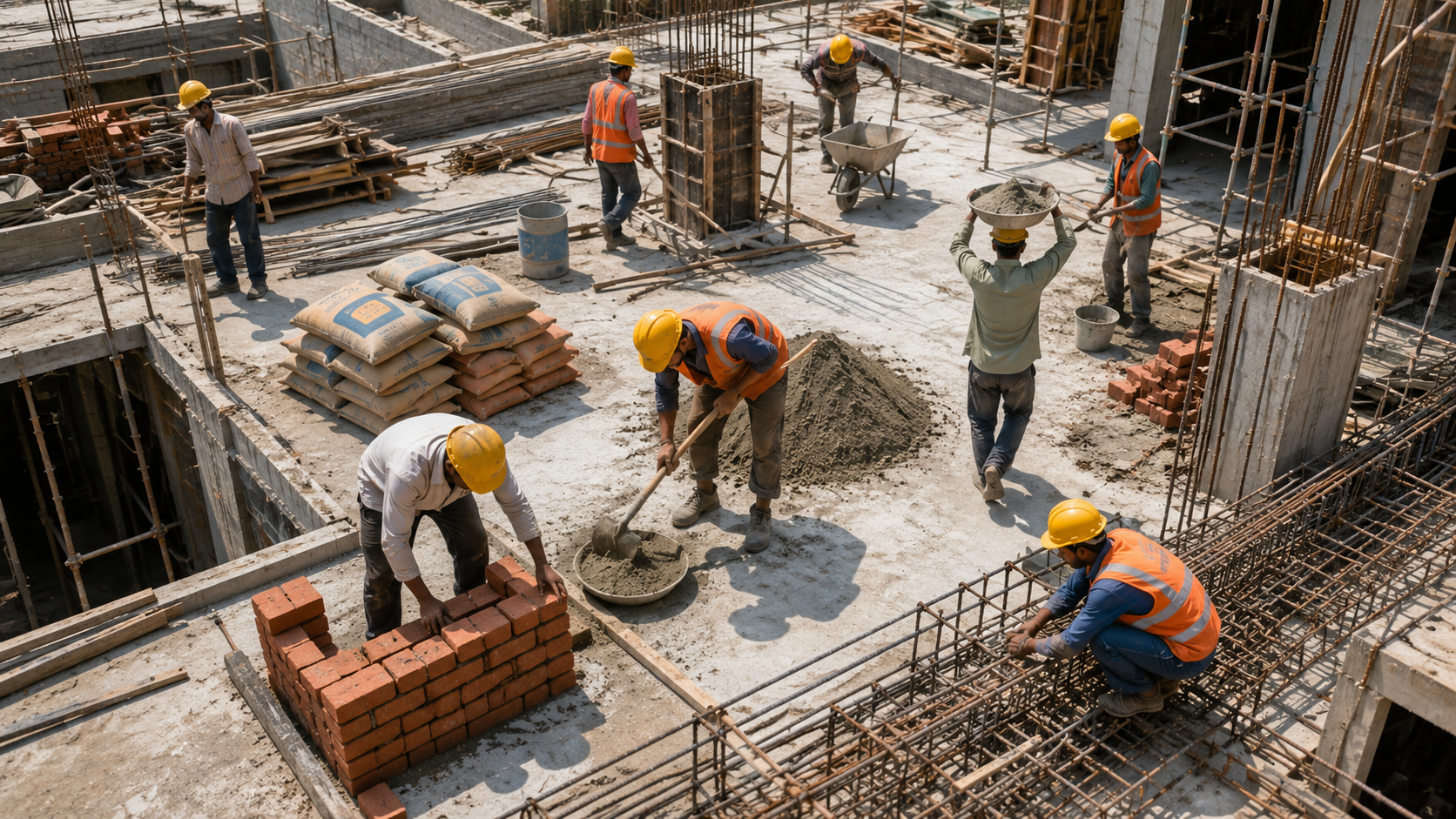




India's digital transformation has been nothing short of revolutionary, and at the heart of this transformation lies a remarkable story of innovation, ambition, and technological disruption. The Jio story—India's world—represents more than just a telecommunications breakthrough; it's a case study in how strategic infrastructure investment can reshape an entire nation's digital landscape. For professionals in the architecture, engineering, construction, and operations sectors, understanding this digital revolution is crucial, as it fundamentally changes how projects are planned, executed, and managed. /blog/the-brics-climate-stress-test-indias-opportunity-to-reshape-global-climate-finan
The Genesis of Digital India: Setting the Stage
When Reliance Industries launched Jio in September 2016, few anticipated the seismic shift it would trigger in India's digital ecosystem. The company's entry into the 4G market wasn't merely about providing another telecom service—it was about democratizing internet access across the nation. With aggressive pricing strategies and bundled data plans, Jio made high-speed internet affordable for millions of Indians who had previously remained on the periphery of the digital economy.
The timing was strategic. India in 2016 was a nation of over 1.3 billion people, with internet penetration hovering around 35%. The vision was clear: connect India, empower India, and create an ecosystem where digital services could thrive. This aligns perfectly with the government's Digital India initiative, which aimed to transform India into a digitally empowered society and knowledge economy by 2025.
For AECORD and the broader AECO (Architecture, Engineering, Construction, Operations) industry, this digital foundation became essential. Construction projects increasingly required real-time communication, digital documentation, and cloud-based project management tools—all of which became viable only with widespread, affordable high-speed internet access.
Build cost · Bengaluru, May 2026
Infrastructure Investment: The Foundation of Connectivity
Building the Network from Ground Up
Jio's infrastructure development was a monumental engineering and construction feat in itself. The company invested over ₹3.5 lakh crores in building a greenfield 4G network across India. This included laying fiber optic cables across cities and towns, establishing cell towers in remote areas, and building data centers to support the massive digital ecosystem.
The construction and infrastructure challenges were immense. Laying fiber optic cables through congested Indian cities required coordination with municipal authorities, careful planning around existing utilities, and innovative solutions for underground installation. In rural areas, erecting towers in difficult terrain demanded specialized engineering expertise and logistical prowess.
This massive infrastructure project created employment opportunities for thousands of construction workers, engineers, and project managers. It also demonstrated the importance of robust project management and coordination—lessons that AECORD professionals apply daily when managing complex construction projects across India.
The Technology Architecture
Jio's network architecture was built on cutting-edge 4G LTE technology, designed from the ground up rather than retrofitting older systems. This greenfield approach allowed for superior network quality and capacity. The company deployed advanced technologies including:
Massive MIMO technology: Enabling multiple antennas to transmit and receive more data simultaneously
Cloud-based infrastructure: Supporting scalable, flexible network operations
Data centers: Strategically located across India to minimize latency and ensure efficient content delivery
Network optimization: Using AI and machine learning to manage traffic and ensure quality of service
These technological choices reflected a deep understanding of India's unique challenges—diverse geography, varying population densities, and the need for cost-effective solutions that could scale rapidly.
Frequently asked
The Market Disruption and Consumer Impact
Pricing Revolution
Perhaps the most disruptive aspect of Jio's entry was its pricing strategy. When Jio launched, it offered unlimited 4G data at prices that seemed almost unbelievable to Indian consumers. Plans that cost ₹149-₹299 per month provided unlimited data—compared to competitors charging ₹500-₹1000 for limited data.
This pricing aggression forced the entire telecom industry to restructure. Competitors either matched Jio's prices or exited the market. The result was consolidation in the telecom sector, with the number of major players reducing from multiple competitors to essentially three major players—Jio, Airtel, and Idea-Vodafone.
For consumers, particularly in tier-2 and tier-3 cities and rural areas, this was transformative. Suddenly, affordable internet was within reach. Students could access online education, small business owners could go digital, and construction professionals could leverage digital tools for project management—whether through AECORD's platform or other digital solutions.
Digital Adoption Acceleration
Jio's affordable internet catalyzed unprecedented digital adoption across India. Between 2016 and 2023, India's internet user base grew from approximately 400 million to over 800 million. The number of smartphone users similarly doubled. This wasn't coincidental—it was directly enabled by Jio's infrastructure and pricing.
The impact on digital services was profound. E-commerce, digital payments, online education, and cloud-based services all experienced explosive growth. For the AECO industry, this meant construction professionals could increasingly rely on digital tools for design collaboration, project tracking, and client communication.
The Jio Ecosystem: Beyond Connectivity
Jio Platforms and Digital Services
Understanding Jio's impact requires looking beyond just telecom services. Reliance created Jio Platforms, an umbrella organization for various digital services including:
JioMart: E-commerce and retail platform
JioTV: Streaming entertainment service
JioMusic: Music streaming platform
JioSaavn: Music and podcast platform (acquired)
JioCinema: Video streaming service
JioGlass: Augmented reality glasses for enterprise applications
These services created a comprehensive digital ecosystem that kept users engaged and encouraged further digital adoption. For construction and engineering professionals, the availability of streaming services and digital entertainment on affordable plans meant better work-life balance and increased productivity during downtime.
5G and Future Technologies
Jio hasn't stopped at 4G. The company has already begun rolling out 5G services across major Indian cities including Mumbai, Delhi, Bangalore, Hyderabad, and Chennai. By 2024, 5G coverage is expected to expand significantly to other metros and major urban centers.
For the AECO industry, 5G opens new possibilities: real-time 3D visualization of construction sites, drone-based site monitoring with minimal latency, augmented reality applications for design visualization, and IoT sensors for equipment tracking and safety monitoring. These technologies will increasingly become standard in project management across India's construction sector.
Impact on India's Digital Economy

Economic Growth and Employment
Jio's contribution to India's digital economy is substantial. The affordable internet enabled by Jio has directly contributed to:
Startup ecosystem growth: Over 100,000 startups have been launched since 2016, many leveraging Jio's affordable connectivity
Digital payments revolution: UPI transactions grew from ₹1 lakh crore in 2016-17 to over ₹50 lakh crore by 2023-24
Gig economy expansion: Platforms for freelancing, delivery, and ride-sharing thrived on the back of reliable internet connectivity
Employment creation: Direct and indirect employment in digital services and related sectors has grown exponentially
For AECORD and construction professionals, this economic growth translates to increased construction activity. More startups mean more office spaces needed, more digital infrastructure requires physical construction, and more economic activity drives real estate development across India's cities.
Rural Digitalization
One of Jio's most significant achievements has been bringing digital connectivity to rural India. With over 400 million rural users now having internet access, the digital divide between urban and rural India has narrowed considerably.
This rural digitalization has enabled:
Agricultural innovation: Farmers accessing market information, weather forecasts, and best practices online
Financial inclusion: Rural populations accessing digital banking and insurance services
Education access: Students in remote areas accessing online education platforms
Entrepreneurship: Rural entrepreneurs launching digital businesses
For construction professionals, rural digitalization means better communication with project sites in remote areas, easier access to digital tools and resources, and improved coordination across geographically dispersed teams.
Challenges and Criticisms
Market Consolidation Concerns
While Jio's entry disrupted the market positively for consumers, it also led to significant industry consolidation. The number of telecom operators reduced from 12 in 2016 to essentially 3 major players by 2023. This raises questions about long-term competition and innovation.
The aggressive pricing, while beneficial for consumers initially, also raised sustainability questions about profitability and investment in network quality. However, Jio has consistently invested in network upgrades and 5G rollout, demonstrating commitment to continuous improvement.
Regulatory and Environmental Considerations
The massive infrastructure development required for Jio's network expansion also raised environmental and regulatory questions. Tower construction, fiber laying, and data center operations all have environmental footprints that require careful management.
Additionally, the rapid growth of digital services raised data privacy and security concerns, leading to stricter regulatory frameworks and compliance requirements. For AECORD users and construction professionals handling sensitive project data, these regulatory developments are important to understand and comply with.
The Jio Story and the AECO Industry
Digital Transformation of Construction
Jio's infrastructure has enabled the digital transformation of India's construction industry. Construction professionals now leverage:
Cloud-based project management tools: Accessible from any location with internet connectivity
Digital documentation: Moving from paper-based to digital records and compliance
Real-time site monitoring: Using drones, cameras, and IoT sensors
Collaborative design platforms: Enabling architects, engineers, and contractors to work seamlessly
Digital marketplaces: Like AECORD, connecting professionals and facilitating project collaboration
These digital tools have improved project efficiency, reduced costs, and enhanced quality—directly enabled by the affordable, reliable internet infrastructure that Jio has provided across India.
Future Opportunities
As Jio continues expanding 5G and developing new technologies, opportunities for the AECO industry will multiply. Augmented reality for design visualization, AI-powered project analytics, and IoT-enabled smart buildings are becoming increasingly viable for Indian construction projects.
Professionals using platforms like AECORD will find increasingly sophisticated tools available as digital infrastructure matures. The foundation laid by Jio makes these innovations possible and affordable across India's diverse markets—from Bangalore to Bhopal, from Mumbai to Meerut.

Lessons for Infrastructure and Development
Strategic Vision and Long-term Investment
The Jio story teaches important lessons about infrastructure development. Strategic vision combined with massive investment in foundational infrastructure can transform entire economies. For India's construction and engineering sectors, this underscores the importance of investing in digital infrastructure alongside physical infrastructure.
Inclusive Growth
Jio's success demonstrates that inclusive growth—extending services to all economic strata and geographic regions—can be both socially responsible and commercially viable. This lesson applies to construction and engineering projects, where inclusive design and accessibility are increasingly important.
Conclusion
The Jio story is fundamentally about democratizing access to digital infrastructure and services. By making high-speed internet affordable and accessible, Jio has catalyzed a digital revolution that touches every aspect of Indian society, including the construction and engineering sectors.
For AECORD professionals and the broader AECO industry, understanding this digital transformation is essential. The infrastructure that Jio has built enables new ways of working, collaborating, and innovating. As 5G expands and new technologies emerge, the pace of digital adoption in construction will only accelerate.
Whether you're an architect designing smart buildings, an engineer managing complex infrastructure projects, or a construction manager coordinating teams across multiple sites, the digital foundation laid by Jio makes your work more efficient and connected. To leverage these digital tools and connect with other professionals navigating India's digital construction landscape, explore AECORD—where architecture, engineering, construction, and operations professionals collaborate on projects using the digital infrastructure that Jio has made possible.
Ready to transform your construction projects with digital tools? Join AECORD today and discover how India's leading AECO marketplace can connect you with the right professionals and technologies for your next project.
Frequently Asked Questions
How did Jio's infrastructure investment impact India's digital transformation?
Jio invested over ₹3.5 lakh crores to build a greenfield 4G network across India, including fiber optic cables, cell towers, and data centers. This massive infrastructure project democratized internet access by making high-speed connectivity affordable for millions, transforming India's digital landscape and enabling digital services across all sectors, including AECO industries.
What engineering challenges did Jio face while building its network infrastructure?
Jio faced significant challenges including laying fiber optic cables through congested cities while coordinating with municipal authorities, erecting cell towers in remote and difficult terrain, and managing complex logistics across India's diverse geography. These challenges required specialized engineering expertise and innovative construction solutions.
How does Jio's digital infrastructure benefit construction and AECO projects?
Jio's affordable high-speed internet enabled construction projects to adopt real-time communication, digital documentation, and cloud-based project management tools. This digital foundation became essential for modern AECO professionals to plan, execute, and manage complex projects more efficiently across India.
What technology does Jio use to deliver superior network quality?
Jio uses cutting-edge technologies including Massive MIMO for simultaneous data transmission, cloud-based infrastructure for scalability, strategically located data centers to minimize latency, and AI-powered network optimization to manage traffic. This greenfield 4G LTE approach was built from scratch rather than retrofitting older systems.
When did Jio launch and what was India's internet penetration at that time?
Jio launched in September 2016 when India had over 1.3 billion people and internet penetration of approximately 35%. The launch aligned with the government's Digital India initiative to transform India into a digitally empowered society by 2025.