

Staircase Railing Designs in India 2026: Modern Trends and Traditional Elegance
Staircase railings are far more than functional safety features—they're design statements that can transform the aesthetic of your entire home or commercial space. In India, the staircase railing market has evolved dramatically over the past few years, blending contemporary minimalism with traditional craftsmanship. As we move into 2026, homeowners and architects are exploring innovative designs that balance safety regulations, sustainability, and visual appeal.
Whether you're renovating a heritage home in Delhi, building a modern apartment in Bangalore, or designing a commercial space in Mumbai, understanding the latest staircase railing trends is essential. This comprehensive guide explores the most popular designs, materials, and innovations shaping the Indian market in 2026.
Build cost · Bengaluru, May 2026
Current Market Trends in Staircase Railing Designs
The Rise of Minimalist Metal Railings
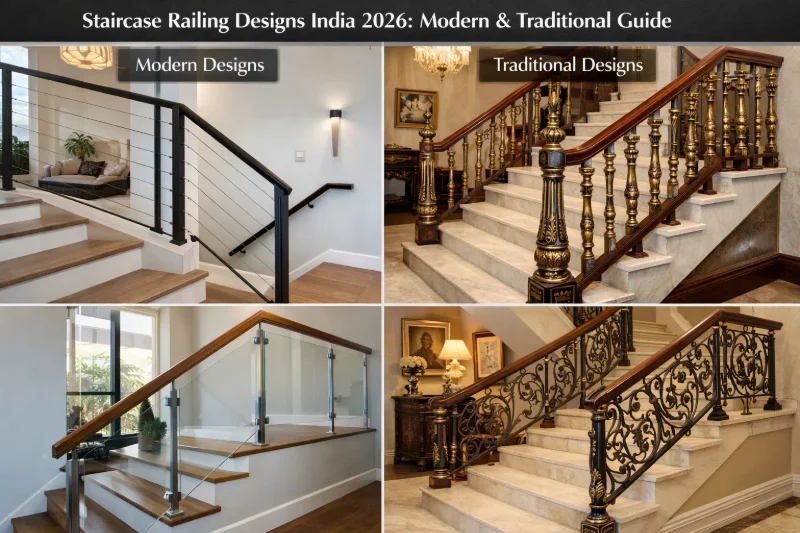
Minimalism continues to dominate interior design preferences across urban India. Contemporary staircase railings featuring sleek metal frames—particularly stainless steel and aluminum—are increasingly popular in metropolitan areas like Bangalore, Hyderabad, and Pune. These designs often feature:
Thin, horizontal metal rods creating clean lines
Frameless glass panels combined with metal accents
Matte black or brushed steel finishes
Floating staircase designs with minimal visible support
The cost of modern metal railings in India ranges from ₹800 to ₹2,500 per linear foot, depending on materials and complexity. Stainless steel options tend toward the higher end, while aluminum provides a more budget-friendly alternative without compromising aesthetics.
Glass and Metal Combinations
The fusion of tempered glass with metal frameworks has become the gold standard for contemporary Indian homes. This combination offers:
Unobstructed views and light flow through interiors
Easy maintenance and cleaning
A sophisticated, modern appearance
Compliance with Indian building safety codes
Tempered glass railings provide superior safety compared to traditional designs while maintaining visual lightness. The cost typically ranges from ₹1,200 to ₹3,000 per linear foot, with premium options featuring custom etching or frosted patterns reaching ₹4,000 per linear foot.
Frequently asked
Sustainable and Eco-Conscious Designs
Environmental consciousness is reshaping design choices across India's construction sector. In 2026, sustainable staircase railing options include:
Reclaimed wood combined with recycled metal frames
Bamboo railings for residential spaces
Composite materials made from recycled plastics
FSC-certified timber with non-toxic finishes
These eco-friendly options appeal particularly to environmentally conscious residents in cities like Pune, Bangalore, and Gurgaon. While sustainable materials may cost 10-15% more initially, they offer long-term durability and lower maintenance expenses.
Traditional Indian Railing Designs Still Thriving
Wooden Railings with Intricate Carvings
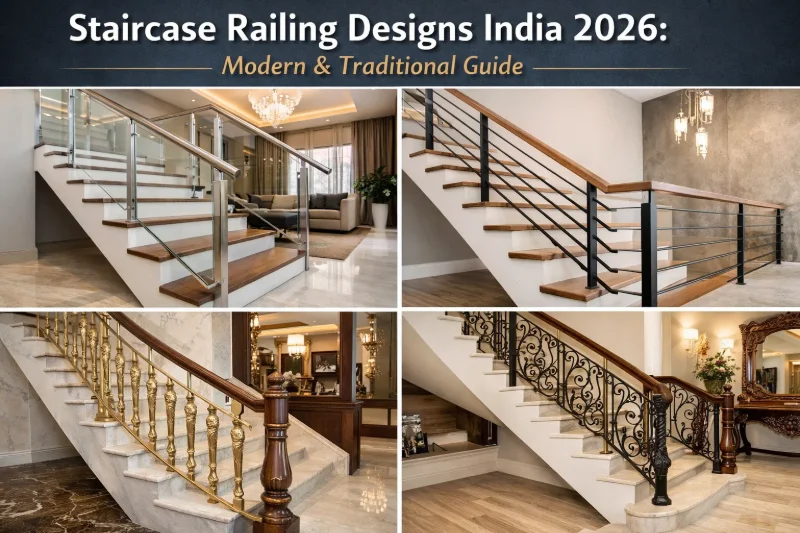
Despite the surge in modern designs, traditional wooden railings remain popular, especially in heritage properties and culturally significant residences. Indian artisans continue crafting:
Hand-carved wooden balusters featuring traditional motifs
Jali-inspired geometric patterns
Ornate designs incorporating regional artistic elements
Teak and sheesham wood railings with traditional finishes
High-quality traditional wooden railings cost between ₹1,500 and ₹4,000 per linear foot, with master craftsmen's work commanding premium prices. Cities like Jaipur, Udaipur, and Jodhpur are renowned centers for these traditional designs.
Iron and Wrought Iron Railings
Wrought iron railings represent a classic choice that bridges traditional and contemporary aesthetics. These designs feature:
Hand-forged iron elements with artistic flourishes
Powder-coated finishes in various colors
Integration with wooden or marble steps
Durability lasting 20+ years with minimal maintenance
Wrought iron railings typically cost ₹600 to ₹1,800 per linear foot, making them an economical choice for homeowners seeking traditional aesthetics without premium material costs.
Regulatory Compliance and Safety Standards in India
Building Code Requirements
The National Building Code of India (NBC) specifies strict requirements for staircase railings. Key regulations include:
Minimum railing height of 900mm (3 feet) for residential spaces
Balustrade spacing not exceeding 100mm to prevent child entrapment
Load capacity of 1.2 kN per linear meter for residential applications
Fire safety compliance for commercial buildings
When selecting railing designs, ensure your chosen professional understands these regulations. AECORD connects you with certified architects and contractors in your area who specialize in code-compliant staircase designs.
Regional Variations in Building Codes
Different states and municipal corporations in India have specific requirements. For example:
Delhi: Delhi Building Bye-laws require specific railing heights and materials for heritage properties
Mumbai: BMC regulations mandate additional fire safety measures for commercial spaces
Bangalore: BBMP has specific guidelines for residential complexes and apartment buildings
Hyderabad: GHMC regulations focus on structural safety and material durability
Consulting with local professionals ensures your railing design meets all regulatory requirements while achieving your aesthetic goals.
Material Innovations and Durability Considerations
Advanced Metal Alloys
2026 sees increased adoption of advanced metal alloys that offer superior durability in India's diverse climates:
Duplex Stainless Steel: Combines strength with excellent corrosion resistance, ideal for coastal areas like Goa and Mumbai
Aluminum Composites: Lightweight yet durable, perfect for high-rise residential buildings
Powder-Coated Steel: Offers color options while maintaining structural integrity in humid climates
Material selection significantly impacts long-term maintenance costs. Stainless steel railings in coastal regions may cost more upfront but eliminate rust-related issues that plague standard steel options.
Glass Technology Advancements
Tempered glass technology has advanced considerably. Modern options include:
Self-cleaning glass with nano-coatings
Laminated glass for enhanced safety
Smart glass that adjusts opacity electronically
Thermal-insulating glass for temperature-controlled spaces
While these advanced options increase costs, they provide long-term value through reduced maintenance and improved functionality.
Design Styles Popular in 2026
Industrial Chic
Industrial design remains strong, particularly in converted warehouse spaces and modern lofts across India's metropolitan areas. Characteristics include:
Exposed metal frameworks with minimal finishing
Reclaimed wood combined with steel
Raw, unpolished aesthetic
Cost-effective implementation (₹800-₹1,500 per linear foot)
Contemporary Minimalism
Clean lines, neutral colors, and functional simplicity define contemporary minimalist railings:
Monochromatic color schemes (black, white, gray)
Frameless glass panels
Hidden fasteners and minimal hardware visibility
Integration with smart home systems
Transitional Designs
Blending traditional elements with modern sensibilities appeals to many Indian homeowners. Transitional railings feature:
Classic balusters with contemporary finishes
Traditional patterns in modern materials
Mixed textures combining wood and metal
Versatility across various interior styles
Luxury and Bespoke Designs
High-end residential projects in cities like Mumbai, Delhi, and Bangalore increasingly feature custom-designed railings:
Handcrafted metal work by renowned artisans
Integration with art installations
Personalized designs reflecting individual aesthetics
Premium materials and finishes
Bespoke railing designs can cost ₹5,000-₹15,000+ per linear foot, depending on complexity and materials.
Installation and Maintenance Best Practices
Professional Installation Requirements
Proper installation is critical for safety and longevity. Key considerations include:
Hiring certified installers familiar with Indian building codes
Ensuring proper anchoring to structural elements
Quality checking before final approval
Obtaining necessary permits and inspections
Installation costs typically range from ₹200 to ₹500 per linear foot, depending on complexity and location.
Maintenance Schedules
Different materials require specific maintenance approaches:
Stainless Steel: Annual cleaning with mild soap solution; avoid harsh chemicals
Wooden Railings: Quarterly polishing and annual deep conditioning
Glass Panels: Monthly cleaning to prevent dust accumulation and fingerprints
Wrought Iron: Annual inspection for rust; touch-up painting as needed
Regular maintenance extends railing lifespan by 10-15 years and preserves aesthetic appeal.
Cost Considerations and Budgeting
Budget-Friendly Options
For homeowners with limited budgets, several options provide good value:
Basic Wrought Iron: ₹600-₹1,000 per linear foot
Aluminum Railings: ₹800-₹1,200 per linear foot
Standard Wooden Railings: ₹1,000-₹1,500 per linear foot
Mid-Range Solutions
Offering better aesthetics and durability:
Glass and Metal Combinations: ₹1,500-₹2,500 per linear foot
Quality Wooden Railings with Finishing: ₹1,500-₹2,500 per linear foot
Powder-Coated Steel: ₹1,200-₹2,000 per linear foot
Premium Options
For luxury projects and custom designs:
High-End Glass Systems: ₹3,000-₹5,000+ per linear foot
Artisan-Crafted Designs: ₹4,000-₹15,000+ per linear foot
Smart Glass Integration: ₹5,000-₹8,000+ per linear foot
Finding the Right Professional for Your Project
Selecting experienced professionals is crucial for successful staircase railing projects. Look for:
Architects and designers with proven experience in railing design
Contractors familiar with Indian building codes and regulations
Manufacturers with quality certifications and warranties
References from completed projects in your city
AECORD provides access to vetted architecture, engineering, and construction professionals across India who specialize in staircase design and installation. Browse portfolios, read reviews, and connect with experts who understand your local market and regulatory requirements.
Future Trends for Staircase Railings
Smart and Connected Railings
Emerging technologies are introducing smart features:
LED-integrated railings for ambient lighting
Motion-sensor lighting for safety
Temperature-responsive materials
Integration with home automation systems
Sustainable Material Innovation
The market continues developing eco-friendly alternatives:
Bio-composite materials from agricultural waste
Recycled ocean plastic railings
Carbon-neutral manufacturing processes
Locally-sourced material initiatives
Customization and 3D Design
Advanced technology enables unprecedented customization:
3D visualization before installation
Digital design tools for personalization
Parametric design for complex geometries
Virtual reality walkthroughs of proposed designs
Conclusion
Staircase railing design in India for 2026 reflects a dynamic market balancing tradition with innovation, safety with aesthetics, and cost-consciousness with quality. Whether you prefer minimalist modern designs, traditional craftsmanship, or innovative hybrid approaches, numerous options exist to enhance your space.
The key to success lies in understanding your specific needs, local regulations, budget constraints, and aesthetic preferences. Partnering with experienced professionals ensures your staircase railings meet safety standards while achieving your design vision.
Ready to transform your staircase? Explore AECORD's marketplace to find qualified architects, designers, and contractors specializing in staircase railings in your city. Connect with professionals who understand Indian building codes, local market trends, and your unique vision. Browse portfolios, compare expertise, and bring your staircase design dreams to life with trusted AECO professionals.
Frequently Asked Questions
What are the most popular staircase railing designs in India for 2026?
The most popular designs in 2026 include minimalist metal railings with sleek stainless steel or aluminum frames, glass and metal combinations for contemporary homes, and sustainable eco-conscious options using reclaimed wood or bamboo. Traditional wooden railings with intricate carvings remain popular in heritage properties and culturally significant residences.
How much do modern staircase railings cost in India?
Modern metal railings in India range from ₹800 to ₹2,500 per linear foot, while tempered glass and metal combinations typically cost ₹1,200 to ₹3,000 per linear foot. Premium options with custom etching can reach ₹4,000 per linear foot, and traditional wooden railings range from ₹1,500 to ₹4,000 per linear foot.
Are glass and metal staircase railings safe and compliant with Indian building codes?
Yes, tempered glass railings combined with metal frameworks provide superior safety compared to traditional designs and fully comply with Indian building safety codes. They offer unobstructed views and light flow while maintaining the structural integrity required for residential and commercial spaces.
What sustainable options are available for staircase railings in India?
Eco-conscious railing options include reclaimed wood combined with recycled metal frames, bamboo railings, composite materials made from recycled plastics, and FSC-certified timber with non-toxic finishes. While sustainable materials cost 10-15% more initially, they offer long-term durability and lower maintenance expenses.
Which Indian cities are known for traditional carved wooden staircase railings?
Jaipur, Udaipur, and Jodhpur are renowned centers for traditional hand-carved wooden railings featuring intricate motifs, jali-inspired geometric patterns, and regional artistic elements. These cities are home to master craftsmen who create high-quality teak and sheesham wood railings with traditional finishes.