

Understanding RCC Rate Per Sq Ft: A Comprehensive 2024 Guide
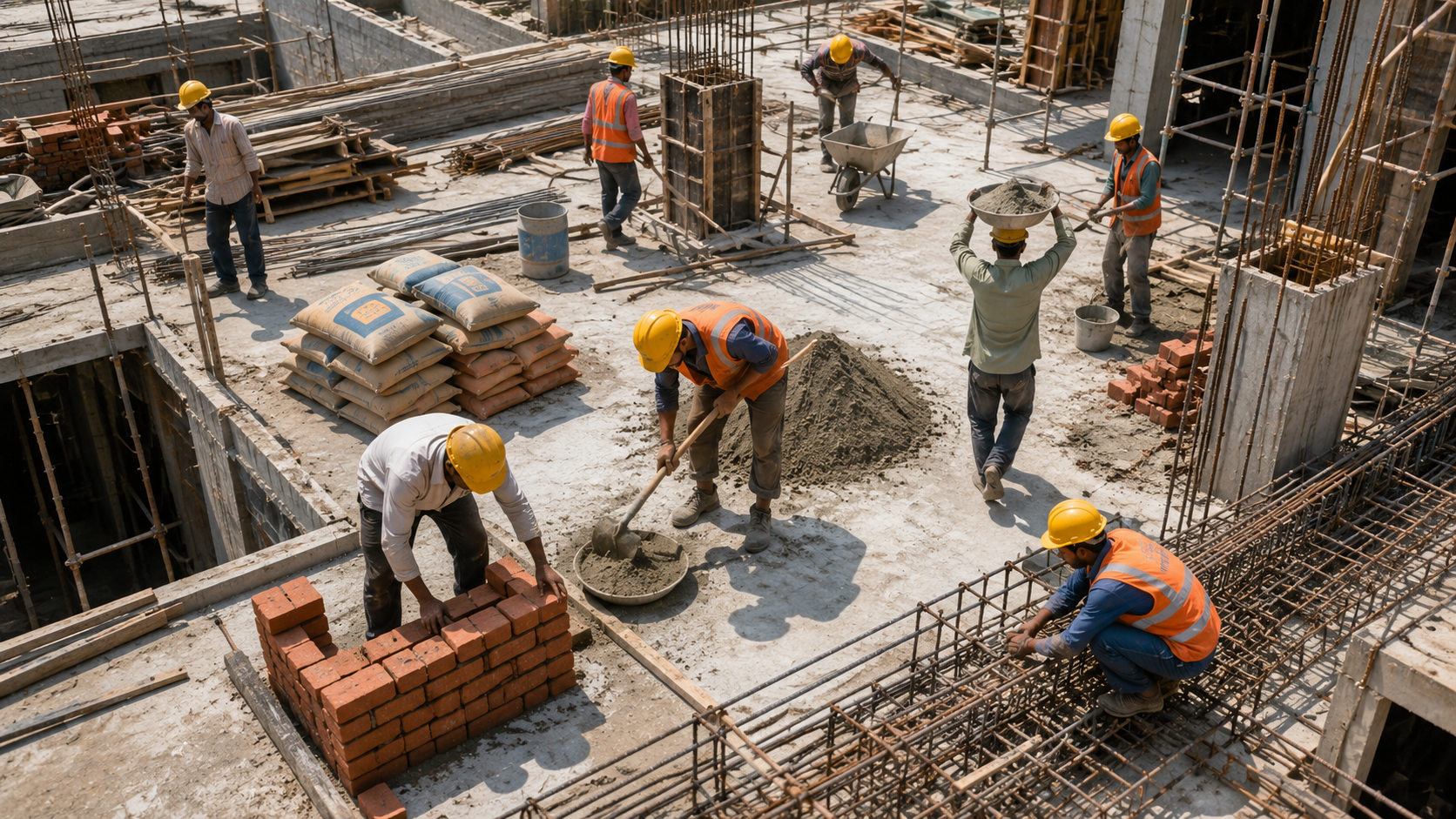
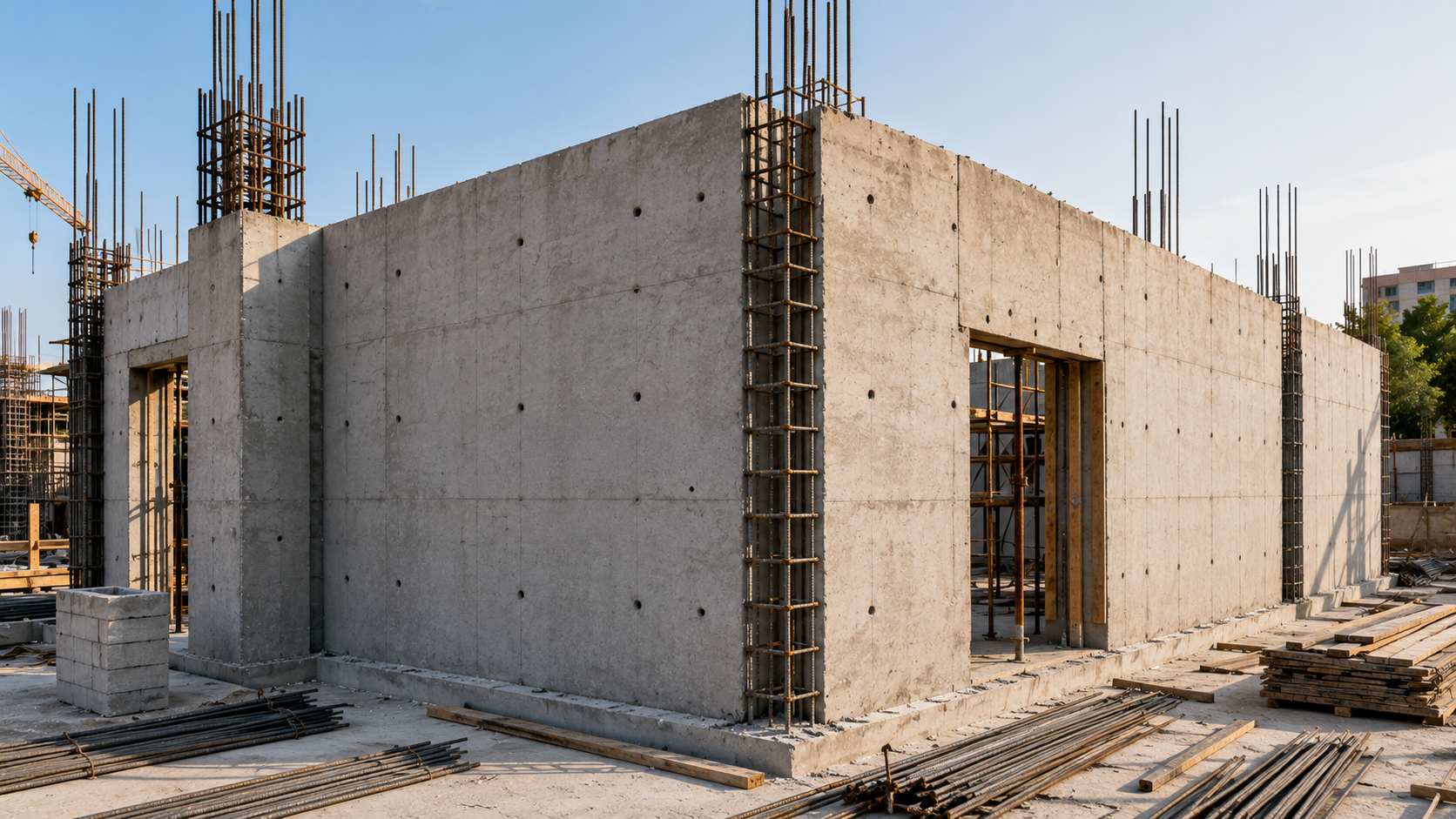
Reinforced Cement Concrete (RCC) is the backbone of modern construction in India, used extensively in residential, commercial, and industrial projects. Whether you're planning a new building, extension, or renovation, understanding the current RCC rates per square foot is crucial for accurate budgeting. In 2024, RCC costs have fluctuated due to cement price variations, steel rates, and regional factors, making it essential to have updated information before starting your project.
This comprehensive guide breaks down RCC slab rates per square foot, including material costs, labor charges, and factors that influence pricing across different Indian cities and regions.
Build cost · Bengaluru, May 2026
Current RCC Rate Per Sq Ft in India (2024)
General Price Range
As of 2024, the average RCC rate per square foot in India ranges from ₹450 to ₹700 per sq ft, depending on various factors. This includes materials and labor but may vary significantly based on:
Slab thickness (75mm, 100mm, 125mm, 150mm)
Steel reinforcement percentage
Concrete grade (M20, M25, M30)
Location and accessibility
Local labor availability
Project scale and complexity
City-Wise RCC Rates
RCC costs vary significantly across major Indian cities due to differences in material availability, transportation costs, and local labor rates:
Mumbai & Tier-1 Metro Cities: ₹600-₹750 per sq ft
Delhi NCR: ₹550-₹700 per sq ft
Bangalore & Hyderabad: ₹500-₹650 per sq ft
Pune & Chennai: ₹480-₹620 per sq ft
Tier-2 Cities (Jaipur, Lucknow, Chandigarh): ₹400-₹550 per sq ft
Tier-3 Cities & Towns: ₹350-₹450 per sq ft
Frequently asked
RCC Material Cost Breakdown
Cement
Cement is the primary binding agent in RCC and typically accounts for 10-15% of the total RCC cost. For a standard RCC slab of 100mm thickness with M25 grade concrete, you'll need approximately 6-7 bags of cement (50kg each) per 100 sq ft.
Current Cement Price: ₹400-₹500 per bag (50kg)
Cost per sq ft: ₹24-₹35
Fine Aggregate (Sand)
Sand constitutes about 30-35% of concrete by volume and significantly impacts concrete workability and strength. The quality and source of sand affect both cost and concrete performance.
M-Sand (Manufactured Sand): ₹40-₹60 per cubic foot or ₹1,400-₹2,000 per cubic meter
River Sand: ₹50-₹80 per cubic foot or ₹1,800-₹2,500 per cubic meter
Cost per sq ft (100mm slab): ₹50-₹80
For a 100mm thick RCC slab covering 100 sq ft, you'll require approximately 3.5-4 cubic meters of sand, making it a substantial cost component.
Coarse Aggregate (Gravel)
Coarse aggregate provides the structural framework of concrete and typically comprises 40-45% of the concrete volume.
20mm Metal/Gravel: ₹60-₹100 per cubic foot or ₹2,000-₹3,200 per cubic meter
40mm Metal: ₹50-₹90 per cubic foot or ₹1,800-₹3,000 per cubic meter
Cost per sq ft (100mm slab): ₹70-₹120
Steel Reinforcement
Steel is critical for RCC's tensile strength. The amount of steel required depends on the slab thickness, span, and loading conditions. Standard RCC slabs typically require 0.5-1% steel reinforcement by volume.
Current Steel Price: ₹50-₹65 per kg (varies with market)
Steel Required (100mm slab): 50-70 kg per 100 sq ft
Cost per sq ft: ₹25-₹45
For a 150mm thick slab, steel requirements increase to 70-90 kg per 100 sq ft, increasing costs proportionally.
Water
Water quality is essential for concrete strength. Most urban areas have treated water available, though some projects may need to purchase water tankers.
Cost per sq ft: ₹2-₹5
Labor Costs for RCC Work
Labor typically constitutes 30-40% of the total RCC cost and varies based on skill level, location, and project complexity.
Labor Rate Breakdown
Skilled Mason/Shuttering Carpenter: ₹500-₹800 per day
Semi-skilled Worker: ₹300-₹500 per day
Unskilled Labor: ₹200-₹400 per day
For a standard 100mm RCC slab, labor productivity is typically 100-150 sq ft per day per mason, translating to labor costs of ₹150-₹250 per sq ft.
Labor Cost Components
Labor charges cover several activities:
Shuttering (formwork) installation and removal
Steel cutting, bending, and placement
Concrete mixing, pouring, and finishing
Curing and maintenance
RCC Slab Thickness and Cost Variations
75mm Slab
Rate: ₹350-₹500 per sq ft
Typically used for:
Partition walls
Light-load applications
Temporary structures
100mm Slab (Most Common)
Rate: ₹450-₹600 per sq ft
Standard for:
Residential floor slabs
Office buildings
Most commercial spaces
125mm Slab
Rate: ₹550-₹700 per sq ft
Used for:
Longer spans (over 5 meters)
Higher loads
Industrial buildings
150mm Slab
Rate: ₹650-₹850 per sq ft
Required for:
Heavy-load applications
Large spans
Industrial and warehouse structures

Concrete Grade and Its Impact on Costs
Different concrete grades offer varying strength and durability levels, affecting both material costs and project suitability.
M20 Grade (1:1.5:3)
Cost: ₹400-₹550 per sq ft (100mm slab)
Characteristics:
Compressive strength: 20 MPa at 28 days
Used for non-structural elements
Suitable for small residential projects
M25 Grade (1:1:2)
Cost: ₹450-₹600 per sq ft (100mm slab)
Characteristics:
Compressive strength: 25 MPa at 28 days
Most commonly used in India
Suitable for residential and light commercial buildings
Better durability than M20
M30 Grade (1:0.75:1.5)
Cost: ₹500-₹700 per sq ft (100mm slab)
Characteristics:
Compressive strength: 30 MPa at 28 days
Used for commercial and heavy-load structures
Better water resistance
Longer durability
M35 and Above
Cost: ₹600-₹850+ per sq ft
Used for:
High-rise buildings
Structures in aggressive environments
Specialized applications
Factors Affecting RCC Costs
Material Transportation
Distance from material sources significantly impacts costs. Projects in remote locations or areas with limited material availability face 10-20% higher costs due to transportation charges. Urban areas like Mumbai, Delhi, and Bangalore benefit from competitive pricing due to proximity to material suppliers and ready-mix concrete plants.
Seasonal Variations
RCC costs fluctuate seasonally:
Monsoon Season: Higher costs due to increased labor, curing challenges, and material storage requirements
Summer: Moderate costs with faster curing
Winter: Lower costs, optimal curing conditions
Ready-Mix Concrete vs. Site-Mixed
Ready-Mix Concrete: ₹4,500-₹6,500 per cubic meter (urban areas). Better quality control, faster execution, but higher cost.
Site-Mixed Concrete: ₹3,500-₹5,000 per cubic meter. Cost-effective for smaller projects, but quality depends on mixing expertise.
Steel Price Fluctuations
Steel prices are volatile and directly impact RCC costs. A ₹5 per kg increase in steel rates translates to approximately ₹25-₹35 additional cost per sq ft for standard slabs.
Project Complexity
Complex architectural designs, curved slabs, or irregular shapes increase labor costs by 15-30% compared to standard rectangular slabs.
Regulatory and Quality Considerations in India
Building Codes and Standards
All RCC work in India must comply with:
Indian Standards (IS): IS 456:2000 for plain and reinforced concrete
National Building Code (NBC): Safety and construction standards
Local Municipal Regulations: Vary by city and state
Compliance ensures structural safety and may affect material specifications and costs.
Quality Testing
Professional projects typically include:
Slump tests for concrete workability
Cube testing for strength verification
Core sampling for in-situ concrete strength
Steel testing for grade verification
These tests add ₹10-₹20 per sq ft to project costs but ensure structural integrity.
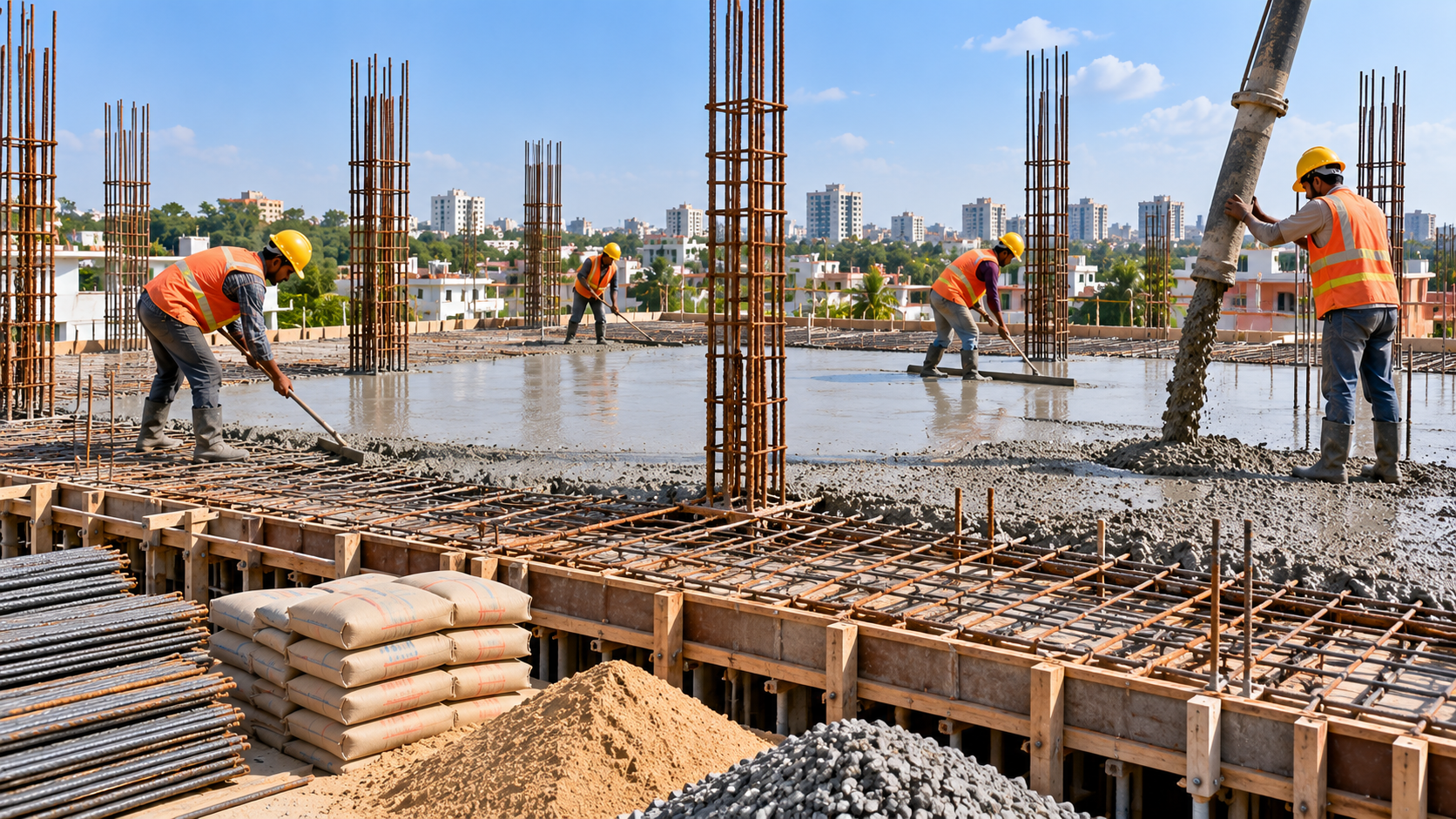
Cost Estimation Example
Let's calculate RCC cost for a 100mm M25 grade slab covering 1,000 sq ft in Bangalore:
Material Costs (per sq ft)
Cement: ₹28
Sand: ₹65
Coarse Aggregate: ₹95
Steel: ₹35
Water & Admixtures: ₹5
Subtotal: ₹228 per sq ft
Labor Costs (per sq ft)
Shuttering & De-shuttering: ₹80
Steel Work: ₹40
Concrete Work: ₹60
Curing & Finishing: ₹20
Subtotal: ₹200 per sq ft
Additional Costs
Quality Testing: ₹15 per sq ft
Contingency (5%): ₹22 per sq ft
Total Estimated Cost: ₹465 per sq ft
For 1,000 sq ft: ₹4,65,000 approximately
Tips for Cost Optimization
Material Selection
Compare prices from multiple suppliers. In cities like Delhi and Pune, bulk purchasing can save 5-10% on materials. Consider M-sand instead of river sand for cost savings without compromising quality.
Labor Efficiency
Hire experienced masons who can complete work faster. Batch similar tasks to improve productivity. Proper planning reduces delays and labor costs.
Timing
Execute RCC work during winter months when labor is readily available and curing conditions are optimal. Avoid monsoon season when costs spike due to weather-related challenges.
Concrete Grade Selection
Use M25 for standard residential projects instead of M30. This saves ₹50-₹100 per sq ft without compromising safety for typical loads.
Technology Adoption
Use ready-mix concrete for large projects. While slightly more expensive, it ensures consistency and reduces wastage, offsetting the premium cost.
Finding Quality RCC Contractors on AECORD
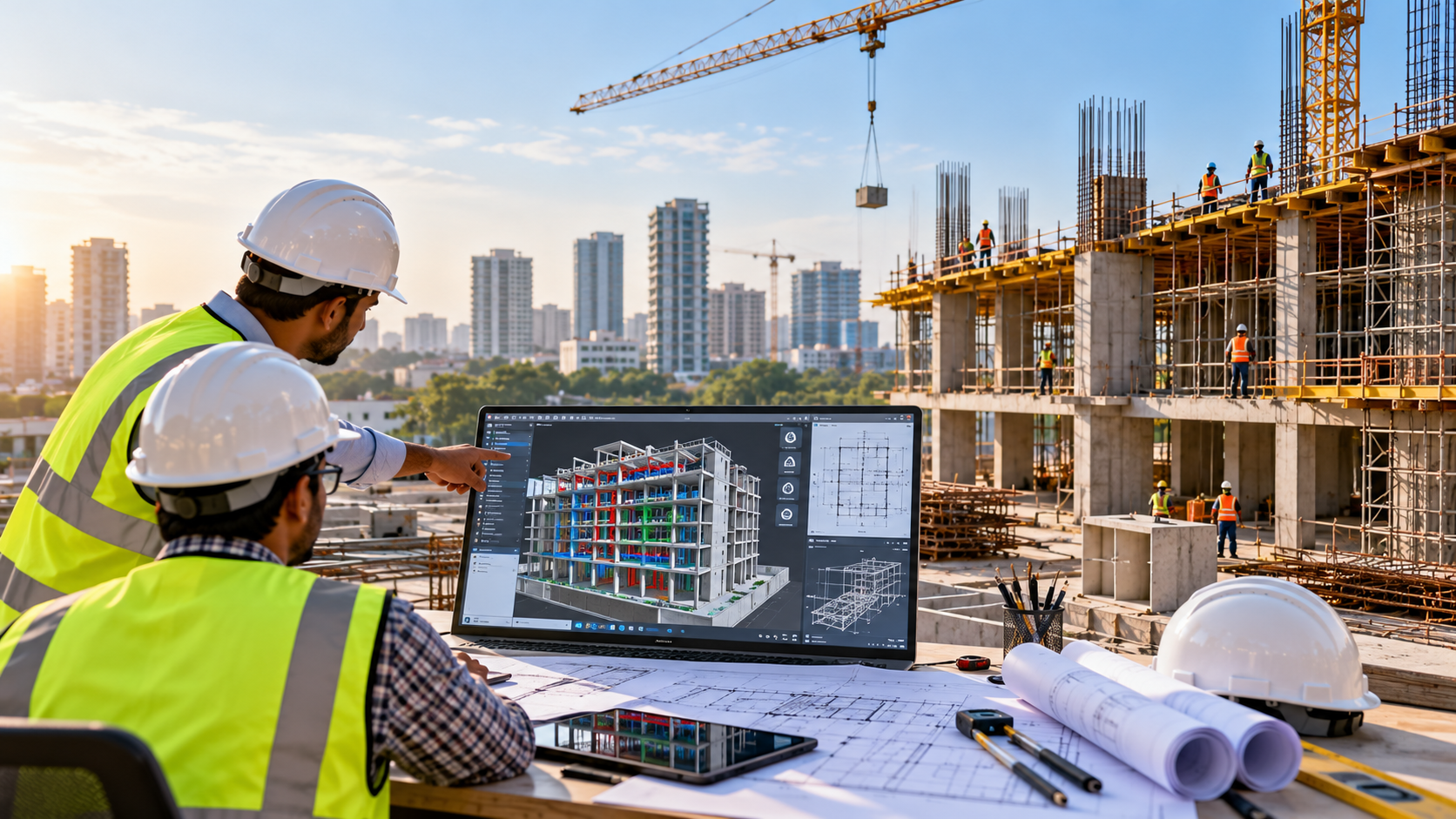
Accurate RCC rate estimation requires professional expertise and current market knowledge. AECORD, India's leading B2B2C marketplace for AECO professionals, connects you with verified RCC contractors, structural engineers, and material suppliers across major Indian cities. Whether you're in Mumbai, Delhi, Bangalore, or Pune, AECORD helps you find professionals who can provide accurate quotes based on your specific project requirements.
When sourcing RCC work through AECORD, you can compare multiple quotations, verify contractor credentials, and access transparent pricing for your project. The platform simplifies the procurement process and ensures you get competitive rates without compromising quality.
Conclusion
RCC costs in 2024 range from ₹450 to ₹700 per square foot, varying based on slab thickness, concrete grade, location, and market conditions. Material costs typically account for 50-60% of the total expense, with labor comprising the remaining 40-50%. Understanding these cost components helps in accurate budgeting and project planning.
Whether you're planning a residential apartment, commercial building, or industrial structure, getting detailed quotations from multiple sources is essential. Use this guide as a reference point, but always obtain site-specific estimates from qualified professionals. Connect with experienced RCC contractors and structural engineers through AECORD to ensure your project is executed within budget while maintaining quality and safety standards.
Remember that the lowest quote isn't always the best option—prioritize contractors with proven experience, quality certifications, and positive client feedback to ensure your RCC work meets Indian standards and lasts for decades.