



Understanding Property Registration in India: A Complete Guide for 2026
Property registration is one of the most critical steps in any real estate transaction in India. Whether you're buying a residential apartment in Mumbai, a commercial space in Bangalore, or agricultural land in Punjab, understanding the registration process is essential to protect your investment and ensure legal ownership. As we move into 2026, the property registration landscape in India continues to evolve with digital advancements and regulatory updates.
This comprehensive guide will walk you through every aspect of property registration in India, helping you navigate the process with confidence and clarity.
Build cost · Bengaluru, May 2026
What is Property Registration?
Property registration is the legal process of recording details of a property and its ownership in government records. In India, this process is governed by the Registration Act, 1908, and property registration is mandatory for all immovable property transfers. The registration creates an official record of ownership and serves as evidence in case of disputes.
When you register a property, you're essentially creating a legal document that proves your ownership rights. This document is recognized by courts and government authorities across India, making it crucial for any property transaction.
Why is Property Registration Important?
Legal Protection
Registration provides legal evidence of ownership. Without registration, you have no official claim to the property, regardless of whether you've paid for it. This protection is vital if disputes arise or if someone else claims ownership of the same property.
Frequently asked
Prevention of Fraud
Registered properties are recorded in government databases, making it difficult for sellers to commit fraud by selling the same property to multiple buyers. The registration system acts as a safeguard against such unethical practices.
Mortgage and Loan Benefits
Banks and financial institutions require property registration before approving home loans or mortgages. A registered property can be mortgaged to secure loans at competitive interest rates, typically ranging from 6.5% to 8.5% per annum in 2026.
Inheritance and Succession
Registered properties can be easily transferred to heirs through legal succession. Without registration, the inheritance process becomes complicated and time-consuming.
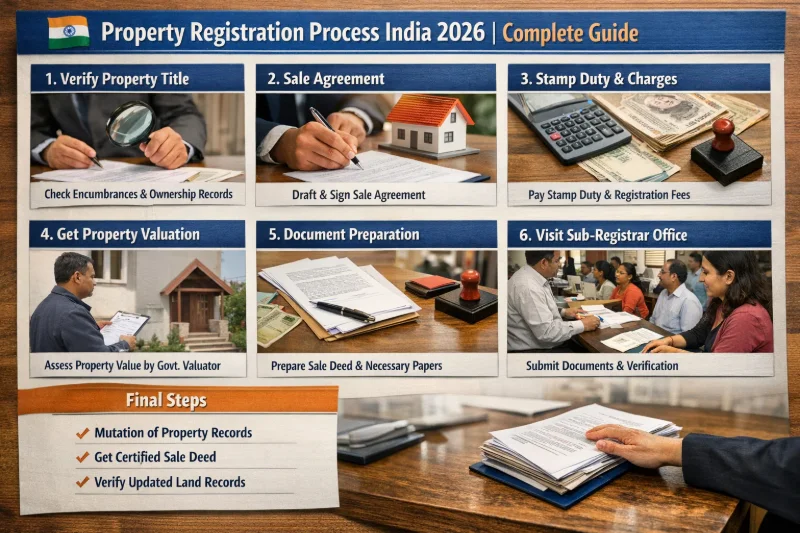
The Property Registration Process in India: Step-by-Step
Step 1: Prepare the Sale Deed
The first step in property registration is preparing the sale deed. This is a legal document that outlines the details of the property being sold, the seller, the buyer, and the consideration amount (price). The sale deed should include:
Complete description of the property (location, dimensions, area)
Details of both buyer and seller
Purchase price and payment terms
Terms and conditions of the sale
Encumbrances, if any (existing mortgages, liens, etc.)
The sale deed must be drafted by a qualified lawyer or notary. In major Indian cities like Delhi, Mumbai, Bangalore, and Hyderabad, the average cost of drafting a sale deed ranges from ₹3,000 to ₹10,000, depending on property complexity.
Step 2: Stamp Duty Payment
Before registration, you must pay stamp duty on the sale deed. Stamp duty is a tax levied by state governments on property transactions. The rate varies across Indian states:
Maharashtra: 5% of property value (plus 1% registration fee)
Delhi: 4% for residential properties, 6% for commercial
Karnataka: 3% for residential, 5% for commercial
Tamil Nadu: 6% for residential, 8% for commercial
Gujarat: 4% for residential, 5% for commercial
For example, if you're purchasing a residential property in Mumbai for ₹50 lakhs, you'd pay approximately ₹3 lakhs in stamp duty. Stamp duty can be paid online through the state's revenue department portal or at designated stamp vendors.
Step 3: Submit Documents to the Sub-Registrar's Office
After stamp duty payment, you need to submit the stamped sale deed and other required documents to the Sub-Registrar's office. Required documents typically include:
Stamped sale deed (original and copies)
Identity proof of both parties (Aadhaar, PAN, passport)
Address proof (utility bills, rental agreement)
Previous property documents (old sale deeds, gift deeds)
No Objection Certificate (NOC) from society/association (for apartments)
Property tax receipts for the last 2-3 years
Encumbrance Certificate from the Sub-Registrar
Clearance certificate from the municipality
The Sub-Registrar's office exists in every district and city across India. Major cities have multiple sub-registrar offices to handle the high volume of registrations.
Step 4: Verification and Inspection
Once documents are submitted, the Sub-Registrar will verify all information and may conduct a physical inspection of the property. This step ensures that the property details match the official records and that there are no discrepancies. The inspection typically takes 3-7 days.
Step 5: Registration and Document Issuance
After verification, the Sub-Registrar will register the property and issue the registered sale deed. This is the final and most important document proving your ownership. The registered deed is signed by the Sub-Registrar and contains an official seal and registration number.

Timeline for Property Registration in 2026
The complete property registration process typically takes 30-60 days from document submission to receiving the registered deed. However, this timeline can vary:
Simple residential properties: 30-45 days
Commercial properties: 45-60 days
Properties with encumbrances: 60-90 days
Delays can occur due to incomplete documentation, title disputes, or high volume at the Sub-Registrar's office. In metropolitan areas like Delhi and Mumbai, registrations may take longer due to heavy workload.
Digital Advancements in Property Registration
Online Registration Systems
Many Indian states have implemented online property registration systems. States like Maharashtra, Karnataka, and Delhi now offer e-registration facilities where documents can be submitted online, reducing the need for physical visits to the Sub-Registrar's office.
Digital Signature Authentication
Digital signatures are now widely accepted for property registration documents across India. This has accelerated the registration process and reduced paperwork significantly.
Real Estate (Regulation) Act (RERA) Compliance
RERA, implemented across India since 2016, has brought transparency to the real estate sector. RERA-registered projects provide buyers with additional protection and clarity regarding property specifications and timelines.
Common Challenges in Property Registration
Title Defects
Sometimes properties have unclear or disputed titles. Before registration, conduct a thorough title search through the Sub-Registrar's office to identify any existing claims or encumbrances on the property.
Incomplete Documentation
Missing or incorrect documents can delay the registration process significantly. Ensure all documents are complete, accurate, and properly attested before submission.
Tax Clearance Issues
Property tax arrears or pending municipal dues can prevent registration. Settle all outstanding taxes before initiating the registration process.
Mutation and Record Updates
After registration, you should update the property records in the municipality and revenue department through the mutation process. This ensures your name appears as the owner in all official records.
Costs Involved in Property Registration
Understanding the complete cost structure is essential for property buyers. Here's a breakdown of typical costs for a ₹50 lakh residential property in India:
Stamp Duty: ₹2,50,000 (5% in Maharashtra)
Registration Fee: ₹50,000 (1% in Maharashtra)
Lawyer Fees: ₹5,000-₹10,000
Encumbrance Certificate: ₹100-₹500
Mutation Charges: ₹1,000-₹5,000
Miscellaneous Charges: ₹2,000-₹5,000
Total Estimated Cost: ₹3,08,100 to ₹3,20,500 (approximately 6.2-6.4% of property value)
These costs vary significantly based on location, property type, and state regulations. Commercial properties typically have higher registration costs due to higher stamp duty rates.

Role of Professionals in Property Registration
Real Estate Lawyers
A qualified real estate lawyer is invaluable during property registration. They review all documents, identify potential issues, and ensure your interests are protected. This professional guidance can save you from costly legal disputes later.
Property Consultants
Property consultants help navigate the registration process, coordinate with various authorities, and ensure timely completion. They're particularly helpful if you're unfamiliar with local regulations.
Chartered Accountants
For commercial property registrations or properties involving complex financial arrangements, a CA can provide tax advice and ensure compliance with income tax regulations.
If you're looking for reliable professionals to guide you through the property registration process, AECORD connects you with verified real estate lawyers, consultants, and property experts across India. Whether you're in Pune, Chennai, Kolkata, or any other major city, AECORD's platform makes it easy to find qualified professionals for your specific needs.
Important Considerations for Property Registration in 2026
GST Implications
For properties under construction or newly built properties sold by developers, GST is applicable. Ensure you understand the GST implications before registration, as it affects the total cost of the property.
Benami Property Laws
Properties registered in someone else's name (benami properties) are illegal under the Benami Transactions (Prohibition) Act, 1988. Ensure the property is registered in the actual buyer's name to avoid legal complications.
NRI Registration Requirements
Non-Resident Indians (NRIs) can register properties in India, but with certain restrictions. NRIs cannot purchase agricultural land, and they need to obtain RBI approval for property purchases above a certain limit. Consult a lawyer before proceeding with NRI property registration.
Property in Flood-Prone or Restricted Areas
Before registration, verify that the property isn't in a flood-prone zone or under any government restrictions. Such properties may have limited resale value and additional compliance requirements.
Post-Registration Steps
Mutation in Revenue Records
After receiving the registered deed, apply for mutation in the revenue department to update your name as the owner in official records. This process typically takes 15-30 days and costs ₹1,000-₹5,000.
Update Property Tax Records
Register yourself as the property owner with the local municipal corporation and update property tax records. This ensures you receive property tax bills and can claim property-related tax benefits.
Obtain Encumbrance Certificate
After registration, obtain a fresh Encumbrance Certificate to confirm that the property is now free from any encumbrances (except the mortgage, if any).
Conclusion
Property registration is a crucial step that protects your real estate investment and establishes your legal ownership. While the process involves multiple steps and costs, the security and legal protection it provides are invaluable. In 2026, with digital advancements making the process smoother, property registration is more accessible than ever before.
Whether you're a first-time homebuyer in Hyderabad, a commercial real estate investor in Bangalore, or purchasing property in any other part of India, understanding the registration process ensures you make informed decisions and avoid potential legal issues.
Remember, the key to smooth property registration is proper documentation, timely payment of duties and fees, and professional guidance. Don't hesitate to seek expert advice—it's a small investment that can save you from significant problems in the future.
Ready to find expert professionals to guide you through property registration? Visit AECORD today and connect with verified real estate lawyers, consultants, and property experts in your city. AECORD makes it simple to find the right professionals for your property registration needs, ensuring a smooth and legally sound transaction.
Frequently Asked Questions
Is property registration mandatory in India?
Yes, property registration is mandatory for all immovable property transfers in India under the Registration Act, 1908. Without registration, you have no official legal claim to the property, regardless of payment, making it essential for protecting your ownership rights.
What documents are needed for property registration in India?
The primary document needed is the sale deed, which should include the property description, details of buyer and seller, purchase price, payment terms, and any encumbrances. You'll also need identity proofs, address proofs, and proof of payment of stamp duty before registration.
How much does property registration cost in India?
Property registration costs include stamp duty (varying by state, typically 4-6% of property value) and registration fees (usually 1% of property value). Sale deed drafting costs range from ₹3,000 to ₹10,000 in major cities, depending on property complexity.
Can I get a home loan without property registration?
No, banks and financial institutions require property registration before approving home loans or mortgages. A registered property is essential to secure loans at competitive interest rates, typically ranging from 6.5% to 8.5% per annum.
What are the benefits of registering a property?
Property registration provides legal proof of ownership, prevents fraud by recording properties in government databases, enables mortgage and loan eligibility, and simplifies inheritance and succession processes for heirs.