

When planning a house construction project in India, one of the critical decisions you'll need to make is choosing the right type of cement. Two of the most commonly discussed options are Ordinary Portland Cement (OPC) and Portland Pozzolana Cement (PPC). Both have their merits, and understanding the differences between them can significantly impact the quality, durability, and cost-effectiveness of your home.
In this comprehensive guide, we'll break down the characteristics, advantages, disadvantages, and best applications of both OPC and PPC cement to help you make an informed decision for your house construction project.
Understanding OPC (Ordinary Portland Cement)
Ordinary Portland Cement, commonly known as OPC, is the most traditional and widely used cement in India. It's manufactured by grinding clinker (produced by heating limestone and clay at high temperatures) along with gypsum. OPC is available in different grades, with OPC 43 and OPC 53 being the most popular for residential construction.
Build cost · Bengaluru, May 2026
Composition and Characteristics of OPC
OPC consists primarily of calcium silicates, which provide its binding properties. The cement gains strength quickly, reaching approximately 70% of its 28-day strength within just 7 days. This rapid strength gain makes OPC particularly useful for projects with tight timelines.
The heat of hydration in OPC is relatively high, meaning it generates considerable heat during the curing process. While this accelerates strength development, it can also lead to shrinkage cracks in large concrete masses if not properly managed.
Grades and Applications of OPC
OPC 43 is the lower-strength variant, typically used in general construction where early strength development isn't critical. OPC 53 is higher-strength cement that develops strength more rapidly and is preferred for structures requiring faster construction timelines.
OPC is ideal for:
Structural elements like columns, beams, and slabs
Projects requiring rapid strength gain
Areas with normal environmental conditions
High-rise residential buildings where formwork needs quick removal
Understanding PPC (Portland Pozzolana Cement)
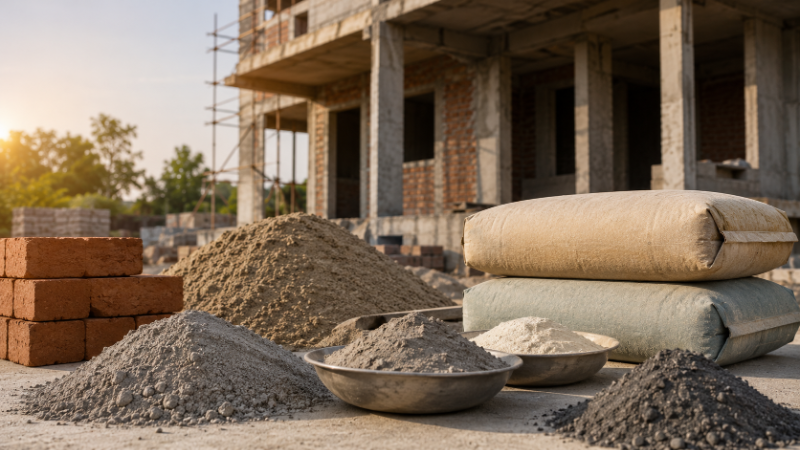
Portland Pozzolana Cement is a blended cement that combines ordinary Portland cement clinker with pozzolanic materials—typically fly ash from thermal power plants. In India, where fly ash availability is abundant due to numerous coal-fired power stations, PPC has gained significant traction over the past two decades.
Frequently asked
Composition and Characteristics of PPC
PPC typically contains 10-30% pozzolanic material (usually fly ash) mixed with Portland cement clinker. The pozzolanic material undergoes a slow chemical reaction with lime (calcium hydroxide) produced during cement hydration, contributing to long-term strength development.
This gradual strength gain means PPC takes longer to reach its design strength compared to OPC. However, it continues to gain strength over an extended period, often exceeding OPC's strength after one year.
Grades and Applications of PPC
PPC is available in different grades, with PPC 43 being the standard variant for most residential applications. The strength development is slower than OPC, but the long-term durability benefits are substantial.
PPC is ideal for:
Structures in aggressive environments (coastal areas, industrial zones)
Projects where long-term durability is paramount
Foundations and structures exposed to moisture
Mass concrete applications where heat generation needs to be minimized
Sustainable construction projects
OPC vs PPC: Key Differences
Strength Development Timeline
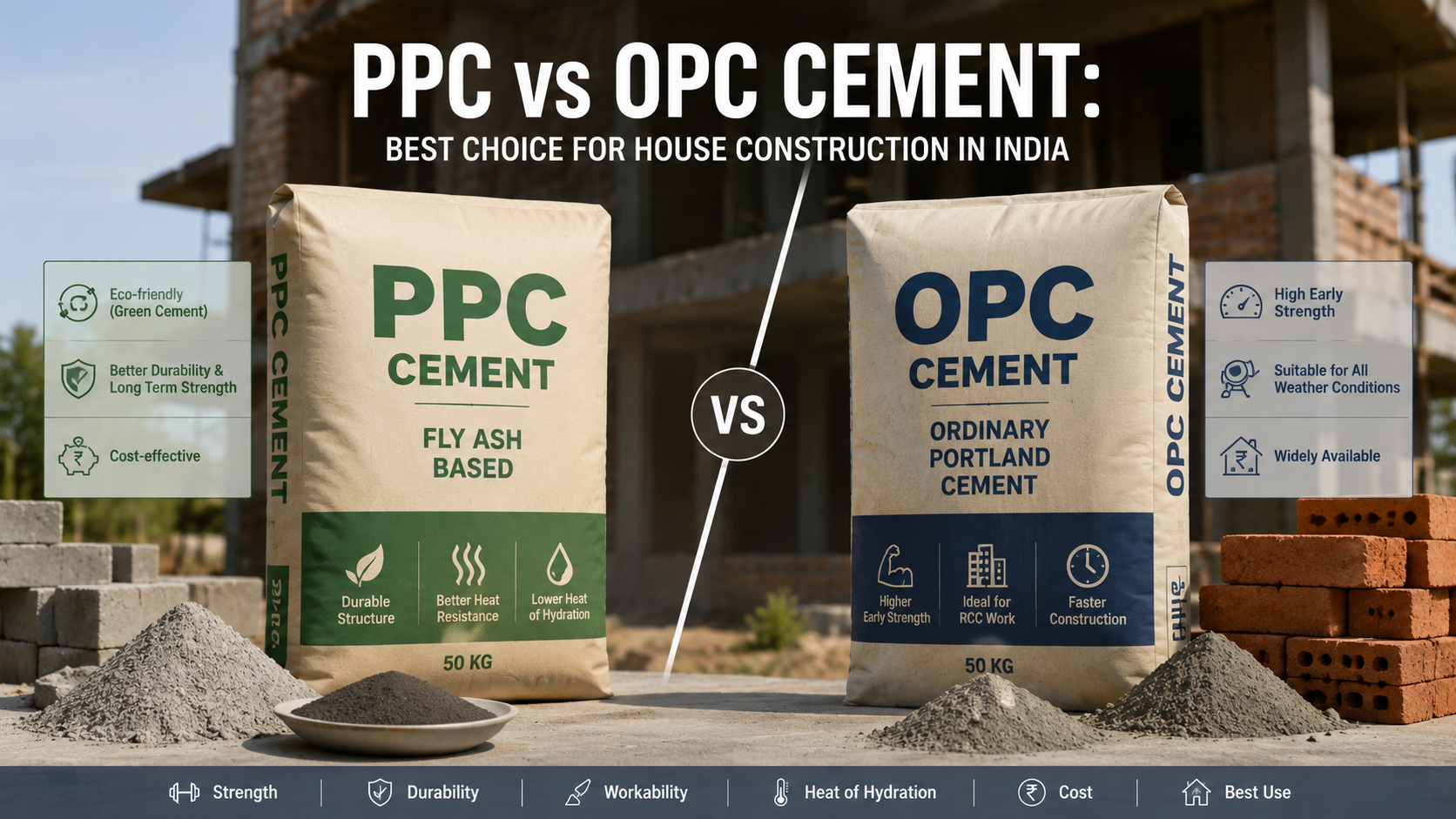
One of the most significant differences between OPC and PPC lies in their strength development patterns. OPC reaches approximately 70% of its 28-day strength within 7 days, making it ideal for rapid construction schedules. PPC, on the other hand, gains strength more slowly—typically reaching only 50-60% of its 28-day strength in the same period.
However, this apparent disadvantage becomes an advantage in the long term. After 90 days and beyond, PPC often develops greater strength than OPC due to the continued pozzolanic reaction. For a typical residential house construction that doesn't require immediate formwork removal, this slower strength gain is rarely a practical concern.
Cost Comparison
In terms of pricing, PPC is generally 10-15% cheaper than OPC in most Indian markets. For a typical house requiring 300-400 bags of cement, this translates to savings of ₹1,500-3,000. However, prices fluctuate based on regional availability, transportation costs, and market conditions.
Cities like Mumbai, Delhi, and Bangalore may have different pricing dynamics due to proximity to manufacturing units and ports. It's advisable to check current rates with local suppliers before making bulk purchases.
Durability and Longevity
PPC demonstrates superior durability in aggressive environments. The pozzolanic reaction creates a denser concrete matrix with finer pores, making it more resistant to:
Sulfate attack (particularly important in areas with saline groundwater)
Chloride ingress (critical for structures near coastal areas like Goa, Chennai, or Mumbai)
Alkali-silica reaction
Carbonation and subsequent reinforcement corrosion
For homes in coastal regions or areas with problematic groundwater chemistry, PPC offers significantly better long-term protection. In normal environments, the durability advantage of PPC is less pronounced but still measurable over 50+ years.
Heat of Hydration
OPC generates approximately 20-25% more heat during hydration compared to PPC. This is a minor concern for typical residential construction but becomes important for:
Thick concrete sections (massive foundations)
Large continuous pours
Projects in hot climates where thermal cracking is a risk
PPC's lower heat of hydration makes it a better choice for mass concrete applications and during summer construction in regions like Delhi, Jaipur, or Hyderabad.
Environmental Impact
PPC is the more environmentally sustainable option. By utilizing fly ash from thermal power plants, it reduces the demand for raw materials and lowers the carbon footprint of cement production. The manufacturing process requires lower kiln temperatures, resulting in reduced CO₂ emissions.
For environmentally conscious homeowners, PPC aligns better with sustainable building practices. Many green building certifications in India (like IGBC or LEED) favor PPC usage.
Which Cement Should You Choose for Your House?
Choose OPC If:
You need rapid construction progress: If your project timeline is tight and you need formwork removal within 7-10 days, OPC's faster strength gain is beneficial.
You're in a normal environment: For inland areas with neutral soil and groundwater conditions, OPC performs adequately.
Your budget is flexible: Though more expensive, OPC might be justifiable if you need to accelerate construction phases.
You're using specialized concrete mixes: Some specific applications may require OPC's particular properties.
Choose PPC If:
You want long-term durability: For structures expected to last 50+ years with minimal maintenance, PPC is superior.
You're in a coastal or aggressive environment: If your home is within 5-10 km of the coast or in industrial areas, PPC's resistance to chemical attack is invaluable.
You want cost savings: The 10-15% price advantage of PPC adds up significantly for residential projects.
You prioritize sustainability: PPC's lower environmental impact appeals to eco-conscious builders.
You're constructing in hot climates: PPC's lower heat of hydration reduces the risk of thermal cracking during summer construction in cities like Bangalore, Hyderabad, or Pune.
Regional Considerations for Indian Homeowners
Coastal Regions (Mumbai, Chennai, Goa, Kochi)
For homes in coastal areas, PPC is the clear winner. The marine environment's salinity and moisture exposure make PPC's superior durability essential. The slightly slower strength gain is inconsequential compared to the protection against corrosion and chemical degradation over decades.
Inland Metropolitan Areas (Delhi, Bangalore, Hyderabad, Pune)
In these regions with normal soil and climate conditions, either cement can work well. However, PPC's cost advantage and lower heat generation (beneficial during summer) make it the practical choice. Many developers in these cities have shifted to PPC as their standard cement.
Areas with Problematic Groundwater (Parts of Gujarat, Rajasthan, Punjab)
In regions where groundwater contains high sulfate or chloride content, PPC's chemical resistance is invaluable. Consult with local engineers to understand your area's specific groundwater chemistry.
Quality and Standards
Regardless of whether you choose OPC or PPC, ensure the cement meets IS 269 (for OPC) or IS 1489 (for PPC) standards set by the Bureau of Indian Standards. Purchase from reputable manufacturers like ACC, Ambuja, Ultratech, Dalmia, or Heidelberg to ensure quality consistency.
When sourcing materials for your construction project, consider using platforms like AECORD, which connects you with verified suppliers and construction professionals who can provide expert guidance on cement selection based on your specific project requirements and local conditions.
Practical Tips for Using Either Cement
Storage and Handling
Both OPC and PPC must be stored in dry conditions. Exposure to moisture causes the cement to hydrate prematurely, reducing its effectiveness. Ensure bags are stacked on elevated platforms away from direct ground contact.
Mixing Proportions
For typical residential construction, a concrete mix of 1:2:4 (cement:sand:aggregate) is common. However, if using PPC, you might use slightly higher proportions due to its slower strength gain—something a structural engineer can advise on specifically.
Curing Practices
Proper curing is crucial for both cements. For OPC, 7 days of curing is standard; for PPC, extending curing to 14 days yields better results given its slower strength development. Keep concrete surfaces moist during hot weather to prevent premature drying.
Making Your Final Decision
The choice between OPC and PPC ultimately depends on your specific circumstances:
For most residential houses in India, PPC is the recommended choice because it offers better long-term durability, costs less, and has lower environmental impact. The slower strength gain is rarely a practical limitation for typical house construction timelines.
However, if your project has an exceptionally tight timeline requiring rapid formwork removal or if you're using specialized concrete applications, OPC might be necessary.
The best approach is to consult with your structural engineer or contractor who understands your local soil conditions, climate, and project requirements. They can provide tailored recommendations based on professional experience with similar projects in your area.
Conclusion
Both OPC and PPC are reliable cements suitable for house construction in India. PPC has gained significant market share over the past decade due to its superior long-term durability, cost-effectiveness, and environmental benefits. OPC remains the choice for projects requiring rapid strength development.
For most homeowners constructing a residential property in India, PPC represents the better value proposition. It delivers excellent durability, costs less, and aligns with modern sustainable building practices—all while meeting stringent quality standards.
To ensure you're making the best choice for your specific project, connect with experienced construction professionals and material suppliers. Platforms like AECORD can help you find qualified structural engineers, contractors, and material suppliers in your area who can provide expert guidance tailored to your project's unique requirements and local conditions. Whether you choose OPC or PPC, proper execution and quality materials will ensure your home stands strong for generations to come.