

Choosing the wrong outdoor tile can lead to cracks, water seepage, slippery surfaces, and expensive repairs within just a few years. Whether you're designing a terrace, balcony, garden pathway, or villa entrance, selecting weather-resistant outdoor tiles is essential for Indian conditions. This guide explains the best outdoor tile materials, costs, design ideas, and installation tips for 2026.
Best Outdoor Tiles for Terrace, Balcony & Garden Areas in India (2026 Guide)
India's varied climate zones—from the humid coastal regions of Kerala and Goa to the arid landscapes of Rajasthan and the monsoon-prone areas of the Western Ghats—demand careful tile selection. Outdoor tiles must withstand temperature fluctuations, heavy rainfall, UV exposure, and moisture absorption that can lead to deterioration.
Unlike indoor tiles, outdoor tiles require superior slip resistance, durability, and weather resistance. In India, where outdoor spaces experience intense sun exposure and seasonal flooding in many regions, investing in high-quality tiles prevents costly replacements within 2-3 years.
Build cost · Bengaluru, May 2026
Why Outdoor Tile Selection Matters in India
India's climate varies dramatically across regions. Homes in Bangalore, Mumbai, Chennai, Hyderabad, Delhi, and Kerala experience different combinations of rainfall, humidity, temperature, and UV exposure.
Outdoor tiles should provide:
Anti-skid performance
Water resistance
UV resistance
Durability
Easy maintenance
Investing in quality outdoor flooring can extend the life of your terrace, balcony, or landscape area by 10–15 years. Best Outdoor Tile Types for Indian Homes
Tile Type | Water Resistance | Durability | Cost Range |
|---|---|---|---|
Porcelain Tiles | Excellent | Excellent | ₹150–500/sq.ft |
Vitrified Tiles | Very Good | Good | ₹100–300/sq.ft |
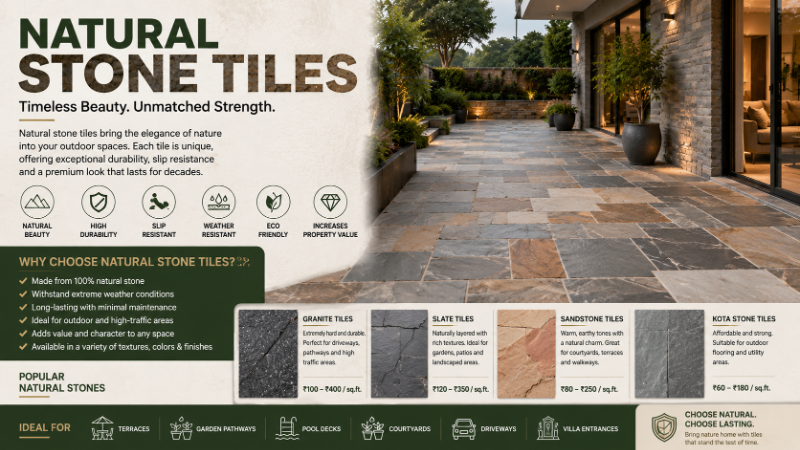
Granite Tiles | Excellent | Excellent | ₹100–400/sq.ft |
Slate Tiles | Very Good | Very Good | ₹120–350/sq.ft |
Ceramic Tiles | Moderate | Moderate | ₹80–200/sq.ft |
Types of Outdoor Tiles Available in India
Frequently asked
Porcelain Tiles
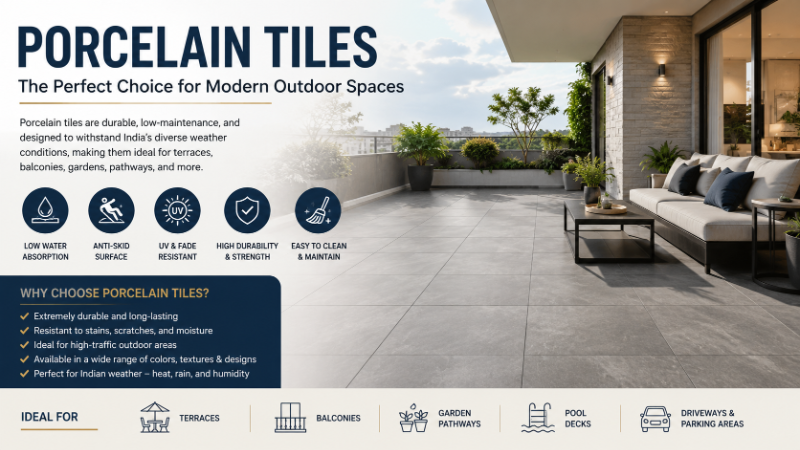
Porcelain tiles are widely considered the best outdoor tile option for Indian conditions.
Benefits
Water absorption below 0.5%
Excellent resistance to rain and moisture
Fade-resistant under harsh sunlight
Best For
Open terraces
Rooftop seating areas
Balcony flooring
Pool decks
Natural Stone Tiles
Natural stone remains popular for premium residential projects.
Granite
Best for:
Driveways
Villa entrances
Garden pathways
Advantages:
High strength
Long lifespan
Excellent weather resistance
Slate
Best for:
Landscaped gardens
Luxury villas
Courtyards
Advantages:
Natural texture
Excellent grip
Premium appearance
Ceramic Tiles
While less expensive than porcelain (₹80-₹200 per square foot), ceramic tiles have higher water absorption rates (3-10%) and are less suitable for outdoor applications in regions with heavy rainfall. However, they work adequately in drier climates like Delhi and parts of Rajasthan.
Vitrified Tiles
A cost-effective option for homeowners seeking durability without the premium price of porcelain.
Best suited for:
Semi-covered balconies
Sit-out areas
Covered terraces
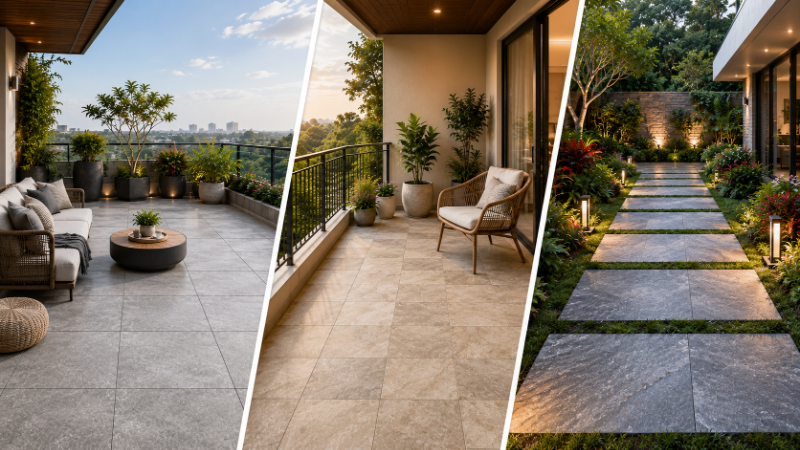
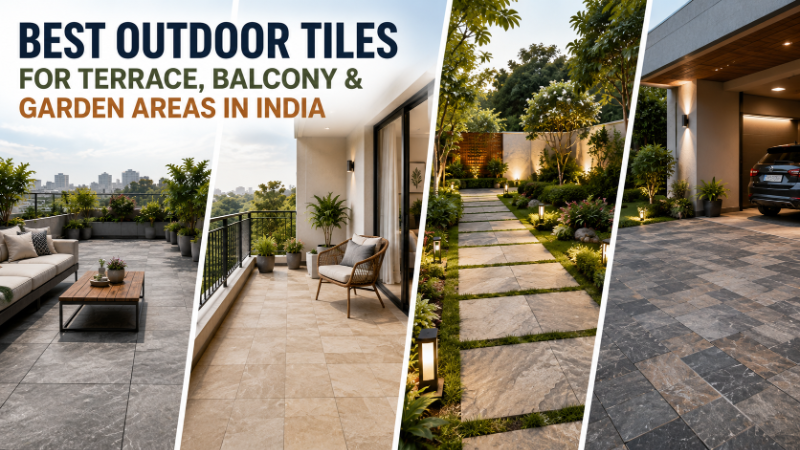
Best Outdoor Tiles for Different Areas
Best Tiles for Terrace Flooring
Recommended:
Anti-skid porcelain tiles
Textured vitrified tiles
Avoid:
Polished surfaces
Glossy finishes
Best Tiles for Balconies
Recommended:
Matte-finish vitrified tiles
Light-colored porcelain tiles
Benefits:
Cooler under sunlight
Easy maintenance
Best Tiles for Garden Pathways
Recommended:
Granite
Slate
Stone-finish porcelain
Benefits:
Natural appearance
Slip resistance
Durability
Best Tiles for Parking Areas
Recommended:
Heavy-duty granite
15–20 mm porcelain pavers
Requirements:
High load capacity
Crack resistance
Low maintenance
Key Selection Criteria for Outdoor Tiles
Slip Resistance Rating
The Indian Standards Institution (ISI) classifies slip resistance using the Coefficient of Friction (CoF) rating. For outdoor spaces where wet conditions are common, select tiles with CoF ratings of 0.6 or higher. This prevents accidents on rain-soaked terraces, a critical safety consideration in Indian homes.
Water Absorption and Porosity
This is the single most important factor for outdoor tile selection in India. Tiles with water absorption below 3% are suitable for outdoor use. Porcelain tiles (below 0.5% absorption) are optimal for regions with high rainfall, while vitrified tiles (0.5-3% absorption) work for moderate-moisture areas.
Frost Resistance
While not critical for most of India, frost resistance matters in hill stations like Shimla, Manali, and Ooty where winter temperatures drop below freezing. Frost-resistant tiles prevent expansion and contraction damage during freeze-thaw cycles.
UV Stability
India's intense solar radiation (averaging 4-6 kWh/m²/day) can fade certain tile colors. Request UV-stability certifications from manufacturers, particularly for darker-colored tiles that absorb more heat.
Thickness and Load Capacity
Outdoor tiles should be 10-12mm thick for foot traffic areas and 15-20mm for vehicle-accessible zones. Check the manufacturer's specifications for load ratings, typically expressed in kilograms per square centimeter (kg/cm²).
Design and Aesthetic Considerations
Color Selection for Indian Climates
Light-colored tiles (cream, beige, light gray) reflect solar heat, reducing surface temperatures by 10-15°C compared to dark tiles. In cities like Delhi, Jaipur, and Hyderabad, where summer temperatures exceed 45°C, light-colored tiles improve outdoor comfort and reduce heat island effects.
Dark-colored tiles enhance visual contrast and modern aesthetics but require more frequent cleaning due to visible dust and water spots—a practical consideration in India's dusty urban environments.
Texture and Finish Options
Outdoor tiles come in various finishes, each with distinct advantages:
Polished: Elegant appearance but slippery when wet; avoid for high-traffic outdoor areas
Matte: Excellent slip resistance; hides dust and water spots better than polished finishes
Textured/Brushed: Superior grip; ideal for pool decks and terraces; requires more maintenance to remove debris from surface crevices
Rustic: Authentic, aged appearance; popular for traditional Indian designs
Size and Pattern Considerations
Larger tiles (600mm × 600mm and above) create a seamless, modern appearance and require fewer grout lines—reducing maintenance in monsoon-prone regions where water accumulates in grout. Smaller tiles offer more traditional aesthetics and better grip but demand more grout maintenance.
Installation Best Practices for Indian Outdoor Spaces
Site Preparation
Proper substrate preparation determines tile longevity. For outdoor installations:
Ensure proper slope: A minimum 1-2% gradient (1cm per meter) prevents water pooling, critical in monsoon regions
Install waterproofing membrane: Use high-quality waterproofing agents (bituminous or polyurethane-based) beneath tiles to prevent water seepage into structural elements
Allow for expansion: Leave 5-10mm expansion joints around tile perimeters and every 3-4 meters to accommodate thermal expansion in India's temperature-variable climates
Check substrate stability: Concrete should be at least 6 months old and cured properly before tile installation
Adhesive Selection
Standard cement-based adhesives are inadequate for outdoor applications. Use:
Polymer-modified thin-set mortars: Superior bond strength and flexibility; cost ₹400-₹600 per bag
Two-part epoxy adhesives: Maximum water resistance; recommended for pool areas and high-moisture zones; ₹800-₹1,200 per kit
Acrylic-based adhesives: Good for moderate outdoor use; ₹300-₹500 per bag
Grouting Considerations
Grout selection significantly impacts outdoor tile performance:
Epoxy grout: Superior water resistance and stain resistance; ideal for monsoon climates; ₹1,500-₹2,500 per bag
Polymer-modified cement grout: Good balance of performance and cost; ₹400-₹700 per bag
Avoid: Standard cement grout for outdoor areas as it's porous and prone to water infiltration
Proper grout sealing (using penetrating sealers) after installation adds an extra layer of protection against moisture intrusion, especially important in regions like Kochi, Chennai, and Kolkata where humidity levels exceed 70% year-round.
Professional Installation Importance
While DIY installation is possible, hiring certified professionals through platforms like AECORD ensures compliance with Indian building codes and proper execution of moisture management techniques. AECORD connects you with vetted contractors across major Indian cities who understand local climate challenges and building regulations.
Maintenance and Care for Outdoor Tiles
Regular Cleaning Routine
Establish a maintenance schedule appropriate for India's climate:
Weekly: Sweep to remove dust, leaves, and debris that accumulate quickly in outdoor spaces
Bi-weekly: Wash with mild detergent and water; use a soft brush to prevent scratching
Monthly: Deep clean with pH-neutral tile cleaner; avoid acidic cleaners that damage natural stone
Post-monsoon: Inspect for algae growth and mold, particularly in shaded areas; use appropriate fungicides if needed
Seasonal Maintenance
Indian seasonal variations demand specific maintenance approaches:
Monsoon (June-September): Increase cleaning frequency; ensure drainage systems function properly; inspect grout for water infiltration
Summer (March-May): Check for UV damage and color fading; apply protective sealers to natural stone tiles
Winter (December-February): In hill stations, monitor for frost damage; ensure proper drainage to prevent ice formation
Sealing and Protection
Apply protective sealers based on tile type:
Porcelain tiles: Sealing optional but recommended for grout lines; every 2-3 years
Natural stone: Essential; every 12-18 months using penetrating sealers (₹800-₹2,000 per liter)
Vitrified tiles: Sealing recommended for grout; every 18-24 months
Addressing Common Issues
Efflorescence (white haze): Common in monsoon regions; clean with white vinegar solution and allow to dry completely.
Mold and algae growth: Prevalent in humid, shaded areas; use diluted bleach solution (1:10 ratio) and improve ventilation.
Cracked or loose tiles: Replace immediately to prevent water infiltration; use AECORD to find experienced tile repair professionals in your city.
Grout deterioration: If grout crumbles or shows significant gaps, schedule professional regrouting to prevent water damage to underlying structures.
Cost Estimation for Outdoor Tile Projects in India
A typical outdoor tile installation project (100 square meters) costs approximately:
Porcelain tiles: ₹15,000-₹50,000 (material) + ₹8,000-₹15,000 (labor)
Natural stone: ₹10,000-₹40,000 (material) + ₹10,000-₹18,000 (labor)
Vitrified tiles: ₹10,000-₹30,000 (material) + ₹7,000-₹12,000 (labor)
Additional costs include waterproofing (₹3,000-₹8,000), adhesives and grout (₹4,000-₹10,000), and contingency for substrate repairs (₹5,000-₹20,000).
Choosing the Right Tiles for Your Location
Coastal areas (Mumbai, Goa, Chennai): Prioritize porcelain tiles with exceptional water resistance; ensure superior drainage systems.
Monsoon regions (Kerala, Konkan coast): Opt for frost-resistant, high-porosity-rated porcelain; invest in quality waterproofing membranes.
Arid regions (Rajasthan, Delhi): Vitrified or ceramic tiles perform adequately; focus on UV-stable colors and heat-reflective properties.
Hill stations (Shimla, Manali): Select frost-resistant porcelain tiles; ensure proper expansion joints for thermal movement.
Conclusion
Selecting and maintaining outdoor tiles for Indian climates requires understanding regional weather patterns, tile properties, and proper installation techniques. Porcelain tiles offer the best long-term value for most Indian climates, while natural stone provides premium aesthetics with higher maintenance demands. Professional installation and regular maintenance ensure your outdoor tiles remain beautiful and functional for 10-15 years or more.
Ready to transform your outdoor space? Explore AECORD's network of certified tile contractors, installers, and maintenance professionals across India. Whether you need consultation on tile selection, professional installation, or ongoing maintenance services, AECORD connects you with experienced AECO professionals who understand India's unique climate challenges and building requirements. Visit AECORD today to find the right expert for your outdoor tile project.
Frequently Asked Questions
What water absorption rate should outdoor tiles have in India?
Outdoor tiles in India should have a water absorption rate below 3%, with porcelain tiles being ideal at less than 0.5%. This low absorption rate is critical for preventing cracks, discoloration, and deterioration in monsoon-prone areas where rainfall can exceed 2,000mm annually.
Are porcelain tiles better than natural stone for outdoor use in India?
Porcelain tiles are generally superior for outdoor applications due to their lower water absorption (below 0.5%), minimal maintenance requirements, and resistance to freeze-thaw cycles. Natural stone like granite and slate offer premium aesthetics but require periodic sealing every 12-18 months, adding to long-term maintenance costs.
Which outdoor tile types work best in dry Indian climates?
In drier climates like Delhi and Rajasthan, ceramic tiles (₹80-₹200 per square foot) work adequately despite higher water absorption rates, while vitrified tiles (₹100-₹300 per square foot) offer better durability for moderate outdoor use in semi-covered spaces like pergolas.
How often should natural stone outdoor tiles be sealed in India?
Natural stone outdoor tiles like granite, slate, and sandstone should be sealed every 12-18 months to maintain water resistance and prevent staining, particularly in high-moisture areas prone to heavy rainfall.
What is the cost range for quality outdoor tiles in India?
Outdoor tile costs vary by material: porcelain tiles range from ₹150-₹500 per square foot, natural stone from ₹80-₹400 per square foot, ceramic tiles from ₹80-₹200 per square foot, and vitrified tiles from ₹100-₹300 per square foot.