The construction industry in India stands at a critical crossroads. As urbanisation accelerates and housing demand reaches unprecedented levels, builders and developers face a fundamental question: should they embrace modular construction methods or stick with traditional approaches? This decision has profound implications for project timelines, budgets, environmental impact, and quality outcomes.
In 2026, as technology matures and market adoption increases, understanding the practical differences between these two approaches becomes essential for architects, engineers, contractors, and project managers across India. This comprehensive guide examines both methods through the lens of speed, cost, sustainability, and suitability for different project types.
Understanding the Two Approaches
Build cost · Bengaluru, May 2026
Traditional Construction: The Established Method
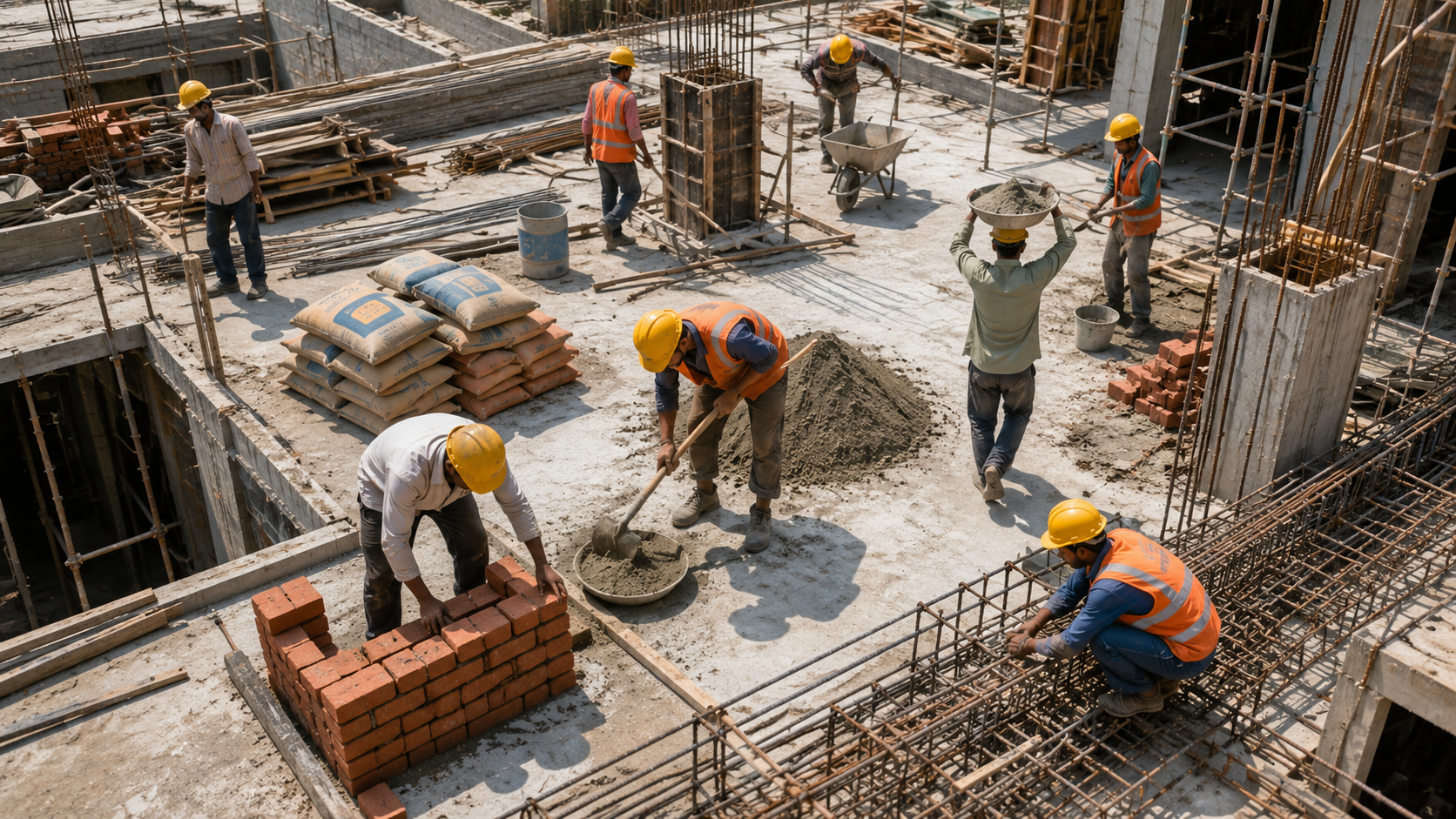
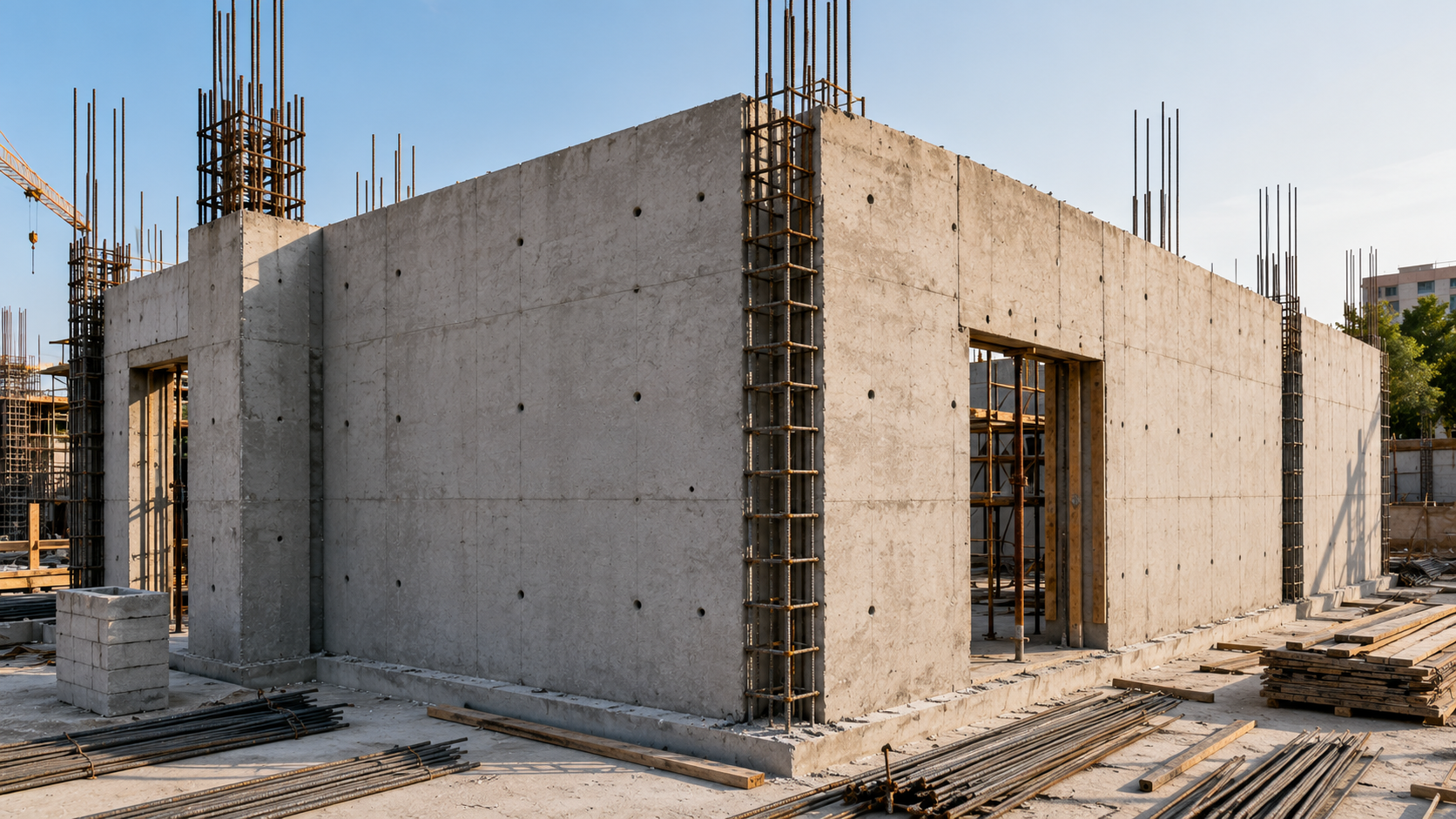
Traditional construction, also called stick-built or on-site construction, remains the dominant method in India. This approach involves constructing the entire building on-site, from foundation to finishing, using conventional materials like concrete, steel, and bricks.
The process typically follows sequential phases: site preparation, foundation work, structural construction, MEP (mechanical, electrical, plumbing) installation, interior finishing, and final inspections. Each phase depends on the completion of the previous one, creating a linear timeline.
Modular Construction: The Modern Alternative
Modular construction involves manufacturing building components (modules) in controlled factory environments, then transporting and assembling them on-site. These modules are three-dimensional units that arrive nearly complete, requiring minimal assembly and finishing on-site.
The key advantage lies in parallelization: while site preparation occurs, factory production continues simultaneously. This overlap significantly reduces overall project duration.
Speed Comparison: Which Builds Faster?
Frequently asked
Traditional Construction Timeline
A typical mid-rise residential building in Indian cities like Bangalore, Mumbai, or Delhi using traditional methods takes approximately 24-36 months from groundbreaking to occupancy. A 10-story apartment complex with 50-60 units typically requires:
Foundation and structural work: 8-12 months
MEP rough-in: 4-6 months (overlapping with structural)
Interior finishing: 6-8 months
Final inspections and approvals: 2-3 months
Weather delays, labor shortages, material procurement delays, and regulatory approvals frequently extend these timelines by 3-6 months.
Modular Construction Timeline
The same project using modular construction can be completed in 12-18 months. The acceleration occurs because:
Factory production begins immediately while site preparation continues (parallel processing)
Weather doesn't impact factory production
Modules arrive pre-finished with MEP systems installed
On-site assembly becomes a straightforward process
Quality control happens in controlled environments, reducing rework
For a 10-story modular building, the timeline breakdown looks like:
Design and factory setup: 2-3 months
Factory production (concurrent with site prep): 8-10 months
Site preparation: 2-3 months
Module assembly and finishing: 3-4 months
Inspections and handover: 1-2 months
Speed Winner: Modular construction delivers 40-50% faster completion, a significant advantage in markets where time-to-market directly impacts profitability and occupancy rates.
Cost Analysis: Initial Investment vs. Long-Term Savings
Traditional Construction Costs in India
For a mid-range residential project in Bangalore or Pune, traditional construction costs approximately ₹1,500-2,000 per square foot (₹16,000-21,500 per square meter). For a 50,000 sq ft building, this translates to ₹75-100 crores.
Cost breakdown:
Land and site acquisition: 20-25%
Structural work: 30-35%
MEP systems: 15-20%
Interior finishing: 15-20%
Contingency and overheads: 10-15%
Hidden costs often emerge: labor disputes, material price fluctuations, weather-related delays, and rework due to quality issues can inflate budgets by 10-20%.
Modular Construction Costs
Initial modular construction costs are typically 5-15% higher than traditional methods, roughly ₹1,650-2,300 per square foot. However, this premium is offset by:
Reduced labor costs (30-40% savings due to factory efficiency)
Minimized waste (factory processes waste 5-10% vs. 15-20% on-site)
Faster project completion (reduced financing costs and overhead)
Fewer change orders and rework (quality control in factories)
Reduced site management and supervision costs
For a ₹100 crore project, the actual cost difference becomes negligible when accounting for these factors. Additionally, the 18-month timeline versus 30-month timeline saves approximately ₹8-12 crores in financing costs and extended overhead.
Cost Sensitivity by Project Type
High-rise residential (15+ stories): Modular shows 10-15% cost advantage due to reduced on-site labor and faster financing cycles.
Low-rise projects (1-4 stories): Traditional methods often remain more cost-effective because modular's economies of scale don't apply.
Commercial/Office spaces: Modular construction offers 15-20% savings due to standardized layouts and reduced MEP variability.
Cost Winner: For most mid-rise and high-rise projects in India, modular construction offers 8-12% total cost savings when all factors are considered.
Environmental Impact: Which is Greener?
Traditional Construction's Environmental Footprint
Traditional construction generates significant environmental impact:
Waste generation: 15-20% of materials become waste on construction sites, often improperly disposed
Water consumption: 3-5 liters per square foot for curing concrete and dust control
Carbon emissions: Approximately 0.8-1.2 tons of CO₂ per square meter of constructed area
Energy consumption: On-site equipment and machinery operate inefficiently
Dust and pollution: Open-air construction creates air and noise pollution affecting surrounding communities
Transportation: Multiple trips for material deliveries increase logistics emissions
Modular Construction's Environmental Advantages
Factory-based modular construction demonstrates superior environmental performance:
Waste reduction: 5-10% waste generation through recycling systems and precise material planning
Water efficiency: Controlled factory environments use 40-50% less water
Carbon footprint: 20-30% lower emissions due to factory efficiency and reduced transportation (consolidated shipments)
Energy efficiency: Modern factories use renewable energy (solar panels are common in Indian modular facilities)
Pollution control: Enclosed facilities contain dust and emissions
Material optimization: Computer-aided design ensures precise material quantities
A 50,000 sq ft modular building in India generates approximately 500-600 tons of CO₂, compared to 800-1,000 tons for traditional construction—a 35-40% reduction.
Lifecycle Considerations
Modular buildings also demonstrate advantages in operational sustainability. Factory-built modules often include:
Better insulation and thermal performance
Integrated renewable energy systems
Advanced water management systems
LED lighting and smart controls
These features reduce operational energy consumption by 20-30% over the building's 50-year lifespan, offsetting manufacturing carbon costs within 3-5 years.
Sustainability Winner: Modular construction is 30-40% greener across the entire lifecycle.
Quality and Durability Comparison
Quality Control Advantages
Modular construction's factory environment enables superior quality control:
Consistent environmental conditions (temperature, humidity)
Automated quality checks at multiple production stages
Reduced human error through standardized processes
Better material handling and storage
Easier identification and correction of defects
Traditional on-site construction faces challenges: weather exposure, variable labor quality, difficult inspections during construction, and delayed defect identification.
Durability and Longevity
Contrary to misconceptions, modular buildings are equally durable as traditional structures. Both use similar materials and must meet identical building codes. However, modular buildings often outlast traditional ones due to:
Better initial quality reducing structural defects
Improved weather resistance from protected assembly
Standardized connections and joints
Factory testing of all systems before installation
Buildings in Scandinavia and North America using modular methods have demonstrated 60+ year lifespans with minimal issues.
Suitability for Different Indian Projects
When Modular Works Best
Residential complexes in metro cities: Bangalore, Hyderabad, and Pune developments benefit from faster delivery and cost savings.
Standardized layouts: Projects with repeating floor plans (apartment towers, office buildings) maximize modular efficiency.
Tight schedules: When time-to-market is critical, modular's speed advantage justifies premium costs.
Complex MEP systems: Hotels, hospitals, and data centers benefit from factory-tested integrated systems.
Remote locations: Projects in Tier-2 and Tier-3 cities avoid labor shortages through modular approaches.
When Traditional Remains Preferable
Unique architectural designs: Bespoke structures with irregular shapes favor on-site construction.
Small projects: Homes under 2,000 sq ft don't achieve modular economies of scale.
Adaptive reuse: Renovations and retrofits require traditional methods.
Constrained sites: Projects with limited access for module delivery may require traditional construction.
Uncertain timelines: Projects with frequently changing requirements work better with traditional flexibility.
Regulatory and Market Considerations in India
Building Code Compliance
India's National Building Code (NBC) and state-specific regulations now explicitly accommodate modular construction. However, awareness varies by state:
Progressive states: Karnataka, Telangana, and Gujarat actively promote modular methods
Developing states: Madhya Pradesh and Rajasthan are beginning to recognize modular approaches
Conservative states: Some states still require additional documentation and approvals
When planning modular projects, engage with local municipal authorities early to understand approval processes.
Market Growth and Adoption
India's modular construction market is projected to grow 20-25% annually through 2026. Major developers like Godrej, Prestige, and DLF are increasingly adopting modular methods for select projects.
Finding qualified modular construction partners remains challenging. This is where platforms like AECORD become invaluable—connecting project teams with vetted modular construction specialists, architects experienced in modular design, and engineers familiar with factory-based manufacturing processes.
Making Your Decision: A Practical Framework
Key Questions to Ask
1. What is your timeline requirement? If you need completion within 18 months, modular is significantly advantageous.
2. Is your project design standardized? Repeating modules maximize modular efficiency.
3. What is your budget flexibility? While modular offers long-term savings, initial costs may be higher.
4. How important is sustainability? If green credentials matter, modular's 30-40% carbon reduction is substantial.
5. Can you access modular manufacturers? India's modular infrastructure is concentrated in metros and Tier-1 cities.
Hybrid Approaches
Many successful Indian projects employ hybrid methods: modular for standardized residential units combined with traditional construction for common areas, lobbies, and unique architectural elements. This approach balances speed, cost, and design flexibility.
Looking Ahead to 2026
By 2026, technological advances will further favor modular construction:
3D printing will enable customized modular components
AI-powered quality control will reduce defects to near-zero
Autonomous transportation will lower logistics costs
Government incentives for green construction will favor modular methods
Labor costs will rise, making modular's efficiency gains more valuable
However, traditional construction will remain relevant for unique projects, adaptive reuse, and small-scale developments.
Conclusion: The Verdict
Speed: Modular construction is 40-50% faster, delivering projects in 12-18 months versus 24-36 months for traditional methods.
Cost: While initial costs are 5-15% higher, total project costs are 8-12% lower when accounting for financing, overhead, and reduced rework.
Sustainability: Modular construction is 30-40% greener across the entire lifecycle, with significant waste reduction and carbon savings.
The best choice depends on your specific project requirements. For most mid-rise and high-rise residential and commercial projects in Indian metros, modular construction offers compelling advantages in speed, cost, and environmental impact.
To explore whether modular or traditional construction suits your project, consult with experienced professionals who understand both methods and India's specific market conditions. AECORD connects you with architects, engineers, and construction specialists experienced in both approaches, helping you make an informed decision based on your project's unique requirements and constraints.
Whether you choose modular innovation or traditional reliability, the key is partnering with professionals who understand your market, regulatory environment, and project goals. Start your search for the right team on AECORD today and accelerate your project toward successful delivery.