

India's architectural heritage stands as a testament to the brilliance of ancient engineers whose innovations shaped civilizations and influenced global construction practices for millennia. From the intricate water management systems of Harappa to the soaring temples of South India, these masterpieces represent engineering solutions that modern professionals still study and admire today. Yet, many of these remarkable achievements remain underappreciated, their engineering principles often overshadowed by their aesthetic grandeur.
The Engineering Marvels We've Forgotten
Ancient India produced some of the world's most sophisticated engineering systems, yet their technical brilliance is frequently overlooked in contemporary discourse. These weren't merely architectural feats—they were comprehensive solutions to complex problems of urban planning, hydraulics, structural integrity, and sustainable living that modern cities are still struggling to solve.
The engineering principles embedded in these ancient structures offer invaluable lessons for today's construction and operations professionals in India. As the AECO (Architecture, Engineering, Construction, and Operations) industry evolves, reconnecting with these foundational principles can inspire innovative approaches to modern challenges in cities like Mumbai, Delhi, Bangalore, and Chennai.
Build cost · Bengaluru, May 2026
The Indus Valley Civilization: Urban Planning Ahead of Its Time
The cities of Harappa and Mohenjo-daro, dating back to 2600-1900 BCE, demonstrate engineering sophistication that rivaled contemporary civilizations in Mesopotamia and Egypt. What makes these cities remarkable is their grid-based urban planning and advanced infrastructure systems.
The drainage systems in Mohenjo-daro were exceptionally sophisticated. Public baths, private wells, and sewage systems were interconnected through a network of underground terracotta pipes and brick-lined channels. The Great Bath, measuring approximately 12 meters by 7 meters, featured perfectly fitted bricks and a sophisticated drainage system that could be sealed. This wasn't accidental—it represented deliberate engineering planning for water management and public health.
The standardization of bricks (approximately 25 x 12.5 x 7.5 cm) across the civilization suggests centralized quality control and manufacturing standards—principles that modern construction professionals implement through building codes and material specifications. The streets were designed with slopes for natural water drainage, and the separation of water supply from sewage systems predates similar systems in Europe by over 4,000 years.
Structural Engineering in Ancient Indian Temples
The evolution of temple architecture from the 5th century onwards reveals sophisticated understanding of structural mechanics, particularly in the construction of increasingly complex roof systems and load-bearing walls.
The Kailasanatha Temple in Ellora, carved from a single rock face in the 8th century, represents one of the most ambitious monolithic structures ever attempted. Engineers had to calculate load distribution across the entire structure while removing stone, essentially building in reverse. The precision required was extraordinary—a miscalculation would have resulted in catastrophic structural failure.
The Brihadeeswarar Temple in Thanjavur, built in the 11th century, features a 216-foot granite tower (gopuram) that has survived numerous earthquakes without modern reinforcement. The secret lies in its engineering: the tower is constructed with precisely cut granite blocks without mortar, relying on the weight and friction of the stones themselves. The capstone alone weighs 216 tons and was raised using an ingenious system of ramps that extended for miles.
Modern structural engineers studying these temples have discovered that the absence of mortar actually provides flexibility—the stones can shift microscopically during earthquakes, absorbing energy rather than cracking. This principle is now being revisited by contemporary engineers designing earthquake-resistant structures in seismic zones like Nepal and parts of North India.
Water Management: Ancient Wisdom for Modern Cities
India's ancient civilizations developed sophisticated water management systems that modern cities desperately need to emulate as water scarcity becomes increasingly critical.
Frequently asked
The Tank and Step Well Systems
The tank system, prevalent across South India, represented a comprehensive approach to water harvesting and storage. These weren't simple reservoirs—they were engineered systems with specific gradients, overflow mechanisms, and distribution channels. The Kallanai Dam in Tamil Nadu, built in the 2nd century CE by the Chola dynasty, is still functional after nearly 2,000 years.
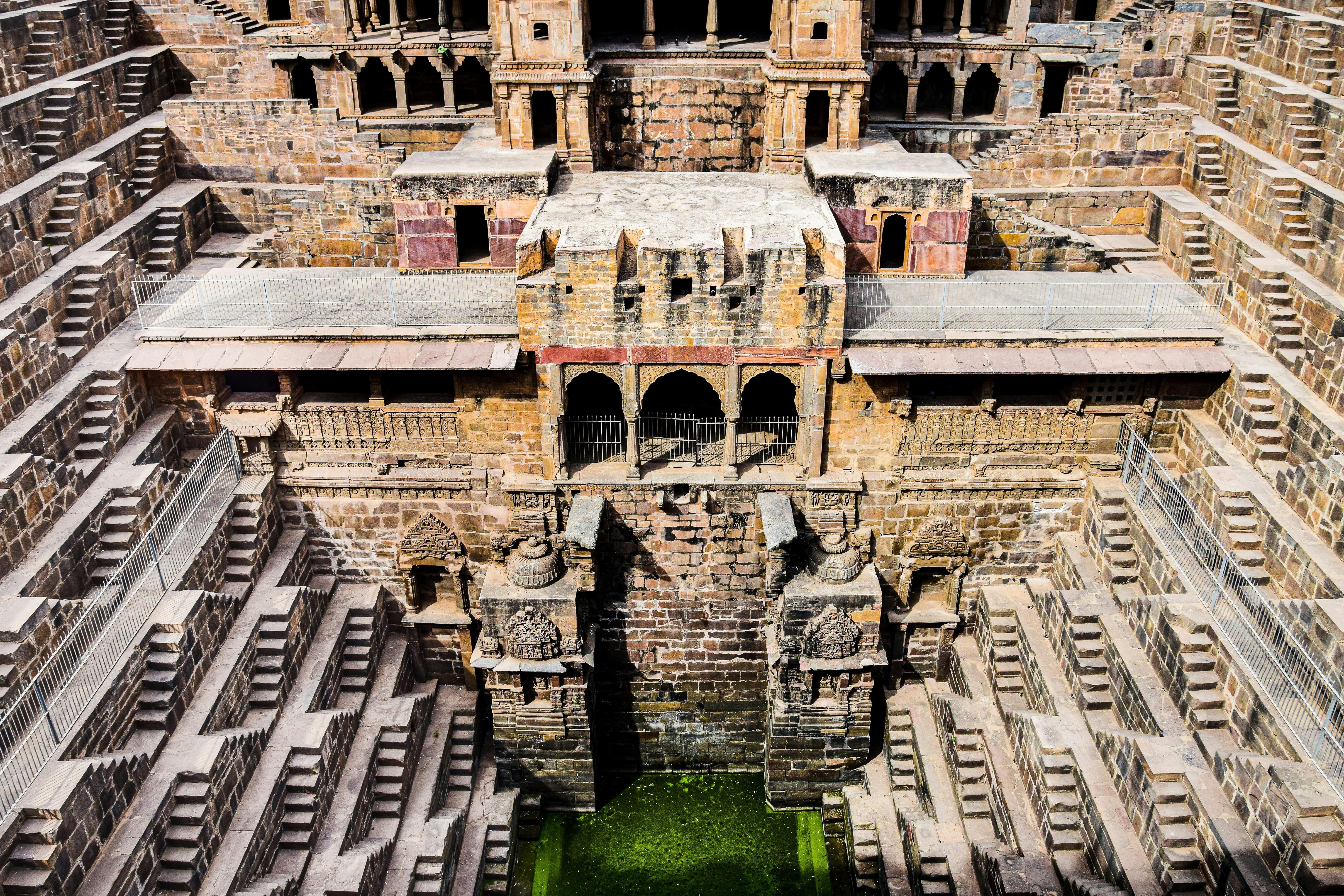
Step wells (baolis), found extensively across Rajasthan, Gujarat, and parts of North India, served multiple purposes: water storage, temperature regulation, and architectural beauty. The Chand Baoli in Abhaneri, Rajasthan, descends 100 feet with 3,500 steps arranged in a geometric pattern. The engineering here addressed a critical problem—accessing groundwater during droughts while minimizing evaporation through the deep, shaded structure.
These systems incorporated principles of hydrology that engineers wouldn't formally articulate until centuries later. The slope calculations, overflow spillways, and sediment management features show deep understanding of water flow dynamics. Cities like Jaipur, Udaipur, and Jodhpur were designed around these tank systems, and their revival is now considered essential for sustainable urban water management.
The Qanat Systems and Underground Channels
In regions influenced by Persian engineering, underground channel systems (qanats) transported water over long distances while minimizing evaporation. The engineering challenge was maintaining precise gradients over kilometers—too steep and velocity would cause erosion; too shallow and water would stagnate. Ancient engineers solved this through regular inspection shafts and careful surveying techniques that predated modern instruments.
Architectural Innovations and Material Science
Ancient Indian engineers didn't just build—they innovated with materials and techniques that modern science has only recently begun to fully understand.
Advanced Brick and Mortar Technology
The bricks used in Indus Valley structures demonstrate careful material selection and quality control. Analysis shows consistent firing temperatures and clay composition, suggesting standardized kiln operations. The mortar used in later structures often contained lime, ash, and other additives that created stronger, more durable bonds than simple mud mortar.
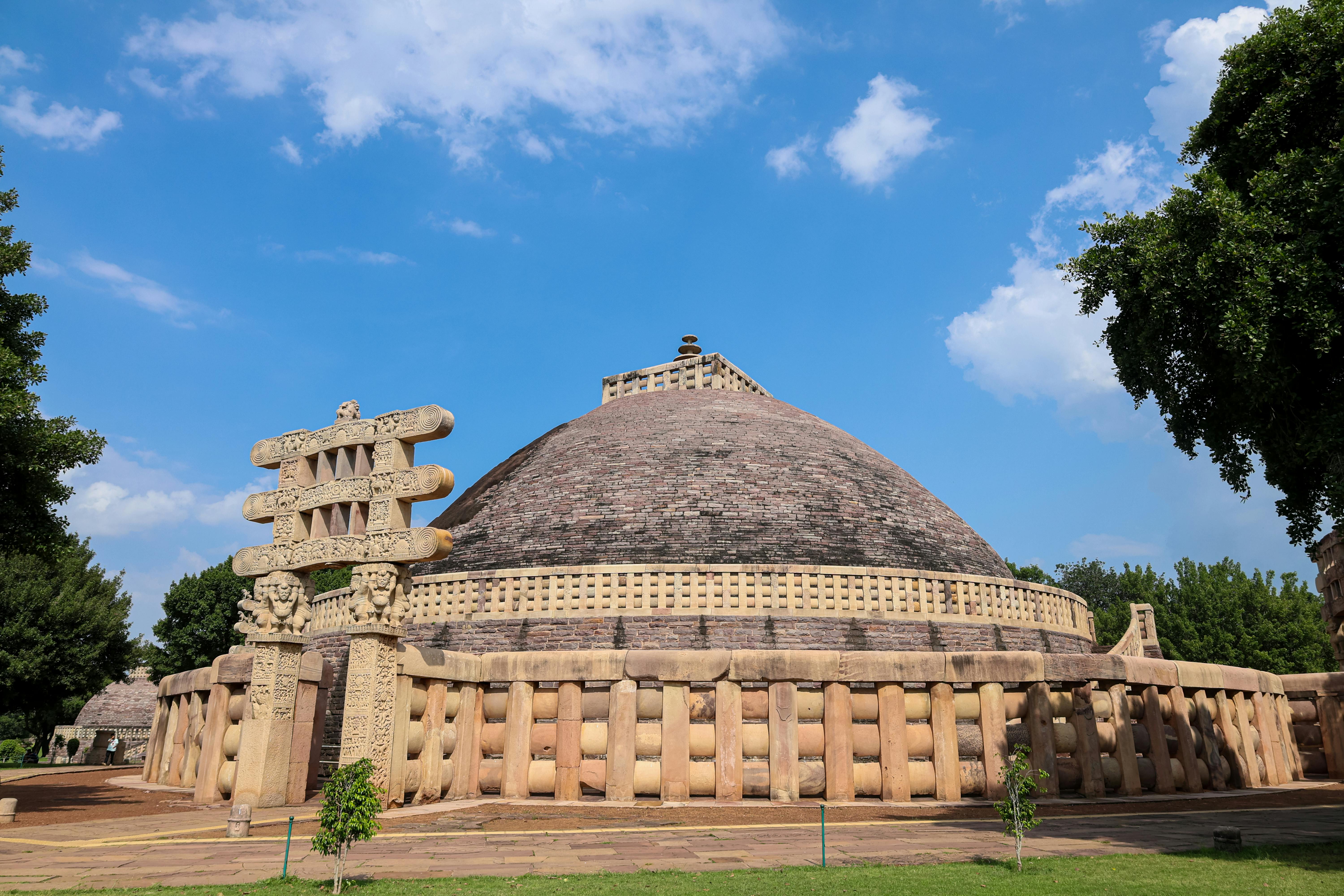
The concrete-like material used in some ancient structures, particularly in Buddhist stupas, incorporated volcanic ash and other pozzolanic materials. This created a durable composite that actually improved with age—a principle that Roman concrete also employed, but which Indian engineers developed independently.
The Science of Stone Selection and Placement
Different stones were chosen for different purposes based on their properties. Granite was used for load-bearing elements due to its compressive strength, while softer stones were reserved for decorative elements. The orientation of stone layers followed natural grain patterns to maximize durability. This wasn't intuitive knowledge—it represented accumulated experience and systematic observation.

Urban Planning and City Design Principles
Ancient Indian cities weren't haphazardly constructed—they followed deliberate planning principles that modern urban designers recognize as sophisticated.
Hierarchical Street Networks
Harappa and Mohenjo-daro featured main streets running north-south and east-west, with secondary streets creating a grid pattern. This wasn't merely aesthetic—it provided efficient movement, clear navigation, and systematic access to utilities. The main streets were wider (up to 12 meters) while residential lanes were narrower, creating a hierarchy that modern traffic engineers still employ.
Zoning and Functional Separation
Archaeological evidence suggests functional zoning: residential areas were separated from industrial areas (pottery kilns, metalworking), and public spaces were distinct from private dwellings. The citadel areas were elevated, possibly serving administrative functions. This separation of uses is a fundamental principle of modern urban planning that Indian cities like Bangalore and Pune are now attempting to implement through master plans.
Public Infrastructure and Amenities
Public baths, wells, and grain storage facilities were systematically distributed throughout cities, suggesting planned provision of essential services. The Great Granary at Mohenjo-daro, with its ventilation system designed to prevent moisture accumulation, shows understanding of food preservation and public resource management.
Lessons for Modern AECO Professionals in India
The engineering principles embedded in ancient Indian structures offer practical lessons for contemporary professionals working in the AECO sector today.
Sustainability and Resource Efficiency
Ancient structures were built to last centuries without constant maintenance or energy input. Modern sustainable design seeks similar goals—reducing operational costs, minimizing environmental impact, and creating buildings that age gracefully. The principle of designing for longevity rather than disposability is increasingly relevant as India faces resource constraints and environmental pressures.
Adaptation to Local Conditions
Ancient builders adapted their techniques to local materials and climate. Structures in Kerala incorporated elevated platforms and ventilation for humid climates, while Rajasthani buildings featured thick walls and minimal openings to manage heat. This climate-responsive design is essential as India experiences increasing temperature extremes and water stress.
Integrated Systems Thinking
Ancient cities weren't collections of isolated buildings—they were integrated systems where water management, waste disposal, traffic flow, and structural integrity were interconnected. Modern AECO professionals, particularly those working on large projects in cities like Mumbai, Delhi, and Hyderabad, are increasingly recognizing that siloed approaches lead to inefficiency and environmental problems.
Professionals using platforms like AECORD can access expertise across multiple disciplines to implement integrated design approaches that reflect this ancient wisdom. Whether you're designing a commercial complex, residential development, or infrastructure project, the principle of viewing your project as part of a larger system—connecting to existing utilities, respecting local geography, and planning for long-term sustainability—echoes principles that worked for centuries.
Quality Control and Standardization
The consistency in Indus Valley bricks and construction practices suggests systematic quality control. Modern construction relies on building codes, material certifications, and inspection protocols—but the principle is ancient. Ensuring that every brick, every joint, and every structural element meets standards is what allowed ancient structures to endure.
Why This Knowledge Was Lost
Several factors contributed to the decline of these engineering traditions. The fragmentation of the Indian subcontinent into numerous kingdoms disrupted the continuity of knowledge transmission. Invasions and cultural upheaval interrupted the apprenticeship systems through which technical knowledge was passed. The transition from stone and brick to other materials, combined with the loss of written technical documentation (or the inability to decipher it), meant that the underlying principles became obscured.
Colonial period construction practices introduced different materials, techniques, and standards that displaced traditional methods. While some knowledge was preserved in oral traditions and regional practices, much was forgotten or dismissed as primitive compared to industrial-era engineering.
Rediscovering Ancient Engineering for Contemporary Applications
A growing movement among Indian architects and engineers seeks to rediscover and reapply these principles. Research institutions are studying ancient structures using modern analytical techniques—ground-penetrating radar, material analysis, and computational modeling—to understand how they were built and why they've endured.
This isn't about romantic nostalgia or rejecting modern materials and techniques. Rather, it's about recognizing that ancient engineers solved real problems with constraints similar to those we face today: limited energy availability, need for durability, climate adaptation, and resource efficiency. Their solutions, informed by centuries of accumulated knowledge, offer insights that modern engineering can integrate with contemporary technology.
For professionals working on heritage conservation projects or seeking to incorporate traditional principles into modern designs, AECORD connects you with specialists who understand both ancient techniques and contemporary standards. Whether you're restoring a historic structure in Varanasi, designing a climate-responsive building in Bangalore, or planning an infrastructure project that must integrate with existing urban fabric, accessing the right expertise is crucial.
The Path Forward: Integrating Ancient and Modern Engineering
The future of Indian AECO lies in intelligent synthesis—leveraging modern materials, technology, and scientific understanding while incorporating the wisdom embedded in ancient structures. This might mean:
Designing water management systems inspired by tank systems and step wells, but enhanced with modern filtration and monitoring
Applying principles of structural flexibility learned from ancient temples to earthquake-resistant modern buildings
Incorporating climate-responsive design strategies that ancient builders perfected through centuries of observation
Adopting hierarchical planning principles in urban design that create efficient, livable cities
Implementing quality control and standardization practices that ensure durability and reliability
As India continues rapid urbanization and infrastructure development, these principles become increasingly valuable. Cities grappling with water scarcity, waste management, heat stress, and congestion can learn from civilizations that sustained large urban populations for centuries.
Conclusion: Reclaiming Our Engineering Heritage
India's ancient engineers weren't lost—their work still stands, literally and figuratively. The Brihadeeswarar Temple still stands after a millennium. The Kallanai Dam still functions after nearly 2,000 years. The principles embedded in Indus Valley cities still inform urban planning theory. What was lost was the continuous transmission of knowledge, the understanding of the engineering principles that made these achievements possible.
Reclaiming this heritage doesn't mean abandoning modern technology or pretending that contemporary engineering isn't more sophisticated in many ways. Rather, it means recognizing that our ancestors solved fundamental problems of construction, water management, sustainability, and urban living with remarkable ingenuity. Their solutions, understood through modern analytical frameworks, can inform better approaches to the challenges we face today.
For AECO professionals in India, this heritage represents both inspiration and practical resource. Whether you're designing a new commercial district, restoring a historical structure, or planning infrastructure for a growing city, the principles embedded in ancient Indian engineering offer valuable guidance. The challenge and opportunity lies in understanding these principles deeply enough to apply them creatively in contemporary contexts.
If you're working on projects that require expertise in sustainable design, heritage conservation, climate-responsive architecture, or integrated infrastructure planning, AECORD connects you with professionals who understand both the historical context and modern requirements. Browse our marketplace of architects, engineers, and construction specialists who can help bring ancient wisdom into your contemporary projects. Together, we can build structures and systems that honor our engineering heritage while meeting the needs of modern India.
Frequently Asked Questions
What can modern AECO professionals learn from ancient Indian engineering?
Ancient Indian engineering systems offer valuable lessons in sustainable urban planning, water management, and structural integrity that remain relevant to contemporary construction challenges. Modern professionals can apply principles like standardized building materials, natural drainage design, and load-bearing techniques used in structures like the Brihadeeswarar Temple to solve today's infrastructure problems in Indian cities.
How advanced were the water management systems in the Indus Valley Civilization?
The Indus Valley cities featured sophisticated underground terracotta pipe networks and brick-lined channels that separated water supply from sewage systems—a practice that predates similar European systems by over 4,000 years. The Great Bath in Mohenjo-daro included sealed drainage systems and sloped streets designed for natural water flow, demonstrating deliberate engineering planning for public health.
Why did ancient Indian temples survive earthquakes without modern reinforcement?
Temples like the Brihadeeswarar Temple were constructed using precisely cut stone blocks without mortar, relying on weight and friction between stones to distribute loads. This technique actually provides structural flexibility during earthquakes, allowing the building to move slightly rather than crack, which is why these 11th-century structures have survived seismic activity for centuries.
What does brick standardization in Harappa reveal about ancient Indian construction?
The consistent brick dimensions (approximately 25 x 12.5 x 7.5 cm) across the Indus Valley Civilization indicate centralized quality control and manufacturing standards, principles that modern construction professionals still implement through building codes and material specifications today.
How was the 216-ton capstone of the Brihadeeswarar Temple constructed and raised?
Ancient engineers used an ingenious system of ramps that extended for miles to raise the massive 216-ton capstone atop the 216-foot granite tower. This demonstrates sophisticated understanding of mechanical advantage and load distribution that modern construction managers still study for insights into moving and positioning heavy materials.