Understanding IGBC Certification: A Comprehensive Guide for Indian AECO Professionals
The Indian Green Building Council (IGBC) certification has become a cornerstone of sustainable construction practices in India. As environmental concerns grow and regulatory frameworks evolve, understanding IGBC certification is essential for architects, engineers, contractors, and developers who want to remain competitive in today's market. This comprehensive guide explores everything you need to know about IGBC certification, its benefits, rating systems, and how to achieve it./blog/how-to-make-sustainability-a-selling-point-not-a-compromise-mp15qu9a
Build cost · Bengaluru, May 2026
What is IGBC Certification?
The Indian Green Building Council (IGBC) is a council of the Confederation of Indian Industry (CII) that promotes green building practices and sustainable construction in India. IGBC certification is a voluntary, performance-based rating system that evaluates buildings based on their environmental and health performance throughout their lifecycle.
Established in 2001, IGBC has become the leading green building certification body in India, with thousands of certified projects across residential, commercial, industrial, and institutional sectors. The certification framework is specifically designed for the Indian climate, building practices, and regulatory environment, making it more relevant than international standards like LEED for projects in India.
Why IGBC Certification Matters for Indian Construction
India's construction industry is one of the fastest-growing sectors globally, but it also accounts for significant environmental impact. Buildings consume approximately 30% of India's total energy and produce 25% of waste. This is where IGBC certification becomes crucial:
Regulatory Compliance: Many state governments and municipal corporations in India now mandate green building standards for public projects. Some states offer incentives like floor area ratio (FAR) relaxations and property tax exemptions for IGBC-certified buildings.
Cost Savings: IGBC-certified buildings typically reduce operational costs by 20-30% through energy efficiency and water conservation measures.
Market Value: Green buildings command premium rental and sale prices, with studies showing 5-15% higher valuations in major Indian cities like Bangalore, Mumbai, and Delhi.
Occupant Health: IGBC standards ensure better indoor air quality, natural lighting, and thermal comfort, leading to improved productivity and reduced absenteeism.
Brand Value: Developers and companies gain positive brand recognition and corporate social responsibility credentials through green certifications.
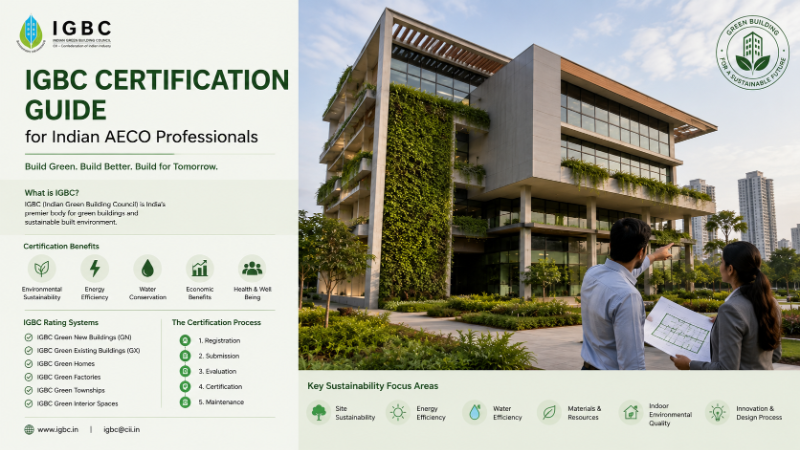
IGBC Rating Systems and Certification Levels
IGBC offers multiple rating systems tailored to different building types and project phases. Understanding these systems is essential for professionals working on various project categories.
Frequently asked
IGBC Green Building Rating System (New Construction)
This is the primary rating system for new commercial buildings and is based on LEED v4 standards, adapted for Indian conditions. Projects are evaluated on a points-based system with four certification levels:
Certified: 40-49 points
Silver: 50-59 points
Gold: 60-79 points
Platinum: 80+ points
The rating system evaluates buildings across eight key categories: Sustainable Sites, Water Efficiency, Energy and Atmosphere, Materials and Resources, Indoor Environmental Quality, Innovation in Design, and Regional Priority.
IGBC Green Homes Rating System
Specifically designed for residential buildings, this system addresses the unique requirements of apartment complexes and individual homes. It covers both pre-construction and post-construction phases, making it applicable to ongoing residential projects across Indian cities like Pune, Hyderabad, and Chennai.
IGBC Green Factory Building Rating System
Tailored for industrial and manufacturing facilities, this system focuses on operational efficiency, worker safety, and environmental impact reduction in factory settings.
IGBC Green Retrofit Rating System
For existing buildings undergoing renovation or retrofitting, this system evaluates improvements in energy efficiency, water conservation, and indoor environmental quality.
IGBC Green Interiors Rating System
Focused on interior design and fit-out projects, this system is ideal for office renovations, retail spaces, and hospitality interiors.
Key Performance Areas in IGBC Certification
To achieve IGBC certification, buildings must demonstrate excellence across several key performance areas:
Sustainable Sites (SS)
This category evaluates the building's location and site management practices. Points are awarded for:
Proximity to public transportation (critical in Indian cities where traffic congestion is a major issue)
Brownfield redevelopment
Site management during construction to minimize environmental disruption
Stormwater management and rainwater harvesting (increasingly important in drought-prone regions)
Heat island effect mitigation through cool roofs and permeable surfaces
Water Efficiency (WE)
Water scarcity is a critical challenge in many Indian regions. IGBC certification encourages:
Water-efficient fixtures reducing consumption by 20-30%
Rainwater harvesting systems (mandatory in many Indian cities)
Wastewater treatment and recycling for landscape irrigation
Cooling tower water management
Landscape design using native, drought-resistant plants
Buildings in water-stressed regions like Bangalore, Pune, and Delhi can achieve significant cost savings by implementing these measures effectively.
Energy and Atmosphere (EA)
This is typically the highest-scoring category for IGBC projects. Key requirements include:
Energy-efficient HVAC systems with proper commissioning
LED lighting with daylight sensors and occupancy controls
Building automation systems for optimal performance
Renewable energy integration (solar panels are increasingly affordable in India)
Refrigerant management to reduce ozone depletion
Energy audits and continuous monitoring
Materials and Resources (MR)
This category promotes sustainable material sourcing and waste reduction:
Use of locally-sourced materials (reducing transportation costs and supporting Indian suppliers)
Recycled and rapidly renewable materials
Construction waste management with at least 50% diversion from landfills
Responsible wood sourcing
Low-emitting materials for better indoor air quality
Indoor Environmental Quality (IEQ)
This focuses on occupant health and comfort:
Adequate ventilation and air quality monitoring
Thermal comf ort through proper insulation and HVAC design
Daylighting and views to outdoor spaces
Acoustic performance to minimize noise
Non-toxic, low-VOC materials throughout the building
Innovation in Design (ID)
Projects can earn bonus points for innovative sustainable strategies beyond standard requirements, such as:
Advanced water recycling systems
Zero-waste construction practices
Integration of green roofs or vertical gardens
Smart building technologies
The IGBC Certification Process
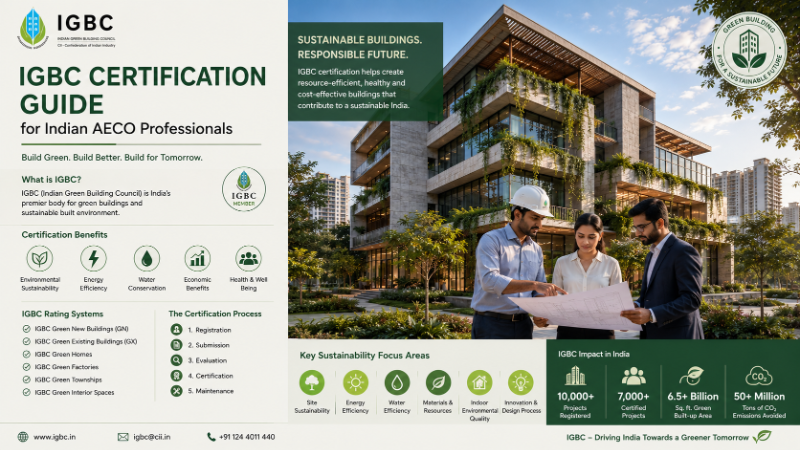
Achieving IGBC certification involves a structured process that typically spans the project lifecycle:
Pre-Design Phase
Before construction begins, project teams should register with IGBC and conduct a preliminary assessment. This phase involves:
Identifying green building goals and target certification level
Assembling a green building team with representation from architects, engineers, and contractors
Conducting a site analysis and baseline energy modeling
Estimating the cost of green features (typically 2-5% premium over conventional construction)
Design Phase
During design development, teams integrate green strategies into building plans:
Optimize building orientation and form for passive solar design
Specify energy-efficient mechanical and electrical systems
Plan water conservation and recycling systems
Select sustainable materials and finishes
Design for natural ventilation and daylighting where possible
Construction Phase
Implementation requires careful coordination:
Maintain an on-site environmental management plan
Implement waste management practices
Conduct commissioning of building systems
Document all green building measures with photographs and certifications
Train contractors and workers on sustainable practices
Post-Construction and Certification
After project completion, submit documentation to IGBC:
Compile evidence for all claimed credits (typically 100-200+ documents)
Submit application with supporting documentation
IGBC reviews the submission (typically 4-8 weeks)
Address any clarifications or additional information requests
Receive certification letter and public recognition
Cost Implications of IGBC Certification
Understanding the financial aspects is crucial for project planning:
Certification Costs
Application Fee: ₹50,000 - ₹150,000 depending on building type and size
Documentation and Consulting: ₹300,000 - ₹1,500,000 for professional support
Testing and Commissioning: ₹200,000 - ₹500,000
Construction Premium
The additional cost for green building features typically ranges from 2-5% of total construction cost, depending on the target certification level and existing building practices. For a ₹10 crore commercial project in Bangalore, this translates to ₹20-50 lakhs additional investment.
Return on Investment
However, these costs are typically offset by:
20-30% reduction in operational costs (energy, water, waste)
5-15% premium in property value or rental rates
Government incentives (FAR relaxation, property tax exemptions, subsidies)
Reduced vacancy rates and improved tenant retention
Most IGBC-certified buildings achieve payback periods of 3-7 years.

Government Incentives and Support for IGBC Certification
Various Indian states and municipalities offer incentives to promote IGBC-certified buildings:
Delhi: FAR relaxation up to 10% for green buildings
Maharashtra: Property tax exemptions for IGBC-certified buildings
Karnataka: Subsidy of up to ₹50 per square foot for green building features
Tamil Nadu: Exemption from certain building bylaws for certified projects
Telangana: Water tariff exemptions for water-efficient buildings
Professionals using AECORD can easily identify and connect with consultants, contractors, and suppliers experienced in IGBC certification requirements in their specific region.
Common Challenges in Achieving IGBC Certification
While beneficial, IGBC certification presents several challenges:
Documentation Burden
Gathering and organizing evidence for 50+ credits requires meticulous record-keeping throughout the project lifecycle. Many teams underestimate the time and resources required for documentation.
Cost Overruns
Unforeseen expenses in implementing green features or addressing certification requirements can impact project budgets. Early planning and contingency budgeting are essential.
Contractor Awareness
In India, many contractors lack familiarity with green building practices. Proper training and supervision are necessary to ensure compliance with IGBC requirements.
Supply Chain Issues
Sourcing certified sustainable materials can be challenging in some regions. Building relationships with suppliers through platforms like AECORD can help overcome these obstacles.
Performance Verification
Some requirements, like energy performance and indoor air quality, require third-party testing and commissioning, adding to project costs and timelines.
Best Practices for Successful IGBC Certification
To maximize the likelihood of achieving IGBC certification efficiently:
Start Early: Integrate green building goals from the conceptual design phase, not as an afterthought.
Assemble the Right Team: Include experienced IGBC consultants, engineers, and contractors from the beginning. AECORD can help you find qualified professionals in your area.
Set Clear Targets: Define the target certification level early and align all stakeholders on sustainability goals.
Maintain Meticulous Records: Document everything throughout the project with photographs, certifications, and test reports.
Conduct Regular Reviews: Hold monthly green building team meetings to track progress against IGBC requirements.
Leverage Technology: Use building information modeling (BIM) and energy simulation software to optimize performance before construction.
Engage Contractors: Conduct training sessions for construction teams on green building practices and documentation requirements.
Plan for Commissioning: Budget adequate time and resources for system commissioning and performance verification.
Future of IGBC Certification in India
IGBC certification is evolving to address emerging sustainability challenges:
Embodied Carbon: Future versions will increasingly focus on the carbon footprint of building materials, not just operational energy.
Circular Economy: Greater emphasis on material reuse, recycling, and end-of-life building considerations.
Climate Resilience: Integration of climate adaptation measures, particularly important for India given increasing extreme weather events.
Social Sustainability: Enhanced focus on worker welfare, community impact, and social equity in green building practices.
Digital Integration: Increased use of IoT sensors, AI, and building management systems for real-time performance monitoring.
Conclusion
IGBC certification has become an essential consideration for architects, engineers, contractors, and developers in India's construction industry. While achieving certification requires careful planning, investment, and meticulous documentation, the long-term benefits in operational cost savings, property value enhancement, and environmental impact make it a worthwhile endeavor.
The Indian market is increasingly recognizing the value of green buildings, with growing occupant demand, government support, and regulatory requirements driving adoption. Whether you're planning a new commercial development in Mumbai, a residential complex in Pune, or an industrial facility in Bangalore, IGBC certification can provide a competitive advantage and demonstrate your commitment to sustainable practices.
To successfully navigate the IGBC certification process, connect with experienced professionals in your area through AECORD, India's leading B2B2C marketplace for AECO professionals. Find certified consultants, green building specialists, sustainable material suppliers, and contractors who understand IGBC requirements and can help you achieve your certification goals efficiently and cost-effectively.
Frequently Asked Questions
What is IGBC certification and why is it important for Indian construction projects?
IGBC (Indian Green Building Council) certification is a voluntary, performance-based rating system that evaluates buildings based on their environmental and health performance. It's important because many Indian state governments now mandate green building standards for public projects, and IGBC-certified buildings typically reduce operational costs by 20-30% while commanding 5-15% premium valuations in major cities.
What are the different IGBC certification levels and point requirements?
IGBC offers four certification levels: Certified (40-49 points), Silver (50-59 points), Gold (60-79 points), and Platinum (80+ points). These levels are based on a points-based evaluation system across eight key categories including Sustainable Sites, Water Efficiency, Energy and Atmosphere, Materials and Resources, and Indoor Environmental Quality.
How much can IGBC certification reduce building operational costs?
IGBC-certified buildings typically reduce operational costs by 20-30% through energy efficiency and water conservation measures. Additionally, these buildings often achieve 5-15% higher valuations in major Indian cities like Bangalore, Mumbai, and Delhi due to their green building credentials.
What are the benefits of IGBC certification for building occupants?
IGBC standards ensure better indoor air quality, natural lighting, and thermal comfort, which lead to improved occupant productivity and reduced absenteeism. These health-focused design features create a healthier living and working environment for building users.
Does IGBC certification offer any government incentives in India?
Yes, many Indian state governments and municipal corporations offer incentives for IGBC-certified buildings, including floor area ratio (FAR) relaxations and property tax exemptions. Some states also mandate green building standards for public projects, making IGBC certification increasingly valuable for developers.
Frequently Asked Questions
What is IGBC certification and why is it important for Indian construction projects?
IGBC (Indian Green Building Council) certification is a voluntary, performance-based rating system that evaluates buildings based on their environmental and health performance. It's important because many Indian state governments now mandate green building standards for public projects, and IGBC-certified buildings typically reduce operational costs by 20-30% while commanding 5-15% premium valuations in major cities.
What are the different IGBC certification levels and point requirements?
IGBC offers four certification levels: Certified (40-49 points), Silver (50-59 points), Gold (60-79 points), and Platinum (80+ points). These levels are based on a points-based evaluation system across eight key categories including Sustainable Sites, Water Efficiency, Energy and Atmosphere, Materials and Resources, and Indoor Environmental Quality.
How much can IGBC certification reduce building operational costs?
IGBC-certified buildings typically reduce operational costs by 20-30% through energy efficiency and water conservation measures. Additionally, these buildings often achieve 5-15% higher valuations in major Indian cities like Bangalore, Mumbai, and Delhi due to their green building credentials.
What are the benefits of IGBC certification for building occupants?
IGBC standards ensure better indoor air quality, natural lighting, and thermal comfort, which lead to improved occupant productivity and reduced absenteeism. These health-focused design features create a healthier living and working environment for building users.
Does IGBC certification offer any government incentives in India?
Yes, many Indian state governments and municipal corporations offer incentives for IGBC-certified buildings, including floor area ratio (FAR) relaxations and property tax exemptions. Some states also mandate green building standards for public projects, making IGBC certification increasingly valuable for developers.