

House Construction Cost in India Per Sq Ft 2026: A Complete Guide
Building a house in India is a significant financial commitment, and understanding the construction costs per square foot is crucial for planning your project effectively. As we move into 2026, construction costs have evolved considerably due to inflation, material price fluctuations, labor availability, and regional variations. This comprehensive guide will help you understand what to expect when planning your home construction in India.
Build cost · Bengaluru, May 2026
Current Construction Cost Trends for 2026
Related reading: Best Exterior Paint Brands in India Top.
The construction industry in India has witnessed substantial changes over the past few years. According to recent market data, the average construction cost in India ranges from ₹1,200 to ₹3,500 per square foot depending on various factors. However, these figures vary significantly based on location, construction quality, and materials used.
National Average Breakdown
The construction cost landscape in 2026 shows:
Basic/Economy Construction: ₹1,200 to ₹1,800 per sq ft
Standard Construction: ₹1,800 to ₹2,500 per sq ft
Premium Construction: ₹2,500 to ₹3,500 per sq ft
Ultra-Premium Construction: ₹3,500 and above per sq ft
These costs include structural work, finishing, basic electrical, and plumbing installations. However, they typically exclude land acquisition, architectural fees, permits, and interior design elements.
Regional Cost Variations Across India
Construction costs vary significantly across different Indian cities and regions due to factors like labor availability, material transportation, local regulations, and market demand.
For more on this, see our detailed guide to Terrace Waterproofing Cost India 2026.
Frequently asked
Tier 1 Cities (Delhi, Mumbai, Bangalore, Hyderabad)
Metropolitan areas command premium construction costs:
Delhi NCR: ₹2,200 to ₹4,000 per sq ft
Mumbai: ₹2,500 to ₹4,500 per sq ft
Bangalore: ₹2,000 to ₹3,800 per sq ft
Hyderabad: ₹1,800 to ₹3,200 per sq ft
These higher costs are driven by increased labor wages, stricter building codes, higher material costs due to transportation, and premium land values.
Tier 2 Cities (Pune, Ahmedabad, Jaipur, Lucknow)
Secondary cities offer more moderate construction costs:
Pune: ₹1,600 to ₹2,800 per sq ft
Ahmedabad: ₹1,400 to ₹2,400 per sq ft
Jaipur: ₹1,300 to ₹2,200 per sq ft
Lucknow: ₹1,200 to ₹2,000 per sq ft
These cities provide a balance between quality infrastructure and reasonable construction costs, making them attractive for home builders with moderate budgets.
Tier 3 Cities and Rural Areas
Smaller cities and towns offer the most economical construction options:
Construction costs range from ₹1,000 to ₹1,800 per sq ft
Lower labor costs and reduced material transportation expenses
Simpler regulatory requirements
Limited availability of specialized contractors
Cost Breakdown: What's Included in Per Sq Ft Rates
Understanding what constitutes the per square foot cost is essential for accurate budgeting. The typical breakdown includes:
Structural Components (40-45% of total cost)
Excavation and foundation work: ₹150-250 per sq ft
RCC structure (columns, beams, slabs): ₹600-900 per sq ft
Brick masonry and walls: ₹200-350 per sq ft
Finishing Work (30-35% of total cost)
Plastering and painting: ₹150-250 per sq ft
Flooring (tiles, cement, etc.): ₹200-400 per sq ft
Doors and windows: ₹150-300 per sq ft
MEP (Mechanical, Electrical, Plumbing) (15-20% of total cost)
Electrical installations: ₹100-200 per sq ft
Plumbing and sanitary fittings: ₹100-200 per sq ft
HVAC systems (if applicable): ₹150-300 per sq ft
Miscellaneous (5-10% of total cost)
Labor overhead and supervision
Waste management and site maintenance
Temporary structures and safety measures
Material Cost Fluctuations in 2026
Material costs have been a significant factor in construction pricing. Understanding these trends helps in better budgeting:
Steel and Cement Prices
Steel and cement are the backbone of construction in India. In 2026:
Cement: Approximately ₹400-500 per 50kg bag (varies by region and brand)
Reinforced Steel: Around ₹60-75 per kg
These materials account for roughly 20-25% of total construction costs
Sand and Aggregates
Local sourcing significantly impacts these costs:
River sand: ₹40-80 per cubic foot (varies by availability)
M-sand (manufactured sand): ₹50-100 per cubic foot
Aggregates: ₹30-60 per cubic foot
Bricks and Blocks
Traditional clay bricks: ₹5-8 per unit
Fly ash bricks: ₹4-7 per unit
Concrete blocks: ₹15-25 per unit
The choice between these materials can affect costs by 10-15% and also impact construction timeline and durability.
Labor Costs: A Major Component
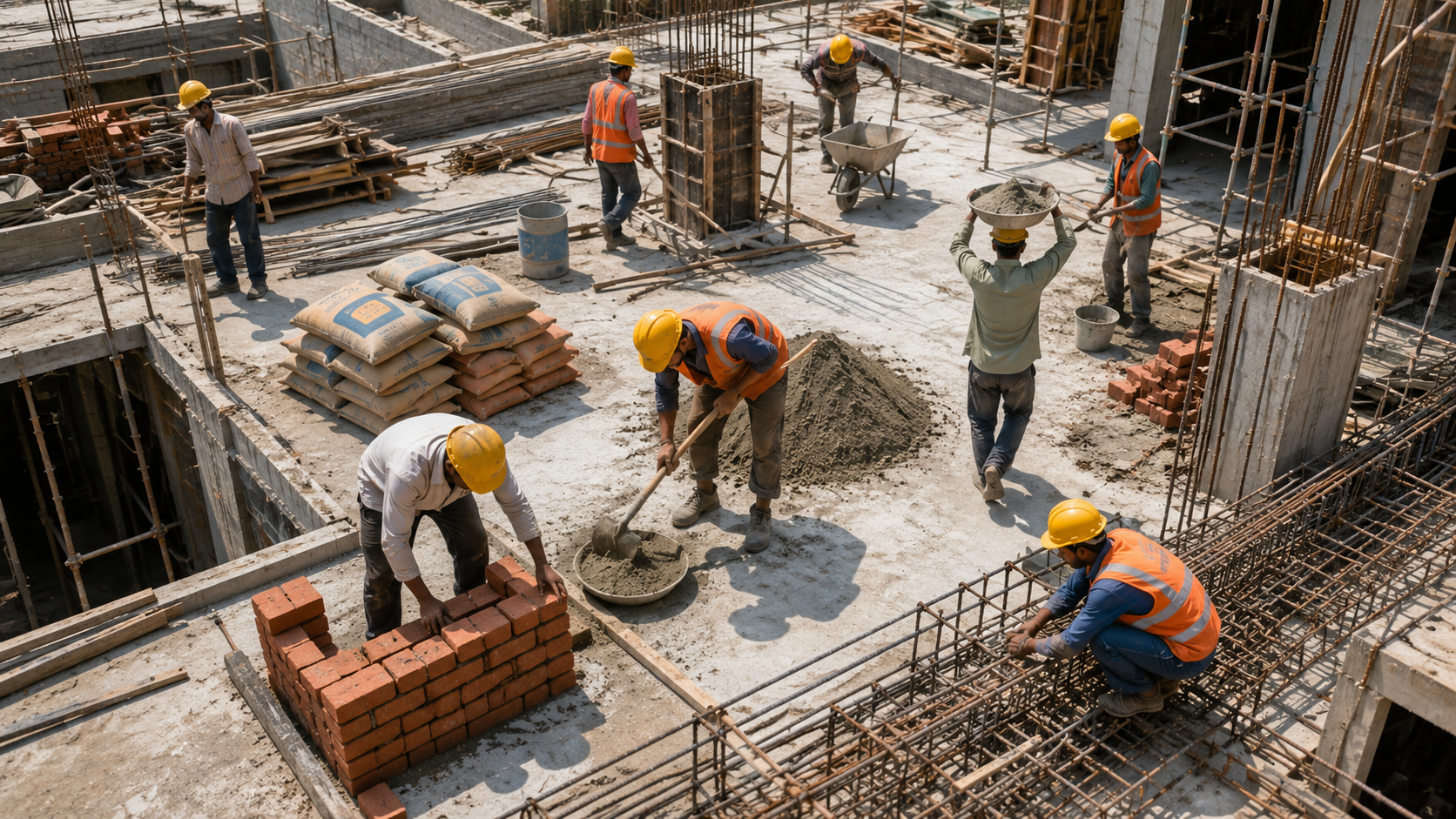
Labor represents a significant portion of construction expenses, typically 25-30% of total costs. In 2026, labor rates have increased considerably:
Skilled Labor Wages
Masons: ₹600-1,200 per day (varies by experience and location)
Carpenters: ₹700-1,500 per day
Electricians: ₹800-1,600 per day
Plumbers: ₹700-1,400 per day
Unskilled Labor
General laborers: ₹400-800 per day
Helpers and assistants: ₹300-600 per day
These wages have increased by 15-20% compared to 2024 due to inflation and improved labor mobility. Tier 1 cities command higher wages than smaller towns.
Quality Grades and Their Impact on Cost
Economy Grade Construction
Suitable for budget-conscious builders, economy construction includes:
Basic RCC structure with standard finishes
Cement plaster and basic paint
Simple flooring options
Basic electrical and plumbing
Cost: ₹1,200-1,800 per sq ft
Standard Grade Construction
The most common choice for middle-class homes:
Quality RCC structure with good finishes
Ceramic tile flooring
Modular electrical fittings
Modern plumbing fixtures
Proper waterproofing and weather protection
Cost: ₹1,800-2,500 per sq ft
Premium Grade Construction
For those seeking superior quality and aesthetics:
High-quality materials throughout
Sophisticated finishes and designs
Premium flooring options (marble, granite)
Advanced electrical and plumbing systems
Energy-efficient features
Cost: ₹2,500-3,500 per sq ft
Ultra-Premium Construction
Luxury homes with exclusive features:
Imported materials and fixtures
Custom architectural designs
Smart home technology
Specialized HVAC and automation systems
Cost: ₹3,500 and above per sq ft
Hidden Costs Often Overlooked
Beyond the per square foot construction cost, several additional expenses must be budgeted:
Pre-Construction Expenses
Architectural and design fees: 1-2% of total construction cost (₹50,000-2,00,000)
Site survey and soil testing: ₹20,000-50,000
Building permits and approvals: ₹10,000-1,00,000 (varies by municipal corporation)
Structural engineer fees: ₹30,000-1,50,000
During Construction
Contractor's overhead: 5-8% of construction cost
Contingency buffer: 10-15% for unforeseen expenses
Insurance and safety: ₹50,000-2,00,000
Post-Construction
Interior design and furnishing: ₹2,00,000-20,00,000+ depending on preferences
Landscaping and external work: ₹1,00,000-5,00,000
Registration and legal fees: ₹50,000-2,00,000
How AECORD Helps Optimize Construction Costs
When planning your construction project in India, leveraging technology and marketplace platforms can significantly help. AECORD, India's B2B2C AECO marketplace, connects builders with verified suppliers and contractors, enabling:
Direct access to material suppliers for competitive pricing
Verified contractor networks across different regions
Transparent pricing and cost comparisons
Quality assurance through verified vendor profiles
Streamlined procurement processes to reduce overhead
Using such platforms can help reduce overall construction costs by 5-10% through better supplier negotiations and efficient project management.
Seasonal Variations and Timing
Construction costs can vary based on the season:
Monsoon Period (June-September)
Higher labor costs due to weather challenges
Increased material wastage
Slower construction progress
Cost increase: 10-15%
Summer (March-May)
Optimal construction conditions
Faster project completion
Standard to slightly lower costs
Winter (October-February)
Ideal construction season
Better material quality and durability
Efficient labor productivity
Cost-effective period for construction
Regulatory and Compliance Costs
Different states and municipalities have varying regulations that impact costs:
Building Bye-Laws Compliance
Varies significantly by state and municipal corporation
FSI (Floor Space Index) requirements
Parking and green space mandates
Can add 3-8% to total construction costs
Environmental and Safety Standards
Rainwater harvesting systems: ₹50,000-2,00,000
Wastewater treatment: ₹1,00,000-5,00,000
Safety measures and certifications: ₹50,000-1,00,000
Budget Planning: A Practical Example
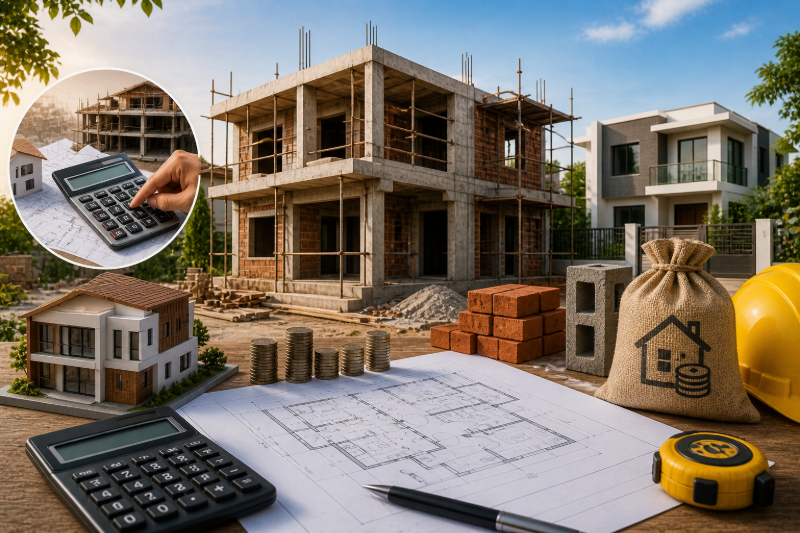
Let's calculate the total cost for a 2,000 sq ft house in Bangalore with standard grade construction:
Construction cost: 2,000 sq ft × ₹2,200 per sq ft = ₹44,00,000
Architectural fees (1.5%): ₹66,000
Permits and approvals: ₹50,000
Contingency (12%): ₹5,28,000
Interior design and furnishing: ₹10,00,000
Landscaping: ₹2,00,000
Registration and legal: ₹1,00,000
Total Estimated Cost: ₹63,44,000 (approximately ₹63.44 lakhs)
This breaks down to approximately ₹31,720 per sq ft when including all costs, highlighting why understanding comprehensive budgeting is crucial.
Future Outlook for 2026 and Beyond
Several factors are expected to influence construction costs in the coming period:
Inflation Impact
Expected inflation of 4-6% annually will likely push construction costs up by 8-12% by late 2026.
Green Building Initiatives
Increased focus on sustainable construction may add 5-15% to costs but offers long-term savings through reduced utility bills.
Technological Integration
Smart home features and automation are becoming standard, adding ₹150-300 per sq ft but improving quality of life.
Labor Market Dynamics
Continued labor shortage may drive wages up by another 10-15%, particularly in metro areas.
Tips for Cost Optimization
Plan ahead: Detailed planning reduces wastage and delays, saving 5-10%
Use local materials: Reduces transportation costs by 10-15%
Competitive bidding: Get quotes from multiple contractors to ensure fair pricing
Quality over quantity: Invest in durable materials to avoid frequent repairs
Build during optimal seasons: Winter construction can save 8-10% in labor costs
Leverage supplier networks: Direct sourcing can reduce material costs by 5-8%
Monitor progress regularly: Ensures work quality and prevents cost overruns
Standardize designs: Reduces architectural complexity and associated costs
Conclusion
House construction costs in India for 2026 range significantly based on location, quality, and materials, with average costs between ₹1,200 and ₹3,500 per square foot. Understanding regional variations, material costs, labor rates, and hidden expenses is crucial for accurate budgeting. By planning meticulously, leveraging technology platforms, and making informed decisions about quality grades and materials, you can optimize your construction budget while ensuring a quality home that meets your needs and expectations.
Frequently Asked Questions
What is the average construction cost per sq ft in India for 2026?
The average construction cost in India for 2026 ranges from ₹1,200 to ₹3,500 per square foot, depending on the quality grade and location. Tier 1 cities like Mumbai and Delhi command premium rates (₹2,200-4,500), while Tier 2 and 3 cities offer more economical options (₹1,200-2,800).
Does the per sq ft cost include interior design and furnishing?
No, the per square foot construction cost typically includes only structural work, basic finishing, and MEP (mechanical, electrical, plumbing) installations. Interior design, furnishing, landscaping, and other post-construction work are additional expenses that can add significantly to the total project cost.
How much should I budget for contingency during construction?
It's recommended to budget 10-15% of the total construction cost as a contingency buffer for unforeseen expenses, design changes, or material price fluctuations. This ensures you have financial flexibility to handle unexpected situations without compromising on quality.
Why is construction more expensive in metro cities compared to smaller towns?
Metro cities have higher construction costs due to increased labor wages (skilled workers earn 30-50% more), stricter building codes and regulations, higher material transportation costs, premium land values, and increased overhead expenses for contractors. Additionally, the cost of living and operational expenses are significantly higher in metropolitan areas.
What is the best time to start construction to minimize costs?
The best time to start construction is during winter (October-February) when weather conditions are optimal, labor productivity is highest, and material quality is best maintained. Construction during monsoon (June-September) can increase costs by 10-15% due to weather-related challenges and increased material wastage.