

Terrace Waterproofing Cost in India 2026: A Complete Guide
Terrace waterproofing costs in India range from ₹35 to ₹250 per square foot in 2026, depending on the method chosen.1 Basic acrylic/polymer coatings start at ₹35–₹60/sq. ft., heavy-duty APP torch-on membranes range from ₹80–₹160/sq.2 ft., and premium Polyurethane (PU) systems cost ₹140–₹300/sq.2 ft.3 Total budgeting should factor in 10- 15% for surface preparation and crack filling.4
Waterproofing System / Method | Rate Range (₹ per sq. ft.) | Expected Lifespan | Best Recommended For |
Acrylic / Polymer Coating | ₹35 – ₹60 | 3 – 5 Years | New or sound roofs with minor surface hairline cracks. |
APP / SBS Torch-On Membrane | ₹80 – ₹160 | 6 – 10 Years | Older terraces experiencing recurrent dampness and heavy seepage. |
Polyurethane (PU) Coating | ₹140 – ₹300 | 10 – 15 Years | Premium modern roofs requiring maximum elasticity and thermal comfort. |
Brick-Bat Coba (Traditional) | ₹75 – ₹110 | 8 – 12 Years | Heavy structural insulation and sloping flat roofs. |
Build cost · Bengaluru, May 2026
Introduction: Why Up-to-Date Waterproofing Data Matters in 2026
A leaking roof or damp ceiling is one of the most destructive maintenance challenges for Indian homeowners.Continuous exposure to aggressive monsoons, intense summer thermal expansion, and structural shifting can cause concrete micro-cracks.
With material inflation and revised contractor labor rates across major urban centers, relying on 2024 or 2025 pricing models can lead to severe project budget overruns. This fully revised 2026 guide breaks down exact material pricing, regional labor variances, and professional strategies to protect your structural investment.
Waterproofing Costs by Major Indian City (2026 Rates)
Labor charges, local material availability, and regional climate severity heavily influence final quotation totals. Below are the localized cost structures across key Indian metropolitan hubs:
1. Delhi NCR
Average Terrace Rate: ₹50 to ₹250 per sq. ft.
Primary Drivers: Extreme seasonal temperature swings (freezing winters to intense summer heat) require high-grade thermal-elastic PU or heavy membrane systems. Localized labor costs average ₹25–₹35 per sq. ft.
Frequently asked
2. Mumbai Metropolitan Region (MMR)
Average Terrace Rate: ₹60 to ₹300 per sq. ft.
Primary Drivers: High humidity and prolonged heavy monsoons demand robust multi-layer APP membranes or premium polymer coatings. Premium contractor overheads push upper limits in prime residential zones.
3. Bangalore
Average Terrace Rate: ₹45 to ₹200 per sq. ft.
Primary Drivers: Moderate climate allows for successful execution of acrylic polymer systems and standard fiber-reinforced coatings, keeping average project expenditures economical.
4. Hyderabad & Pune
Average Terrace Rate: ₹40 to ₹220 per sq. ft.
Primary Drivers: Competitive contractor ecosystems and steady supply chains for brands like Dr. Fixit, Asian Paints (DampProof), and Fosroc help stabilize material overheads.
Detailed Cost Component Breakdown
For a standard 1,000 sq. ft. terrace project valued at ₹75,000 using mid-range membrane solutions, expenses distribute across these operational phases:
[Materials: 50%] ---> [Surface Prep & Repair: 15%] ---> [Labor Charges: 20%] ---> [Primer & Finishing: 15%]
Waterproofing Materials (45–55%): Base coats, reinforcing mesh, liquid membranes, or torch-applied bitumen rolls.
Labor & Application Charges (20–25%): Specialized applicator wages, curing supervision, and detailed detailing around drain outlets.
Surface Preparation & Cleaning (10–15%): High-pressure water jet washing, debris removal, and dust elimination.
Crack Filling & Patchwork (5–10%): Routing out structural joints and filling deep chasms with polymer-modified mortar (PMM).
Primer & Top Protective Coat (5–10%): UV-resistant reflective topcoats that prevent solar degradation.
Expert Insights & Industry Best Practices
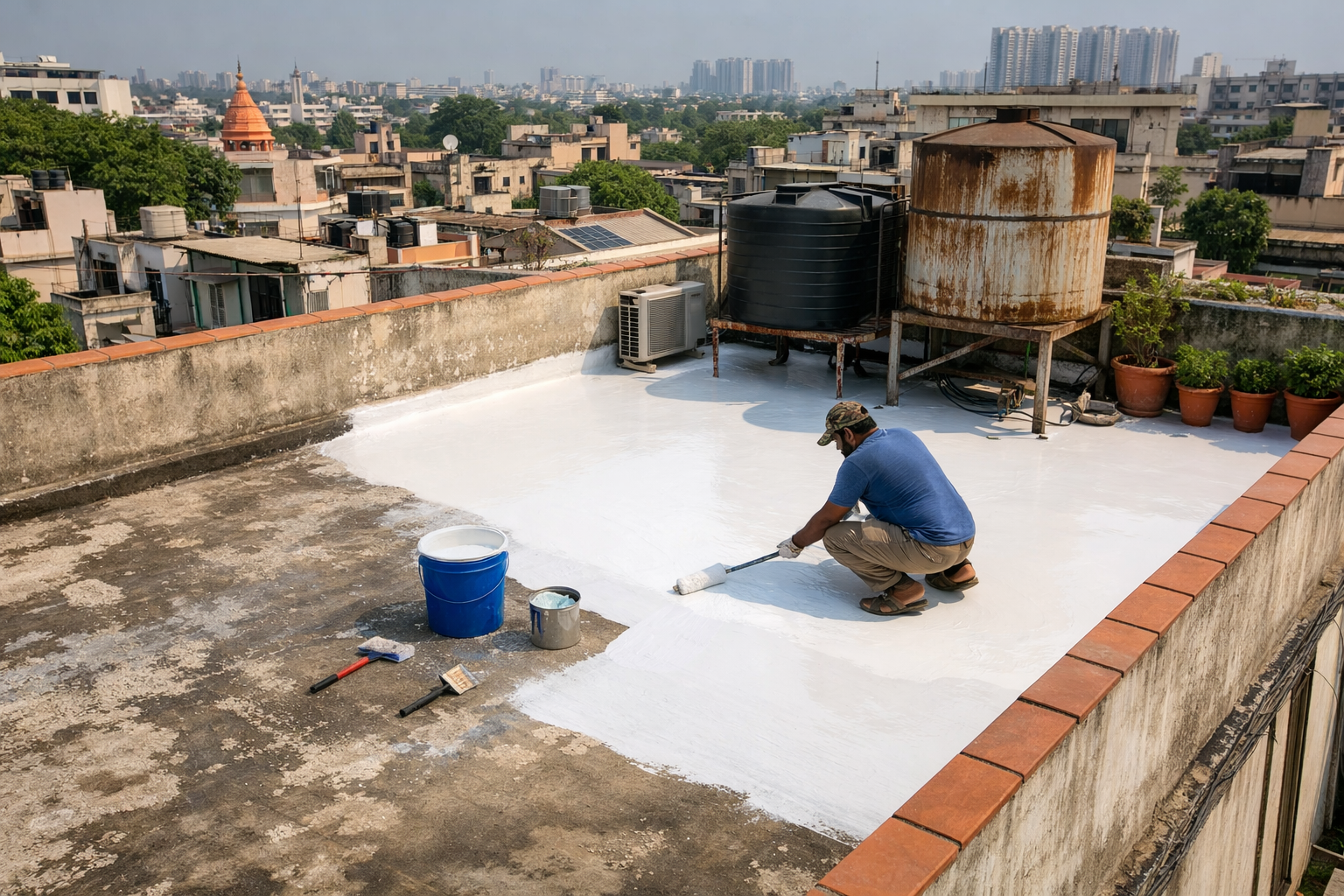
"Never apply a liquid or membrane waterproofing coat directly over a dusty or damp concrete slab. 70% of premature waterproofing failures stem from poor surface preparation rather than inferior chemical quality." — Er. Manish Verma, Senior Waterproofing Consultant
"When upgrading a high-exposure roof in 2026, invest in a reflective topcoat over your primary waterproof membrane. It drops internal top-floor temperatures by 3 to 5 degrees Celsius while protecting the underlying membrane from UV hardening." — Ar. Sneha Kulkarni, Building Envelope Specialist
Essential Cost-Saving Tips for Property Owners
Address Drainage Slopes First: Ensure your terrace has a slope of at least 1:100 toward rain outlet pipes. Standing water breaks down even the highest-grade polymer membranes prematurely.
Complete Pre-Monsoon Audits: Schedule inspections and minor touch-ups during dry summer months (March to May) when contractor availability is high and material bonding conditions are optimal.
Verify Product Warranties: Always request manufacturer-backed warranties (ranging from 5 to 10 years depending on the system) alongside the contractor's service guarantee.
Leverage Professional Networks: Connect with verified, pre-screened waterproofing experts through AECORDto secure transparent quotations and standardized milestone execution.
Popular Waterproofing Methods and Their Costs
Liquid Waterproofing Membranes
Cost Range: ₹35–₹50 per sq ft
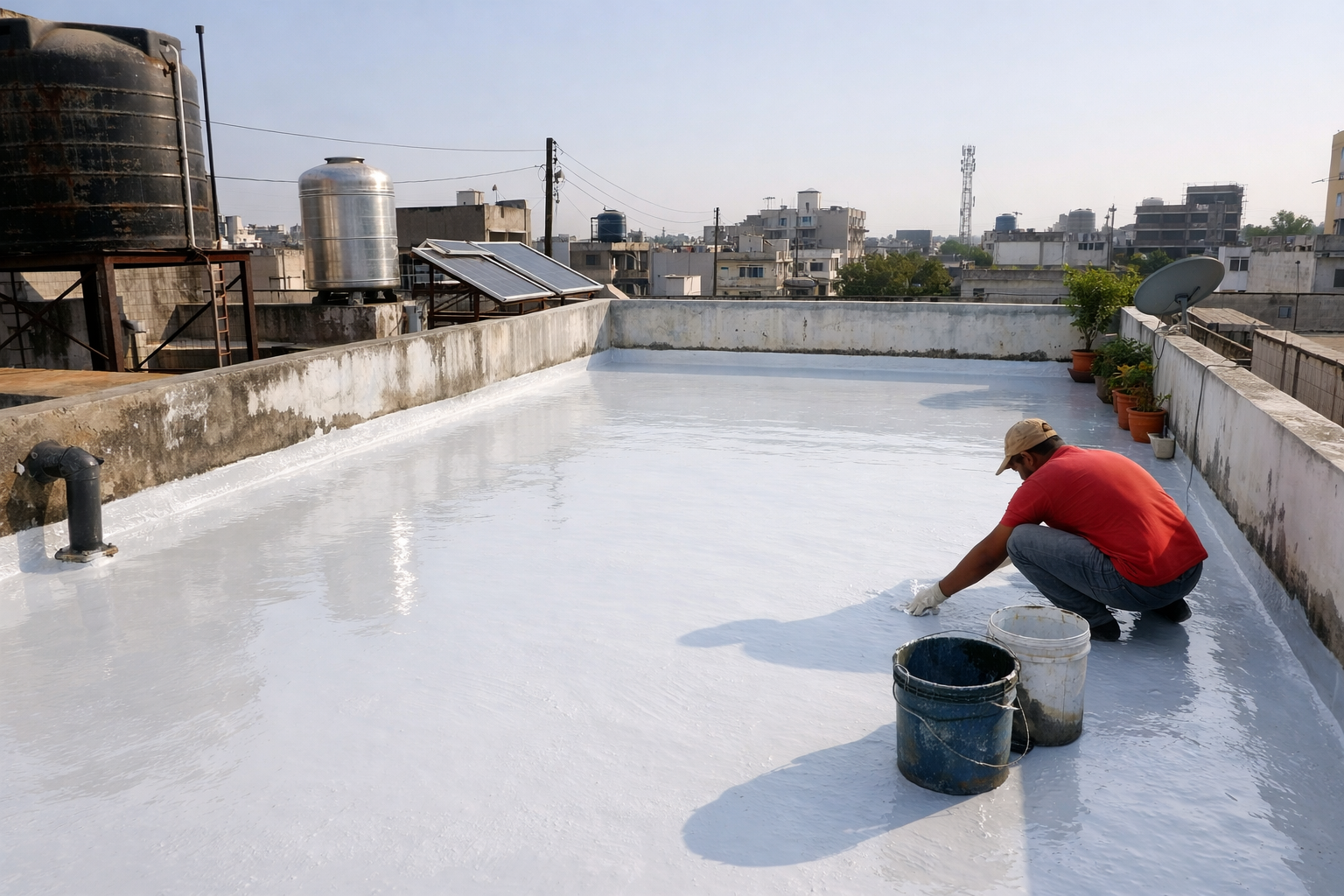
Liquid membranes are sprayed or rolled onto the terrace surface. They're popular for residential properties in Indian cities like Pune and Bangalore. These coatings are UV-resistant and flexible, adapting to temperature changes. A typical 1,000 sq ft terrace costs ₹35,000–₹50,000 including materials and labor.
Bituminous Membranes
Cost Range: ₹30–₹45 per sq ft
Traditional and cost-effective, bituminous membranes are widely used across India. They're durable for 5–7 years in moderate climates but may require more frequent maintenance in high-rainfall regions. Popular brands include Fosroc, Sika, and local manufacturers.
Polyurethane Coatings
Cost Range: ₹50–₹80 per sq ft
Premium option offering excellent flexibility and UV resistance. Ideal for commercial buildings and high-end residential properties. Durability extends to 10–15 years with proper maintenance. Common in Delhi, Bangalore, and Mumbai's commercial sectors.
Cementitious Waterproofing
Cost Range: ₹20–₹35 per sq ft
Budget-friendly option suitable for new constructions. Less effective for existing terraces with cracks. Requires regular maintenance and reapplication every 3–4 years.
Elastomeric Membranes
Cost Range: ₹60–₹100 per sq ft
High-performance option with excellent elasticity and durability (12–20 years). Ideal for commercial buildings and areas with extreme weather. Premium choice in Mumbai and coastal cities.
Crystalline Waterproofing
Cost Range: ₹25–₹40 per sq ft
Innovative technology that creates crystalline formations within concrete pores. Self-healing properties make it increasingly popular. Excellent for new constructions and major renovations across Indian metros.
Additional Costs to Consider
Surface Preparation and Repair
Before waterproofing application, the terrace requires cleaning, crack filling, and leveling. These preparatory works typically cost ₹5,000–₹20,000 depending on the terrace condition.
Drainage System Installation
Proper drainage prevents water accumulation. Installing or upgrading drainage systems costs ₹10,000–₹30,000 for a standard terrace. This includes slope correction and drain pipe installation.
Warranty and Maintenance Packages
Extended warranties (5–10 years) typically add 10–20% to the project cost but provide peace of mind. Annual maintenance contracts cost ₹3,000–₹8,000 per year.
Scaffolding and Safety Equipment
For multi-story buildings, scaffolding rental adds ₹5,000–₹15,000. Safety equipment and insurance add another ₹2,000–₹5,000.
Regional Cost Variations Across India
Northern India (Delhi, Punjab, Haryana)
Average cost: ₹35–₹70 per sq ft. Extreme temperature variations require flexible membranes. Popular methods: Polyurethane and liquid membranes. Seasonal demand affects pricing, with winter being the preferred season.
Western India (Mumbai, Gujarat, Goa)
Average cost: ₹40–₹80 per sq ft. High rainfall and humidity necessitate premium waterproofing. Salt-resistant materials are essential in coastal areas. Elastomeric and polyurethane membranes are preferred.
Southern India (Bangalore, Hyderabad, Chennai)
Average cost: ₹38–₹75 per sq ft. Moderate rainfall but high humidity requires efficient drainage. Tech cities have higher labor costs. Crystalline and liquid membrane options are popular.
Eastern India (Kolkata, Assam)
Average cost: ₹32–₹65 per sq ft. Heavy monsoons demand robust solutions. Bituminous and elastomeric membranes are commonly used. Labor costs are relatively lower than metros.
Choosing the Right Contractor and Material
Evaluating Contractors
When selecting a waterproofing contractor, consider:
Experience with similar projects (minimum 5 years)
Certifications and partnerships with material manufacturers
Warranty offerings and after-sales service
Customer reviews and references from recent projects
Detailed cost breakdown and timeline
Material Selection Tips
Choose materials based on your climate, budget, and durability expectations. For monsoon-prone areas, invest in premium options. For dry regions, mid-range solutions suffice. Always verify material certifications and compatibility with your terrace substrate.
Getting Multiple Quotes
Obtain at least 3 detailed quotes from reputed contractors. Compare material quality, labor costs, and warranty terms. Be cautious of quotes significantly lower than market rates—they often indicate substandard materials or shortcuts.
ROI and Long-Term Savings
Waterproofing is an investment that prevents costly water damage repairs. A ₹60,000 waterproofing project can prevent ₹2,00,000+ in structural damage over 10 years. Premium solutions, while initially expensive, often provide better ROI through extended durability and reduced maintenance.
Properties with proper waterproofing command 5–10% higher resale values in Indian real estate markets, making it a smart investment.
Using AECORD for Waterproofing Projects
AECORD, India's B2B2C AECO marketplace, connects property owners with verified waterproofing contractors and material suppliers. The platform allows you to:
Compare quotes from multiple contractors instantly
Access verified material certifications and specifications
Track project progress and timelines
Manage warranty and after-sales service documentation
Access detailed cost breakdowns and material comparisons
Using AECORD ensures transparency in pricing and helps you make data-driven decisions for your waterproofing project.
Maintenance and Longevity
Post-Installation Care
Proper maintenance extends waterproofing life significantly:
Annual inspections for cracks or damage
Regular cleaning to prevent algae and moss growth
Prompt repair of minor damage
Ensure drainage systems remain clear
Expected Lifespan by Method
Bituminous Membranes: 5–7 years
Liquid Membranes: 7–10 years
Polyurethane Coatings: 10–15 years
Elastomeric Membranes: 12–20 years
Crystalline Waterproofing: 15–25 years
Common Mistakes to Avoid
Skipping surface preparation: Leads to premature failure and poor adhesion
Choosing cheap materials: Results in frequent repairs and higher long-term costs
Ignoring drainage: Water accumulation causes waterproofing failure
Poor contractor selection: Inexperienced contractors compromise quality
Inadequate warranty: Protects against manufacturing defects and application errors
Future Trends in Waterproofing (2026 and Beyond)
The waterproofing industry in India is evolving with:
Eco-friendly membranes: Sustainable, low-VOC options gaining popularity
Smart waterproofing: Sensors detecting leaks early
Nanotechnology coatings: Superior performance at competitive prices
DIY solutions: Consumer-grade products for minor repairs
These innovations are expected to influence pricing and material availability in 2026 and beyond.
FAQ Section
What is the typical cost of waterproofing a 1,500 sq ft terrace in India in 2026?
For a standard 1,500 sq ft residential terrace, expect to spend ₹45,000 to ₹1,20,000, depending on your location and the waterproofing method. In metro cities like Mumbai and Delhi, the cost typically ranges from ₹60,000 to ₹1,00,000. Tier 2 cities generally cost 20–30% less. The variation depends on material quality, labor costs, and terrace condition.
How long does terrace waterproofing last in India's climate?
Lifespan depends on the method used. Bituminous membranes last 5–7 years, liquid membranes 7–10 years, polyurethane coatings 10–15 years, and elastomeric membranes 12–20 years. In high-rainfall regions like Mumbai and Kerala, durability is typically on the lower end of these ranges. Regular maintenance can extend lifespan by 2–3 years.
Is it better to choose expensive or budget-friendly waterproofing methods?
While premium methods cost more upfront (₹60–₹100 per sq ft), they offer better durability and lower maintenance costs over 10–15 years. Budget options (₹20–₹35 per sq ft) require frequent reapplication. For long-term ROI, mid-to-premium range (₹40–₹70 per sq ft) offers the best balance. Your choice should depend on climate, budget, and how long you plan to stay in the property.
Do I need to hire a contractor or can I do terrace waterproofing myself?
Professional contractors are strongly recommended for terrace waterproofing. Proper application requires surface preparation, correct material mixing, and precise technique. DIY mistakes can lead to premature failure and costly repairs. However, minor touch-ups and maintenance can be done yourself. Always hire certified contractors for major waterproofing projects to ensure warranty coverage.
What should I look for in a waterproofing contractor?
Choose contractors with 5+ years of experience, relevant certifications, and partnerships with established material manufacturers. Request references from recent projects, verify their warranty offerings (minimum 3–5 years), and obtain detailed cost breakdowns. Check customer reviews on platforms like AECORD, Google, or industry-specific sites. Always compare at least 3 quotes before deciding.