



False Ceiling Cost Per Sq Ft India 2026 - Pricing Guide
False ceiling costs in India for 2026 range from ₹150 to ₹800 per square foot depending on material choice, with basic POP ceilings being the most affordable option and premium integrated lighting designs commanding the highest prices. The final cost is significantly influenced by geographic location, material selection, design complexity, and labor availability, with tier-1 cities like Mumbai and Bangalore typically charging 40-60% more than tier-2 and tier-3 cities. Understanding these pricing factors helps homeowners and businesses accurately budget their interior design projects while choosing materials that balance cost-effectiveness with durability and aesthetic appeal.
AE
AECORD Editorial Team
11 min read
Quick Answer
Complete false ceiling pricing guide for India 2026. Compare costs from ₹150-₹800/sq ft for POP, gypsum, FRP, wood & ACP ceilings.

False Ceiling Cost Per Sq Ft in India 2026: Complete Pricing Guide
False ceilings have become an essential element of modern interior design in India, offering both aesthetic appeal and practical functionality. Whether you're renovating a residential apartment in Mumbai, designing a commercial space in Bangalore, or upgrading an office in Delhi, understanding false ceiling costs is crucial for budgeting your project accurately. This comprehensive guide breaks down the current pricing structure for false ceilings across India in 2026.
Understanding False Ceiling Costs in India
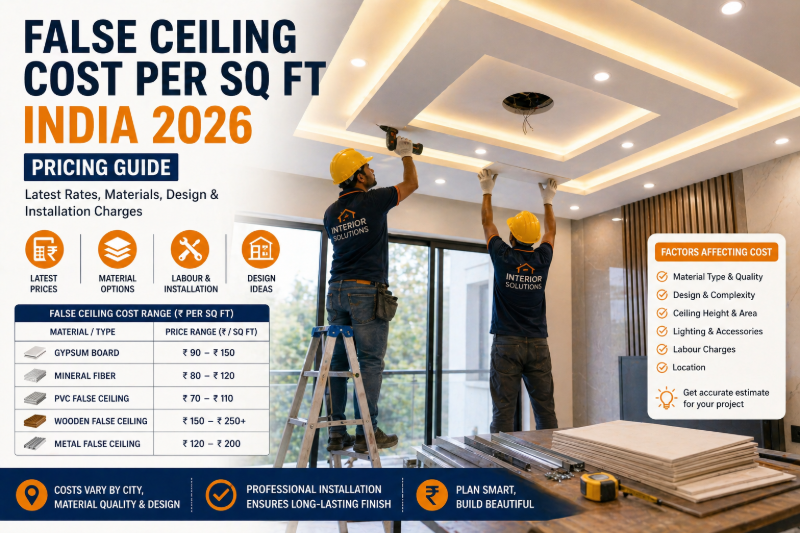
The cost of false ceilings in India varies significantly based on materials, design complexity, location, and labor availability. As of 2026, homeowners and businesses can expect to pay anywhere from ₹150 to ₹800 per square foot for false ceiling installation, depending on the type and quality of materials chosen.
Current Market Pricing Breakdown (2026)
Basic POP (Plaster of Paris) Ceilings: ₹150-₹250 per sq ft
Gypsum Board Ceilings: ₹250-₹450 per sq ft
Fiber Reinforced Plastic (FRP) Ceilings: ₹300-₹500 per sq ft
Wooden False Ceilings: ₹400-₹700 per sq ft
Aluminum Composite Panel (ACP) Ceilings: ₹350-₹600 per sq ft
Integrated Lighting & Premium Designs: ₹500-₹800+ per sq ft
These rates typically include materials, labor, and basic installation. However, prices can fluctuate based on regional factors, project scale, and specific customization requirements.
Factors Affecting False Ceiling Costs
1. Material Selection
The choice of material is the primary cost driver for false ceiling projects. POP (Plaster of Paris) remains the most budget-friendly option, popular in tier-2 and tier-3 Indian cities. It's easy to install and offers good sound absorption properties. However, it's less durable than alternatives and can develop cracks over time.
Gypsum board (also called drywall) has gained significant popularity across major Indian metros like Bangalore, Hyderabad, and Pune. It's fire-resistant, moisture-resistant, and offers excellent finishing quality. The cost premium is justified by its longevity and superior performance characteristics./blog/false-ceiling-designs-and-costs-india-2026
Wooden false ceilings command premium prices but provide warmth and aesthetic appeal, particularly in high-end residential and commercial spaces. Teak and pine are common choices, with teak being significantly more expensive.
2. Geographic Location
False ceiling costs vary considerably across Indian cities:
Tier-1 Cities (Mumbai, Delhi, Bangalore, Hyderabad): ₹300-₹800 per sq ft
Tier-2 Cities (Pune, Ahmedabad, Jaipur, Lucknow): ₹200-₹500 per sq ft
Tier-3 Cities and Towns: ₹150-₹350 per sq ft
Major metropolitan areas command higher prices due to increased labor costs, material transportation expenses, and higher demand for premium finishes. In Mumbai and Delhi, expect to pay 30-40% more than in smaller cities for comparable work quality.
3. Design Complexity
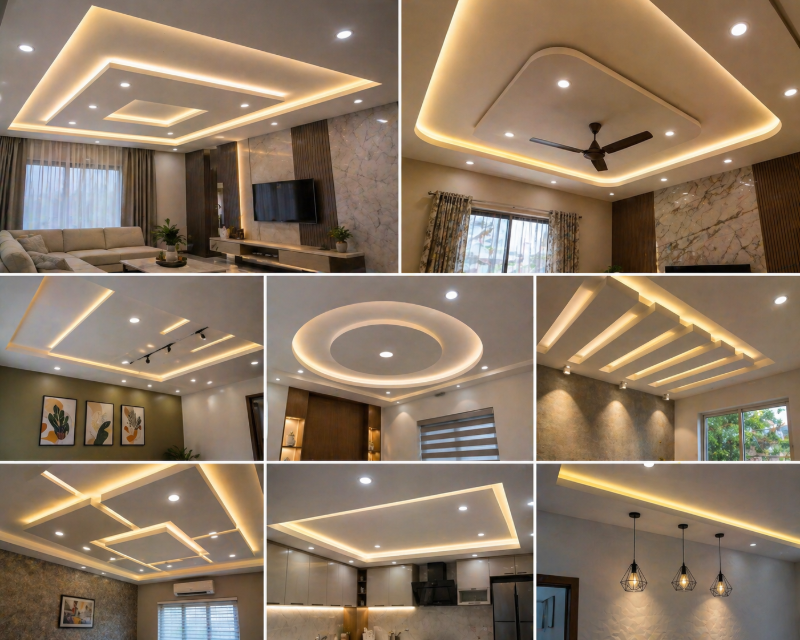
Simple, flat false ceilings cost significantly less than intricate designs. Complex designs with multiple levels, curved sections, or integrated lighting features can increase costs by 50-100%. For instance, a simple gypsum ceiling might cost ₹300 per sq ft, while a multi-level design with LED integration could reach ₹600+ per sq ft.
4. Lighting Integration
Integrated lighting solutions add substantial costs to false ceiling projects. Basic recessed lighting might add ₹50-₹100 per sq ft, while sophisticated LED systems with smart controls can add ₹150-₹300 per sq ft. Premium integrated lighting in commercial spaces can push costs even higher.
5. Electrical and Structural Requirements
Projects requiring additional electrical work, HVAC integration, or structural modifications will incur extra costs. Budget an additional ₹100-₹200 per sq ft for these specialized requirements.
Material-Wise Cost Analysis
POP (Plaster of Paris) False Ceilings
POP remains the most economical choice for false ceilings in India. The material cost is approximately ₹30-₹50 per sq ft, with labor accounting for ₹100-₹150 per sq ft. While affordable, POP has limitations including moisture sensitivity and potential for cracking. It's best suited for dry climates and budget-conscious projects.
Gypsum Board False Ceilings
Gypsum board has become the preferred choice for quality-conscious builders and homeowners. Material costs range from ₹80-₹150 per sq ft, with installation labor adding ₹150-₹250 per sq ft. The superior durability and fire-resistant properties justify the premium pricing, especially in commercial applications and moisture-prone areas like kitchens and bathrooms.
Mineral Fiber Ceilings
Mineral fiber tiles offer excellent acoustic properties and cost between ₹200-₹350 per sq ft. They're particularly popular in offices and commercial spaces across Bangalore, Chennai, and Hyderabad, where they help manage noise and provide clean, professional aesthetics.
Aluminum and Composite Materials
Aluminum composite panels and ACP ceilings cost ₹250-₹400 per sq ft for materials and installation. These materials are highly durable, moisture-resistant, and offer contemporary finishes. They're increasingly popular in modern commercial spaces and premium residential projects.
Wooden False Ceilings
Wooden ceilings represent the premium segment, costing ₹400-₹700 per sq ft depending on wood type and finish. Teak wood false ceilings in cities like Mumbai and Delhi can exceed ₹800 per sq ft. While expensive, wooden ceilings provide unmatched aesthetic appeal and can significantly enhance property value.
Cost Breakdown for Different Project Types
Residential Apartments
For a typical 1000 sq ft apartment in a major Indian city, false ceiling costs typically range from ₹2-₹4 lakhs. A middle-range gypsum board ceiling with basic lighting would cost approximately ₹300-₹400 per sq ft. For a 2000 sq ft villa with premium wooden ceilings and integrated lighting, expect costs between ₹8-₹12 lakhs.
Commercial Offices
Commercial spaces prioritize durability and professional aesthetics. A typical office project in Bangalore or Hyderabad would use mineral fiber or gypsum board ceilings at ₹300-₹450 per sq ft. For a 5000 sq ft office space, budget ₹15-₹22.5 lakhs for false ceiling work alone.
Retail Spaces
Retail environments often require custom designs with integrated lighting and branding elements. Costs typically range from ₹400-₹700 per sq ft. A 2000 sq ft retail space could require an investment of ₹8-₹14 lakhs for a high-quality false ceiling installation.
Hospitality Projects
Hotels, restaurants, and hospitality venues demand premium finishes and specialized acoustic properties. False ceiling costs in hospitality projects typically exceed ₹500-₹800 per sq ft, with some luxury establishments spending over ₹1000 per sq ft for bespoke designs.
Labor Costs and Installation Timeline
Labor Expenses
Labor typically accounts for 40-60% of total false ceiling costs. Skilled ceiling installers in major cities command higher wages—approximately ₹500-₹800 per day in tier-1 cities compared to ₹300-₹500 per day in smaller towns. Specialized work like curved ceilings or integrated lighting increases labor costs by 25-50%. /blog/false-ceiling-designs-and-cost
Installation Timeline
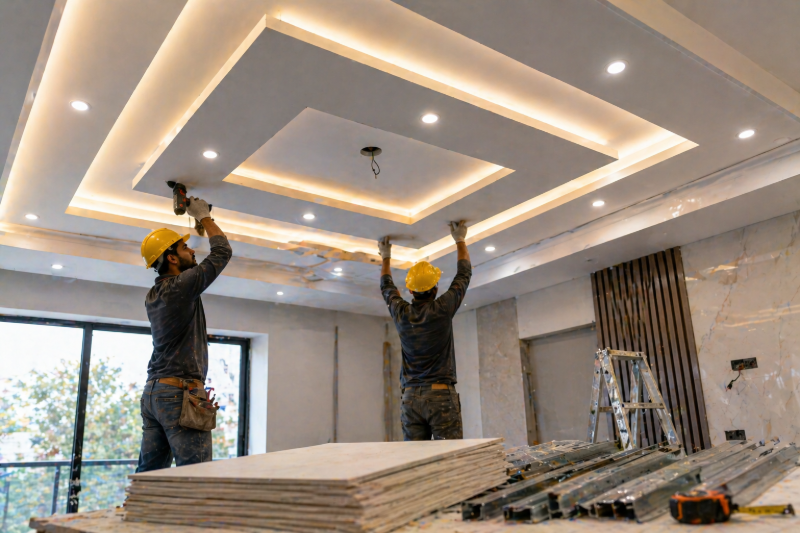
Installation speed depends on design complexity and project size. A simple flat gypsum ceiling for a 1000 sq ft space typically takes 5-7 days. Complex multi-level designs with integrated lighting might require 15-20 days. This timeline affects overall project costs and should be factored into construction schedules.
Regional Price Variations
Northern India
In Delhi, Noida, and Gurgaon, false ceiling costs are among the highest in India. Gypsum board ceilings average ₹350-₹450 per sq ft, while premium options exceed ₹600 per sq ft. The competitive market and high construction standards drive these prices upward.
Western India
Mumbai and Pune maintain premium pricing similar to northern metros, with costs ranging from ₹300-₹500 per sq ft for standard installations. Ahmedabad offers slightly more competitive rates at ₹250-₹400 per sq ft.
Southern India
Bangalore, Hyderabad, and Chennai have become increasingly competitive markets. Prices range from ₹250-₹450 per sq ft, with Hyderabad offering some of the most competitive rates among major metros. The growing construction industry in these cities has created healthy competition among contractors.
Eastern India
Kolkata and other eastern cities offer more budget-friendly options, with false ceiling costs typically ranging from ₹200-₹350 per sq ft. This makes eastern India attractive for cost-conscious projects without compromising on quality.
Hidden Costs to Consider
Beyond the per-square-foot pricing, several hidden costs can impact your final budget:
Structural Reinforcement: If existing structures need reinforcement, budget an additional ₹50-₹150 per sq ft
Electrical Work: Wiring, conduits, and electrical integration can add ₹40-₹100 per sq ft
Acoustic Treatment: Sound-absorbing materials add ₹30-₹80 per sq ft
Waterproofing: Essential in bathrooms and kitchens, adding ₹20-₹50 per sq ft
Finishing and Painting: Professional finishing adds ₹30-₹60 per sq ft
Contingency Buffer: Always allocate 10-15% extra for unforeseen expenses
Cost-Saving Tips for False Ceiling Projects
Choose Appropriate Materials
Select materials based on actual requirements rather than aesthetics alone. POP is sufficient for dry, low-traffic areas, while gypsum board is worthwhile for moisture-prone spaces and commercial applications. This strategic selection can reduce costs by 20-30%.
Simplify Design
Complex multi-level designs with curves and intricate patterns significantly increase costs. Opting for simpler, clean-lined designs reduces labor time and material waste, potentially saving 15-25% on installation costs.
Plan Lighting Strategically
Integrated lighting is attractive but expensive. Consider installing basic fixtures during ceiling installation and upgrading to smart lighting systems later. This phased approach can reduce initial costs substantially.
Bulk Projects
Larger projects typically qualify for material discounts of 10-20%. If you're working on multiple spaces or large areas, negotiate bulk rates with suppliers and contractors.
Timing Your Project
Construction activity typically slows during monsoon seasons in many parts of India. Scheduling your project during off-peak periods can result in 10-15% cost savings due to reduced labor demand.
Finding Quality Contractors
Selecting the right contractor is crucial for cost control and quality assurance. When evaluating contractors, request detailed quotes breaking down material costs, labor, and overhead. Compare at least 3-4 quotes before making a decision. Look for contractors with proven experience in your specific project type and location.
Platforms like AECORD connect you with verified ceiling specialists and contractors across India. Using AECORD, you can compare quotes from multiple professionals, review their past projects, and access transparent pricing information specific to your city and project requirements. This eliminates guesswork and ensures competitive pricing for your false ceiling project.
Quality Standards and Certifications
Ensure contractors follow Indian Standards (IS codes) for false ceiling installation. Materials should meet IS 2572 for gypsum plasterboard and relevant fire-rating standards. Quality installations include proper structural support, adequate spacing for utilities, and compliance with building codes. These standards ensure longevity and safety, justifying investment in quality work.
Maintenance and Long-Term Costs
Different materials have varying maintenance requirements and lifespans. POP ceilings may need repainting every 3-4 years and are prone to damage in humid conditions. Gypsum board ceilings typically last 10-15 years with minimal maintenance. Wooden ceilings require periodic polishing but can last 20+ years. Consider these long-term costs when evaluating initial investment options.
Future Trends in False Ceiling Costs
The false ceiling market in India is evolving toward sustainable materials and smart integration. Eco-friendly options like recycled gypsum and sustainable wood alternatives are gaining traction but may carry a 10-15% premium. Smart ceiling systems with integrated IoT sensors for lighting, temperature, and air quality management are emerging but remain expensive (₹700-₹1000+ per sq ft). As these technologies mature and manufacturing scales up, prices are expected to become more competitive.
Conclusion
False ceiling costs in India for 2026 range from ₹150 to ₹800+ per square foot, depending on materials, location, design complexity, and additional features. For most residential projects in major cities, budgeting ₹300-₹450 per sq ft provides a good balance between cost and quality. Understanding the various cost factors and regional variations helps you make informed decisions and negotiate better rates with contractors.
To ensure you get the best value for your false ceiling project, connect with experienced professionals through AECORD, India's trusted B2B2C marketplace for AECO professionals. Whether you're in Mumbai, Bangalore, Delhi, or any other Indian city, AECORD helps you find verified contractors, compare competitive quotes, and access transparent pricing information. Start your false ceiling project with confidence by exploring quality options on AECORD today.
Frequently Asked Questions
What is the average false ceiling cost per sq ft in India in 2026?
The average false ceiling cost in India ranges from ₹150 to ₹800 per square foot, depending on the material type and design complexity. Basic POP ceilings start at ₹150-₹250 per sq ft, while premium options with integrated lighting can exceed ₹800 per sq ft.
Which false ceiling material is most cost-effective in India?
POP (Plaster of Paris) is the most budget-friendly option at ₹150-₹250 per sq ft, making it popular in tier-2 and tier-3 cities. However, gypsum board offers better durability and fire-resistance at ₹250-₹450 per sq ft, providing better long-term value.
How much more expensive are false ceilings in Mumbai and Delhi compared to smaller cities?
False ceiling costs in tier-1 cities like Mumbai and Delhi are 30-40% higher than in smaller cities, ranging from ₹300-₹800 per sq ft. This premium is due to increased labor costs, material transportation expenses, and higher demand for premium finishes.
Does integrated lighting increase false ceiling costs?
Yes, integrated lighting significantly increases costs. Basic recessed lighting adds ₹50-₹100 per sq ft, while sophisticated LED systems with smart controls can add ₹150-₹300 per sq ft to your total false ceiling project cost.
How much does design complexity affect false ceiling pricing?
Complex designs with multiple levels, curves, or integrated features can increase costs by 50-100% compared to simple flat ceilings. For example, a basic gypsum ceiling at ₹300 per sq ft could cost ₹600+ per sq ft with multi-level design and LED integration.
Topics
Share
AE
Explore more articles
Trending:
Keep Reading
View all
Discussion
Loading comments...