

False Ceiling Designs and Costs in India 2026: Complete Guide for Modern Interiors
False ceilings have become a standard feature in modern Indian homes and commercial spaces, transforming how we think about interior design. Whether you're renovating a Mumbai apartment, designing an office in Bangalore, or upgrading your Pune residence, understanding false ceiling designs and their costs is crucial for making informed decisions. This comprehensive guide covers everything you need to know about false ceiling options, pricing, and trends in 2026.
Updated 2026-05-28. Plain-English ₹/sq.ft costs, a side-by-side table for the six common false-ceiling types, and the one that suits each room. Built for homeowners, architects, and interior designers in India.
Sell ceiling boards, panels, tiles, or stretch membranes? Get in front of architects and interior designers who price-check ceilings on AECORD every week. Claim your AECORD seller page →
Build cost · Bengaluru, May 2026
Quick comparison — false-ceiling types at a glance (2026 ₹/sq.ft, India)
| Type | Material ₹/sq.ft | Labour ₹/sq.ft | Total ₹/sq.ft | Lifespan | Best for |
|---|---|---|---|---|---|
| Gypsum board | ₹45–80 | ₹35–70 | ₹80–150 | 10–15 yrs | Living room, bedroom (most common pick) |
| POP (Plaster of Paris) | ₹55–95 | ₹45–105 | ₹100–200 | 8–12 yrs | Decorative cornice, traditional homes |
| Mineral-fibre tile | ₹65–135 | ₹55–115 | ₹120–250 | 15–20 yrs | Offices, schools, hospitals (sound-quiet) |
| Metal / aluminium | ₹90–180 | ₹60–120 | ₹150–300 | 25–30 yrs | Kitchens, bathrooms, shopfronts (wet-area-safe) |
| Stretch / PVC membrane | ₹130–260 | ₹70–140 | ₹200–400 | 15–20 yrs | Hotel lobbies, showrooms, statement rooms |
| Wooden / veneer | ₹160–340 | ₹90–160 | ₹250–500+ | 20–30 yrs | Luxury living rooms, home libraries |
Design pick — which type suits which room
- Living room / bedroom: gypsum board with cove-light pocket. Best look-to-cost ratio.
- Kitchen / bathroom: metal or aluminium grid. Handles steam, won't sag.
- Office / co-working floor: mineral-fibre tile. Quiet, modular, fast access for AC and cable runs.
- Hospital / clinic: mineral-fibre tile with anti-microbial face. Easy wipe-down.
- Commercial shopfront / hotel lobby: stretch PVC or aluminium baffle for a clean statement look.
What Are False Ceilings and Why Choose Them?
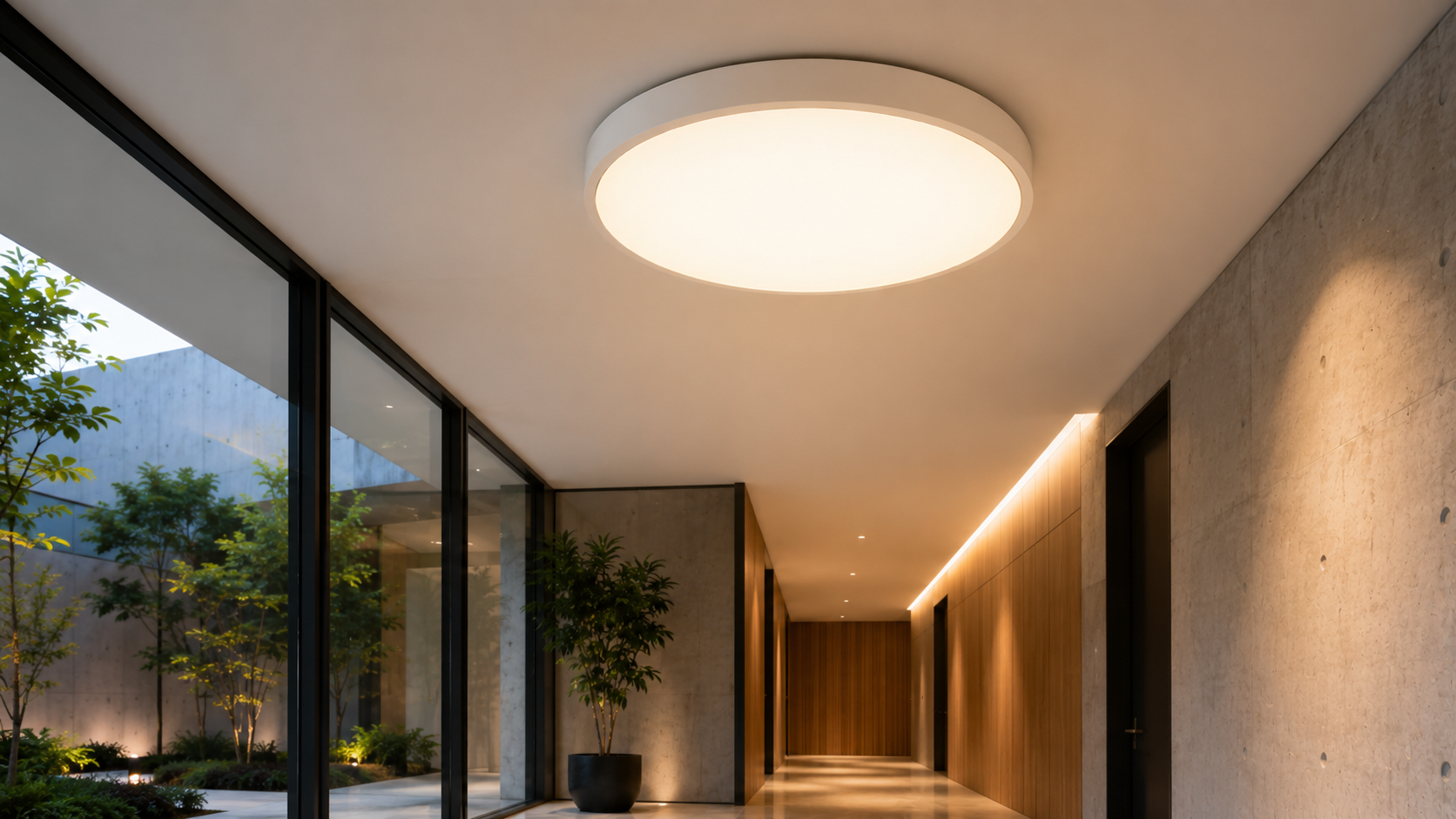
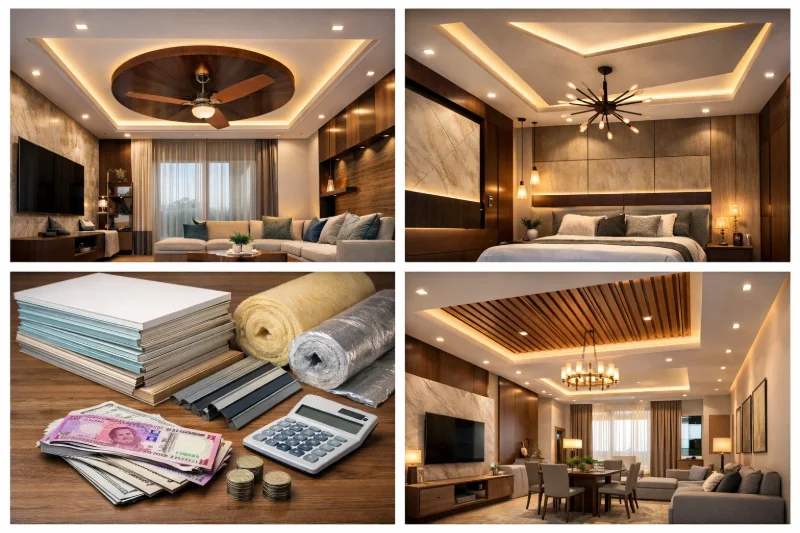
A false ceiling, also known as a drop ceiling or suspended ceiling, is a secondary ceiling installed below the main structural ceiling. It creates a gap between the original ceiling and the new one, offering both aesthetic and functional benefits.
Key Benefits of False Ceilings
Improved Aesthetics: Modern, sleek appearance that enhances interior design
Better Lighting: Integrated LED lights and recessed lighting options for better illumination
Sound Insulation: Reduces noise transmission between floors
Thermal Insulation: Helps maintain room temperature and reduces energy costs
Concealment: Hides electrical wiring, plumbing, and HVAC systems
Maintenance Access: Easy access to overhead utilities for repairs and maintenance
Flexibility: Can be easily modified or removed without structural changes
Frequently asked
Popular False Ceiling Designs in India 2026
1. Gypsum Board False Ceilings
Gypsum board remains the most popular choice for residential false ceilings across India. It's affordable, easy to install, and offers excellent finish quality.
Features:
Smooth, paintable surface
Lightweight and durable
Fire-resistant properties
Sound absorption capabilities
Can be shaped into curved or complex designs
Cost Range (2026): ₹80 to ₹150 per square foot including installation
Best For: Bedrooms, living rooms, kitchens in residential properties
2. POP (Plaster of Paris) False Ceilings
Though less common now due to maintenance issues, POP false ceilings are still chosen for their ornamental designs and decorative appeal.
Features:
Highly customizable designs
Can create elaborate patterns and motifs
Elegant, traditional appearance
Requires regular maintenance and repainting
Cost Range (2026): ₹100 to ₹200 per square foot
Best For: Traditional homes, heritage properties, formal dining areas
3. Mineral Fiber Tiles (Suspended Ceiling Tiles)
These modular ceiling tiles are popular in commercial spaces and modern offices. They offer quick installation and easy maintenance.
Features:
Modular and easy to install
Excellent sound absorption
Moisture-resistant options available
Easy access for maintenance
Available in various colors and textures
Cost Range (2026): ₹120 to ₹250 per square foot
Best For: Offices, hospitals, educational institutions, commercial spaces
4. Aluminum False Ceilings
Aluminum systems are gaining popularity for their durability, sleek appearance, and modern aesthetic.
Features:
Highly durable and long-lasting
Moisture and corrosion-resistant
Modern, contemporary look
Easy to clean and maintain
Excellent for kitchens and bathrooms
Cost Range (2026): ₹150 to ₹300 per square foot
Best For: Kitchens, bathrooms, modern offices, commercial establishments
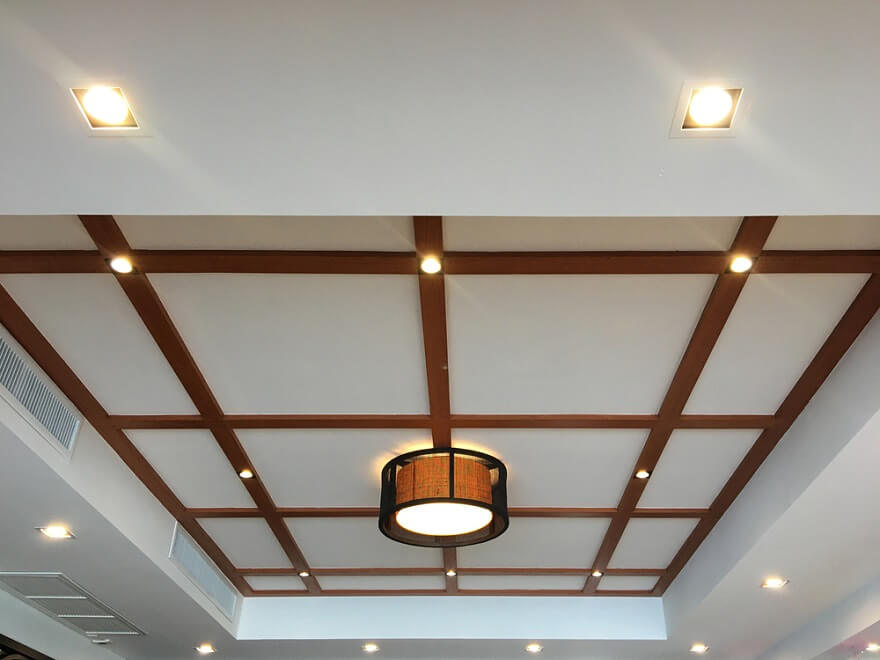
5. Wooden False Ceilings
Wooden ceilings add warmth and elegance to spaces, particularly popular in luxury homes and premium offices.
Features:
Natural aesthetic appeal
Excellent insulation properties
Requires regular maintenance
Premium pricing but long-lasting
Various wood finishes available
Cost Range (2026): ₹250 to ₹500+ per square foot
Best For: Living rooms, home offices, libraries, luxury residential spaces
6. Stretch Ceilings
A modern innovation gaining traction in Indian metros, stretch ceilings use PVC membrane stretched across a framework.
Features:
Seamless appearance
Can incorporate printed designs and images
Moisture-resistant
Easy to clean
Available in matte, satin, and glossy finishes
Cost Range (2026): ₹200 to ₹400 per square foot
Best For: Bedrooms, living rooms, commercial establishments, hospitality spaces
False Ceiling Cost Breakdown in India 2026
Material Costs vs. Labor Costs
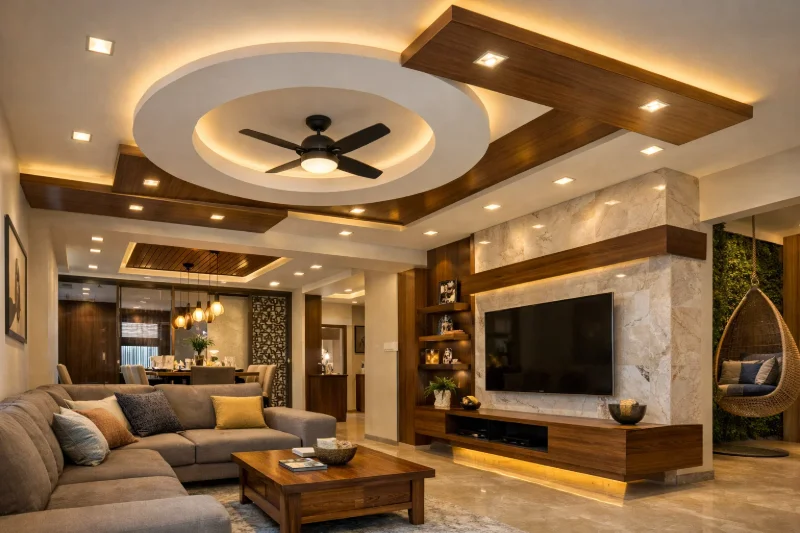
The total cost of a false ceiling installation typically comprises:
Materials: 40-50% of total cost
Labor: 30-40% of total cost
Fixtures and Fittings: 10-20% of total cost (lights, vents, speakers, etc.)
Cost Variation by City (2026)
Mumbai (Metropolitan):
Gypsum Board: ₹100-160 per sq ft
Aluminum: ₹180-320 per sq ft
Stretch Ceiling: ₹250-450 per sq ft
Bangalore (Tech Hub):
Gypsum Board: ₹85-140 per sq ft
Aluminum: ₹150-280 per sq ft
Stretch Ceiling: ₹200-380 per sq ft
Delhi-NCR (National Capital):
Gypsum Board: ₹90-150 per sq ft
Aluminum: ₹160-300 per sq ft
Stretch Ceiling: ₹220-400 per sq ft
Pune (Growing Market):
Gypsum Board: ₹80-130 per sq ft
Aluminum: ₹140-260 per sq ft
Stretch Ceiling: ₹180-360 per sq ft
Hyderabad (Emerging Hub):
Gypsum Board: ₹75-120 per sq ft
Aluminum: ₹130-240 per sq ft
Stretch Ceiling: ₹170-340 per sq ft
Sample Project Cost Estimation
Project: 1000 sq ft residential space with gypsum board false ceiling
Material Cost: ₹40,000 - ₹60,000
Labor Cost: ₹30,000 - ₹50,000
Fixtures (LED lights, vents): ₹20,000 - ₹40,000
Total Estimated Cost: ₹90,000 - ₹1,50,000
Per Sq Ft: ₹90 - ₹150
Project: 1000 sq ft office space with mineral fiber tiles
Material Cost: ₹60,000 - ₹1,00,000
Labor Cost: ₹40,000 - ₹60,000
Fixtures and accessories: ₹30,000 - ₹50,000
Total Estimated Cost: ₹1,30,000 - ₹2,10,000
Per Sq Ft: ₹130 - ₹210
Design Trends for False Ceilings in 2026
Minimalist Designs
Clean lines and simple geometric patterns dominate 2026's false ceiling trends. Flat, smooth surfaces with subtle lighting create modern, uncluttered spaces.
Integrated Smart Lighting
Smart LED systems with dimming capabilities, color-changing options, and app control are becoming standard. Costs for smart lighting integration add ₹5,000-₹15,000 per room.
Acoustic Comfort
Post-pandemic, focus on acoustic properties has increased. Textured gypsum boards and specialized acoustic tiles improve sound quality in homes and offices.
Curved and 3D Designs
Architectural curves and 3D ceiling elements create visual interest. These designs cost 20-40% more than standard flat ceilings but offer premium aesthetics.
Sustainable Materials
Eco-friendly false ceiling materials are gaining traction. Recycled content boards and low-VOC paints appeal to environmentally conscious buyers.
Color and Texture Variety
Beyond white, designers are experimenting with subtle colors, wood finishes, and textured surfaces to complement interior themes.
Factors Affecting False Ceiling Costs
1. Ceiling Height and Complexity
Lower ceilings require more materials and labor. Complex designs with curves, levels, and architectural features increase costs by 30-50%.
2. Material Quality
Premium materials from established brands cost 20-30% more but offer better durability and aesthetics.
3. Location and Accessibility
Ground floor installations are cheaper than upper floors due to easier material access. High-rise buildings in metro cities charge premium labor rates.
4. Lighting Integration
Basic LED lights add ₹5,000-₹10,000, while smart lighting systems can cost ₹15,000-₹40,000 depending on features.
5. Existing Structural Condition
If the existing ceiling requires repairs or leveling, additional costs of ₹10,000-₹30,000 may apply.
6. Contractor Expertise
Experienced contractors with good portfolios charge 15-25% more but ensure quality workmanship.
Installation Timeline and Process
Typical Installation Phases
Phase 1: Planning and Design (1-2 weeks)
Site survey and measurements
Design finalization
Material selection
Cost estimation
Phase 2: Preparation (3-5 days)
Material procurement
Site preparation
Framework installation
Phase 3: Installation (5-10 days)
Ceiling board installation
Electrical wiring and fixture placement
Joint taping and mudding (for gypsum)
Phase 4: Finishing (3-7 days)
Sanding and priming
Painting
Light fixture installation
Final touches and cleanup
Total Timeline: 2-4 weeks for an average 1000 sq ft space
Maintenance and Longevity
Maintenance Requirements by Material
Gypsum Board:
Lifespan: 10-15 years
Maintenance: Occasional repainting (every 3-5 years), dust cleaning
Annual maintenance cost: ₹2,000-₹5,000
Mineral Fiber Tiles:
Lifespan: 15-20 years
Maintenance: Tile replacement as needed, regular cleaning
Annual maintenance cost: ₹3,000-₹7,000
Aluminum:
Lifespan: 20-25 years
Maintenance: Minimal, occasional cleaning and polish
Annual maintenance cost: ₹1,000-₹3,000
Stretch Ceilings:
Lifespan: 15-20 years
Maintenance: Regular cleaning, occasional repairs
Annual maintenance cost: ₹2,000-₹4,000
Choosing the Right False Ceiling for Your Space
For Residential Spaces
Bedrooms: Gypsum board or stretch ceiling with soft lighting. Budget: ₹90-₹200 per sq ft
Living Rooms: Gypsum with accent lighting or wooden ceilings for premium look. Budget: ₹100-₹250 per sq ft
Kitchens: Aluminum or moisture-resistant gypsum. Budget: ₹120-₹200 per sq ft
Bathrooms: Aluminum or PVC-coated gypsum for moisture resistance. Budget: ₹130-₹220 per sq ft
For Commercial Spaces
Offices: Mineral fiber tiles or aluminum for acoustic properties. Budget: ₹130-₹250 per sq ft
Retail Stores: Stretch ceilings or gypsum with integrated lighting. Budget: ₹150-₹300 per sq ft
Hospitals/Clinics: Hygienic mineral fiber or aluminum. Budget: ₹140-₹280 per sq ft
Using AECORD for False Ceiling Solutions
AECORD's B2B2C marketplace connects you with verified false ceiling contractors, material suppliers, and interior designers across India. Benefits include:
Access to multiple quotes from certified professionals
Transparent pricing with no hidden charges
Portfolio reviews and customer ratings
Quality assurance and project guarantees
Easy project tracking and communication
Flexible payment options
Search for false ceiling specialists in your city on AECORD to compare designs, costs, and expertise before making a decision.
Budget-Friendly Tips for False Ceiling Installation
Plan Design Carefully: Avoid complex designs that increase labor costs
Choose Standard Heights: Uniform ceiling heights are cheaper than variable heights
Bulk Material Purchase: Buy materials in bulk to get discounts
Combine Services: Get quotes for design, materials, and installation together for package deals
Off-Season Installation: Hire contractors during slow seasons for better rates
Partial Installation: Install false ceilings in high-priority areas first
DIY Painting: Handle painting yourself to save labor costs
Common Mistakes to Avoid
Ignoring Ceiling Height: Ensure minimum 8-9 feet clearance after installation
Poor Lighting Planning: Plan lighting positions before installation
Skipping Acoustic Considerations: Don't ignore sound insulation needs
Choosing Wrong Material for Space: Consider moisture, humidity, and usage patterns
Hiring Unverified Contractors: Always check credentials and previous work
Not Accounting for Maintenance: Consider long-term maintenance requirements and costs
Underestimating Timeline: Plan for potential delays in material delivery or installation
Future Outlook for False Ceilings in India
The false ceiling market in India is projected to grow at 8-10% CAGR through 2026. Key trends shaping the future include:
Increased adoption of smart, integrated ceiling systems
Growing demand for sustainable and eco-friendly materials
Rise of modular, easy-to-install solutions
Integration with home automation systems
Customization and personalization becoming standard
Premium finishes and designer options becoming more accessible
Frequently Asked Questions
What is the average cost of false ceiling installation in India in 2026?
The average cost ranges from ₹80 to ₹300 per square foot depending on the material and location. Gypsum board is the most affordable at ₹80-₹150 per sq ft, while premium materials like stretch ceilings and aluminum cost ₹200-₹400 per sq ft. For a typical 1000 sq ft space, expect to spend ₹90,000 to ₹2,50,000 including materials, labor, and fixtures.
How long does false ceiling installation take?
A typical false ceiling installation for a 1000 sq ft space takes 2-4 weeks, including planning, preparation, installation, and finishing. The actual installation time is 5-10 days, but design finalization, material procurement, and finishing work add to the timeline. Complex designs or large commercial projects may take longer.
Which false ceiling material is best for bathrooms and kitchens?
Aluminum false ceilings are ideal for kitchens and bathrooms due to their moisture and corrosion resistance. PVC-coated gypsum board and mineral fiber tiles with moisture-resistant properties are also suitable alternatives. Avoid regular gypsum board in these areas as moisture can cause damage and mold growth.
Can I install false ceilings in old buildings with low ceiling heights?
Yes, but you need to ensure adequate clearance. False ceilings typically reduce height by 6-12 inches. If your current ceiling is less than 8-9 feet, consult with a professional to avoid making the space feel cramped. Thin-profile options like stretch ceilings can minimize height loss.
What are the benefits of smart false ceilings with integrated lighting?
Smart false ceilings with integrated LED lighting offer energy efficiency (30-50% less power consumption), customizable lighting options, dimming capabilities, color-changing features, and app-based control. They enhance ambiance, reduce electricity bills, and provide modern convenience. However, they cost ₹15,000-₹40,000 more per room depending on features and complexity.
For ceiling brands and material sellers
Every quote you see above is what an architect or homeowner uses to brief the project. If you make gypsum board, POP, metal grids, acoustic tiles, or stretch membranes — your product belongs on the same page they are reading. AECORD lists ceiling-material sellers with city-wise pricing, lead time, and project gallery — no agency fee, no middleman.