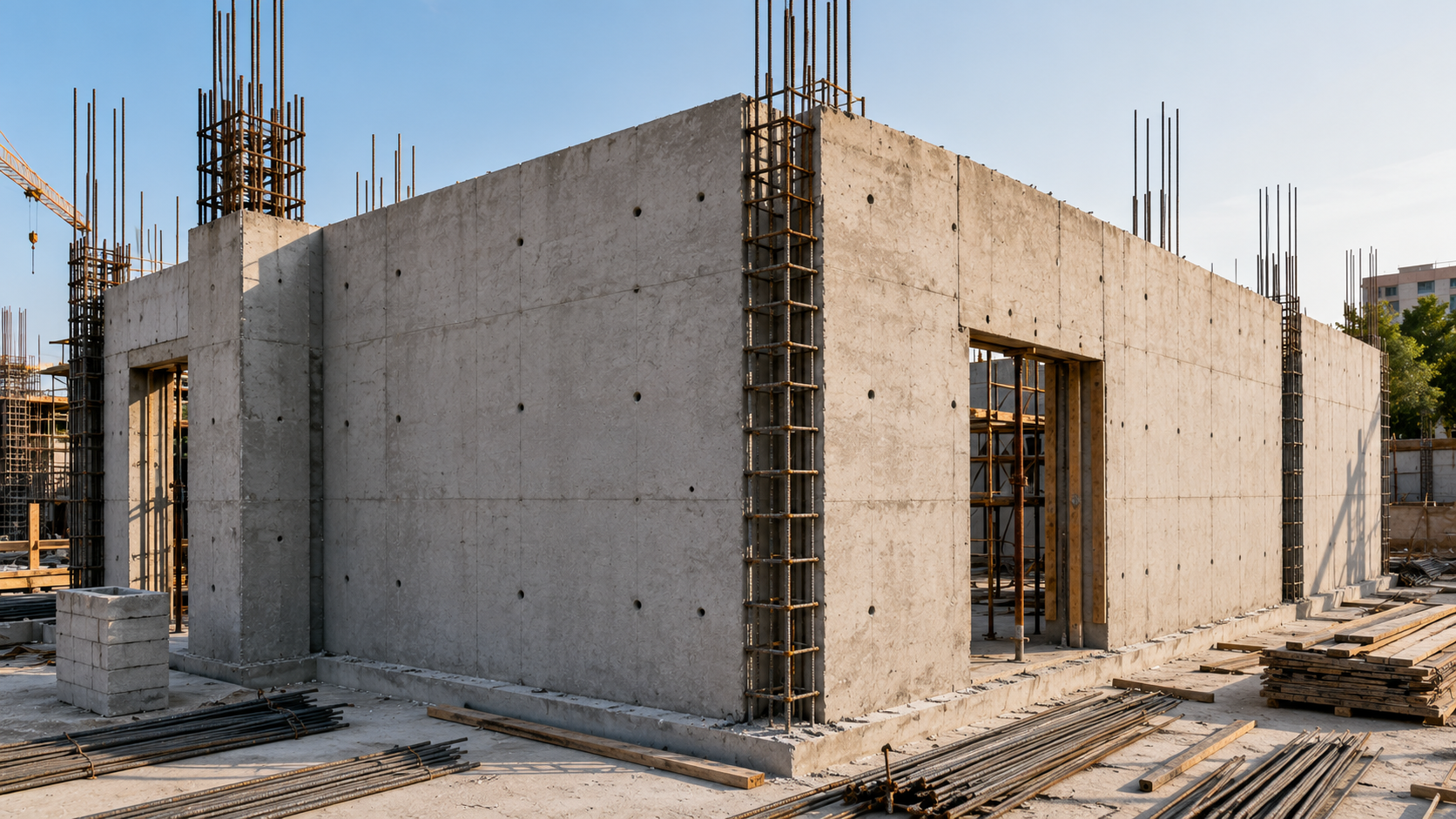


Energy Efficient Home Design in India: A Comprehensive Guide for 2026
As India grapples with rising electricity costs and climate concerns, energy-efficient home design has shifted from being a luxury to a practical necessity. With electricity tariffs increasing by 5-7% annually across major Indian cities, homeowners are actively seeking ways to reduce their energy consumption and lower utility bills. This comprehensive guide explores the latest energy-efficient home design strategies, technologies, and regulations that will shape residential construction in India through 2026.
Build cost · Bengaluru, May 2026
Understanding India's Energy Efficiency Landscape in 2026
Current Energy Costs and Rising Tariffs
The average electricity cost in India ranges from ₹5 to ₹8 per unit, depending on the state and consumption category. For a typical Indian household consuming 300 units monthly, this translates to monthly bills of ₹1,500 to ₹2,400. Over a year, an average middle-class home spends ₹18,000 to ₹28,800 on electricity alone. Energy-efficient design can reduce this by 30-50%, resulting in annual savings of ₹5,400 to ₹14,400 per household.
The Energy Conservation Building Code (ECBC) 2017 and its upcoming 2025 revisions mandate stricter energy efficiency standards for commercial buildings. While residential buildings aren't legally mandated to follow ECBC, progressive builders and homeowners are increasingly adopting these standards voluntarily.
Government Incentives and Regulations
The Ministry of Power's Energy Efficiency Services Limited (EESL) offers various schemes including:
Pradhan Mantri Ujala Yojana for energy-efficient LED bulbs
UJALA SAUBHAGYA scheme for solar rooftop installations
State-level subsidies for solar panel installations (varying from 30-50% in different states)
Net metering policies allowing homeowners to sell excess solar power back to the grid
Frequently asked
Passive Design Strategies: The Foundation of Energy Efficiency
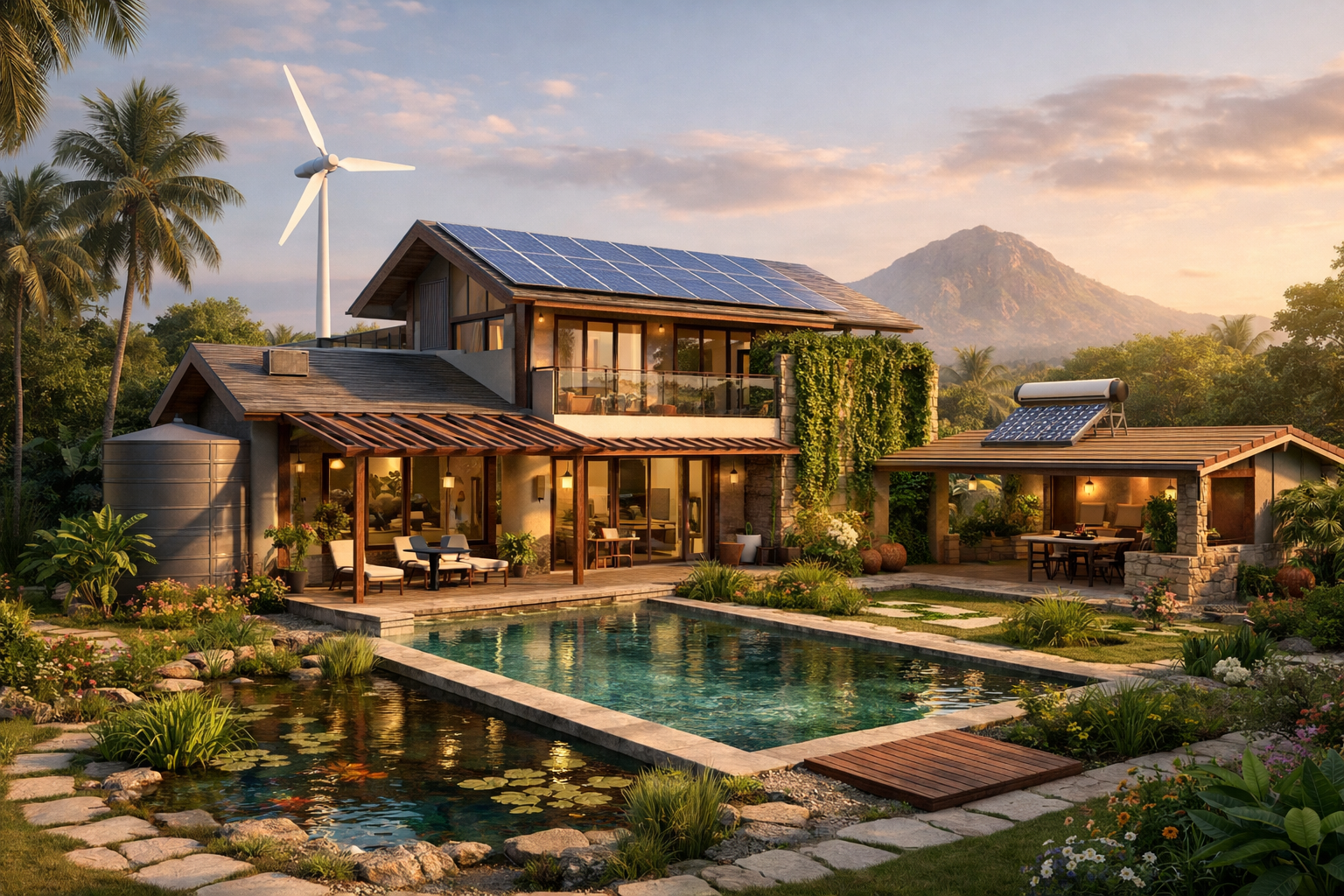
Optimal Building Orientation
Building orientation is the most cost-effective energy efficiency measure, requiring no additional expenditure. In India's Northern Hemisphere location:
East-West orientation: Reduces heat gain by 25-30% compared to North-South orientation
North-facing walls: Receive minimal direct sunlight, naturally remaining cooler
South-facing walls: Ideal for winter solar gains in northern India; require shading in summer
For cities like Delhi, Mumbai, and Bangalore, designing living spaces on the north side and service areas (kitchens, bathrooms) on the south side can reduce air conditioning load by 20-25%.
Natural Ventilation and Cross-Ventilation
Proper ventilation design eliminates the need for air conditioning during moderate weather periods. Key strategies include:
Cross-ventilation: Placing windows on opposite walls allows natural air circulation, reducing AC dependence by 15-20 days annually in Indian cities
Stack ventilation: Using height differences and thermal buoyancy to create natural air movement, effective in buildings up to 4-5 stories
Wind catchers: Traditional architectural elements like jaali and jharokha that channel breezes into interiors
Operable windows: Allow residents to control ventilation; estimated cost addition: ₹2,000-5,000 per window
Thermal Mass and Insulation
Thermal mass absorbs heat during the day and releases it at night, moderating indoor temperature fluctuations. In Indian climates:
Brick masonry walls: Provide natural thermal mass; 230mm thick walls offer better temperature regulation than hollow blocks
Concrete slabs: Exposed concrete ceilings (when not plastered) act as thermal mass, reducing peak temperatures by 2-4°C
Cost consideration: Upgrading to better insulation materials costs ₹150-300 per square meter additionally
For climates with significant temperature swings (Delhi, Jaipur), thermal mass can reduce HVAC energy consumption by 15-20%.
Climate-Specific Design Strategies
Hot and Dry Climates (Delhi, Jaipur, Ahmedabad)
These regions experience extreme summer heat (45-50°C) and require aggressive cooling strategies:
Deep overhangs and shading: Reduces solar heat gain by 40-60%; typical overhang depth: 1-1.5 meters
Courtyards: Create microclimates; central courtyards reduce surrounding room temperatures by 3-5°C
Light-colored exteriors: Reflect 60-70% of solar radiation compared to dark colors (cost difference: negligible)
Evaporative cooling: Traditional water features and fountains can cool surrounding air by 5-8°C
Hot and Humid Climates (Mumbai, Kolkata, Bangalore, Chennai)
High humidity makes evaporative cooling ineffective; focus shifts to ventilation and moisture control:
Elevated structures: Raising buildings 1-2 meters above ground improves air circulation underneath
Ventilated cavity walls: Create air gaps that reduce heat transmission by 25-30%; additional cost: ₹100-200 per square meter
Moisture barriers: Prevent mold and dampness; essential in coastal areas like Mumbai and Goa
Ceiling fans: Highly effective in humid climates; can reduce AC usage by 30-40% when properly sized
Moderate Climates (Pune, Hyderabad, Lucknow)
These regions benefit from mixed strategies with emphasis on natural ventilation:
Maximize natural ventilation during moderate seasons (October-March)
Provide flexible shading for transitional seasons
Design for both cooling and heating needs
High-Performance Building Materials and Technologies
Energy-Efficient Windows and Glazing
Windows account for 25-30% of heat loss/gain in buildings. Modern solutions include:
Double-glazed windows: Reduce heat transfer by 50% compared to single-pane; cost: ₹1,200-2,500 per square foot vs. ₹400-800 for single-pane
Low-emissivity (Low-E) coatings: Reflect infrared radiation; additional cost: ₹300-500 per square foot
Smart glass: Electrochromic windows that adjust tint based on sunlight; cost: ₹3,000-5,000 per square foot (still niche in India)
Window-to-wall ratio: Optimal ratio is 30-40% for Indian climates to balance daylighting with heat control
Insulation Materials
Proper insulation reduces heating/cooling loads significantly:
Fiberglass batts: Most common; cost ₹40-80 per square meter; R-value 3.2-3.8 per inch
Mineral wool: Better fire resistance; cost ₹60-120 per square meter
Expanded polystyrene (EPS): Cost-effective; ₹30-60 per square meter; R-value 3.6 per inch
Spray foam: Seals air leaks; cost ₹200-400 per square meter; highest R-value but more expensive
For a 2,000 sq. ft. home, upgrading insulation throughout costs ₹80,000-150,000 but reduces cooling/heating costs by 25-35%.
Cool Roofing Solutions
Roofs absorb 70-80% of solar radiation, significantly impacting indoor temperatures:
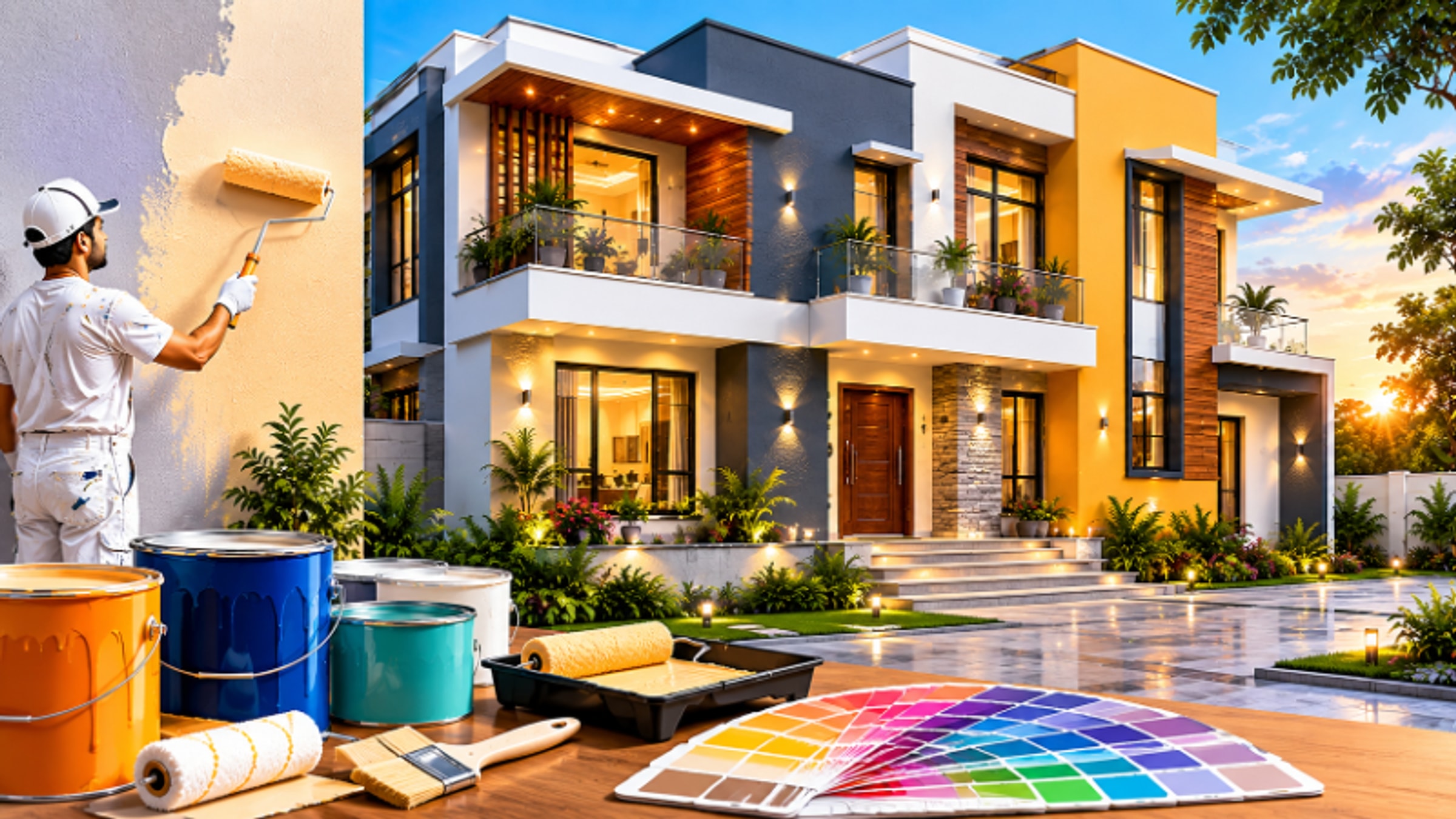
Cool paint coatings: Reflect 70-85% of solar radiation; cost ₹15-30 per square foot; reduces roof surface temperature by 15-20°C
Cool tiles: Specially designed to reflect heat; cost ₹80-150 per square foot vs. ₹40-80 for standard tiles
Green roofs: Vegetation provides insulation and evaporative cooling; cost ₹400-600 per square meter; reduces roof temperature by 20-30°C
Reflective membranes: Cost ₹50-100 per square meter; effective for flat roofs
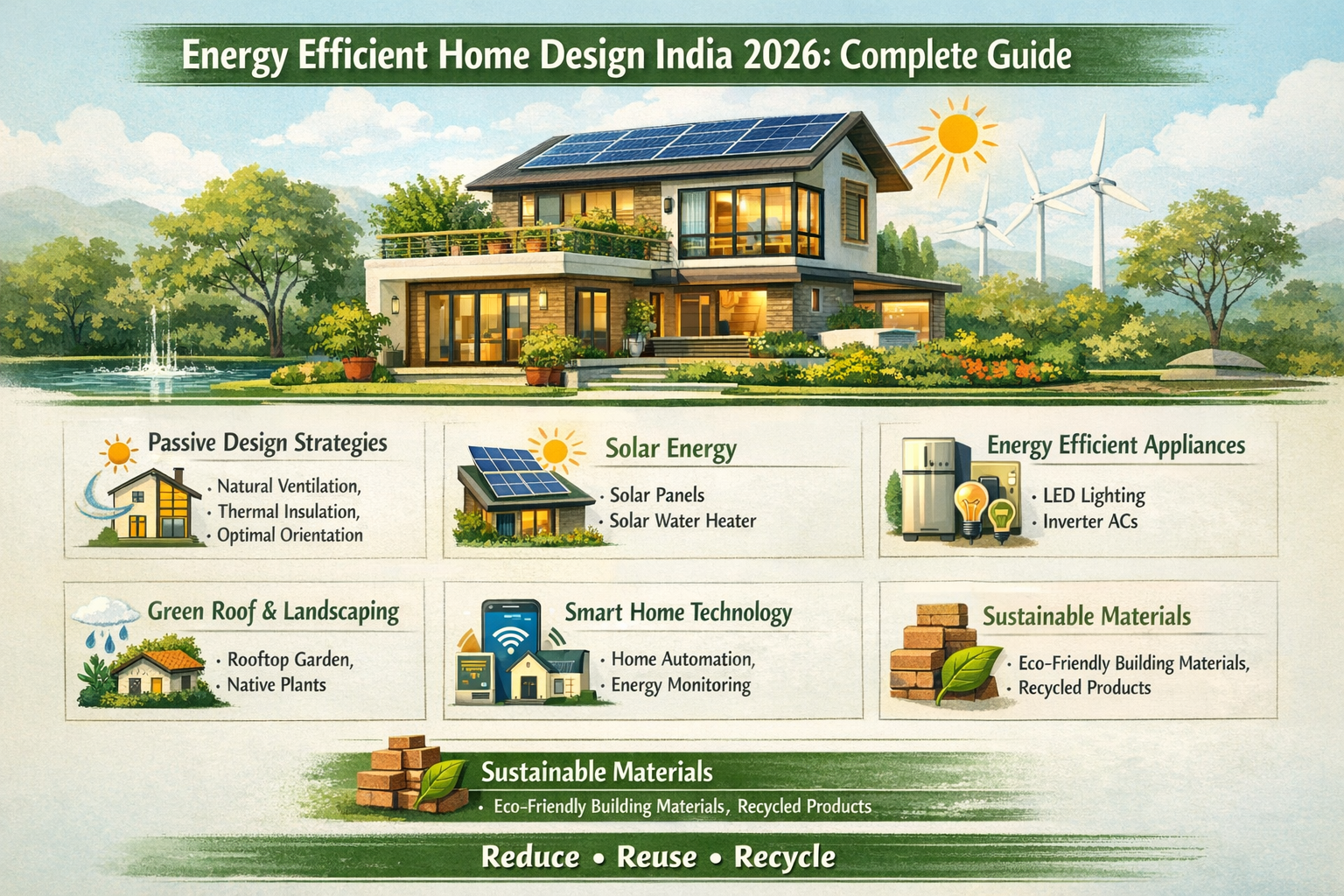
HVAC and Mechanical Systems Optimization
Air Conditioning Efficiency
AC systems consume 40-60% of household electricity in Indian homes. Optimization strategies include:
Inverter ACs: Consume 30-40% less energy than fixed-speed compressors; cost ₹35,000-65,000 vs. ₹25,000-45,000 for non-inverter; payback period: 2-3 years
Variable refrigerant flow (VRF) systems: Ideal for larger homes; efficiency up to 40% better than traditional split ACs; cost: ₹150,000-300,000 for a 2,000 sq. ft. home
Proper sizing: Oversized units waste energy; each room should have a load calculation (₹500-1,000 per assessment)
Regular maintenance: Clean filters every 2 weeks; servicing every 6 months improves efficiency by 10-15%
Heat Recovery and Ventilation Systems
Energy Recovery Ventilation (ERV) systems recycle conditioned air:
Recover 60-80% of heating/cooling energy from exhaust air
Cost: ₹150,000-300,000 for whole-house installation
Best suited for sealed, well-insulated homes
Payback period: 5-7 years through reduced HVAC loads
Renewable Energy Integration
Solar Photovoltaic Systems
Solar has become increasingly affordable in India:
Rooftop solar capacity: 3-5 kW typical for Indian homes; generates 12-20 units daily depending on location
Cost: ₹60,000-80,000 per kW (₹1,80,000-4,00,000 for 3-5 kW system)
Government subsidy: 30-50% in many states through various schemes
Payback period: 5-7 years; 25-year lifespan
Net metering: Excess power exported to grid at favorable rates in states like Maharashtra, Karnataka, and Tamil Nadu
Solar Water Heating
Water heating accounts for 15-20% of household energy use:
Solar thermal collectors: Cost ₹25,000-45,000 for a 200-liter system
Energy savings: 70-80% reduction in water heating costs
Payback period: 3-4 years
Subsidy availability: MNRE (Ministry of New and Renewable Energy) offers 30% subsidy in many states
Water Efficiency and Management
While not directly energy-related, water heating is energy-intensive. Efficient water use reduces overall energy consumption:
Low-flow fixtures: Reduce water use by 30-50%; cost ₹500-1,500 per fixture vs. ₹200-500 for standard fixtures
Rainwater harvesting: Reduces municipal water dependence and associated energy costs; system cost: ₹50,000-150,000 for a 2,000 sq. ft. home
Greywater recycling: Reuses water from sinks and showers for toilets and landscaping; cost: ₹30,000-80,000
Smart Home Automation for Energy Management
Building Management Systems (BMS)
Automation optimizes energy use through real-time monitoring:
Smart thermostats: Learn occupancy patterns and adjust temperatures; cost ₹5,000-15,000; save 10-15% on heating/cooling
Occupancy sensors: Automatically control lighting and HVAC; cost ₹2,000-5,000 per room
Energy monitoring systems: Track real-time consumption; cost ₹15,000-40,000; help identify waste and optimize usage
Smart lighting: LED bulbs with dimming and scheduling; cost ₹200-500 per bulb vs. ₹50-100 for standard LEDs
IoT Integration and AI-Powered Systems
Advanced systems use artificial intelligence for predictive energy management:
Predictive algorithms forecast energy demand based on weather, occupancy, and historical data
Automatic load balancing prevents peak demand charges
Integration with solar systems optimizes battery charging and discharging
Cost: ₹50,000-150,000 for comprehensive home automation setup
Regulatory Compliance and Certifications
IGBC Green Home Certification
The Indian Green Building Council (IGBC) offers certification for residential buildings:
Platinum rating: 90+ points; requires comprehensive energy efficiency measures
Gold rating: 70-89 points; moderate energy efficiency investments
Certification cost: ₹50,000-150,000 depending on home size
Benefits: Premium resale value (5-10% higher), lower operating costs, health benefits
ECBC Compliance
While not mandatory for residential buildings, following ECBC 2017 standards ensures:
Compliance with potential future regulations
Better resale value
Reduced operational costs
Improved comfort and indoor air quality
Cost-Benefit Analysis: Making the Investment
A typical energy efficiency retrofit for a 2,000 sq. ft. home in India might involve:
Measure | Cost (₹) | Annual Savings (₹) | Payback (Years) |
|---|---|---|---|
Cool roof coating | ₹40,000 | ₹8,000 | 5 |
Window upgrades | ₹1,20,000 | ₹12,000 | 10 |
Solar PV system (3 kW) | ₹2,40,000 | ₹36,000 | 6.5 |
Solar water heater | ₹35,000 | ₹9,000 | 3.8 |
Smart thermostat | ₹10,000 | ₹3,000 | 3.3 |
Total Package | ₹4,45,000 | ₹68,000 | 6.5 |
With electricity tariff increases of 5-7% annually, actual payback periods are typically 1-2 years shorter than calculated above.
Using AECORD for Energy-Efficient Home Design
AECORD, India's leading B2B2C AECO marketplace, simplifies the process of sourcing energy-efficient materials and services. The platform connects homeowners with verified suppliers of:
High-performance windows, doors, and glazing systems
Insulation materials and thermal solutions
Solar panels and renewable energy systems
Smart home automation equipment
Energy-efficient HVAC systems
Certified architects and energy consultants specializing in green building
Users can compare prices, read verified reviews, and connect directly with suppliers, ensuring competitive pricing and quality assurance. The platform's project management features help coordinate multiple suppliers for comprehensive energy efficiency retrofits.
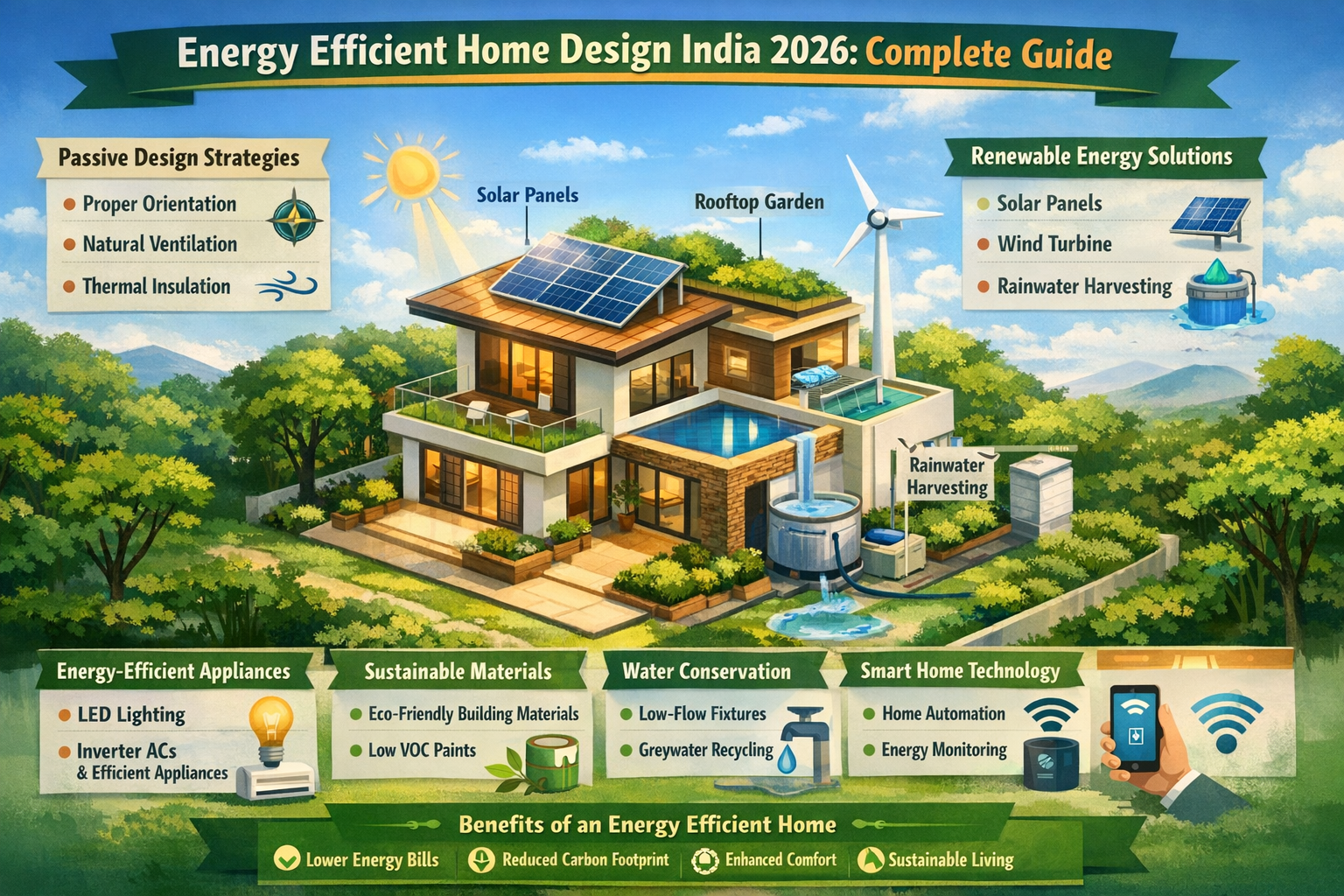
Future Trends in Energy-Efficient Home Design (2026 and Beyond)
Integration of Energy Storage
Battery storage systems are becoming more affordable:
Lithium-ion battery prices have dropped 80% in the last decade
Home battery systems (5-10 kWh) cost ₹3,00,000-6,00,000; enable 24/7 solar power usage
Potential for 100% energy independence in homes with adequate solar and storage
Emerging Building Materials
Phase-change materials (PCM): Store and release thermal energy; becoming more affordable
Bio-based insulation: From agricultural waste; sustainable and increasingly available in India
Recycled materials: Insulation from recycled plastics and textiles; cost-competitive and environmentally beneficial
Blockchain-Based Energy Trading
Peer-to-peer energy trading platforms are emerging, allowing homeowners to sell excess solar power directly to neighbors, optimizing the value of renewable installations.
Conclusion
Energy-efficient home design in India represents a convergence of economic necessity, environmental responsibility, and technological advancement. With rising electricity costs, improving technology affordability, and supportive government policies, 2026 is an ideal time for Indian homeowners to invest in energy efficiency. Whether through passive design strategies that cost nothing, mid-range investments like solar systems, or comprehensive retrofits, opportunities exist for every budget. The combination of reduced operating costs, improved comfort, higher property values, and environmental benefits makes energy efficiency a smart investment for modern Indian homes.
Frequently Asked Questions
What is the most cost-effective energy efficiency measure for Indian homes?
Cool roof coatings and painting offer the best return on investment, costing ₹15-30 per square foot and reducing cooling costs by 15-20% with a 5-year payback period. For new construction, proper building orientation and natural ventilation design cost nothing but provide 20-30% energy savings. Solar water heaters are also highly cost-effective with 3-4 year payback periods and 70-80% energy savings on water heating.
How much can I save annually by implementing energy-efficient home design?
Savings depend on current consumption and measures implemented. A typical middle-class home consuming 300 units monthly (₹1,500-2,400) can reduce consumption by 30-50% through comprehensive energy efficiency measures, saving ₹5,400-14,400 annually. With solar installation, homes can achieve 70-100% reduction in grid electricity purchases, saving ₹12,600-28,800 yearly. Payback periods typically range from 3-7 years depending on the measures chosen.
Are government subsidies available for energy-efficient home improvements in India?
Yes, multiple schemes exist: UJALA provides LED bulbs at subsidized rates, MNRE offers 30-50% subsidies for solar installations (varying by state), and several states provide additional subsidies for solar water heaters. Some states offer tax credits for renewable energy installations. Check with your state's renewable energy department for specific schemes applicable in your area. AECORD can help identify current subsidy programs relevant to your location and project type.
What is the difference between passive and active energy efficiency measures?
Passive measures use building design and materials to reduce energy needs without mechanical systems—examples include proper orientation, natural ventilation, insulation, and shading. These typically cost less upfront but require careful design. Active measures use mechanical or electrical systems to manage energy—examples include solar panels, inverter ACs, smart thermostats, and heat recovery systems. Optimal energy efficiency combines both approaches: passive design reduces the load, while active systems efficiently meet remaining needs.
Can I retrofit an existing home for energy efficiency, or is it only for new construction?
Both new construction and existing homes can be retrofitted for energy efficiency. Retrofits are common in India and include cool roof coatings (₹40,000), window upgrades (₹1,20,000), solar installations (₹2,40,000), insulation improvements, and smart home automation. While retrofits may cost more per unit than incorporating efficiency into new construction, they still offer attractive payback periods of 3-7 years and can be done incrementally based on budget. Many homeowners combine multiple measures over time to spread costs.