

Do I Need an Architect for Home Construction in India? A Complete Guide
Building a home is one of the most significant investments most Indians will make in their lifetime. The question of whether you need an architect often comes up during the planning phase, and the answer isn't straightforward. While it's technically possible to construct a home without an architect in India, doing so can lead to costly mistakes, legal complications, and structural issues that may haunt you for years.
Let's break down the reality of home construction in India and help you make an informed decision about hiring an architect.

Build cost · Bengaluru, May 2026
Understanding the Legal Requirements
Municipal Regulations and Building Bylaws
In India, building regulations vary significantly by municipality and state. Most major Indian cities—Mumbai, Delhi, Bangalore, Pune, Chennai, and Hyderabad—have stringent building bylaws that govern construction. These regulations cover:
Floor Area Ratio (FAR) or Floor Space Index (FSI)
Setback requirements from property boundaries
Height restrictions
Open space and parking requirements
Fire safety and emergency exit provisions
Structural safety standards
An architect is well-versed in these local regulations. Without proper knowledge, you might design a home that violates bylaws, leading to demolition orders or hefty fines. For instance, in Mumbai, the FSI is typically 1.33 to 2.0, depending on the zone, while in Bangalore, it ranges from 1.0 to 4.0. A professional architect ensures your design complies with these specifications from day one.
Approval and Sanctioning Process
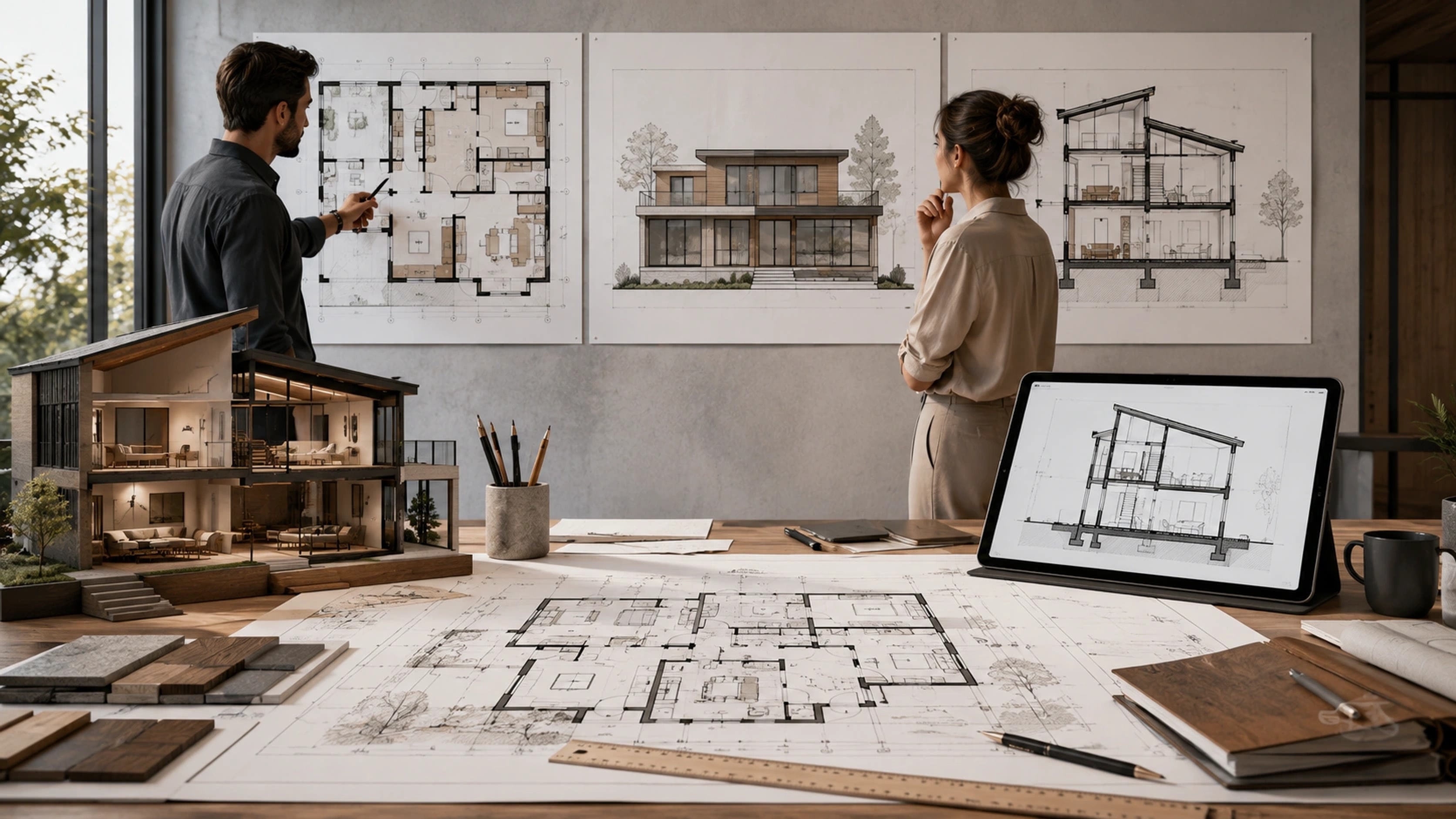
To legally construct a home in India, you need approval from your local municipal corporation or town planning authority. The process involves submitting detailed architectural plans, structural calculations, and various certificates. An architect handles this entire process, including:
Preparing detailed plans and drawings
Structural design calculations
Environmental clearance documentation (if required)
Submitting plans to the municipal authority
Coordinating with authorities for revisions and approvals
Obtaining the Building Permission Certificate
Without an architect, navigating this bureaucratic maze becomes extremely challenging. Many people attempt DIY approaches and end up spending more time and money rectifying rejected submissions.
Frequently asked
Financial Implications of Hiring an Architect
Architect Fees in India
Architect fees typically range from 3% to 8% of the total construction cost, depending on the project complexity and location. Here's a breakdown:
Simple residential projects: 3-4% of construction cost
Medium complexity projects: 4-6% of construction cost
Complex projects with special requirements: 6-8% of construction cost
For example, if your total construction cost is ₹30 lakhs, architect fees would range from ₹90,000 to ₹2,40,000. While this seems substantial, consider the savings an architect brings:
Avoiding costly design changes mid-construction (can cost 10-15% of budget)
Optimizing space utilization, potentially reducing construction area needed
Ensuring energy-efficient design, reducing long-term utility costs
Preventing structural defects that could cost lakhs to repair later
Faster approval process, reducing project timeline and associated costs
Studies suggest that hiring an architect can save 5-10% of total construction costs through better planning and execution.
Cost Comparison: With vs. Without an Architect
Let's consider a typical ₹30 lakh home construction project:
Aspect | With Architect | Without Architect |
|---|---|---|
Architect Fees | ₹1,20,000 | ₹0 |
Design Changes/Rework | ₹30,000 | ₹2,00,000-₹3,00,000 |
Approval Delays/Rejections | Minimal | ₹50,000-₹1,00,000 |
Material Wastage | 5-8% | 12-15% |
Construction Timeline | 12-18 months | 18-24 months |
Total Additional Costs | ₹1,20,000 | ₹3,00,000-₹5,00,000+ |
When You Absolutely Need an Architect
Mandatory Scenarios
Certain situations legally require an architect's involvement in India:
Buildings exceeding 1000 sq. meters: According to the National Building Code and most state regulations, buildings above this threshold require certified architectural and structural plans.
Multi-story residential buildings: Any structure with more than two stories typically requires professional architectural design and structural engineering.
Commercial or mixed-use properties: These always require architect involvement for compliance with specific codes.
Buildings in heritage zones: Heritage areas have special architectural requirements that only professionals can navigate.
Buildings in seismic zones: Areas prone to earthquakes (like parts of Delhi, Mumbai, and Bangalore) have stricter structural requirements.
Practical Scenarios Where Architects Add Value
Complex Site Conditions: If your plot has irregular shape, slope, or challenging soil conditions, an architect's expertise becomes invaluable. They can design structures that work with the terrain rather than against it.
Maximizing Space: An architect can help you optimize your plot's potential. For instance, in Bangalore's expensive real estate market, an architect might help you gain an extra 200-300 sq. ft. of usable space through intelligent design—potentially worth ₹15-20 lakhs.
Future-Proofing: Architects design for future needs—expandability, maintenance access, and adaptability for changing lifestyles.
Sustainability and Energy Efficiency: Modern architects incorporate passive cooling, natural lighting, and water harvesting—reducing your long-term utility costs by 20-30%.
When You Might Skip an Architect
Limited Scenarios
There are rare cases where you might proceed without an architect:
Very small structures: A small cottage or guest house under 500 sq. meters in areas with relaxed regulations might not strictly require an architect.
Renovation of existing structures: Minor renovations within the existing footprint may not need architectural intervention, though it's still advisable.
Using standardized plans: Some builders offer pre-approved standardized designs that comply with local bylaws. You could potentially use these without custom architectural services.
Important caveat: Even in these scenarios, consulting an architect for at least a preliminary review (₹5,000-₹10,000) is wise insurance against costly mistakes.
The Role of Architects in Modern Construction
Beyond Design: Complete Project Management
Today's architects do much more than create pretty designs. They provide:
Structural engineering: Ensuring your home won't collapse or develop cracks.
MEP design: Planning electrical, plumbing, and HVAC systems efficiently.
Cost estimation: Providing accurate budgets before construction begins.
Contractor coordination: Ensuring construction follows approved plans.
Quality assurance: Regular site inspections during construction.
Compliance certification: Obtaining final occupancy certificates.
Digital Tools and AECORD Integration
Modern architects increasingly use digital platforms to streamline the design and approval process. Platforms like AECORD connect homeowners with verified architects and help manage the entire project lifecycle—from initial consultation through final handover. This transparency and digital documentation reduce disputes and ensure accountability.
How to Choose the Right Architect
Key Qualifications to Look For
Professional registration: Verify membership with the Council of Architecture (CoA), India's regulatory body.
Experience: Look for architects with 5+ years of experience in residential construction in your city.
Local knowledge: An architect familiar with your municipal bylaws and local conditions is invaluable.
Portfolio: Review completed projects similar to yours.
Client references: Speak with previous clients about their experience.
Fee Structure to Expect
Percentage-based: 3-8% of construction cost (most common)
Fixed fee: ₹1-3 lakhs for simple residential projects
Hourly rate: ₹500-₹2,000 per hour for consultations
Phased payments: 30% at design approval, 30% at construction start, 40% at completion
Regional Variations in India
Different Cities, Different Requirements
Mumbai: Strict FSI regulations and coastal regulations make architects essential. Expect higher fees (6-8%) but better value in space optimization.
Delhi: Complex zoning laws and heritage considerations often require specialized architects. Seismic zone classification also adds requirements.
Bangalore: Rapid development and changing bylaws mean you need an architect updated on latest regulations. Tech-savvy architects here often use BIM (Building Information Modeling).
Pune: More relaxed regulations than metros, but still advisable to hire an architect for anything beyond 1000 sq. meters.
Tier-2 and Tier-3 cities: Regulations are often less stringent, but hiring a local architect still prevents costly mistakes.

Red Flags and Common Mistakes
What to Avoid
Unregistered architects: Always verify CoA registration. Unregistered designers can't take legal responsibility.
Architects unfamiliar with your area: Local knowledge is crucial for navigating municipal processes.
No written agreement: Always have a detailed contract specifying scope, fees, timeline, and deliverables.
Skipping structural engineering: Never compromise on structural design, even to save fees.
Ignoring building bylaws: The cheapest mistake is one that requires demolition.
The Bottom Line
For most home construction projects in India, hiring an architect is not just advisable—it's essential. The combination of complex building regulations, municipal approval processes, and the technical aspects of construction makes professional guidance invaluable.
While architect fees represent an additional cost (3-8% of construction budget), they typically save 5-10% of total project costs through better planning, faster approvals, and fewer rework cycles. For a ₹30 lakh home, this translates to potential savings of ₹1.5-₹3 lakhs.
The real cost of not hiring an architect isn't just financial—it's the stress, delays, legal complications, and the risk of structural defects that could affect your family's safety and your property's value for decades to come.
FAQ
Is it illegal to build a house without an architect in India?
It's not explicitly illegal for very small structures, but buildings exceeding 1000 sq. meters or more than two stories legally require certified architectural plans in most Indian municipalities. Even for smaller structures, municipal approval requires architectural drawings. Building without proper approvals can result in demolition orders, fines, and legal action. It's safer to assume you need an architect.
How much does an architect cost for a typical home in India?
Architect fees typically range from 3-8% of construction cost. For a ₹30 lakh home, expect ₹90,000 to ₹2,40,000. Some architects charge fixed fees (₹1-3 lakhs for simple projects) or hourly rates (₹500-₹2,000/hour). Fees vary by city, project complexity, and architect experience. Always get a detailed written quote before hiring.
Can I use online templates or pre-approved designs instead of hiring an architect?
While pre-approved standardized designs exist and can work for simple projects, they rarely account for your specific site conditions, local regulations, or personal needs. A template designed for Delhi's bylaws might violate Bangalore's regulations. At minimum, have a local architect review any template design (₹5,000-₹10,000) before proceeding with construction.
How long does the architectural design and approval process take?
Typically 2-4 months depending on your city and project complexity. This includes initial design (3-4 weeks), municipal submission, and approval (4-8 weeks). Delays can occur if the municipal authority requests revisions. An experienced local architect familiar with your municipal processes can minimize delays significantly.
What's the difference between an architect and a structural engineer?
An architect designs the overall building layout, aesthetics, and functionality, while a structural engineer calculates loads and designs the structural framework to ensure safety. For residential construction in India, you typically need both. Some architects have structural engineering qualifications, but for complex projects, separate structural engineers are advisable. Both roles are essential for a safe, approved home.
```