


In India's booming construction sector, understanding the distinction between architects and civil engineers is crucial for project success. While these professionals often work together on construction projects, their roles, qualifications, and responsibilities are distinctly different. Whether you're planning a residential building in Bangalore, a commercial complex in Mumbai, or an infrastructure project in Delhi, knowing when to hire an architect versus a civil engineer can save you time, money, and ensure regulatory compliance.
Understanding the Core Differences
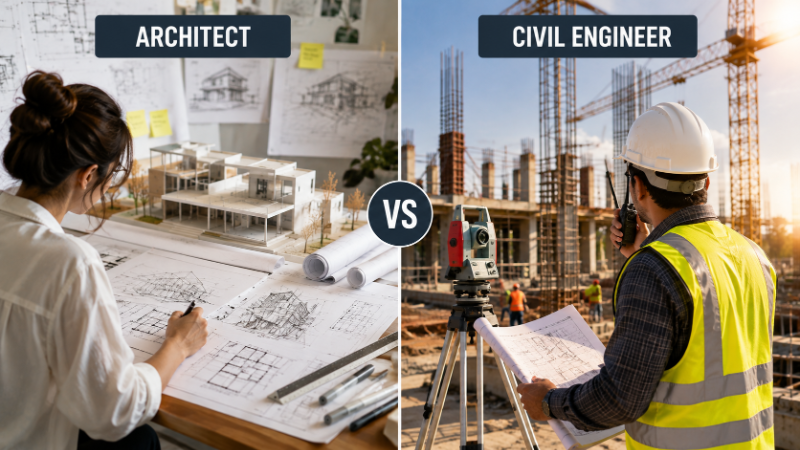
Architects and civil engineers are both essential to the construction industry, but they approach projects from different perspectives. An architect focuses on the design, aesthetics, and user experience of a building, while a civil engineer concentrates on the structural integrity, safety, and technical feasibility of construction. Think of it this way: the architect envisions what a building should look like and how people will use it, while the civil engineer ensures it can actually be built safely and efficiently.
This fundamental difference shapes everything from their educational background to their day-to-day responsibilities on a project. Understanding these distinctions helps you assemble the right team for your construction needs.

Build cost · Bengaluru, May 2026
Educational Qualifications and Training
Architect Education in India
In India, becoming an architect requires a specialized educational path. The standard qualification is a 5-year Bachelor of Architecture (B.Arch) degree from an AICTE-approved institution. After graduation, aspiring architects must complete a 1-year internship and pass the National Architect Registration Examination (NARE) conducted by the Council of Architecture (CoA).
The curriculum for architecture students includes:
Design and drawing principles
Building materials and construction techniques
History and theory of architecture
Urban planning and landscape design
Building information modeling (BIM) and CAD software
Sustainable design and green building practices
Architects in India can pursue further specialization through M.Arch programs focusing on areas like sustainable architecture, heritage conservation, or urban design.
Civil Engineer Education in India
Civil engineers typically complete a 4-year Bachelor of Technology (B.Tech) or Bachelor of Engineering (B.E) degree in Civil Engineering from an AICTE-approved college. After graduation, they can pursue professional registration with the Institution of Engineers (India) or other regulatory bodies.
Civil engineering curriculum covers:
Structural analysis and design
Geotechnical engineering
Hydraulics and water resources
Transportation engineering
Construction management
Mathematics, physics, and applied mechanics
Environmental engineering
Civil engineers can specialize in areas like structural engineering, transportation, water resources, or foundation engineering through postgraduate degrees.
Frequently asked
Key Responsibilities and Project Roles
What Architects Do
Architects are responsible for the conceptualization and design phase of a project. Their primary responsibilities include:
Space Planning: Designing functional layouts that optimize space usage and user experience
Aesthetic Design: Creating visually appealing buildings that align with client vision and cultural context
Regulatory Compliance: Ensuring designs meet local building codes, zoning regulations, and municipal bylaws (like those in the National Building Code of India)
Material Selection: Choosing appropriate materials based on aesthetics, durability, and cost considerations
3D Visualization: Creating renderings and models to help clients understand the final design
Project Coordination: Overseeing the design team and ensuring all consultants align with the architectural vision
Site Supervision: Periodic site visits to ensure construction follows the approved design
For example, when designing a residential apartment complex in Pune, an architect would determine the building's shape, facade design, apartment layouts, common areas, and overall aesthetic appeal.

What Civil Engineers Do
Civil engineers focus on the technical and structural aspects of construction. Their key responsibilities include:
Structural Design: Calculating load-bearing capacities and designing structural systems (beams, columns, foundations)
Foundation Design: Assessing soil conditions and designing appropriate foundations for the structure
Construction Planning: Creating detailed construction schedules, methodologies, and resource management plans
Safety Management: Implementing safety protocols and ensuring compliance with labor laws
Cost Estimation: Preparing detailed project budgets and cost breakdowns
Quality Control: Testing materials and monitoring construction quality
Site Management: Overseeing day-to-day construction activities and resolving technical issues
Using the same apartment complex example, the civil engineer would design the structural framework, calculate how much weight the foundations must support, determine the concrete mix required, and manage the construction timeline and budget.
Qualifications and Licensing
Architect Registration in India
Architects in India must be registered with the Council of Architecture (CoA) to practice legally. The registration process requires:
Completion of a recognized B.Arch degree
Completion of mandatory 1-year internship
Passing the National Architect Registration Examination (NARE)
Registration with CoA
Registered architects can use the title "Architect" and are bound by a code of conduct that ensures professional standards and ethical practice.
Civil Engineer Registration in India
Civil engineers can register with the Institution of Engineers (India) or state-level engineering councils. Registration categories include:
Associate Member: After B.Tech/B.E with relevant experience
Professional Member: With additional experience and competency requirements
Chartered Engineer (ChE): The highest qualification, recognizing extensive experience and expertise
Registration ensures that engineers adhere to professional standards and ethical guidelines while practicing in India.
Project Involvement Timeline
Architect's Timeline
Architects typically get involved from the earliest stages of a project:
Pre-Design Phase: Understanding client requirements, site analysis, feasibility studies
Conceptual Design: Developing initial design concepts and presenting options to the client
Detailed Design: Refining the chosen design and preparing detailed architectural drawings
Construction Documentation: Creating comprehensive drawings and specifications for contractors
Construction Phase: Periodic site visits and design clarifications (typically less involved than during design phases)
Post-Completion: Final inspections and handover assistance
Civil Engineer's Timeline
Civil engineers become more involved during the technical and construction phases:
Pre-Design Phase: Site surveys, soil testing, geotechnical investigations
Design Phase: Structural design and technical specifications (often working with the architect's design)
Pre-Construction: Detailed construction planning, method statements, and resource planning
Construction Phase: Full-time site management, quality control, safety oversight
Post-Completion: Handover documentation and maintenance guidelines
Cost Implications in the Indian Market
Understanding the cost structure for hiring these professionals is important for project budgeting.
Architect Fees
In India, architect fees typically range from 3-8% of the total project cost, depending on:
Project complexity and size
Architect's experience and reputation
Location (metro cities like Mumbai, Delhi, and Bangalore command higher fees)
Scope of services (design only vs. full project supervision)
For example, designing a ₹1 crore residential project might cost ₹3-8 lakhs in architect fees.
Civil Engineer Fees
Civil engineer charges are often structured as:
Percentage-based: 2-5% of project cost
Fixed fees: Depending on project scope and complexity
Hourly rates: ₹500-2000 per hour for consultations
Site supervision: Additional charges for full-time on-site management
Full-time site supervision for a construction project might cost ₹2-5 lakhs per month, depending on project size and location.
When to Hire an Architect vs. Civil Engineer
Hire an Architect When:
You're designing a new building from scratch and need aesthetic and functional design solutions
You want to renovate or redesign an existing space for improved functionality and appearance
You need space planning expertise for commercial or residential projects
You require compliance with building codes and municipal regulations
You want professional visualization and presentations for stakeholders
You're planning urban development or landscape design projects
Hire a Civil Engineer When:
You need structural design and calculations for your building
You're dealing with complex foundation requirements or challenging soil conditions
You need construction planning, scheduling, and budget management
You require full-time site supervision during construction
You're working on infrastructure projects (roads, bridges, water systems)
You need quality control and safety management expertise
You're dealing with specialized projects like high-rise buildings or underground construction
How They Work Together
In reality, architects and civil engineers collaborate extensively on most construction projects. The architect develops the design concept, and the civil engineer ensures it's structurally sound and constructible. This collaboration is essential for project success.
For instance, an architect might design a building with a large cantilever overhang for aesthetic reasons, but the civil engineer would calculate whether the structure can safely support it and propose modifications if necessary. This teamwork ensures projects are both beautiful and safe.
When searching for professionals on AECORD, you can find both architects and civil engineers with verified credentials and project portfolios. This makes it easier to assemble the right team for your specific project needs.

Choosing the Right Professional for Your Project
When selecting between an architect and civil engineer—or ideally, both—consider:
Project Type: Residential, commercial, or infrastructure projects may require different expertise
Project Complexity: Simple projects might need only one professional, while complex projects require both
Your Budget: Factor in professional fees when planning your project budget
Experience: Look for professionals with experience in similar projects in your city (Delhi, Mumbai, Bangalore, etc.)
Credentials: Verify registration with CoA (for architects) or Institution of Engineers (for civil engineers)
Portfolio: Review past projects to assess quality and style alignment
Platforms like AECORD help you connect with qualified professionals who have verified credentials and portfolios, making the selection process more transparent and reliable.
Conclusion
While architects and civil engineers both play crucial roles in construction, their expertise, qualifications, and responsibilities are distinct. Architects focus on design, aesthetics, and user experience, while civil engineers ensure structural safety, technical feasibility, and constructability. Understanding these differences helps you make informed decisions about which professionals to hire for your project.
Most successful construction projects in India benefit from collaboration between both professionals. Whether you're building a home in Hyderabad, a commercial space in Kolkata, or an industrial facility in Chennai, having the right team ensures your project meets both aesthetic and technical standards.
Ready to find the right architect or civil engineer for your project? Visit AECORD today to connect with verified professionals in your city. Browse portfolios, compare credentials, and hire the experts who can bring your vision to life. With AECORD's comprehensive platform, assembling your dream team has never been easier.
Frequently Asked Questions
What is the main difference between an architect and a civil engineer?
Architects focus on the design, aesthetics, and user experience of buildings, while civil engineers concentrate on structural integrity, safety, and technical feasibility. Architects envision what a building should look like, while civil engineers ensure it can be built safely and efficiently.
What qualifications do you need to become an architect in India?
To become an architect in India, you need a 5-year Bachelor of Architecture (B.Arch) degree from an AICTE-approved institution, followed by a 1-year internship and passing the National Architect Registration Examination (NARE) conducted by the Council of Architecture.
How long does it take to become a civil engineer in India?
It takes 4 years to complete a Bachelor of Technology (B.Tech) or Bachelor of Engineering (B.E) degree in Civil Engineering from an AICTE-approved college, after which graduates can pursue professional registration with the Institution of Engineers (India).
Do I need both an architect and a civil engineer for my construction project?
Yes, most construction projects benefit from both professionals. Architects design the building's layout and aesthetics while ensuring regulatory compliance, while civil engineers handle structural design, safety calculations, and construction feasibility to bring the architect's vision to life.
What subjects are covered in civil engineering education?
Civil engineering curriculum covers structural analysis and design, geotechnical engineering, hydraulics, transportation engineering, construction management, mathematics, physics, applied mechanics, and environmental engineering.