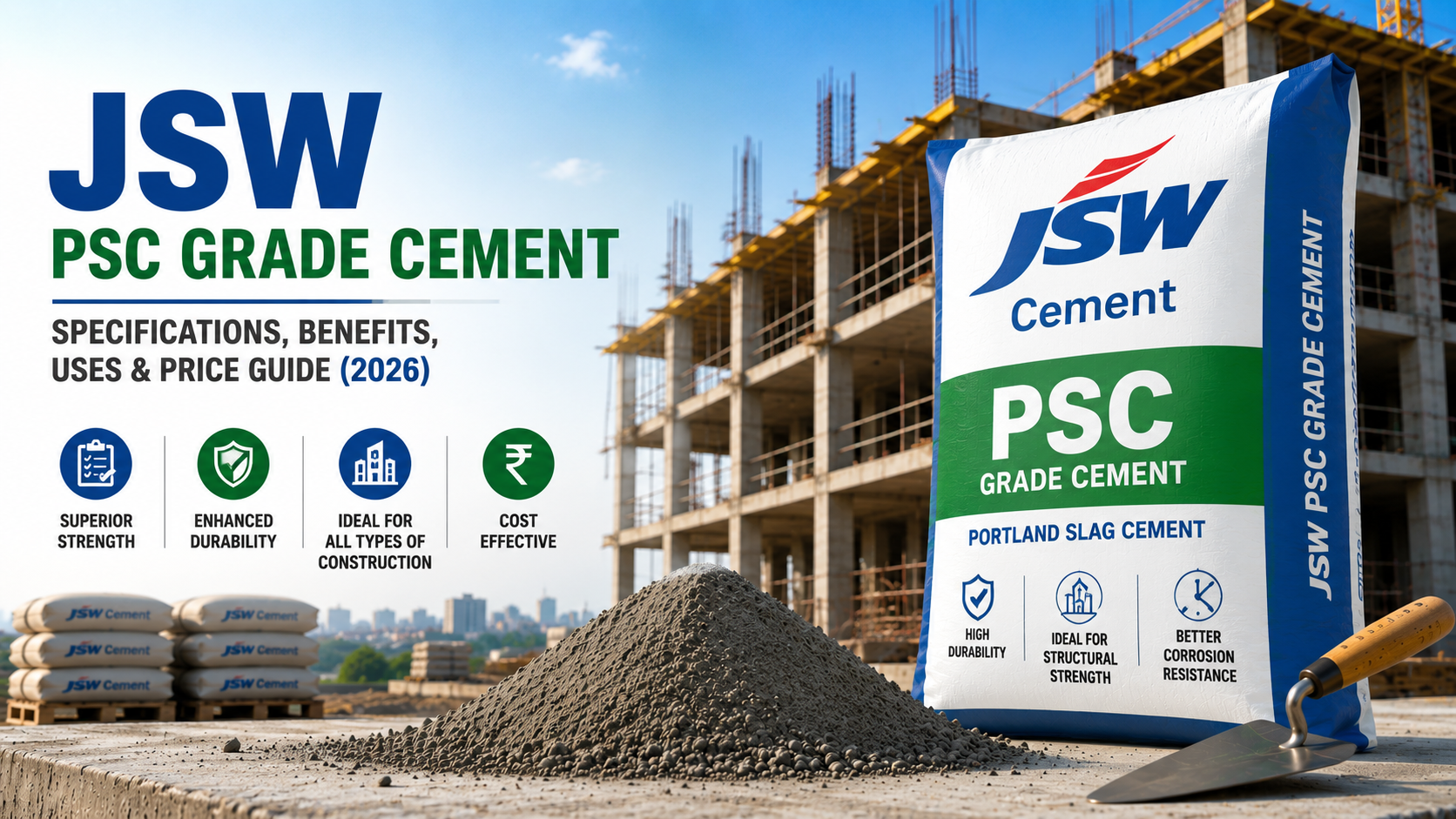


Understanding Deccan PSC Grade Cement in Laminated Bags: A Comprehensive Guide for Indian Construction Professionals
Cement is the backbone of any construction project, and selecting the right type and grade is crucial for ensuring structural integrity, durability, and cost-effectiveness. Among the various cement options available in the Indian market, Deccan PSC (Portland Slag Cement) Grade cement in laminated bags has become increasingly popular among architects, engineers, and construction professionals. This guide will help you understand everything you need to know about this cement variant and how to source it effectively.
Build cost · Bengaluru, May 2026
What is Deccan PSC Grade Cement?
Deccan PSC Grade Cement is a Portland Slag Cement manufactured by Deccan Cements Limited, one of India's leading cement producers. PSC cement is a blended cement that combines Portland cement clinker with granulated blast furnace slag (GBFS) in specific proportions. This composition makes it an excellent choice for various construction applications across India.
The "Grade" designation (typically 43 or 53) refers to the compressive strength that the cement can achieve at 28 days. The laminated bag packaging is a modern storage solution that provides better protection against moisture and environmental degradation compared to traditional paper bags.
Key Properties and Specifications of PSC Grade Cement
Understanding the technical specifications is essential for construction professionals selecting cement for their projects:
Compressive Strength: PSC 43 Grade achieves a minimum of 43 MPa at 28 days, while PSC 53 Grade achieves 53 MPa or higher
Initial Setting Time: Typically between 45-600 minutes, allowing adequate working time
Fineness: Specific surface area of 225-325 m²/kg as per IS 455:2015
Chemical Composition: Contains 25-70% slag content, which reduces heat of hydration
Soundness: Measured by Le Chatelier expansion, ensuring dimensional stability
Durability: Enhanced resistance to sulfate attack due to slag content
These properties make Deccan PSC Grade cement suitable for a wide range of applications, from residential construction in Bangalore and Hyderabad to commercial projects in Mumbai and Delhi.
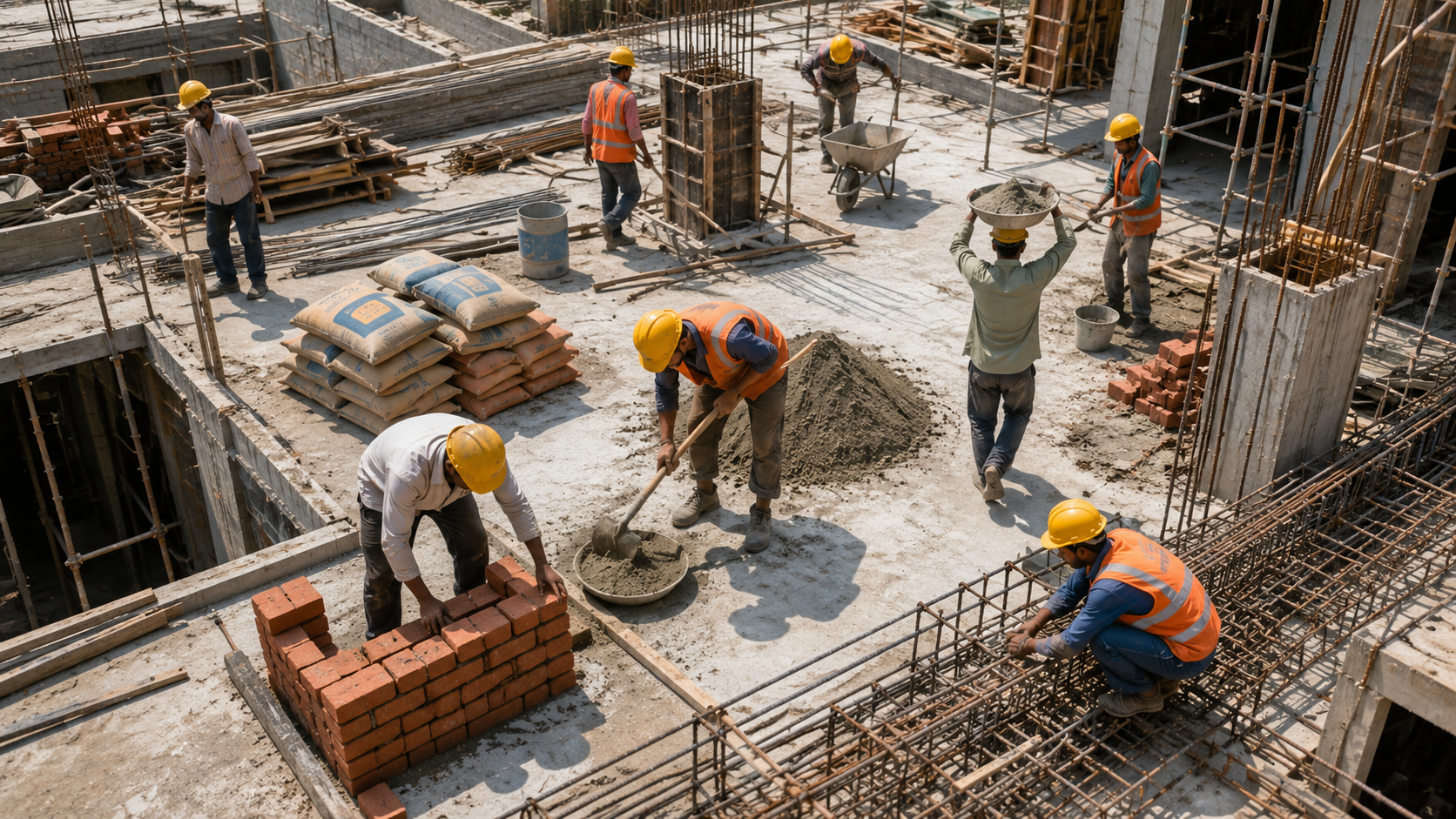
Advantages of PSC Grade Cement for Indian Construction
Frequently asked
Cost-Effectiveness
One of the primary reasons construction professionals in India choose PSC cement is its competitive pricing. PSC cement typically costs ₹50-100 less per bag compared to OPC (Ordinary Portland Cement) of equivalent grade. For large projects requiring hundreds of tons of cement, this translates to significant savings. A typical construction project in Pune or Bangalore using 500 tons of cement could save ₹25,000-50,000 by choosing PSC over OPC.
Reduced Heat of Hydration
The slag content in PSC cement generates considerably less heat during the hydration process. This property is particularly valuable for:
Mass concrete structures like dams and large foundations
Projects in hot climates like Rajasthan and Gujarat
Reducing thermal cracking in thick concrete sections
Projects where controlled curing is challenging
This characteristic has made PSC cement the preferred choice for many large infrastructure projects across India.
Enhanced Durability
PSC cement offers superior resistance to sulfate attack, making it ideal for:
Structures in coastal areas prone to salt water exposure (Chennai, Mumbai, Goa)
Projects in regions with sulfate-rich soil conditions
Underground structures and basements
Sewage treatment plants and water infrastructure
The long-term durability advantages often justify the initial material costs, particularly for infrastructure projects with 50+ year design lives.
Environmental Benefits
Using PSC cement contributes to sustainable construction practices by:
Reducing CO₂ emissions by 20-30% compared to OPC
Utilizing industrial waste (blast furnace slag) productively
Supporting India's commitment to green building standards
Aligning with LEED and IGBC certification requirements
Understanding Laminated Bag Packaging
What Are Laminated Bags?
Laminated bags represent an advancement in cement packaging technology. These bags typically consist of:
Multiple layers of kraft paper and plastic film
Waterproof and moisture-resistant properties
Better protection against environmental exposure
Improved handling and storage characteristics
Clear labeling and batch information for traceability
The reference number likely indicates a specific batch, product code, or quality certification number used by Deccan Cements for inventory and quality control purposes.
Advantages of Laminated Bags Over Traditional Packaging
Construction professionals and site managers in major Indian cities have noted several benefits:
Moisture Protection: Laminated bags maintain cement quality even in humid conditions prevalent in coastal cities like Mumbai and Kolkata
Longer Shelf Life: Cement remains usable for extended periods without quality degradation
Better Handling: Laminated bags are easier to stack and transport without tearing
Cleaner Job Sites: Reduced dust during handling improves site safety and worker health
Regulatory Compliance: Better documentation and traceability support quality audits
Applications of Deccan PSC Grade Cement in Indian Construction
Residential Construction
PSC Grade cement is extensively used in residential projects across India:
Multi-story apartment complexes in Bangalore, Hyderabad, and Pune
Individual house construction in tier-2 and tier-3 cities
Foundation and structural work
Plastering and finishing work
Commercial and Infrastructure Projects
Large-scale projects benefit significantly from PSC cement properties:
Office buildings and IT parks
Shopping malls and retail complexes
Road and bridge construction
Water supply and sewerage systems
Industrial facilities and manufacturing plants
Specialized Applications
PSC cement's unique properties make it suitable for demanding applications:
Underground metro construction in Delhi, Bangalore, and Mumbai
Tunnel boring and underground structures
Hydroelectric dam construction
Marine structures and coastal protection
Repair and rehabilitation of aging infrastructure
Quality Standards and Certifications
Indian Standards Compliance
Deccan PSC Grade cement must comply with IS 455:2015 (Code of Practice for Plain and Reinforced Concrete) and related standards. These specifications ensure:
Consistent quality across batches
Reliable performance in various climatic conditions
Compatibility with Indian construction practices
Acceptance by structural engineers and building authorities
Third-Party Certifications
Quality assurance includes:
BIS (Bureau of Indian Standards) certification
Independent laboratory testing
Batch-wise quality documentation
Compliance with environmental standards
Cost Analysis and Pricing in the Indian Market
Current Market Rates (2026)
As of 2024, typical pricing for Deccan PSC Grade cement varies by region:
North India (Delhi, NCR): ₹380-420 per 50 kg bag
South India (Bangalore, Hyderabad, Chennai): ₹350-400 per 50 kg bag
Western India (Mumbai, Pune, Gujarat): ₹370-410 per 50 kg bag
Eastern India (Kolkata, Patna): ₹360-400 per 50 kg bag
Prices fluctuate based on raw material costs, transportation, and market demand. Bulk purchases and direct procurement from manufacturers often yield 5-10% discounts.
Cost Comparison with Other Cement Types
For a typical residential project requiring 100 tons of cement:
OPC 53 Grade: ₹42,000-45,000 total cost
PSC 43 Grade: ₹37,000-40,000 total cost
PSC 53 Grade: ₹39,000-42,000 total cost
Potential Savings with PSC: ₹3,000-8,000 per 100 tons
Sourcing and Procurement on AECORD
Finding reliable suppliers of Deccan PSC Grade cement in laminated bags has become easier with digital platforms. AECORD, India's leading B2B2C marketplace for AECO professionals, connects construction project managers, engineers, and contractors with verified cement suppliers across the country.
Benefits of Using AECORD for Cement Procurement
Verified Suppliers: Access to pre-vetted cement manufacturers and distributors
Competitive Pricing: Compare quotes from multiple suppliers in your region
Quality Assurance: Suppliers on AECORD maintain BIS certifications and quality standards
Transparent Transactions: Clear terms, delivery schedules, and payment options
Regional Availability: Find suppliers in your city—whether Bangalore, Mumbai, Delhi, or smaller towns
Technical Support: Access to expert advice on cement selection and application
Whether you're managing a small residential project in Pune or a large commercial development in Hyderabad, AECORD makes it simple to source quality cement materials with confidence.
Storage and Handling Guidelines
Proper Storage Practices
To maintain cement quality until use:
Store bags in a dry, well-ventilated area protected from rain and moisture
Stack bags on wooden pallets or platforms, not directly on ground
Maintain adequate air circulation to prevent moisture accumulation
Keep bags away from chemical storage areas
Use FIFO (First In, First Out) method for inventory management
Inspect bags regularly for tears or damage
Shelf Life Considerations
Although laminated bags provide better protection, cement quality degrades over time:
Cement is generally considered usable for 3-6 months from manufacturing date
After 6 months, strength development may be affected
Always check manufacturing and testing dates on bags
For critical projects, use cement within 3 months of manufacturing
Common Misconceptions About PSC Cement
Several myths surround PSC cement in the Indian construction industry:
Myth 1: "PSC cement is inferior to OPC" – Reality: PSC cement meets all BIS standards and often outperforms OPC in durability and long-term strength.
Myth 2: "PSC cement takes longer to set" – Reality: While early strength development is slightly slower, 28-day and 90-day strengths are comparable or superior.
Myth 3: "PSC cement is only for large projects" – Reality: PSC cement is suitable for all types of construction, from small houses to mega infrastructure.
Myth 4: "Laminated bags are just marketing" – Reality: Laminated packaging significantly improves cement preservation, particularly important in India's varied climates.
Technical Specifications for Design Engineers
For structural engineers and architects specifying cement:
Concrete Grade Compatibility: PSC cement is suitable for M20 to M60 concrete grades
Water-Cement Ratio: Typically 0.45-0.55 depending on concrete grade
Curing Requirements: Standard 28-day curing applies; extended curing may benefit long-term strength
Workability: PSC concrete may have slightly lower initial slump; adjust water content accordingly
Temperature Sensitivity: Lower heat of hydration makes PSC ideal for summer construction
Sustainability and Environmental Impact
Choosing Deccan PSC Grade cement aligns with India's sustainability goals:
Carbon Footprint Reduction: 20-30% lower CO₂ emissions per ton compared to OPC
Waste Utilization: Productive use of blast furnace slag, an industrial byproduct
Resource Conservation: Lower clinker content reduces limestone quarrying
Green Building Compliance: Supports LEED, IGBC, and GRIHA certification targets
For projects targeting green building certifications in cities like Bangalore, Mumbai, and Delhi, specifying PSC cement can contribute valuable points toward sustainability goals.
Troubleshooting Common Issues
Slow Strength Development
If concrete shows slower-than-expected strength gain:
Verify cement freshness and manufacturing date
Check water quality and curing practices
Ensure proper concrete mix design
Allow extended curing time (PSC cement benefits from 56-90 day curing)
Concrete Discoloration
Slight color variations in PSC concrete are normal due to slag content and don't indicate quality issues. This is purely aesthetic and doesn't affect structural performance.
Workability Concerns
If concrete appears less workable:
Slightly increase water content (within design limits)
Use appropriate plasticizers or superplasticizers
Ensure proper mixing time and equipment
Conclusion
Deccan PSC Grade cement in laminated bags represents a smart choice for modern Indian construction projects. Its combination of cost-effectiveness, durability, environmental benefits, and proven performance across diverse applications makes it an excellent material for architects, engineers, and contractors.
Whether you're working on a residential project in Bangalore, a commercial complex in Mumbai, or infrastructure development in any Indian city, understanding the properties and advantages of PSC cement will help you make informed material decisions.
When sourcing your cement requirements, consider connecting with verified suppliers through AECORD, India's trusted marketplace for AECO professionals. You'll find competitive pricing, quality assurance, and the convenience of comparing multiple suppliers in your region. Start your search today and ensure your construction projects are built on the foundation of quality materials and professional partnerships.
Ready to source Deccan PSC Grade cement for your project? Visit AECORD now to connect with verified cement suppliers, get competitive quotes, and access expert guidance from construction professionals across India.