

Understanding Ceramic and Vitrified Tiles: The Basics
When it comes to flooring and wall solutions for residential and commercial spaces in India, the choice between ceramic and vitrified tiles remains one of the most common decisions homeowners and builders face. Both materials have their own advantages and limitations, but the cost difference between them is often the deciding factor. Understanding what makes these tiles different will help you make an informed decision that aligns with your budget and long-term maintenance expectations.
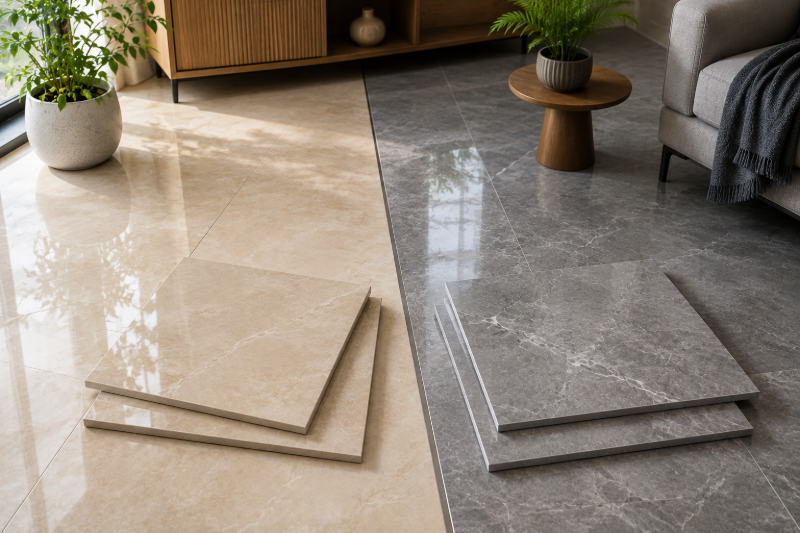
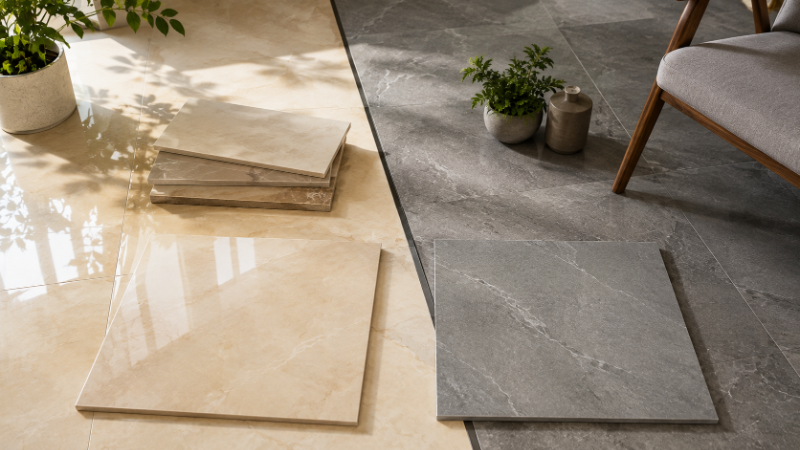
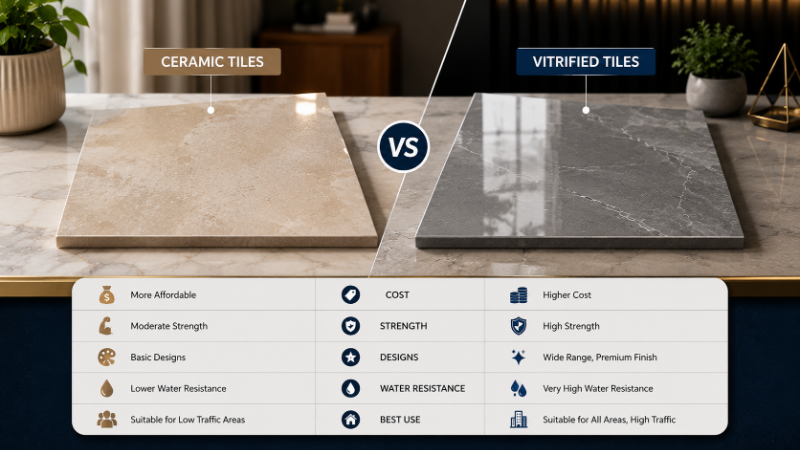
Ceramic tiles are made from clay that is shaped and then fired in a kiln at high temperatures. Vitrified tiles, on the other hand, are manufactured by mixing clay with silica and feldspar, then firing them at even higher temperatures. This process creates a non-porous surface that is more resistant to water and stains. The manufacturing difference directly impacts the cost and performance characteristics of each tile type.
Build cost · Bengaluru, May 2026
Cost Comparison: Ceramic vs Vitrified Tiles in India
Per Square Foot Pricing
In the Indian market, the cost difference between ceramic and vitrified tiles is significant. As of 2024, ceramic tiles typically range from ₹40 to ₹100 per square foot for standard quality tiles, depending on the design and brand. Budget ceramic tiles from local manufacturers can go as low as ₹25-₹40 per square foot, while premium branded ceramic tiles may reach ₹120-₹150 per square foot.
Vitrified tiles, being more durable and water-resistant, command a higher price point. Standard vitrified tiles range from ₹60 to ₹150 per square foot, with premium options extending up to ₹200-₹300 per square foot. High-end vitrified tiles from established brands like Kajaria, Asian Paints, or Somany can cost even more, particularly for large format tiles or designer collections.
For a typical 1000 square foot apartment in cities like Bangalore, Mumbai, or Delhi, the material cost difference alone can be substantial. Using ceramic tiles would cost approximately ₹40,000 to ₹1,00,000, while vitrified tiles would require ₹60,000 to ₹3,00,000, depending on the quality selected.
Regional Price Variations
The cost of tiles varies significantly across Indian cities due to transportation, local demand, and availability. In metropolitan areas like Mumbai and Delhi, both ceramic and vitrified tiles tend to be slightly more expensive due to higher real estate costs and demand. In tier-2 cities like Pune, Hyderabad, and Ahmedabad, you might find 10-15% lower prices. Smaller towns and cities may offer even better deals on ceramic tiles, though the vitrified tile market remains relatively consistent across regions.
Frequently asked
Installation Labor Costs
Ceramic Tile Installation
The installation of ceramic tiles is relatively straightforward, which often translates to lower labor costs. In Indian metros, ceramic tile installation typically costs between ₹20 to ₹50 per square foot, depending on the complexity of the design and the skill level of the mason. Simple layouts with standard tiles fall on the lower end, while intricate patterns or mosaic designs cost more.
For a 1000 square foot space, you can expect to pay ₹20,000 to ₹50,000 for ceramic tile installation labor alone. In smaller cities, these costs might be 20-30% lower, ranging from ₹15 to ₹35 per square foot.
Vitrified Tile Installation
Vitrified tiles, being harder and more brittle, require more skilled labor for installation. Masons need to be careful during cutting and placement to avoid breakage. This increased skill requirement typically results in higher labor costs: ₹30 to ₹70 per square foot in metropolitan areas. The same 1000 square foot space would cost ₹30,000 to ₹70,000 for labor.
The difference in installation cost stems from several factors: vitrified tiles are harder to cut, require more precise leveling, and demand better grouting techniques to prevent water seepage. Finding experienced masons who specialize in vitrified tile installation is crucial, and they often command premium wages.
Additional Installation Costs
Both tile types require proper surface preparation, which adds to the overall cost. Leveling compounds, primer, and adhesives typically cost ₹500 to ₹1500 per 100 square feet. Grouting materials for ceramic tiles cost around ₹200-₹400 per 100 square feet, while vitrified tiles require better quality grout, which can cost ₹300-₹600 per 100 square feet.
Material Quality and Durability Impact on Total Cost
Ceramic Tile Lifespan and Maintenance
Ceramic tiles typically last 10-15 years with proper maintenance in high-traffic areas, though they can last longer in low-traffic zones. However, they are porous and prone to staining, water absorption, and chipping. This means you'll likely need to replace them sooner, especially in kitchens and bathrooms where moisture and spills are common.
The maintenance costs for ceramic tiles include regular sealing (₹2-₹5 per square foot every 2-3 years), periodic cleaning with specialized products (₹500-₹2000 per application), and replacement of damaged tiles (₹50-₹200 per tile plus labor). Over a 20-year period, maintenance costs can accumulate to ₹20,000-₹50,000 for a 1000 square foot space.
Vitrified Tile Longevity and Maintenance
Vitrified tiles are non-porous and can last 20-30 years or even longer with minimal maintenance. They resist water absorption, staining, and are less prone to chipping compared to ceramic tiles. This durability significantly reduces long-term maintenance expenses.
Vitrified tiles require minimal maintenance—primarily regular sweeping and occasional mopping with mild detergent. No sealing is necessary, and they don't require specialized cleaning products. Occasional tile replacement due to damage might cost ₹100-₹300 per tile plus labor, but this is infrequent. Over a 20-year period, maintenance costs typically range from ₹5,000-₹15,000 for a 1000 square foot space.
Total Cost of Ownership: 20-Year Analysis
Ceramic Tile Investment
Let's calculate the total cost of ownership for ceramic tiles in a 1000 square foot residential space over 20 years:
Material cost: ₹40,000-₹1,00,000
Installation labor: ₹20,000-₹50,000
Additional installation materials: ₹5,000-₹15,000
Maintenance over 20 years: ₹20,000-₹50,000
Replacement (estimated once in 20 years): ₹40,000-₹1,00,000
Total: ₹1,25,000-₹3,15,000
Vitrified Tile Investment
For the same 1000 square foot space with vitrified tiles:
Material cost: ₹60,000-₹3,00,000
Installation labor: ₹30,000-₹70,000
Additional installation materials: ₹7,500-₹20,000
Maintenance over 20 years: ₹5,000-₹15,000
Replacement (minimal, estimated once in 30 years): ₹10,000-₹30,000
Total: ₹1,12,500-₹4,35,000
While the initial investment in vitrified tiles appears higher, when you factor in durability and minimal maintenance, the cost per year can be comparable or even lower than ceramic tiles, especially over extended periods.
Application-Specific Cost Considerations
Kitchen Flooring
For kitchen applications, vitrified tiles are often the better investment despite higher upfront costs. Kitchens experience frequent spills, moisture, and heat exposure. Ceramic tiles in kitchens typically need replacement every 8-12 years, while vitrified tiles can last 25+ years. The material cost difference of ₹20-₹100 per square foot is quickly offset by avoiding premature replacement.
Bathroom Flooring
Bathrooms are moisture-intensive environments where ceramic tiles' porosity becomes a significant drawback. Vitrified tiles' water resistance makes them ideal for bathrooms, reducing the risk of mold, mildew, and water damage. While the initial cost is higher, the long-term savings in maintenance and replacement make vitrified tiles more economical for bathroom applications.
Living Room and Bedroom Flooring
In low-moisture areas like living rooms and bedrooms, ceramic tiles can be a cost-effective choice. These spaces don't require the same level of water resistance, and ceramic tiles perform adequately. The cost savings can be significant, making ceramic tiles suitable for budget-conscious homeowners focusing on these areas.
Quality Grades and Their Impact on Pricing
Ceramic Tile Grades
Ceramic tiles are classified into different grades based on water absorption and durability. Grade A (vitreous) ceramic tiles have less than 0.5% water absorption and cost ₹60-₹100 per square foot. Grade B (semi-vitreous) tiles absorb 0.5-3% water and cost ₹40-₹70 per square foot. Grade C (non-vitreous) tiles absorb 3-7% water and cost ₹25-₹50 per square foot. Grade D tiles absorb more than 7% water and are rarely used for flooring in India.
Vitrified Tile Grades
Vitrified tiles typically have water absorption below 0.5%, making them consistently high-quality. However, pricing varies based on finish, size, and brand reputation. Standard vitrified tiles cost ₹60-₹120 per square foot, while premium polished or designer vitrified tiles range from ₹150-₹300 per square foot.
Finding the Right Professionals for Installation
The quality of installation significantly impacts the longevity and appearance of your tiles. Whether you choose ceramic or vitrified tiles, working with experienced professionals is essential. On AECORD, India's leading B2B2C marketplace for AECO professionals, you can find vetted masons, tile contractors, and installation specialists in your city. These professionals can provide accurate quotes, handle proper surface preparation, and ensure quality installation that maximizes your tile investment.
When sourcing professionals through AECORD, you can compare quotes from multiple contractors, read reviews from previous clients, and select specialists who have experience with your specific tile type and application. This transparency helps ensure you're getting fair pricing and quality workmanship.
Return on Investment (ROI) Considerations
Resale Value Impact
High-quality vitrified tile flooring can positively impact your property's resale value, particularly in metropolitan areas like Bangalore, Mumbai, and Delhi where buyers prioritize durability and low maintenance. Properties with well-maintained vitrified tile flooring often command 2-5% higher prices compared to similar properties with ceramic tiles.
Cost-Benefit Analysis by Location
In high-humidity areas like coastal cities (Mumbai, Goa) or regions with heavy monsoons, vitrified tiles provide better ROI due to their water resistance. In drier regions like Delhi or Jaipur, the ROI difference is less pronounced, making ceramic tiles a more viable budget option.
Making Your Decision: Key Takeaways
The cost difference between ceramic and vitrified tiles extends far beyond the initial material and installation expenses. While ceramic tiles are cheaper upfront (₹25-₹100 per square foot), vitrified tiles (₹60-₹150 per square foot) offer superior durability, lower maintenance costs, and longer lifespan, making them more economical over 20+ years, especially in moisture-prone areas.
For budget-conscious homeowners, ceramic tiles remain an option for low-traffic, dry areas. However, for kitchens, bathrooms, and high-traffic zones, vitrified tiles provide better long-term value despite higher initial costs. The decision ultimately depends on your budget, the specific application, climate conditions in your location, and how long you plan to keep the property.
Get Expert Guidance on AECORD
Making the right choice between ceramic and vitrified tiles requires understanding your specific needs and local market conditions. On AECORD, you can connect with experienced tile contractors, architects, and interior designers who can assess your project requirements and provide personalized recommendations. Whether you're renovating a single bathroom in Bangalore or planning a complete flooring overhaul for your Mumbai apartment, AECORD's network of verified professionals can help you find the best solution within your budget.
Browse through AECORD's marketplace to compare professionals, view their portfolios, and get detailed quotes for your tile installation project. Make an informed decision today and invest in flooring that matches both your budget and long-term needs.