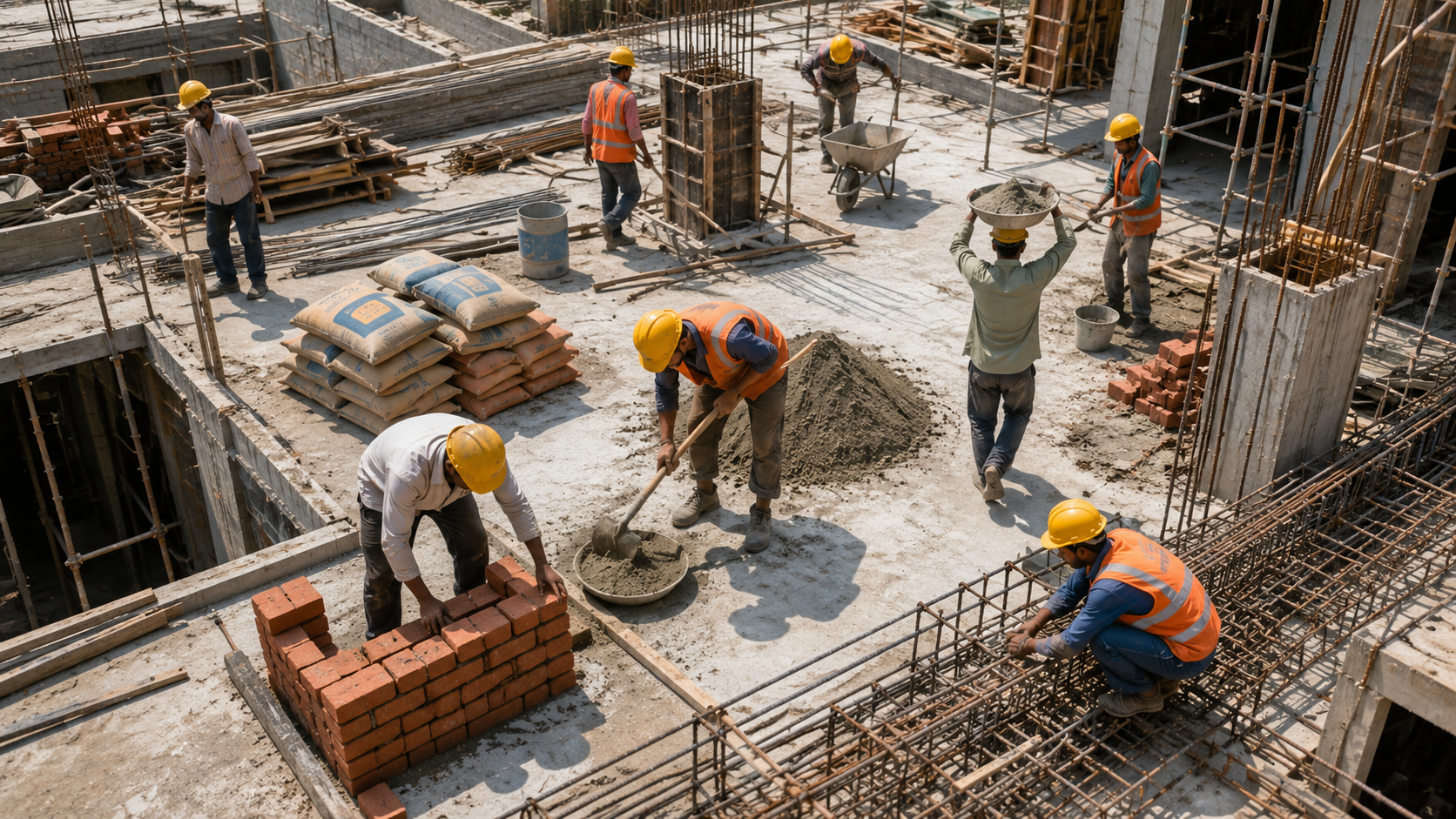


Accurate material estimation is one of the most critical aspects of construction project planning. Whether you're managing a small residential renovation in Bangalore or overseeing a large commercial development in Mumbai, calculating the right quantities of construction materials can make the difference between project success and costly overruns. This comprehensive guide will help you master construction material calculations and optimise your project budgets.
Why Construction Material Calculation Matters
Construction material calculation is far more than just a formality—it's the foundation of effective project management. When you calculate materials accurately, you:
Control costs: Avoid wasteful overordering and reduce material expenses by 10-15%
Prevent delays: Ensure materials arrive when needed, keeping the project on schedule
Minimize waste: Reduce environmental impact and disposal costs
Improve cash flow: Better budget planning leads to more efficient financial management
Maintain quality: Having the right materials in the right quantities ensures consistent quality
In India's construction industry, where material costs typically account for 50-60% of total project expenses, precise calculations directly impact your bottom line. Whether you're working on a ₹50 lakh residential project or a multi-crore commercial development, the methodology remains the same—only the scale changes.
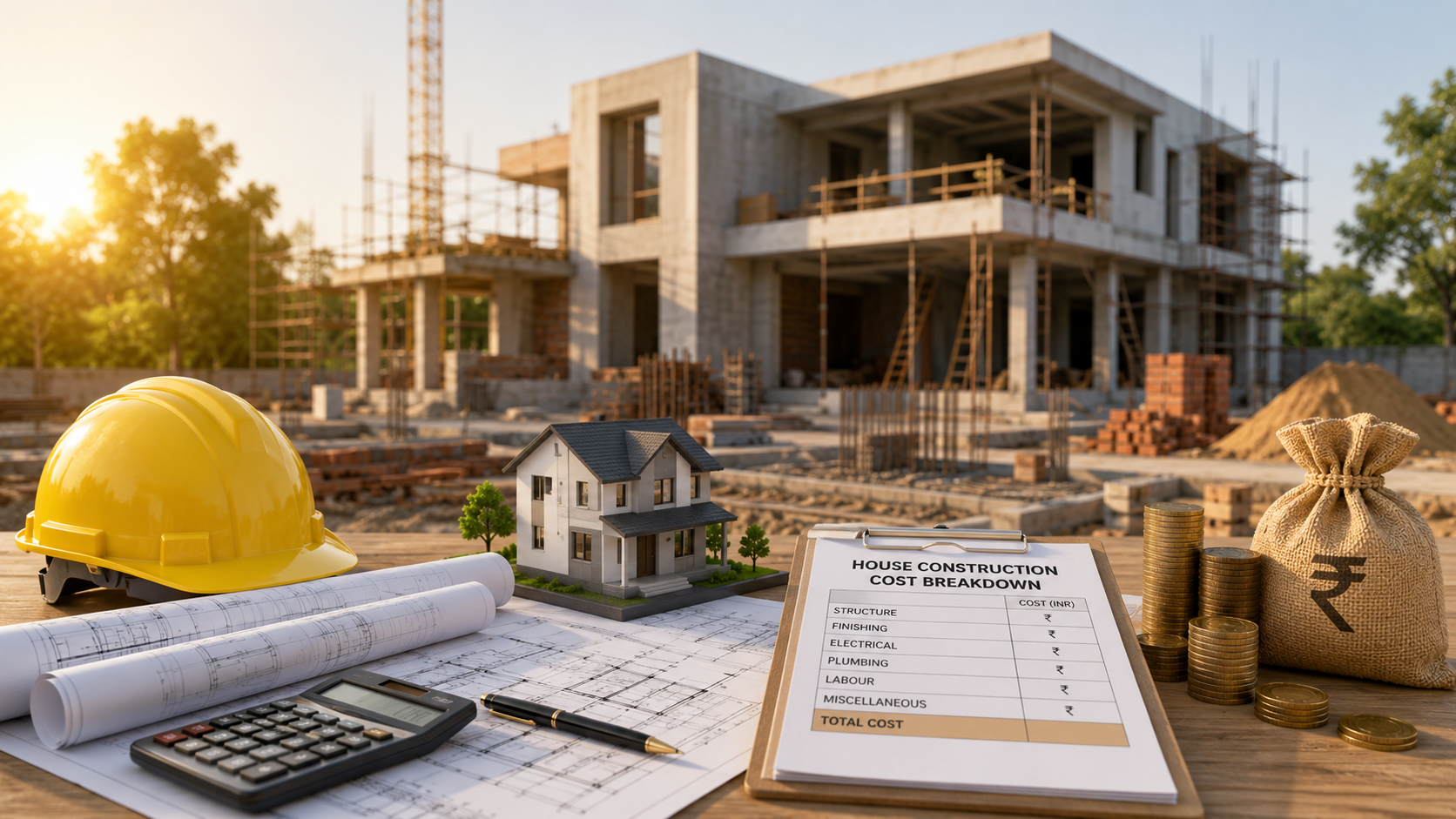
Build cost · Bengaluru, May 2026
Understanding Basic Construction Material Categories
Structural Materials
Structural materials form the backbone of any construction project. These include:
Cement: Usually calculated in bags (50 kg per bag is standard in India)
Sand: Measured in cubic meters or cubic feet
Aggregates: Coarse aggregates (20mm and 40mm) calculated by volume
Steel/Reinforcement: Calculated in kilograms or tonnes
Concrete: Measured in cubic meters (m³)
For a typical residential building in cities like Delhi, Pune, or Hyderabad, a 1000 sq ft apartment might require approximately 40-50 bags of cement, 8-10 cubic meters of sand, and 8-10 tonnes of steel reinforcement.
Finishing Materials
Finishing materials include everything that goes into the final aesthetic and functional aspects of a building:
Bricks or blocks (measured in numbers)
Tiles (measured in square meters or pieces)
Paint (measured in liters)
Plaster (calculated by volume)
Flooring materials
Doors and windows frames

Frequently asked
Step-by-Step Material Calculation Process
Step 1: Gather Essential Information
Before you start any calculations, collect the following information:
Complete architectural drawings and specifications
Detailed structural design plans
Site conditions and soil report (for foundation calculations)
Local building codes and regulations (varies by state in India)
Quality standards required (IS codes for Indian standards)
Wastage allowance (typically 5-10% for most materials)
Step 2: Break Down the Project into Sections
Divide your project into manageable sections:
Foundation and basement
Structural frame (columns, beams, slabs)
Walls and partitions
Flooring
Roofing
Finishing and painting
Utilities (plumbing, electrical, HVAC)
This systematic approach ensures you don't miss any critical materials and makes the calculation process more manageable.
Step 3: Calculate Concrete Requirements
Concrete is typically the largest material component in structural projects. Calculate it using this formula:
Volume of Concrete = Length × Width × Depth (in meters)
For example, if you're pouring a concrete slab for a 100 sq meter floor with 150mm (0.15m) thickness:
Volume = 100 × 0.15 = 15 cubic meters
For a standard concrete mix ratio of 1:1.5:3 (cement:sand:aggregate), you would need:
Cement: 15 × 400 kg = 6,000 kg = 120 bags (50 kg bags)
Sand: 15 × 0.55 = 8.25 cubic meters
Coarse aggregate: 15 × 1.1 = 16.5 cubic meters
Water: 15 × 200 liters = 3,000 liters
These calculations follow Indian Standard IS 456:2000 specifications.
Step 4: Calculate Brick and Block Requirements
For masonry work, you need to calculate the total wall area first:
Number of Bricks = (Wall Length × Wall Height) / (Brick Length × Brick Height) + 10% (for wastage)
Standard Indian brick dimensions are 190mm × 90mm × 90mm. For a wall 10 meters long and 3 meters high:
Number of bricks = (10 × 3) / (0.19 × 0.09) × 1.10 = approximately 1,935 bricks
For cement mortar in brickwork, assume 0.3 cubic meters of mortar per 1,000 bricks.
Step 5: Calculate Steel Reinforcement
Steel quantity depends on the structural design and loading conditions. Calculate using:
Steel Quantity = (Steel Area / 100) × Volume of Concrete × Density
Typical steel percentages in Indian construction:
Columns: 1.5-2.5% of concrete volume
Beams: 0.8-1.5% of concrete volume
Slabs: 0.3-0.5% of concrete volume
For a 15 cubic meter slab with 0.4% steel requirement: 15 × 0.4 / 100 × 7,850 kg/m³ = approximately 4.7 tonnes
Step 6: Calculate Finishing Materials
Plaster: For internal plaster (12mm thick), calculate the plastered wall area and multiply by 0.012 cubic meters per square meter. Add 15-20% wastage.
Paint: One liter of paint typically covers 10-12 square meters with one coat. For two coats, calculate accordingly. Budget ₹200-500 per liter depending on quality.
Tiles: Tile requirements = Total area / (Tile length × Tile width). Standard Indian tiles are 300×300mm or 600×600mm. Add 5-10% for cutting and breakage.
Using Technology for Material Calculations
Digital Tools and Software
Modern construction projects benefit significantly from digital calculation tools. Popular options include:
BIM Software: Revit and ArchiCAD provide automated material takeoffs
Spreadsheet Tools: Excel templates for standard calculations
Online Calculators: Quick estimates for simple components
Project Management Software: Tools that integrate material calculations with scheduling and budgeting
When sourcing materials through AECORD, you can connect with suppliers who can provide accurate pricing based on your calculated quantities, ensuring competitive bids and transparent costing.
Regional Variations in Material Calculations
Climate Considerations
India's diverse climate zones affect material requirements:
Coastal areas (Mumbai, Kochi): Require higher cement grades (43 grade or 53 grade) and corrosion-resistant steel due to salt spray
High rainfall zones (Goa, Kerala): Need additional waterproofing materials and increased concrete cover
Seismic zones (Kashmir, Northeast): Require higher steel percentages and specialized reinforcement patterns
Hot and dry regions (Rajasthan, Gujarat): May need additional water for curing and heat-resistant finishing materials
Local Building Codes
Different states in India have varying building codes. Always consult:
National Building Code (NBC) of India
State-specific building regulations
Municipal corporation guidelines for your city
Fire and safety regulations
Accounting for Wastage and Contingencies
No construction project uses exactly 100% of ordered materials. Industry-standard wastage allowances include:
Cement and concrete: 5-8%
Sand and aggregates: 8-10%
Bricks: 8-12%
Steel: 5-8%
Tiles: 10-15%
Paint and finishes: 10-15%
Always add these percentages to your base calculations. For a ₹1 crore project, proper wastage accounting can save ₹5-10 lakhs.
Cost Estimation Based on Material Calculations
Current Market Rates in India (2026)
Material costs vary significantly by location and supplier. Approximate rates include:
Cement (50 kg bag): ₹350-450 (varies by grade and region)
Sand (per cubic meter): ₹400-800
Coarse aggregate (per cubic meter): ₹600-1,200
Steel (per tonne): ₹50,000-65,000
Bricks (per 1,000): ₹3,000-6,000
Tiles (per square meter): ₹200-1,500 depending on quality
Paint (per liter): ₹200-800
These rates fluctuate based on market conditions, transportation costs, and regional availability. When you work with professionals through AECORD, you can access current local pricing and negotiate bulk discounts.
Common Calculation Mistakes to Avoid
Underestimating Material Quantities
Many project managers reduce calculated quantities to save costs initially, only to face shortages and delays later. Always use accurate calculations plus appropriate wastage percentages.
Ignoring Local Variations
Material specifications and availability differ across Indian cities. A supplier in Bangalore might recommend different cement grades than one in Delhi based on local climate and building codes.
Forgetting Hidden Materials
Don't overlook materials for:
Scaffolding and temporary structures
Curing compounds
Waterproofing membranes
Joint fillers and sealants
Fixing and fastening materials
Not Accounting for Quality Variations
Premium materials cost more but may reduce wastage and improve durability. Factor in the total cost of ownership, not just purchase price.

Best Practices for Material Management
Create detailed BOQs: Bill of Quantities should be itemized and specific
Get multiple quotes: Compare prices from at least 3-4 suppliers
Verify calculations: Have calculations reviewed by an independent professional
Plan delivery schedules: Coordinate material arrivals with construction phases
Maintain inventory: Track materials received against purchase orders
Document changes: Update calculations if design modifications occur
Monitor usage: Track actual material consumption versus estimates
Leveraging Professional Expertise
While this guide provides comprehensive information about construction material calculations, complex projects benefit from professional expertise. Structural engineers, quantity surveyors, and experienced contractors can refine calculations based on site-specific conditions and design nuances.
Finding qualified professionals for your material calculations and procurement is easier through AECORD, where you can connect with certified quantity surveyors, contractors, and material suppliers across India. AECORD's platform allows you to compare expertise, review portfolios, and get competitive bids from verified professionals.
Conclusion
Mastering construction material calculations is essential for anyone involved in building projects. Whether you're a homeowner planning a renovation, a contractor managing multiple projects, or a developer overseeing large-scale construction, accurate material estimation directly impacts your project's success and profitability.
The key is to follow a systematic approach, account for regional variations and wastage, use appropriate formulas and standards, and leverage technology where possible. By implementing the strategies outlined in this guide, you can significantly improve your project planning, reduce costs, minimize delays, and deliver better results.
Ready to get started on your next project? Connect with experienced quantity surveyors, contractors, and material suppliers on AECORD to ensure your material calculations are accurate and your procurement process is efficient. AECORD's verified professionals can help you optimize your material requirements and find the best deals in your region.
Visit AECORD today to find the right professionals for your construction material needs and take the first step toward a more efficiently managed project.