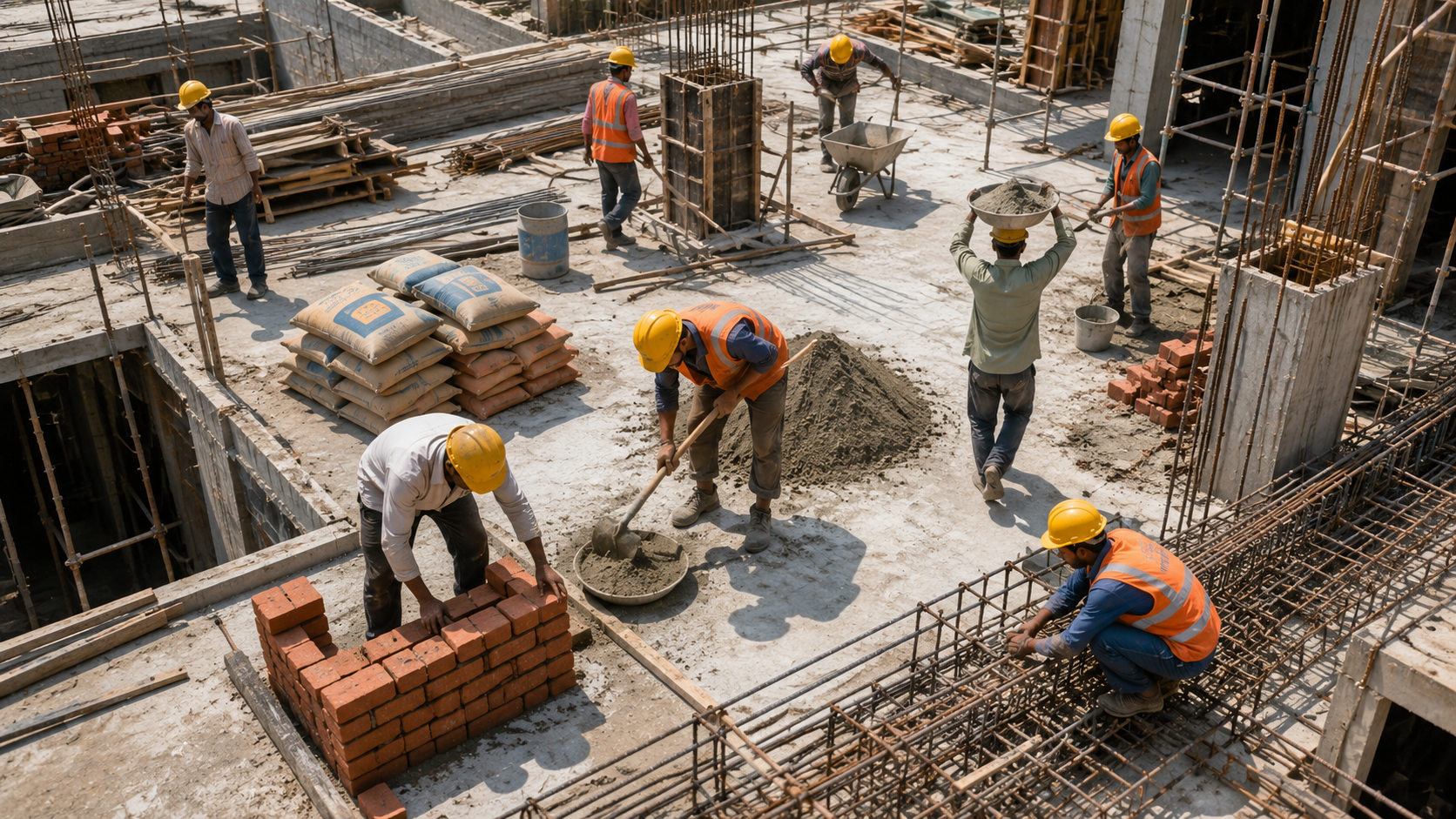


India's construction industry is booming, with the sector expected to grow at 7-8% annually over the next decade. However, this rapid expansion comes with a significant environmental cost: construction and demolition (C&D) waste. According to estimates, India generates over 500 million tonnes of C&D waste annually, with much of it ending up in landfills, consuming valuable land and creating environmental hazards. The challenge is particularly acute in metropolitan areas like Mumbai, Delhi, Bangalore, and Hyderabad, where urban redevelopment projects generate massive quantities of debris.
The good news is that construction waste is not a dead end—it's a valuable resource waiting to be recovered and reused. By implementing effective waste management strategies, construction professionals can reduce environmental impact, lower project costs, and contribute to India's sustainability goals. This comprehensive guide explores how the construction industry can transform building debris into reusable materials.
Understanding Construction and Demolition Waste in India
Construction and demolition waste encompasses all materials generated during building construction, renovation, and demolition activities. This includes concrete, bricks, steel, wood, glass, plastics, and other materials. In India, the composition of C&D waste varies depending on the project type and demolition methods used.
Build cost · Bengaluru, May 2026
Common Types of C&D Waste
Concrete and Rubble: The largest component, typically accounting for 60-70% of demolition waste
Bricks and Masonry: Approximately 20-30% of total waste volume
Wood: Usually 3-5% of waste, including timber and plywood
Metals: Steel, aluminum, and copper—often the most valuable materials for recovery
Glass and Ceramics: Windows, tiles, and sanitary ware
Hazardous Materials: Asbestos, lead paint, and other toxic substances requiring special handling
The challenge isn't just the volume—it's the current disposal practices. Many construction sites in Indian cities simply dump waste at unauthorized locations, creating environmental and public health problems. Proper waste management requires planning, segregation, and access to recycling facilities, which remain limited in many regions.
The Regulatory Framework for C&D Waste in India
India has established regulatory guidelines to manage construction waste more effectively. Understanding these requirements is essential for all construction professionals.
Key Regulations and Standards
The Ministry of Environment, Forest and Climate Change (MoEFCC) issued the Construction and Demolition Waste Management Rules in 2016, which were amended in 2023. These rules mandate:
Segregation of waste at the source into inert and non-inert categories
Authorization for waste processing facilities
Recycling and reuse targets for C&D waste
Penalties for non-compliance, ranging from ₹10,000 to ₹5 lakhs depending on the violation
Additionally, state-level regulations in Maharashtra, Karnataka, Delhi, and other states impose stricter requirements. For example, the Greater Mumbai Municipal Corporation (GMMC) requires construction contractors to deposit waste at designated processing centers, with disposal costs typically ranging from ₹200 to ₹500 per tonne, depending on the waste type and location.
The Indian Green Building Council (IGBC) and LEED certification programs also incentivize waste reduction and material recovery, making sustainable waste management a competitive advantage for construction firms.
Frequently asked
Waste Segregation: The First Step to Recovery
Effective waste segregation is the foundation of any successful C&D waste management program. Segregating waste at the source—rather than at the landfill—dramatically improves recovery rates and reduces processing costs.
Best Practices for On-Site Segregation
Construction professionals should implement a three-bin system on site:
Inert Waste Bin: Concrete, bricks, tiles, and stone—materials that don't decompose
Non-Inert Waste Bin: Wood, plastic, metal, and other degradable materials
Hazardous Waste Bin: Asbestos, lead paint, batteries, and chemical containers requiring special disposal
Clear signage, worker training, and regular monitoring ensure compliance. Many construction sites in Bangalore and Pune have successfully implemented digital tracking systems where waste is weighed and categorized daily, providing real-time data on waste generation rates.
The cost of implementing proper segregation infrastructure typically ranges from ₹1,000 to ₹5,000 per site, depending on project size. However, this investment often recovers itself through reduced disposal fees and recovered material value.
Concrete Recycling: Converting Rubble into Aggregate
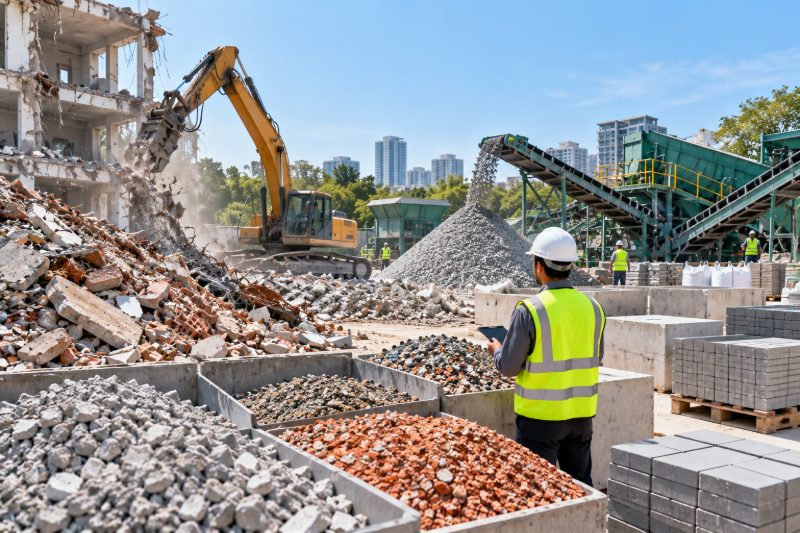
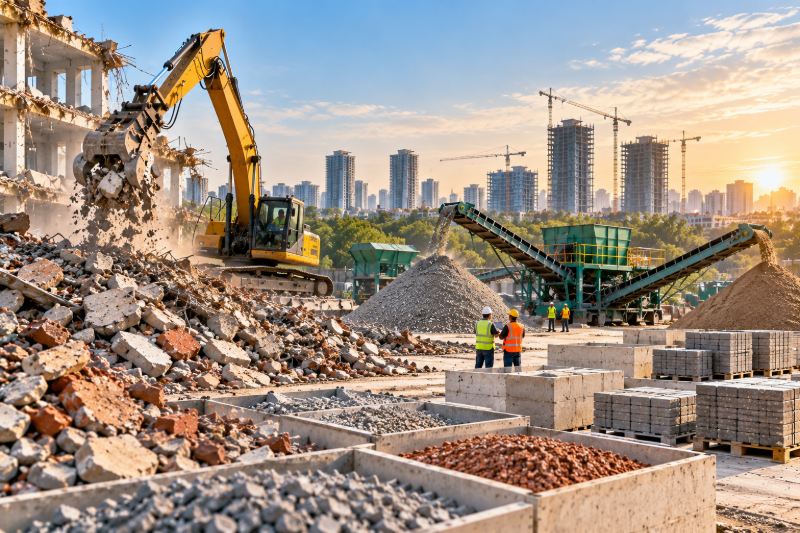
Concrete represents the largest portion of C&D waste in India. Rather than disposing of concrete rubble in landfills, it can be crushed and processed into recycled aggregate for use in new construction projects.
Concrete Recycling Process
The recycling process involves:
Collection and Sorting: Separating concrete from other materials and removing contaminants like steel reinforcement and wood
Crushing: Using industrial crushers to break concrete into smaller pieces, typically 20-40mm in size
Screening: Separating material by size to produce different aggregate grades
Quality Testing: Ensuring recycled aggregate meets Indian Standards (IS 2386 and IS 383)
Recycled concrete aggregate (RCA) can be used in:
New concrete mixes (typically 20-50% replacement of virgin aggregate)
Road base and sub-base layers
Pavement construction
Landscaping and fill applications
In Delhi and NCR region, recycled aggregate typically costs ₹600-₹1,200 per tonne, compared to ₹1,500-₹2,500 for virgin aggregate. This 40-50% cost saving makes recycled concrete economically attractive for developers.
Challenges in Concrete Recycling
Despite the benefits, several barriers limit concrete recycling in India:
Limited Processing Capacity: Few certified C&D waste processing facilities exist outside major cities
Quality Concerns: Some engineers remain hesitant about structural applications of RCA, though technical standards now support its use
Transportation Costs: Recycling facilities are often far from construction sites, making logistics expensive
Regulatory Gaps: Inconsistent enforcement of segregation requirements across different states
Forward-thinking developers in Hyderabad and Mumbai are addressing these challenges by establishing on-site concrete crushing units for large projects, recovering materials for reuse within the same development.
Brick and Masonry Waste Recovery
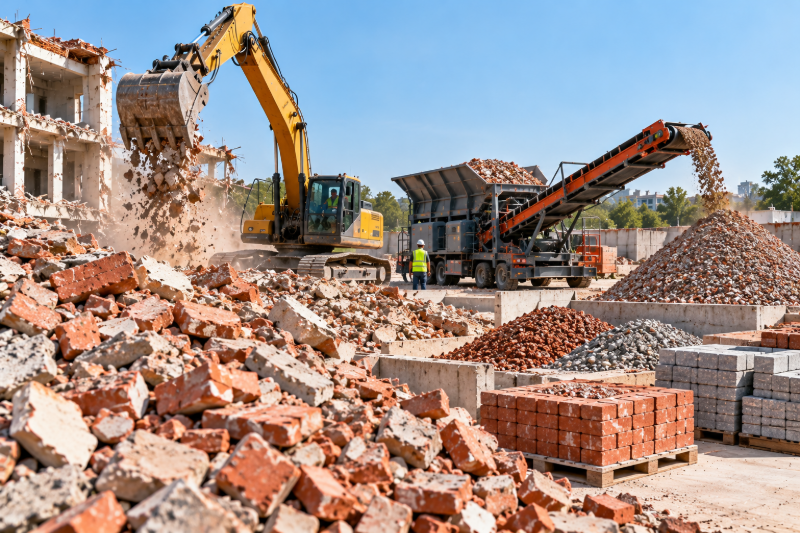
Bricks and masonry materials account for a significant portion of demolition waste, and unlike concrete, individual bricks can often be salvaged and reused directly.
Salvage and Reuse of Bricks
Bricks from demolished structures can be:
Cleaned and Reused: Salvaged bricks are manually cleaned using wire brushes or water jets, then sorted by quality. These can be reused in new construction at a fraction of the cost of new bricks (approximately ₹2-₹4 per brick versus ₹5-₹8 for new bricks)
Crushed for Aggregate: Damaged bricks are crushed to produce brick aggregate for concrete or road construction
Processed into New Products: Brick dust can be used in cement production or as a pozzolanic material
Several NGOs and social enterprises in Kolkata and Chennai have developed brick salvage programs that employ workers to dismantle buildings carefully, recovering bricks for reuse. These initiatives create employment while reducing waste—a win-win for communities.
Economic and Environmental Benefits
Reusing salvaged bricks reduces:
Raw material extraction from clay pits
Energy consumption in brick manufacturing (brick production is energy-intensive, consuming approximately 1-2 MJ per brick)
Project costs by 30-40% for brick materials
Transportation emissions compared to virgin brick production
Metal Recovery and Recycling
Metals are the most economically valuable component of C&D waste, making them a priority for recovery operations.
Types of Metals Recovered
Construction sites generate various metals:
Steel Reinforcement: The most abundant metal in C&D waste, worth ₹35,000-₹45,000 per tonne (current market rates)
Structural Steel: Beams, columns, and other structural elements
Aluminum: Window frames, doors, and cladding materials—worth ₹120,000-₹160,000 per tonne
Copper: Electrical wiring and plumbing—worth ₹600,000-₹750,000 per tonne
Metal recovery is often handled by specialized contractors who use cutting torches, shears, and magnets to separate and sort materials. The recovered metals are then sold to recycling mills, creating a circular economy.
Metal Recycling Economics
For a typical 10,000 square meter commercial demolition project in Bangalore, metal recovery can generate ₹8-₹15 lakhs in revenue. This incentive often makes metal recovery self-financing, with contractors covering their operational costs from the material value recovered.

Wood and Timber Waste Management
Wood represents 3-5% of C&D waste but offers significant reuse potential.
Reuse and Recycling Options
Timber Reuse: Salvaged wood in good condition can be repurposed for furniture, interior elements, or structural applications in new buildings
Engineered Wood Products: Lower-grade wood can be processed into particleboard, MDF, or wood composite materials
Biomass Energy: Untreated wood waste can be used in biomass power plants or as fuel for industrial processes
Mulch and Landscaping: Wood chips are valuable for landscaping and erosion control
Treated wood containing preservatives or paint must be handled separately, as burning or reusing it poses health risks. Proper identification and segregation of treated versus untreated wood is essential.
Establishing an Effective C&D Waste Management Program
Construction professionals looking to implement sustainable waste management should follow a structured approach.
Step 1: Planning and Assessment
Before construction begins, conduct a waste audit to estimate quantities and types of waste. Identify local recycling facilities and establish partnerships with certified waste processors. Budget for waste management—typically 2-5% of project costs.
Step 2: Design for Waste Reduction
Incorporate waste minimization into project design:
Optimize material specifications to reduce waste
Design for deconstruction rather than demolition, allowing materials to be salvaged
Use prefabrication and modular components to reduce on-site waste
Step 3: Implementation and Monitoring
Establish clear waste management protocols:
Train workers on segregation requirements
Conduct regular site inspections
Maintain detailed waste disposal records
Track waste volumes and recycling rates
Step 4: Leverage Technology
Digital tools can streamline waste management. Mobile apps, IoT sensors, and data analytics platforms help monitor waste generation, track material recovery, and ensure regulatory compliance. Several startups in India are developing C&D waste management software tailored to the Indian market.
The Role of AECORD in Sustainable Construction Practices
Finding the right waste management partners is crucial for project success. AECORD, India's leading B2B2C marketplace for AECO professionals, connects construction firms with certified waste management contractors, recycling facilities, and material recovery specialists across the country. Whether you need a waste auditor in Mumbai, a concrete recycling partner in Pune, or a metal recovery contractor in Hyderabad, AECORD helps you find qualified professionals who understand local regulations and market conditions.
By using AECORD to identify experienced waste management partners, construction professionals can ensure compliance, optimize costs, and achieve sustainability targets. The platform's verified contractor network includes specialists in all aspects of C&D waste management, from initial segregation to final material recovery.
Challenges and Future Outlook
Despite regulatory requirements and economic incentives, C&D waste management in India faces several challenges:
Infrastructure Gap: Processing capacity remains insufficient in many states, with only 150-200 authorized facilities nationwide
Awareness Deficit: Many small and medium-sized contractors lack knowledge of waste management best practices
Cost Barriers: Initial investments in segregation and processing infrastructure can be substantial
Inconsistent Enforcement: Regulatory compliance varies significantly across different municipalities
However, the outlook is improving. Investment in waste processing infrastructure is increasing, with government incentives supporting facility development. Technological innovations—including AI-powered sorting systems and blockchain-based waste tracking—are making management more efficient. Additionally, growing demand from developers pursuing green building certifications is creating market pull for recycled materials.
Key Takeaways for Construction Professionals
Construction and demolition waste represents both a challenge and an opportunity for India's building industry:
Segregation is Essential: Proper waste segregation at the source is the foundation of effective recycling and recovery
Economic Value Exists: Recovered materials—particularly metals and concrete aggregate—have genuine market value that can offset management costs
Regulations are Tightening: Compliance with C&D waste rules is increasingly important, with penalties for non-compliance escalating
Sustainability is Competitive: Projects demonstrating strong waste management practices attract environmentally conscious clients and may achieve green building certifications
Partnerships Matter: Collaborating with certified waste processors and material recovery specialists ensures quality and compliance
As India's construction sector continues its rapid growth, the management of building debris will become increasingly critical. By adopting comprehensive waste management strategies, construction professionals can reduce environmental impact, improve project economics, and contribute to a more sustainable built environment.
Ready to implement sustainable C&D waste management on your next project? Connect with certified waste management professionals on AECORD. Browse verified contractors specializing in waste segregation, material recovery, and recycling across major Indian cities. Whether you're planning a large demolition project in Delhi, a major renovation in Bangalore, or a new construction development in Hyderabad, AECORD's network of experts can help you achieve your sustainability goals while ensuring regulatory compliance and cost efficiency. Visit AECORD today to find the right waste management partner for your project.
Frequently Asked Questions
How much construction and demolition waste does India generate annually?
India generates over 500 million tonnes of construction and demolition (C&D) waste annually, with much of it currently ending up in landfills. This waste is particularly acute in metropolitan areas like Mumbai, Delhi, Bangalore, and Hyderabad, where urban redevelopment projects generate massive quantities of debris.
What are the main types of construction and demolition waste?
C&D waste primarily consists of concrete and rubble (60-70%), bricks and masonry (20-30%), metals like steel and copper, wood (3-5%), glass and ceramics, and hazardous materials like asbestos and lead paint. The composition varies depending on the project type and demolition methods used.
What are India's regulations for construction waste management?
The Ministry of Environment, Forest and Climate Change issued the Construction and Demolition Waste Management Rules in 2016 (amended in 2023), which mandate waste segregation at source, authorization for processing facilities, and recycling targets. Penalties for non-compliance range from ₹10,000 to ₹5 lakhs, with additional state-level regulations in major cities.
What is the cost of disposing construction waste in India?
Disposal costs for C&D waste typically range from ₹200 to ₹500 per tonne, depending on the waste type and location. For example, the Greater Mumbai Municipal Corporation requires contractors to deposit waste at designated processing centers with these varying rates.
Why is waste segregation important in construction projects?
Waste segregation is the foundation of successful C&D waste management, allowing materials to be properly categorized into inert and non-inert categories for appropriate recycling and reuse. This practice is mandated by Indian regulations and enables the recovery of valuable materials while reducing environmental impact and project costs.