

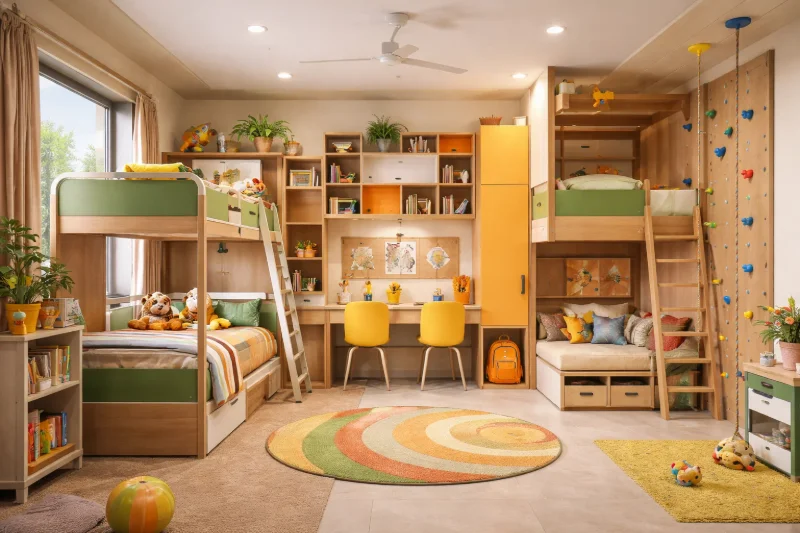
Children's Room Design Ideas for India 2026: Creating Functional and Inspiring Spaces
Designing a child's room is one of the most exciting yet challenging aspects of home planning. In India, where space is often at a premium and climate considerations are crucial, creating a well-designed children's room requires thoughtful planning and creative solutions. Whether you're designing a nursery for a newborn or a study space for a teenager, this comprehensive guide will help you navigate the latest trends and practical considerations for children's room design in 2026.
Build cost · Bengaluru, May 2026
Understanding the Fundamentals of Children's Room Design
A well-designed children's room serves multiple purposes: it's a place for sleep, play, learning, and creative expression. In India's diverse climate zones—from the humid coastal regions of Mumbai and Chennai to the dry heat of Delhi and Jaipur—your design choices must account for local environmental factors. The ideal children's room balances functionality with safety, aesthetics with practicality, and personal expression with age-appropriate design.
When planning your child's room, consider the following key factors: available space (whether you're working with 100 sq ft in Mumbai or 200 sq ft in Bangalore), natural light availability, ventilation requirements, and your budget. Most Indian homes allocate between ₹1,50,000 to ₹4,00,000 for a complete children's room makeover, depending on the size and customization level.
Space-Saving Solutions for Urban Indian Homes
Multi-Functional Furniture Arrangements
In Indian cities like Delhi, Mumbai, and Bangalore, where residential space is expensive, multi-functional furniture has become essential. Consider investing in:
Loft beds with study desks underneath – These save approximately 40% of floor space while creating separate zones for sleeping and studying
Storage ottomans that double as seating – Perfect for storing toys while maintaining a clean aesthetic
Wall-mounted desks and shelving – Utilize vertical space to maximize usable floor area
Trundle beds – Ideal for accommodating guests or siblings without requiring additional floor space
Corner nooks with built-in storage – Transform unused corners into functional play or reading areas
When selecting furniture, prioritize pieces that can grow with your child. Adjustable desks and expandable storage solutions offer better long-term value than single-purpose items. Many interior designers on AECORD specialize in creating space-efficient designs specifically tailored to Indian apartment dimensions and layouts.
Frequently asked
Vertical Storage Solutions
Maximizing wall space is crucial in Indian homes. Install floor-to-ceiling shelving units that can accommodate books, toys, and decorative items. Pegboards are particularly popular in 2026 for their flexibility and aesthetic appeal—they allow children to organize their own items and can be easily reconfigured as their needs change. Wall-mounted storage baskets in natural materials like jute or bamboo add visual warmth while keeping clutter organized.
Color Schemes and Psychological Impact
Trending Color Palettes for 2026
Color psychology plays a significant role in children's room design. In 2026, we're moving away from overly bright, saturated colors toward more sophisticated, calming palettes that support both play and rest:
Soft sage green – Promotes calmness and creativity; pairs well with natural wood elements
Warm terracotta and ochre – Inspired by Indian architectural traditions; creates a grounded, welcoming atmosphere
Soft blues and grays – Excellent for promoting relaxation and focus during study time
Warm neutrals with accent colors – Cream, beige, and soft taupe as base colors with pops of color through accessories
Rather than painting entire walls in bold colors, consider using accent walls or colorful wallpapers in specific zones. This approach allows for easier updates as your child's preferences evolve. In India's climate, lighter colors also help reflect heat, keeping the room naturally cooler during hot months.
Regional Inspiration and Cultural Elements
Incorporating Indian design elements adds cultural richness to a child's room. Consider traditional patterns like:
Madhubani art-inspired wall murals
Rajasthani block prints on fabric or wallpaper
Warli art designs as wall stencils
Traditional Indian textile patterns on cushions and bedding
These elements can be introduced subtly through artwork, textiles, and decorative pieces, creating a space that celebrates Indian heritage while remaining modern and functional.
Lighting Design for Different Activities
Layered Lighting Approach
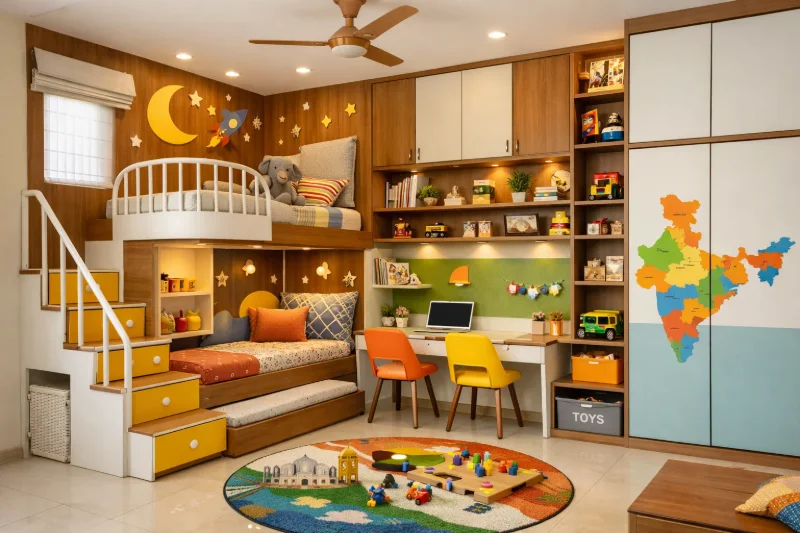
Proper lighting is essential for a child's room, supporting various activities from play to study to sleep. Implement a three-layer lighting system:
Ambient lighting – Soft overhead lights or ceiling fixtures that provide general illumination. In Indian homes, consider ceiling fans with integrated LED lights for dual functionality and energy efficiency
Task lighting – Focused lighting at the study desk, typically requiring 500-750 lux for reading and homework. Adjustable desk lamps with warm LED bulbs reduce eye strain
Accent lighting – Bedside lamps, string lights, or wall sconces that create a cozy atmosphere for bedtime
Given India's power consumption concerns, LED lighting is highly recommended. Modern LED fixtures consume 75% less energy than traditional bulbs while providing better light quality. Smart lighting systems that adjust color temperature throughout the day are becoming increasingly popular, supporting healthy sleep-wake cycles.
Natural Light Optimization
Maximize natural light through strategic window treatments. Use light-filtering curtains or roller blinds that allow diffused natural light during the day while maintaining privacy and controlling heat. In hot climates like Hyderabad or Pune, consider external shading solutions like solar screens that reduce heat gain by up to 40% while maintaining visibility.
Climate-Appropriate Design Considerations
Managing Heat and Humidity
India's diverse climate zones require tailored design approaches. For hot, humid regions (coastal cities like Mumbai, Kochi, or Goa):
Use breathable, natural fabrics like cotton and linen for bedding and curtains
Install ceiling fans with proper air circulation
Choose light-colored, moisture-resistant wall finishes
Avoid heavy, dark-colored furniture that absorbs heat
Ensure adequate ventilation through windows and air vents
For cooler regions (hill stations and northern plains), focus on:
Thermal insulation through proper window treatments
Warm color palettes and textured materials
Adequate artificial heating options
Carpeting or thick rugs for warmth and comfort
Moisture and Mold Prevention
In humid Indian climates, moisture management is critical. Use:
Moisture-resistant paints and finishes
Proper ventilation systems or exhaust fans
Dehumidifiers in extremely humid areas
Mold-resistant materials for storage areas
Safety Considerations and Compliance
Essential Safety Features
Child safety should be paramount in room design. Ensure compliance with Indian safety standards:
Window safety – Install safety grilles or bars on windows above the ground floor, as required by Indian building codes
Electrical safety – Use child-proof outlets, ensure all electrical installations comply with Indian Standards (IS 1293), and keep cords out of reach
Furniture stability – Secure heavy furniture to walls to prevent tip-over accidents
Non-toxic materials – Choose furniture and paints with low VOC (Volatile Organic Compounds) emissions
Rounded corners and edges – Select furniture with safety-approved rounded edges
Flooring – Use slip-resistant, cushioned flooring materials to reduce injury risk during falls
Fire Safety and Emergency Exits
Ensure the room has a clear emergency exit route and that windows can be easily opened from inside. Keep the room free of clutter that could obstruct movement during emergencies. Fire-resistant materials should be used for curtains and upholstery, particularly in multi-story buildings in cities like Delhi and Bangalore.
Age-Appropriate Design Strategies
Nursery Design (0-2 Years)
For infants and toddlers, focus on:
Soft, soothing color palettes
Easy-to-clean, washable surfaces
Minimal clutter and hazards
Comfortable seating for parents/caregivers
Blackout curtains for better sleep
Temperature control for comfort
Preschool and Early School Age (3-7 Years)
This age group benefits from:
Dedicated play zones with easy-to-access toy storage
A small study corner for learning activities
Interactive wall elements (chalkboard walls, cork boards)
Bright accent colors combined with neutral bases
Child-height storage for independence and organization
Older Children and Teens (8+ Years)
Adolescents need:
Separate study and sleep zones
Sophisticated color schemes that reflect maturity
Adequate storage for school supplies and personal items
Tech-friendly design with charging stations and cable management
Input in design decisions to foster ownership and pride
Flexible spaces that can evolve with changing interests
Flooring Options for Indian Homes
Popular Flooring Choices
The right flooring choice impacts both safety and maintenance:
Ceramic tiles – Durable, easy to clean, and excellent for hot climates; costs range from ₹30 to ₹100 per sq ft
Wooden flooring – Warm and aesthetic but requires maintenance; prices vary from ₹60 to ₹200 per sq ft
Laminate flooring – Budget-friendly (₹20-₹60 per sq ft), easy to maintain, and available in various designs
Vinyl or PVC flooring – Water-resistant and cushioned, ideal for young children; costs ₹25-₹80 per sq ft
Carpeting or rugs – Soft and warm but requires regular cleaning; use hypoallergenic options in humid climates
For Indian homes, a combination approach works best—hard flooring for easy cleaning with area rugs or mats for comfort and safety.
Technology Integration in Modern Children's Rooms
Smart Room Features for 2026
Modern children's rooms increasingly incorporate technology:
Smart lighting systems – Adjust brightness and color temperature automatically
Temperature control – Smart thermostats maintain optimal room temperature
Air quality monitoring – Devices that track and improve indoor air quality
Charging stations – Built-in USB ports and wireless charging areas
Sound systems – Integrated speakers for music and white noise
Cable management – Organized routing of various device cables
However, balance technology with analog play. Ensure the room still encourages physical activity, reading, and creative play without screens.
Budget Planning and Cost Optimization
Cost Breakdown for Indian Market
Here's a typical budget breakdown for a complete children's room design in India:
Flooring – ₹30,000 to ₹80,000
Paint and wall treatments – ₹15,000 to ₹40,000
Furniture – ₹60,000 to ₹2,00,000
Lighting – ₹15,000 to ₹50,000
Accessories and decor – ₹20,000 to ₹60,000
Design consultation – ₹10,000 to ₹50,000
To optimize costs, prioritize structural elements (flooring, paint, basic furniture) before spending on decorative items. Many pieces can be sourced from local artisans and craftspeople, supporting Indian businesses while reducing costs.
Smart Shopping Tips
Invest in quality basics that will last through multiple children
Use DIY solutions for decorative elements
Shop during festival seasons for significant discounts
Consider second-hand furniture for items your child will quickly outgrow
Buy versatile pieces that work across different design styles
Sustainable and Eco-Friendly Design
Green Choices for Children's Rooms
Creating an environmentally conscious space teaches children about sustainability:
Sustainable materials – Bamboo, reclaimed wood, and recycled materials
Non-toxic finishes – Low-VOC paints and water-based stains
Energy efficiency – LED lighting and energy-efficient appliances
Organic textiles – Bedding and curtains made from organic cotton
Indoor plants – Improve air quality and teach children about nature
Many professionals available on AECORD specialize in sustainable design practices tailored to the Indian market.
Personalization and Growth Flexibility
Designing for Change
Children's preferences evolve rapidly. Design the room with flexibility in mind:
Use neutral base colors that work across different themes
Incorporate removable wallpapers or wall decals
Choose modular furniture that can be reconfigured
Use artwork and accessories as primary personalization elements
Create a "gallery wall" where your child can display their own creations
Involving Your Child in Design
For children aged 5 and above, involve them in design decisions. Ask about their favorite colors, activities, and interests. This creates emotional investment in the space and teaches design thinking. A collaborative approach often results in more functional and satisfying outcomes.
Working with Design Professionals
When to Hire an Interior Designer
Consider hiring a professional designer if you:
Have limited space and need creative solutions
Want to incorporate complex design elements
Need guidance on safety and compliance standards
Want to optimize your budget effectively
Require coordination with contractors and vendors
On AECORD, you can find experienced interior designers and architects specializing in children's room design across Indian cities. The platform connects you with verified professionals who understand local regulations, climate considerations, and market pricing.
Common Design Mistakes to Avoid
Overcrowding – Too much furniture and decoration creates visual chaos and reduces usable space
Ignoring climate – Failing to account for local weather and humidity
Neglecting storage – Insufficient storage leads to clutter and safety hazards
Poor lighting – Inadequate task lighting affects study performance
Using harsh colors – Overly bright colors can overstimulate and disrupt sleep
Ignoring safety – Overlooking safety features puts children at risk
Designing only for current age – Not planning for growth and changing needs
Conclusion and Next Steps
Designing a children's room in India requires balancing aesthetics, functionality, safety, and climate considerations. Whether you're creating a nursery in Bangalore, a study space in Delhi, or a creative sanctuary in Pune, the principles outlined in this guide will help you create a room that supports your child's growth and well-being.
Start by assessing your space, understanding your child's needs, and establishing a realistic budget. Prioritize safety and functionality before aesthetics, and choose versatile pieces that can adapt as your child grows. Remember that the best children's room design is one that evolves with your child, reflecting their changing interests and developmental stages.
If you're ready to bring your vision to life, consider connecting with experienced design professionals who understand the unique challenges and opportunities of designing children's spaces in India. Visit AECORD to find vetted interior designers, architects, and contractors in your city who specialize in creating beautiful, functional, and safe children's rooms. With the right professional guidance, you can create a space that your child will love and grow into for years to come.
Subject Line: Space-Smart Design Strategies for Residential Projects in 2026
Preview Text: Essential tips for designing functional children's spaces in Indian homes
Frequently Asked Questions
What are the best space-saving furniture solutions for children's rooms in Indian homes?
Loft beds with study desks underneath save approximately 40% of floor space, while multi-functional pieces like storage ottomans, wall-mounted desks, and trundle beds maximize usable area in compact Indian apartments. Choosing adjustable and expandable furniture ensures these pieces can grow with your child over time.
How much should I budget for a complete children's room design in India?
Most Indian homes allocate between ₹1,50,000 to ₹4,00,000 for a complete children's room makeover, depending on the size, location (Mumbai, Delhi, Bangalore), and customization level you choose.
What are the trending color schemes for children's rooms in 2026?
2026 trends favor calming, sophisticated palettes like soft sage green (promotes creativity), warm terracotta and ochre (inspired by Indian architecture), and soft blues and grays (support relaxation and focus). These colors move away from overly bright tones toward more balanced, psychologically supportive environments.
How can I maximize vertical space in a small children's room?
Install floor-to-ceiling shelving units, use pegboards for flexible toy organization, and add wall-mounted storage baskets in natural materials like jute or bamboo. Vertical storage solutions are crucial in Indian homes where floor space is limited and expensive.
What design factors should I consider for children's rooms in different Indian climates?
Account for your region's environmental factors—humid coastal areas like Mumbai and Chennai require different ventilation and moisture-resistant materials than dry heat zones like Delhi and Jaipur. Climate considerations are essential when selecting materials, colors, and room layout for your child's space.