

In the Indian construction industry, the terms "cement" and "concrete" are often used interchangeably by homeowners and even some professionals, yet they are fundamentally different materials with distinct properties and applications. Understanding these differences is crucial for anyone involved in construction, whether you're planning a residential project in Mumbai, a commercial development in Bangalore, or an infrastructure project in Delhi. This comprehensive guide will help you grasp the distinctions between cement and concrete, their respective uses, and how to choose the right material for your specific construction needs.
Understanding the Basic Differences Between Cement and Concrete
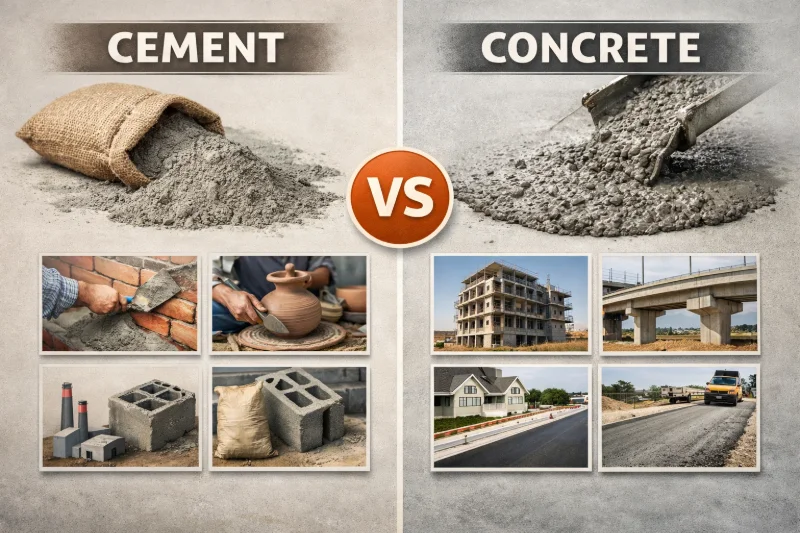
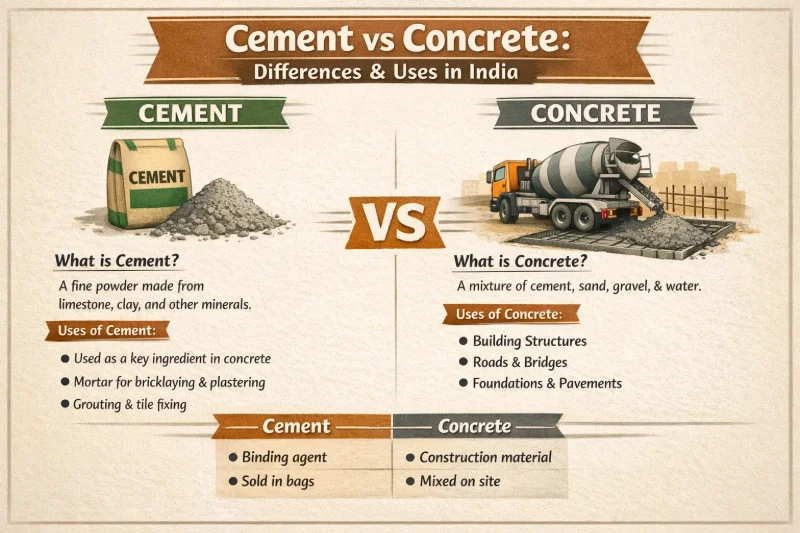
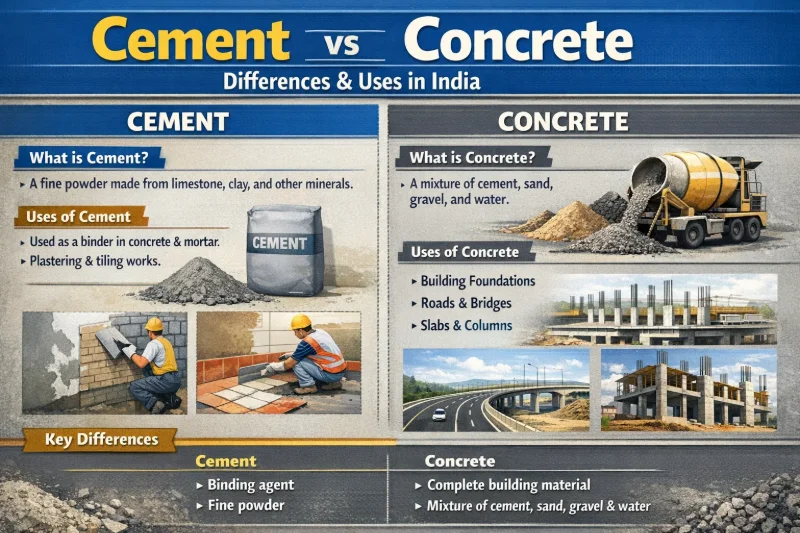
The confusion between cement and concrete is understandable because cement is a key component of concrete. However, they are not the same thing. Think of cement as an ingredient and concrete as the finished product.
Build cost · Bengaluru, May 2026
What is Cement?
Cement is a fine, gray powder made from limestone, clay, and other raw materials that are heated in a kiln at extremely high temperatures. In India, the most commonly used type is Portland cement, which was standardized by the Bureau of Indian Standards (BIS) under IS 269:2015. When cement is mixed with water, it undergoes a chemical reaction called hydration, which allows it to bind other materials together.
The primary function of cement is to act as a binder. By itself, cement cannot be used as a structural material in construction. A typical bag of cement weighs 50 kg in India and costs between ₹300 to ₹450 depending on the brand and region. Major cement manufacturers in India include Ambuja Cement, ACC Limited, UltraTech Cement, and Dalmia Cement.
What is Concrete?
Concrete is a composite material made by mixing cement, fine aggregates (sand), coarse aggregates (gravel or crushed stone), and water in specific proportions. The cement acts as a binder, holding the aggregates together as the mixture hardens. Concrete is a complete, ready-to-use construction material that provides structural strength and durability.
The typical concrete mix ratio used in India is 1:2:4 (cement:sand:gravel) for general construction purposes, though this can vary based on the required strength grade. Concrete is measured in cubic meters, and the cost typically ranges from ₹4,000 to ₹7,000 per cubic meter, depending on the grade and local market conditions.
Key Compositional Differences
Frequently asked
Cement Composition
Cement consists primarily of:
Calcium silicates - provide strength
Calcium aluminates - contribute to early strength development
Calcium aluminoferrites - provide durability
Gypsum - regulates setting time
Concrete Composition
Concrete contains:
Cement (10-15%) - acts as the binder
Fine aggregates/Sand (30-35%) - fills spaces and provides workability
Coarse aggregates/Gravel (40-45%) - provides bulk and structural stability
Water (15-20%) - initiates the hydration process
Admixtures (optional) - enhance specific properties like durability or setting time
Physical and Performance Characteristics
Strength and Durability
Cement alone is brittle and cannot withstand significant structural loads. Concrete, on the other hand, develops compressive strength over time. Typical concrete strength grades used in India include M20 (20 MPa), M25, M30, and higher grades for specialized applications. The strength of concrete depends on the water-cement ratio, curing time, and the quality of aggregates used.
Concrete can last 50-100 years or more when properly designed, constructed, and maintained. In Indian climates, especially in coastal areas like Chennai or Mumbai where corrosion is a concern, proper concrete cover over reinforcement and the use of appropriate cement grades become critical.
Workability and Application
Cement paste (cement mixed with water) has poor workability and cannot be applied directly as a structural material. Concrete, with its aggregate components, provides better workability and can be poured, molded, and finished into various shapes. This makes concrete ideal for creating structural elements like beams, columns, slabs, and foundations.
Cost Considerations
Cement is a raw material cost component, while concrete is a finished product. In a typical concrete mix, cement represents only about 10-15% of the total cost. The bulk of concrete costs come from aggregates and labor. For a small repair job requiring just binding, cement might be more economical, but for structural work, concrete is the appropriate choice.
Types of Cement Used in India
Understanding different cement types helps in selecting the right material for specific applications:
Ordinary Portland Cement (OPC)
The most common type used in India, OPC is suitable for general construction work including buildings, bridges, and pavements. It's available in three grades: 33, 43, and 53, indicating their strength at 28 days of curing.
Portland Pozzolana Cement (PPC)
Contains pozzolanic materials and offers better durability, especially in aggressive environments. It's ideal for structures in coastal areas or those exposed to sulfate-rich soils. PPC is increasingly preferred in Indian construction due to its environmental benefits and long-term durability.
Portland Slag Cement (PSC)
Made with blast furnace slag, PSC provides excellent durability and is suitable for mass concrete structures and underwater construction. It's commonly used in dam construction and large infrastructure projects.
White Cement
Used primarily for aesthetic purposes in architectural finishes, tile grouting, and decorative applications. It's more expensive than gray cement, costing ₹800-1200 per bag.
Concrete Grades and Their Applications in India
Different construction projects require different concrete grades:
M20 Grade Concrete
Strength of 20 MPa at 28 days. Used for general construction, residential buildings, and non-critical structures. This is the most commonly used grade in India for residential projects.
M25 Grade Concrete
Strength of 25 MPa. Used for reinforced concrete structures, beams, and columns in residential and small commercial buildings.
M30 Grade Concrete
Strength of 30 MPa. Used for heavily loaded structures, multi-story buildings, and structures in aggressive environments.
M40 and Above
High-strength concrete used for high-rise buildings, bridges, and specialized structures. Common in major cities like Delhi, Bangalore, and Mumbai where construction standards are stringent.
Primary Uses of Cement
Mortar Preparation
Cement mixed with sand and water creates mortar, used for bonding bricks, stones, and tiles in masonry work. A typical mortar mix ratio is 1:3 (cement:sand).
Plaster and Finishing
Cement-based plaster is applied to walls for finishing and protection. This is essential in Indian construction where weather protection is crucial.
Grouting
Cement grout fills gaps and spaces in construction, particularly in tiling and stone work.
Repair and Maintenance
Cement is used for patching and repairing concrete structures, filling cracks, and maintenance work.
Primary Uses of Concrete
Structural Foundations
Concrete is essential for creating strong foundations that support entire structures. In Indian cities with varying soil conditions, proper concrete foundation design is critical for building stability and longevity.
Framing and Columns
Reinforced concrete columns and beams form the skeleton of buildings. This is the standard construction method across India for residential, commercial, and industrial buildings.
Slabs and Floors
Concrete floor slabs provide the horizontal structural elements in multi-story buildings. They distribute loads and provide working surfaces.
Pavements and Roads
Concrete is extensively used in road construction across India. Rigid pavements using concrete are preferred for highways and high-traffic areas due to their durability.
Dams and Water Structures
Large infrastructure projects like dams, reservoirs, and water treatment plants rely on concrete for structural integrity and water resistance.
Architectural Elements
Concrete can be finished and treated to create aesthetic elements, from decorative walls to artistic installations in modern Indian architecture.
Curing and Setting Differences
Cement Setting Time
Cement paste typically sets in 30-90 minutes, depending on the cement grade and ambient temperature. In hot climates like Delhi or Jaipur, setting time may be faster.
Concrete Curing Time
Concrete requires much longer curing periods. While it achieves about 70% of its strength in 7 days, it takes 28 days to reach its full design strength. In Indian construction standards (IS 456:2000), 28-day strength is the benchmark for concrete quality.
Proper curing is essential in India's diverse climate. In dry regions, inadequate curing can lead to surface cracking. In monsoon areas, excessive water exposure during early curing can compromise strength. Many construction projects in India use wet burlap, plastic sheeting, or curing compounds to maintain moisture during the critical curing period.
Environmental and Cost Considerations
Environmental Impact
Cement production is energy-intensive and contributes significantly to carbon emissions. India, being one of the world's largest cement producers, is increasingly focusing on sustainable cement production. The use of PPC and PSC cements, which incorporate waste materials, helps reduce environmental impact.
Concrete, while a permanent and durable material, has embodied carbon. However, its long lifespan (50-100+ years) means lower carbon footprint per year of use compared to materials requiring frequent replacement.
Cost Analysis
For a typical residential project in India:
Cement cost: ₹350-400 per bag (50 kg)
Concrete cost: ₹4,500-6,500 per cubic meter depending on grade
Mortar cost: ₹1,200-1,500 per cubic meter
The choice between cement and concrete depends on the application. For a simple wall repair requiring mortar, cement is cost-effective. For structural work, concrete is the only appropriate choice despite higher costs.
Quality Standards in India
Both cement and concrete are regulated by the Bureau of Indian Standards (BIS):
IS 269:2015 - Specifications for Portland cement
IS 456:2000 - Code of practice for plain and reinforced concrete
IS 383:2016 - Specifications for coarse and fine aggregates
When procuring materials for construction projects, ensure suppliers provide BIS-certified products. This is particularly important in India where material quality can vary significantly by region and supplier.
Practical Tips for Indian Construction Projects
Choosing Between Cement and Concrete
For structural elements (foundations, columns, beams) - use concrete
For bonding bricks or stones - use cement mortar
For finishing and plastering - use cement plaster
For repairs and patching - use cement-based repair products or concrete
Climate Considerations
India's diverse climate affects material performance. In coastal areas, use PPC or PSC cement for better durability. In dry regions, ensure adequate water during curing. In monsoon areas, provide proper drainage and waterproofing.
Quality Assurance
Always conduct concrete tests (slump test, compression test) during construction. Verify cement quality through supplier certifications and occasional lab testing.
Finding the Right Professionals for Your Project
Whether you're planning a small renovation or a major construction project, working with qualified professionals who understand these material differences is essential. On AECORD, you can connect with experienced structural engineers, contractors, and construction specialists across India who have expertise in selecting and using cement and concrete appropriately for your specific project requirements.
AECORD brings together architects, engineers, and construction professionals who understand Indian building codes, climate considerations, and material specifications. Whether you need advice on concrete grades for your Pune apartment building or cement selection for your Chennai commercial project, AECORD professionals can provide expert guidance tailored to your location and requirements.
Conclusion
While cement and concrete are related, they serve different purposes in construction. Cement is a binding agent, while concrete is a complete structural material. Understanding these differences helps you make informed decisions about material selection, cost budgeting, and construction quality.
In the Indian construction context, where climate, building codes, and material availability vary significantly by region, choosing the right material for your specific application is crucial. Whether you're working on a residential project in Hyderabad, an industrial facility in Gujarat, or a commercial complex in Gurgaon, proper material selection ensures durability, safety, and cost-effectiveness.
For expert guidance on cement and concrete selection for your specific project, connect with qualified professionals on AECORD today. Our network of certified engineers and contractors can help you navigate material choices, ensure compliance with Indian standards, and deliver quality construction outcomes.
Frequently Asked Questions
What is the difference between cement and concrete?
Cement is a fine gray powder made from limestone and clay that acts as a binder, while concrete is a composite material made by mixing cement, sand, gravel, and water. Cement is an ingredient, whereas concrete is the finished construction material with structural strength.
Can cement be used alone in construction?
No, cement cannot be used alone as a structural material because it is brittle and cannot withstand significant structural loads. Cement must be mixed with aggregates and water to create concrete, which provides the necessary strength and durability for construction.
What is the standard concrete mix ratio used in India?
The typical concrete mix ratio used in India is 1:2:4 (cement:sand:gravel) for general construction purposes, though this can vary based on the required strength grade and specific project requirements.
How long does concrete last in Indian climate conditions?
Concrete can last 50-100 years or more when properly designed, constructed, and maintained. In Indian climates, durability depends on factors like water-cement ratio, curing time, and the quality of aggregates used.
What are the main components of concrete?
Concrete consists of cement (10-15%), fine aggregates/sand (30-35%), coarse aggregates/gravel (40-45%), water (15-20%), and optional admixtures that enhance specific properties like durability or setting time.