

Water damage is one of the most common and costly problems faced by building owners in India. Whether it's monsoon season in Mumbai, heavy rains in Bangalore, or the humid climate of Kolkata, moisture infiltration can compromise structural integrity, lead to mold growth, and significantly reduce property value. The solution lies in choosing the right waterproofing chemicals and applying them correctly.
This comprehensive guide explores the best waterproofing chemicals available in the Indian market, their applications, benefits, and how to select the right product for your specific needs.
Understanding Waterproofing Chemicals: Types and Applications
Waterproofing chemicals are specialized products designed to prevent water penetration into building structures. They come in various formulations, each suited to different applications and environmental conditions. Understanding the different types is crucial for selecting the most appropriate solution for your project.
Build cost · Bengaluru, May 2026
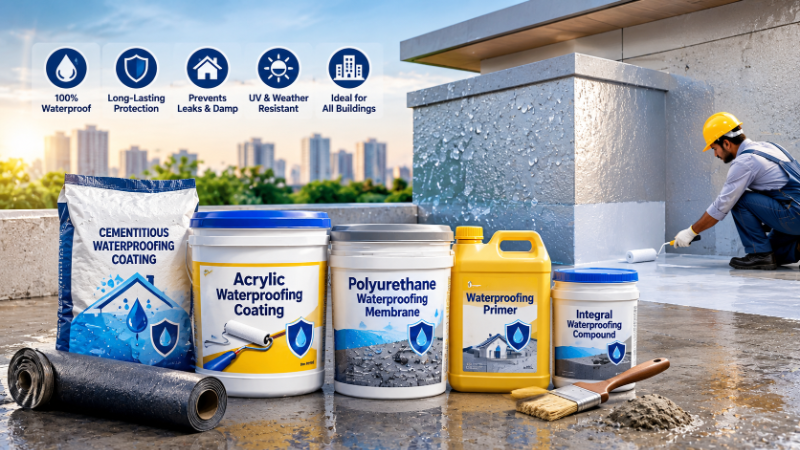
Liquid Waterproofing Membranes
Liquid waterproofing membranes are among the most versatile and widely used solutions in India. These are applied as liquids and cure to form a seamless, flexible membrane that adheres directly to the substrate.
Key advantages include:
Seamless application with no joints or overlaps
Excellent adhesion to concrete and masonry surfaces
Easy application on irregular surfaces and corners
UV-resistant formulations available for exposed areas
Cost-effective compared to sheet membranes
Popular liquid waterproofing products in India include acrylic-based and polyurethane-based membranes. Acrylic membranes typically cost between ₹80-150 per square meter, while polyurethane variants range from ₹150-300 per square meter, depending on quality and brand.
Bituminous Waterproofing Products
Bituminous waterproofing chemicals have been used in India for decades and remain popular for basement waterproofing, foundation protection, and below-grade applications.
Types of bituminous products include:
Bituminous emulsions
Solvent-based bitumen coatings
Bitumen tape and membranes
Modified bitumen with elastomeric properties
These products offer excellent water resistance and are particularly effective in preventing capillary water rise. However, they have lower flexibility compared to modern polyurethane systems and may crack in high-movement areas.
Cementitious Waterproofing
Cementitious waterproofing chemicals are powder-based products that are mixed with water to create a coating or mortar. These are ideal for internal waterproofing of bathrooms, kitchens, and wet areas.
Characteristics:
Breathable – allows vapor transmission
Easy to apply and repair
Compatible with tile adhesives and plasters
Cost-effective at ₹40-100 per square meter
Best for non-moving substrates
These products work through crystalline action, filling micro-pores in concrete to block water penetration.
Frequently asked
Best Waterproofing Chemicals Available in India
Polyurethane-Based Waterproofing Systems
Polyurethane waterproofing chemicals have emerged as industry leaders in India due to their superior performance characteristics. These single or two-component systems offer exceptional flexibility, durability, and water resistance.
Why choose polyurethane?
Superior elongation properties (up to 300-400%) accommodate structural movement
Excellent UV resistance in two-component formulations
Can be applied on damp surfaces
Forms a waterproof, breathable membrane
Ideal for terraces, balconies, and exposed areas
Leading brands like Sika, BASF, Pidilite, and Fosroc offer high-quality polyurethane waterproofing solutions. Expect to invest ₹200-400 per square meter for premium polyurethane systems, though this investment pays off through longevity and reduced maintenance costs.
Acrylic-Based Waterproofing Membranes
Acrylic waterproofing chemicals are water-based, environmentally friendly options gaining popularity across Indian cities like Pune, Delhi, and Hyderabad.
Benefits of acrylic waterproofing:
Water-based – low VOC and environmentally safe
Easy application and quick drying
Good adhesion to various substrates
Breathable membrane properties
Cost-effective at ₹80-150 per square meter
Suitable for both interior and exterior applications
These products are particularly popular for residential projects in metropolitan areas where environmental regulations are stringent.
Cementitious Slurry Waterproofing
Cementitious slurry systems, often called "slurry coat" or "cement-based waterproofing," are two-component products that combine cement, polymers, and additives.
Applications:
Internal waterproofing of bathrooms and kitchens
Water tank interiors
Basement walls
Swimming pool linings
These products are breathable, non-toxic, and compatible with subsequent finishes. Pricing ranges from ₹50-120 per square meter, making them economical for large-scale applications.
Crystalline Waterproofing Chemicals
Crystalline waterproofing is a unique technology that actively heals hairline cracks. When water penetrates the concrete, it activates dormant crystals that grow and block water pathways.
Unique advantages:
Self-healing properties for hairline cracks up to 0.4mm
Works on both positive and negative water pressure sides
Excellent for water-retaining structures
Long-term durability and minimal maintenance
Ideal for water tanks, basements, and water treatment facilities
Products like Xypex are premium options costing ₹300-500 per square meter but offer exceptional performance for critical applications.
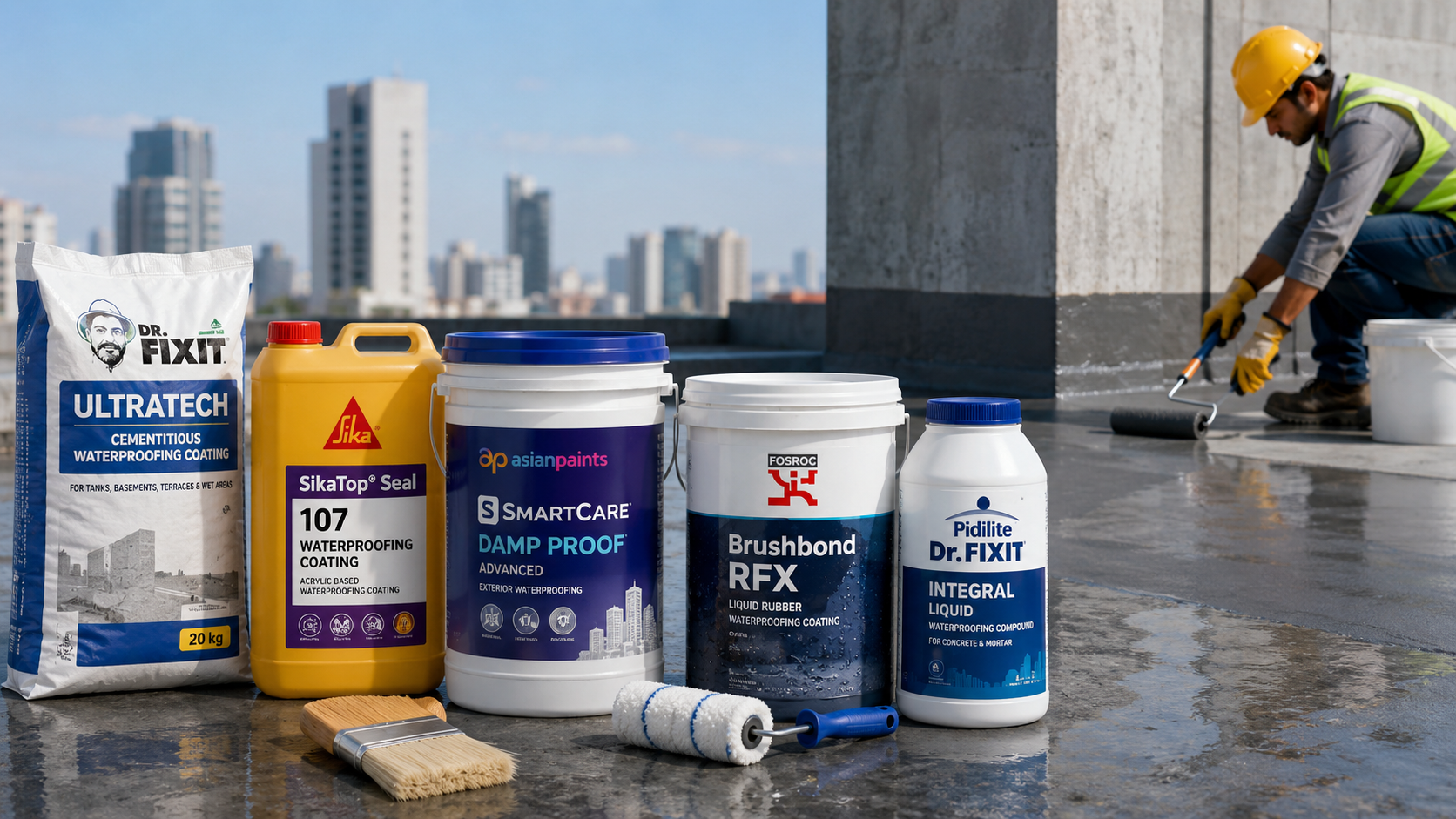
Selecting the Right Waterproofing Chemical for Your Project
Assess Your Application Area
Different areas of a building require different waterproofing solutions. When planning your project, consider:
For Terraces and Balconies: Choose flexible polyurethane or acrylic membranes that can accommodate thermal expansion and structural movement. These areas experience significant temperature variations across Indian climates.
For Bathrooms and Wet Areas: Cementitious slurry or acrylic coatings work best. They're breathable, preventing moisture buildup while providing water resistance. Apply these before tile installation.
For Basements and Below-Grade Structures: Bituminous coatings or polyurethane systems are ideal. These handle hydrostatic pressure from groundwater, particularly important in cities like Bangalore and Hyderabad where water tables can be high.
For Water Tanks and Pools: Crystalline waterproofing or specialized pool-grade products provide superior water retention and durability.
Consider Climate and Weather Conditions
India's diverse climate significantly impacts waterproofing performance. Coastal cities like Mumbai and Chennai experience high humidity and salt spray, requiring UV-resistant and salt-resistant formulations. Inland cities like Delhi and Jaipur face extreme temperature fluctuations, demanding highly flexible membranes.
During monsoon season, which varies by region (June-September in most of India), waterproofing systems must withstand continuous exposure to heavy rainfall and high moisture levels.
Evaluate Substrate Conditions
The surface you're waterproofing matters significantly. New concrete requires different treatment than aged surfaces. If your concrete has existing cracks or movement, flexible polyurethane systems are superior. For stable, non-moving substrates, cementitious products suffice.
Surface preparation is critical – the substrate must be clean, dry (unless using products designed for damp application), and free of loose material. Poor preparation is the leading cause of waterproofing failure in India.
Budget Considerations
Waterproofing costs vary significantly based on product type and coverage area. Here's a typical breakdown for a 1,000 square meter terrace in a metropolitan area:
Budget option (acrylic): ₹80,000-150,000
Mid-range option (polyurethane): ₹200,000-400,000
Premium option (two-component polyurethane): ₹400,000-600,000
While premium options cost more initially, they often provide better long-term value through extended durability and reduced maintenance requirements.
Application Best Practices
Surface Preparation
Proper surface preparation is non-negotiable for waterproofing success. Steps include:
Cleaning the surface thoroughly to remove dust, dirt, and algae
Repairing existing cracks and holes with appropriate sealants
Ensuring proper slope for water drainage (minimum 1:100 gradient for terraces)
Allowing concrete to cure properly (minimum 28 days for new concrete)
Checking moisture levels – most products require substrate moisture below 4%
Primer Application
Many waterproofing systems require primer application before the main coating. Primers improve adhesion and ensure uniform absorption. This step is often overlooked but significantly impacts long-term performance.
Proper Application Techniques
Application method depends on the product type:
For liquid membranes: Use roller or brush application in thin, even coats. Multiple thin coats are superior to single thick coats. Typically, 2-3 coats are required to achieve recommended thickness (usually 1.5-2mm).
For slurry coatings: Apply using trowel or roller in uniform thickness. Ensure complete coverage, particularly at joints and corners.
For bituminous products: Heating may be required for certain formulations. Follow manufacturer guidelines carefully.
Curing and Protection
Allow adequate curing time before exposing the waterproofed surface to water or foot traffic. Curing times vary from 24-72 hours depending on product type and ambient conditions. Protect the surface during curing, particularly during monsoon season.
Common Mistakes to Avoid
When implementing waterproofing chemicals in India, avoid these common pitfalls:
Inadequate surface preparation: This is the primary cause of waterproofing failure. Never skip cleaning and priming steps.
Insufficient coating thickness: Applying too-thin coatings to save costs ultimately leads to premature failure.
Ignoring slope and drainage: Water must flow away from structures. Flat surfaces without proper drainage will fail.
Selecting wrong product for the application: Using cementitious coatings on flexible structures or polyurethane on non-moving substrates reduces performance.
Applying during unfavorable weather: Rain, high humidity, or extreme temperatures during application compromise effectiveness.
Neglecting maintenance: Even quality waterproofing requires periodic inspection and maintenance.
Maintenance and Longevity
Waterproofing chemicals provide protection for 5-15 years depending on type, quality, and environmental conditions. Regular maintenance extends this lifespan:
Inspect waterproofed areas annually, particularly after monsoon season
Clear debris and standing water promptly
Address any visible cracks or damage immediately
Keep drainage systems clear and functional
Consider protective coatings or paints to shield waterproofing membranes from UV exposure
Finding Professional Help Through AECORD
Selecting and applying the right waterproofing chemicals requires expertise and experience. Whether you're a property owner, architect, or contractor in India, finding qualified professionals is essential for project success.
AECORD, India's leading B2B2C marketplace for AECO professionals, connects you with verified waterproofing specialists, contractors, and material suppliers across major Indian cities. Through AECORD, you can:
Access a network of qualified waterproofing contractors with proven track records
Compare quotes from multiple professionals for your specific project
Review detailed project portfolios and client testimonials
Source quality waterproofing chemicals from verified suppliers
Ensure compliance with Indian building codes and regulations
Whether your project is in Mumbai, Delhi, Bangalore, Hyderabad, Pune, or any other Indian city, AECORD helps you find the right expertise and materials for successful waterproofing implementation.
Conclusion
Waterproofing is a critical investment in building longevity and occupant safety. With numerous waterproofing chemicals available in the Indian market, selecting the right product requires understanding your specific application, climate conditions, substrate type, and budget.
Polyurethane-based systems offer superior performance for most applications, while cementitious products provide cost-effective solutions for interior wet areas. Acrylic membranes balance performance and environmental considerations, and crystalline waterproofing excels in specialized applications.
Successful waterproofing depends equally on product quality and professional application. By partnering with experienced professionals through platforms like AECORD and selecting appropriate waterproofing chemicals, you ensure your buildings remain protected from water damage for years to come.
Ready to waterproof your project? Explore verified waterproofing professionals and material suppliers on AECORD today and get started on protecting your investment.
Frequently Asked Questions
What are the best waterproofing chemicals for buildings in India?
The best waterproofing chemicals for Indian buildings include polyurethane-based systems (ideal for terraces and exposed areas), liquid membranes (cost-effective and versatile), bituminous products (excellent for basements), and cementitious coatings (best for bathrooms and wet areas). The choice depends on your specific application, budget, and structural movement requirements.
How much does waterproofing chemicals cost in India?
Waterproofing chemical costs in India vary by type: acrylic liquid membranes range from ₹80-150 per square meter, polyurethane variants cost ₹150-300 per square meter, while cementitious products are the most affordable at ₹40-100 per square meter. Prices depend on quality, brand, and specific formulation.
What is the difference between liquid and bituminous waterproofing?
Liquid waterproofing membranes form seamless, flexible coatings ideal for irregular surfaces and modern applications, while bituminous products are traditional solutions excellent for basement and foundation protection. Liquid membranes offer better flexibility and UV resistance, whereas bituminous products excel at preventing capillary water rise but have lower flexibility in high-movement areas.
Which waterproofing chemical is best for bathrooms and kitchens?
Cementitious waterproofing is ideal for bathrooms and kitchens as it's breathable, easy to apply, compatible with tile adhesives, and cost-effective. These powder-based products work through crystalline action to fill micro-pores in concrete and block water penetration in wet areas.
Can waterproofing chemicals be applied on damp surfaces?
Yes, polyurethane-based waterproofing systems can be applied on damp surfaces, making them particularly suitable for India's humid climate and monsoon conditions. However, other types like bituminous and cementitious products typically require drier substrates for optimal adhesion and performance.