

The bathroom floor is often overlooked in interior design conversations, yet it serves as the foundation for creating a space that is both functional and aesthetically pleasing. Whether you're renovating a small apartment bathroom in Mumbai or redesigning a luxury villa in Bangalore, the right tile choice can transform your bathroom into a sanctuary. In this comprehensive guide, we'll explore contemporary bathroom floor tile design ideas specifically tailored to the Indian market, helping you make informed decisions for your project.
Understanding Bathroom Floor Tile Basics
Before diving into design ideas, it's essential to understand the fundamentals of bathroom floor tiles. Bathroom floors require materials that can withstand moisture, humidity, and daily wear and tear. In India's diverse climate—from the humid coastal regions of Kerala to the dry plains of Delhi—tile selection becomes even more critical.
The most popular options for bathroom floors include ceramic tiles, porcelain tiles, natural stone, and vitreous glass tiles. Each material has distinct advantages and price points ranging from ₹100 to ₹1,500 per square foot, depending on quality and origin.
Build cost · Bengaluru, May 2026
Popular Bathroom Floor Tile Design Trends in India
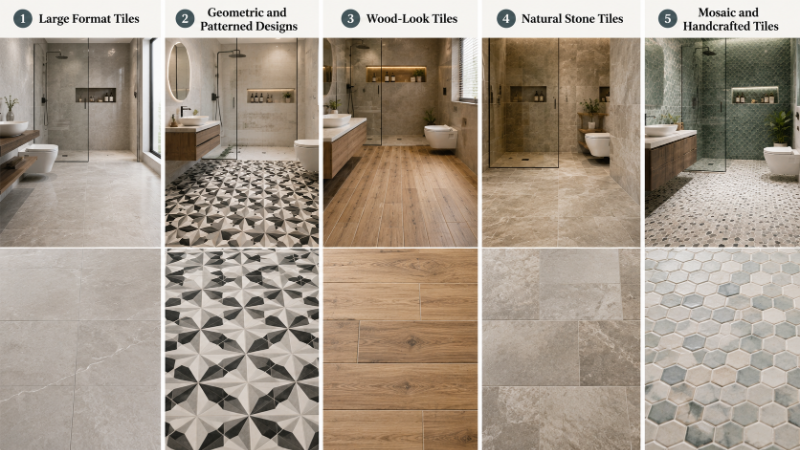
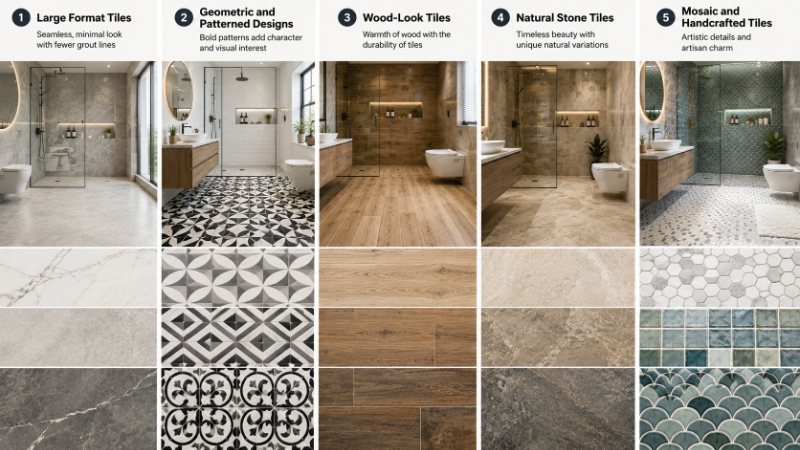
1. Large Format Tiles
Large format tiles (typically 60x60 cm or larger) have become increasingly popular in Indian bathrooms, particularly in metropolitan areas like Delhi, Bangalore, and Pune. These tiles create a seamless, modern appearance with fewer grout lines, making the space appear larger and easier to clean.
Large format tiles are particularly suitable for contemporary Indian homes and commercial spaces. They reduce visual clutter and create a sophisticated look, though installation requires precise leveling and skilled labor. Expect to pay ₹400-₹900 per square foot for quality large format tiles.
2. Geometric and Patterned Designs
Geometric patterns are experiencing a resurgence in Indian bathroom design. Hexagonal tiles, chevron patterns, and intricate geometric mosaics add visual interest while maintaining functionality. These designs work particularly well in bohemian or eclectic interior schemes popular in cities like Goa, Jaipur, and Kolkata.
Patterned tiles can be combined with solid colors to create accent areas or feature walls. A mix of patterned floor tiles with solid wall tiles creates balance and prevents the space from feeling overwhelming.
Frequently asked
3. Wood-Look Tiles
Wood-look porcelain tiles have revolutionized bathroom design by offering the warmth and aesthetic of natural wood without moisture concerns. These tiles are ideal for Indian bathrooms where humidity levels fluctuate seasonally. They're particularly popular in Bangalore and Hyderabad, where contemporary design meets practicality.
These tiles typically cost ₹300-₹700 per square foot and provide excellent durability while maintaining the organic appeal of wooden floors. They pair beautifully with stone accents and minimalist fixtures.
4. Natural Stone Tiles
Marble, granite, and limestone tiles bring luxury and elegance to Indian bathrooms. Indian marble, particularly from Rajasthan, offers stunning patterns and is cost-effective compared to imported varieties. Granite tiles are highly durable and resistant to staining, making them practical for Indian households.
Natural stone requires regular sealing and maintenance but creates an unparalleled aesthetic. Prices range from ₹250-₹1,200 per square foot depending on stone type and origin. Popular choices include Rajasthani marble, Indian granite, and limestone from Jaisalmer.
5. Mosaic and Handcrafted Tiles
Indian heritage tiles, including traditional mosaic designs and handcrafted patterns, are experiencing renewed interest. Tiles inspired by Mughal architecture or traditional Indian motifs add cultural richness to bathrooms. These are particularly popular in heritage homes and boutique hotels across India.
Handcrafted tiles support local artisans and offer unique, one-of-a-kind designs. They're ideal for creating statement floors in master bathrooms or guest facilities.
Color Palettes for Bathroom Floors
Neutral and Minimalist
Neutral tones—whites, grays, beiges, and soft blacks—create a serene, spa-like atmosphere. These colors work in any bathroom size and complement various design styles. In compact Indian apartments, neutral tiles make spaces feel larger and more open.
Soft gray tiles are particularly popular in contemporary Indian homes, offering sophistication without the maintenance concerns of pure white tiles.
Bold and Dark
Dark tiles (charcoal, deep gray, or black) add drama and luxury to bathroom spaces. They're increasingly popular in premium residential projects in Mumbai and Delhi. Dark floors work beautifully with light walls and fixtures, creating high contrast and visual interest.
However, dark tiles show water spots and dust more readily, requiring more frequent cleaning—an important consideration for Indian households.
Warm Earth Tones
Terracotta, ochre, and warm brown tiles reflect India's natural landscape and traditional architecture. These colors are perfect for heritage-style bathrooms or rustic farmhouses. They're also practical, as they don't show dirt as readily as lighter options.
Jewel Tones and Accent Colors
Deep blues, emerald greens, and rich teals are gaining popularity in Indian bathroom design. These colors add personality and can be incorporated through accent tiles or feature walls. They're particularly effective in larger bathrooms where they won't feel claustrophobic.
Size and Layout Considerations
Small Bathrooms
For compact bathrooms common in Indian urban apartments, consider smaller tiles (20x20 cm to 30x30 cm) or large format tiles. Smaller tiles create visual texture in tight spaces, while large tiles can paradoxically make small bathrooms feel bigger by reducing grout lines.
Light-colored tiles with minimal patterns are ideal for small bathrooms in cities like Mumbai, where space is premium. Avoid overly busy patterns that can make small spaces feel cluttered.
Medium to Large Bathrooms
Larger bathrooms offer flexibility for creative layouts. Combine different tile sizes, create geometric patterns, or use a mix of textures. Feature walls with patterned or colored tiles work well in spacious bathrooms without overwhelming the space.
In luxury villas in Bangalore, Pune, or Gurgaon, large bathrooms often feature mixed materials—combining marble with wood-look tiles or creating intricate mosaics.
Practical Design Ideas for Indian Climates
Anti-Slip Tiles
In India's humid climate, anti-slip tiles are essential for safety. Textured surfaces, matte finishes, and tiles with micro-ridges provide grip without compromising aesthetics. These are particularly important in bathrooms with elderly family members or children.
Modern anti-slip tiles come in various designs and colors, so safety doesn't require sacrificing style.
Drainage Considerations
Proper drainage is crucial in Indian bathrooms, especially during monsoon seasons. Tiles with subtle slope toward drains, combined with appropriate grout selection, prevent water pooling. This is particularly important in coastal areas and regions with high rainfall.
Heat and Humidity Resistance
Porcelain tiles are superior to ceramic tiles in humid environments because they're less porous and absorb minimal moisture. In cities like Kochi, Goa, and Kolkata, where humidity levels are consistently high, porcelain tiles are the recommended choice.
Mixing and Matching Tile Styles
Contemporary bathroom design often combines multiple tile styles. Consider pairing large format neutral tiles with geometric accent tiles in one corner. This approach adds visual interest without overwhelming the space.
Another popular technique is combining floor tiles with complementary wall tiles. For example, pair subtle patterned floor tiles with solid-colored walls, or use contrasting colors to create a defined wet area versus dry area in the bathroom.
When working with professionals through platforms like AECORD, you can access designers and contractors who understand these mixing techniques and can execute them flawlessly.
Installation and Maintenance Tips
Professional Installation
Proper installation is crucial for bathroom tile longevity. Uneven surfaces, inadequate waterproofing, or poor grouting can lead to water damage and mold growth—common issues in Indian bathrooms.
Hiring experienced tile installers through AECORD ensures your bathroom floor is installed correctly with proper waterproofing membranes, appropriate adhesives, and quality grouting.
Grout Selection
Epoxy grout is superior to cement-based grout in bathrooms because it's water-resistant and stain-resistant. While more expensive (₹50-₹100 per kg versus ₹10-₹20 for cement grout), epoxy grout significantly extends tile lifespan and reduces maintenance.
Sealing and Maintenance
Natural stone tiles require regular sealing every 6-12 months, particularly in high-moisture areas. Porcelain and ceramic tiles require minimal maintenance—regular cleaning with mild soap and water is typically sufficient.
In India's dusty climate, periodic sealing of grout lines prevents staining and extends the life of your bathroom floor.
Budget-Friendly Design Ideas
Creating an attractive bathroom floor doesn't require a luxury budget. Consider these cost-effective approaches:
Mix High and Low: Use premium tiles for visible areas and budget-friendly options for less visible sections
Accent Approach: Install a feature strip of patterned tiles with solid tiles for the remainder of the floor
Local Materials: Utilize locally-sourced tiles, which are significantly cheaper than imported options
Simpler Patterns: Geometric patterns are less expensive than intricate handcrafted designs
Standard Sizes: Avoid custom sizes, which increase installation costs and waste
In Indian cities like Jaipur, Delhi, and Surat, locally manufactured tiles offer excellent quality at 30-50% lower costs than imported alternatives.
Design Inspiration from Indian Architecture
Traditional Indian architecture offers rich inspiration for bathroom floor design. Mughal-inspired geometric patterns, temple-inspired mosaics, and regional design elements can be incorporated through modern tiles. This approach celebrates Indian heritage while maintaining contemporary functionality.
Tiles inspired by traditional Indian textiles, particularly from regions like Rajasthan and Gujarat, add cultural authenticity to bathrooms.
Working with Design Professionals
Selecting the right tiles involves considering your lifestyle, budget, climate zone, and personal style. Design professionals on AECORD can provide personalized recommendations based on your specific needs and local conditions.
Whether you're in Bangalore, Delhi, Mumbai, or smaller cities, AECORD connects you with experienced architects, interior designers, and tile contractors who understand Indian market conditions and can execute your vision.
Professional consultation ensures you select tiles that are not only beautiful but also practical for India's climate and your household's specific needs.
Conclusion
Your bathroom floor is a significant design element that deserves thoughtful consideration. From large format tiles that create modern elegance to traditional patterns that honor Indian heritage, numerous options exist for every style, budget, and space constraint.
The key is balancing aesthetics with practicality—selecting tiles that withstand India's varied climate while reflecting your personal style. Whether you prefer minimalist neutrals, bold jewel tones, or culturally-inspired patterns, the right tile choice transforms your bathroom into a beautiful, functional space.
Ready to start your bathroom renovation? Explore AECORD's network of verified architects, interior designers, and tile contractors who specialize in bathroom design across India. Connect with professionals who understand your local market, can recommend appropriate materials for your climate, and will execute your vision with precision. Browse AECORD today and find the perfect expert for your bathroom floor project.
Frequently Asked Questions
What are the best bathroom floor tiles for India's humid climate?
Porcelain tiles, ceramic tiles, and natural stone like granite are ideal for India's humid climate as they resist moisture and daily wear. Porcelain is particularly recommended for coastal regions like Kerala due to its superior water resistance and durability compared to ceramic options.
How much do bathroom floor tiles cost in India?
Bathroom floor tile prices in India range from ₹100 to ₹1,500 per square foot depending on material and quality. Ceramic tiles start around ₹100-₹300, wood-look porcelain costs ₹300-₹700, and premium natural stone tiles range from ₹250-₹1,200 per square foot.
What size tiles make a small bathroom look larger?
Large format tiles (60x60 cm or larger) create a seamless appearance with fewer grout lines, making small bathrooms appear larger and more spacious. These tiles reduce visual clutter and are particularly popular in metropolitan Indian homes for their modern, sophisticated look.
Are wood-look tiles suitable for bathrooms?
Yes, wood-look porcelain tiles are excellent for bathrooms as they offer the warmth and aesthetic of natural wood without moisture concerns. They're particularly ideal for Indian bathrooms where humidity fluctuates seasonally and typically cost ₹300-₹700 per square foot.
Which Indian natural stone is best for bathroom floors?
Rajasthani marble, Indian granite, and Jaisalmer limestone are excellent choices for Indian bathrooms. Indian marble offers stunning patterns at cost-effective prices, while granite provides superior durability and stain resistance, making it practical for Indian households.