



Understanding 8mm Designer Cement Bonded Particle Board: A Comprehensive Guide for Indian Construction Professionals
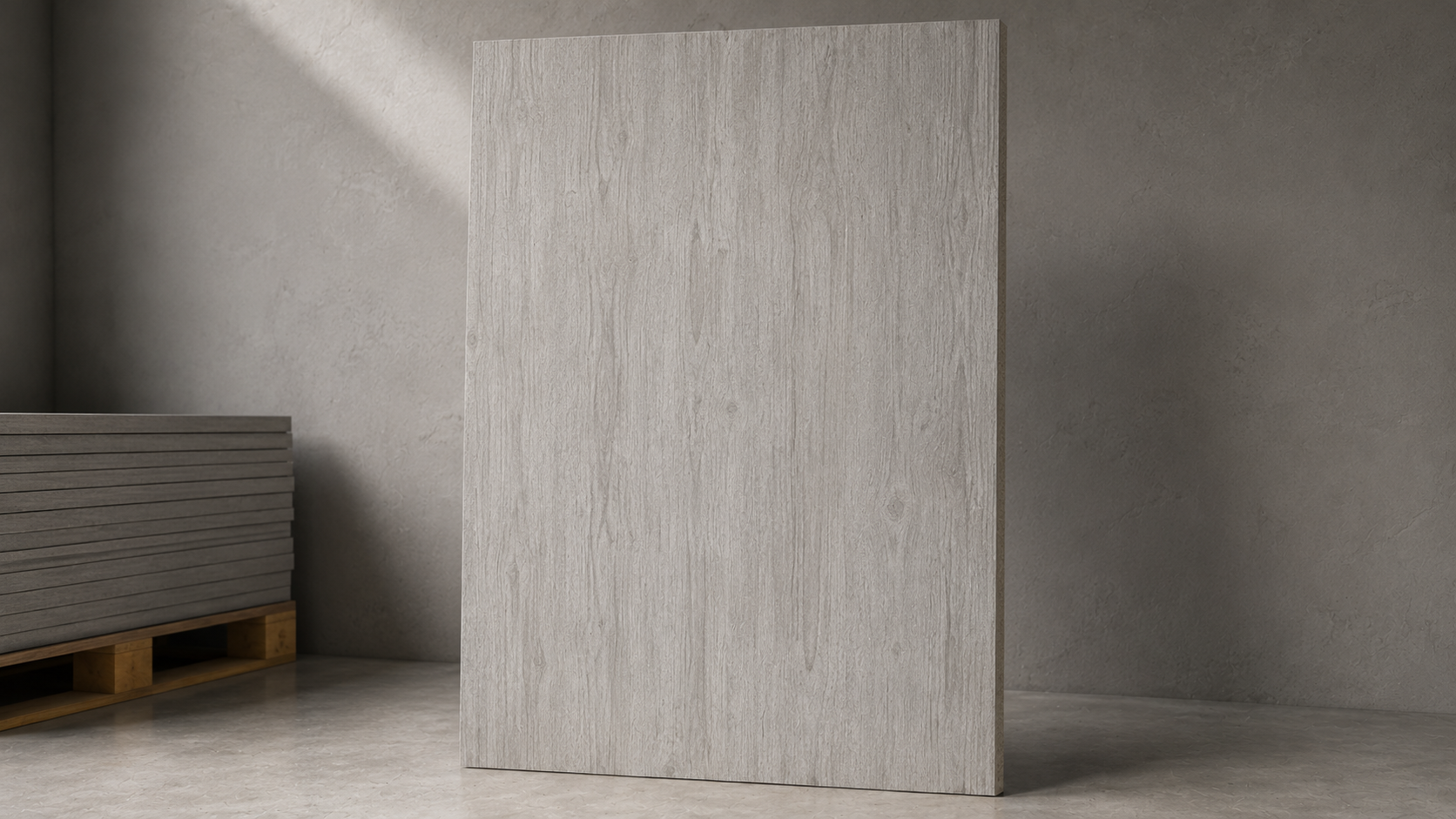
In the rapidly evolving construction landscape of India, the demand for high-performance, aesthetically appealing, and durable building materials has never been higher. One such material that has gained significant traction among architects, engineers, and construction professionals is 8mm thickness cement bonded particle board with designer finishes. The specific variant with dimensions 1220mm x 2440mm in lumber texture grey (361726) represents a premium choice for modern construction projects across India.
This comprehensive guide explores everything you need to know about this specialized building material, its applications, advantages, and how to source quality products through platforms like AECORD, India's leading B2B2C marketplace for AECO professionals.
Build cost · Bengaluru, May 2026
What is Cement Bonded Particle Board?
Composition and Manufacturing
Cement bonded particle board (CBPB) is an engineered composite material manufactured by bonding wood particles with Portland cement and water. The 8mm thickness variant strikes an optimal balance between structural integrity and workability, making it ideal for various applications in Indian construction projects.
The manufacturing process involves:
Sourcing sustainably harvested wood particles
Mixing particles with Portland cement binder and water
Pressing the mixture under controlled temperature and pressure
Curing the boards to achieve desired strength characteristics
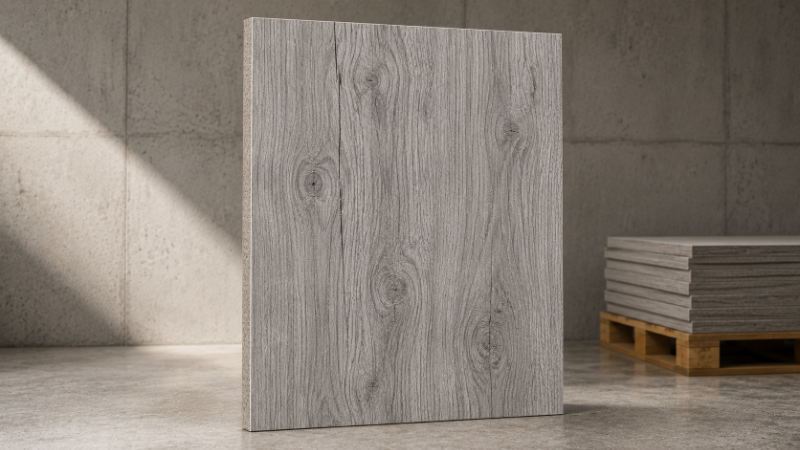
Applying designer finishes such as the lumber texture grey (361726) coating
Standard Dimensions: 1220mm x 2440mm
The 1220mm x 2440mm dimension is the industry-standard size, offering several advantages for Indian construction professionals:
Optimal coverage: Each board covers approximately 2.97 square meters
Easy handling: Manageable size for transportation and installation across Indian cities like Bangalore, Mumbai, Delhi, and Hyderabad
Minimal waste: Standard dimensions allow for efficient cutting and layout planning
Cost-effective: Reduces material wastage and labor costs on construction sites
Frequently asked
Key Properties of 8mm Cement Bonded Particle Board
Structural Characteristics
The 8mm thickness provides substantial structural benefits without excessive weight. Key properties include:
Density: Typically ranges from 1.1 to 1.3 g/cm³, providing excellent strength-to-weight ratio
Modulus of Rupture: Approximately 8-12 MPa, suitable for load-bearing applications
Modulus of Elasticity: Around 3000-4000 MPa, ensuring dimensional stability
Moisture Resistance: Superior to traditional particle board, with minimal swelling when exposed to humidity
Fire Resistance: Cement bonding provides inherent fire-resistant properties, meeting Indian building codes
Designer Lumber Texture Grey Finish (361726)
The lumber texture grey finish (code 361726) is a sophisticated designer application that offers both aesthetic and functional benefits:
Visual Appeal: Mimics natural wood grain patterns while maintaining modern aesthetics
Durability: UV-resistant coating prevents fading and discoloration over time
Easy Maintenance: Wipeable surface resists dust and stains, ideal for residential and commercial spaces
Versatility: Grey tone complements contemporary and traditional design schemes
Cost Efficiency: Provides premium appearance at a fraction of solid wood costs
Applications in Indian Construction
Residential Projects
In residential construction across Indian metros and tier-2 cities, 8mm cement bonded particle board finds extensive applications:
Interior Wall Partitions: Non-load-bearing walls in apartments and villas
Ceiling Systems: Drop ceiling installations in living spaces and bedrooms
Furniture Backing: Cabinet backs and structural support in built-in furniture
Decorative Panels: Feature walls and accent installations
Commercial and Industrial Applications
Commercial construction projects benefit significantly from cement bonded particle board:
Office Partitioning: Modular office systems in corporate buildings
Retail Spaces: Display walls and shop fitting applications
Industrial Facilities: Warehouse partitions and storage solutions
Data Centers: Moisture-resistant walls in controlled environments
Hospitality Sector: Hotel room partitions and public area finishes
Specialized Construction Uses
Beyond standard applications, this material serves specialized purposes:
Educational Institutions: Classroom partitions and laboratory walls
Healthcare Facilities: Hospital ward divisions and clinic interiors
Agricultural Buildings: Moisture-resistant walls in farm structures
Coastal Projects: Salt-resistant properties make it suitable for coastal cities like Goa and Kerala
Advantages Over Alternative Materials
Comparison with Plywood
While plywood remains popular in India, 8mm cement bonded particle board offers distinct advantages:
Cost: Typically 20-30% cheaper than equivalent plywood in the Indian market
Moisture Resistance: Superior performance in humid climates across coastal and central Indian regions
Dimensional Stability: Less prone to warping and twisting
Fire Rating: Better fire resistance properties for compliance with Indian building codes
Sustainability: Often manufactured from recycled wood particles
Advantages Over Gypsum Board
Compared to gypsum drywall, cement bonded particle board provides:
Durability: Longer lifespan with minimal maintenance
Moisture Resistance: Ideal for Indian monsoon climates
Impact Resistance: Better withstands physical damage in high-traffic areas
Structural Strength: Can be used for load-bearing applications
Moisture-prone Areas: Suitable for kitchens, bathrooms, and laundry rooms
Advantages Over MDF
Medium Density Fiberboard (MDF) has limitations compared to cement bonded particle board:
Moisture Performance: CBPB maintains integrity in high-humidity environments
Longevity: Better resistance to degradation over extended periods
Chemical Resistance: Superior performance in industrial and commercial settings
Sustainability: More eco-friendly manufacturing process
Installation and Handling Guidelines
Pre-Installation Considerations
Before installation, ensure proper preparation:
Acclimatization: Allow boards to acclimatize to site conditions for 24-48 hours
Storage: Store boards flat in dry, well-ventilated areas, protected from direct moisture
Inspection: Check for any damage or manufacturing defects before installation
Planning: Prepare detailed layout drawings to minimize waste
Tool Preparation: Ensure cutting tools are sharp and appropriate for the material
Installation Best Practices
Proper installation ensures optimal performance and longevity:
Fastening: Use corrosion-resistant fasteners (stainless steel or galvanized) spaced 150-200mm apart
Support Structure: Install on properly spaced timber or metal frames (typically 400-600mm centers)
Joint Treatment: Seal joints with appropriate sealants for moisture protection
Finishing: Apply protective coatings if additional protection is required
Ventilation: Ensure adequate air circulation around installed boards
Cutting and Machining
The material responds well to standard woodworking tools:
Use carbide-tipped saw blades for clean cuts
Circular saws, table saws, and band saws all work effectively
Drill holes with standard twist drills; pre-drilling recommended for fasteners
Sand edges with 120-150 grit sandpaper for smooth finishing
Edge banding can be applied for aesthetic finishing
Cost Considerations in the Indian Market
Pricing Factors
The cost of 8mm cement bonded particle board varies based on several factors:
Quantity: Bulk purchases in Indian metros typically range from ₹800-1,200 per board (1220x2440mm)
Designer Finish: Premium finishes like lumber texture grey (361726) add 15-25% to base cost
Location: Prices vary across regions; Bangalore and Hyderabad may differ from Delhi or Mumbai
Supplier: Established manufacturers offer better quality assurance than smaller suppliers
Transportation: Logistics costs impact final pricing, especially for remote locations
Market Fluctuations: Cement and wood prices influence board costs
Cost Comparison Analysis
For a typical 100 square meter project in India:
Cement Bonded Particle Board: ₹27,000-40,000 (material only)
Plywood Alternative: ₹35,000-55,000
Gypsum Board System: ₹25,000-35,000 (including framing)
MDF Alternative: ₹30,000-45,000
When factoring in durability, maintenance, and lifespan, cement bonded particle board often provides superior value.
Compliance with Indian Building Standards
Relevant Indian Standards
Products must comply with applicable Indian standards:
IS 3085:2015: Wood-based boards – Determination of moisture content
IS 2105:2015: Particleboards – Specifications
IS 5509:2015: Plywood for general purposes
National Building Code (NBC): Fire and safety requirements
Green Building Code: Sustainability and environmental considerations
Fire Safety Compliance
Cement bonded particle board inherently meets fire safety requirements for most Indian applications. However, verify:
Fire rating classifications for specific project requirements
Smoke development and flame spread characteristics
Compliance with local municipal building codes
Any additional fire-protective coatings required
Maintenance and Long-term Care
Cleaning and Maintenance
The designer lumber texture grey finish requires minimal maintenance:
Regular Cleaning: Wipe with a soft, damp cloth monthly
Stain Removal: Use mild soap and water for general stains
Avoid Excessive Moisture: While moisture-resistant, avoid prolonged water exposure
Protective Coatings: Consider periodic resealing in high-moisture areas
Damage Repair: Minor scratches can be addressed with touch-up finishes
Expected Lifespan
With proper installation and maintenance, 8mm cement bonded particle board typically provides:
Residential Applications: 20-30 years of service life
Commercial Applications: 15-25 years depending on traffic and usage
Industrial Applications: 10-20 years based on environmental conditions
Environmental and Sustainability Considerations
Eco-Friendly Attributes
Cement bonded particle board aligns with India's growing sustainability focus:
Recycled Content: Often manufactured from recycled wood particles and sawmill waste
Reduced Deforestation: Utilizes byproducts rather than virgin timber
Lower Carbon Footprint: Compared to solid wood alternatives
Durability: Extended lifespan reduces replacement frequency and waste
Recyclability: Can be recycled or repurposed at end of life
LEED and Green Building Compliance
Products meeting environmental standards can contribute to green building certifications in India, including:
IGBC (Indian Green Building Council) ratings
LEED India compliance points
GRIHA (Green Rating for Integrated Habitat Assessment) certifications
Finding Quality Suppliers and Professionals
Sourcing on AECORD
AECORD, India's premier B2B2C marketplace for AECO professionals, connects you with verified suppliers and installation experts specializing in cement bonded particle board products. Through AECORD, you can:
Compare offerings from multiple suppliers across Indian cities
Access verified product specifications and certifications
Connect with experienced installation professionals
Review past project portfolios and client testimonials
Negotiate competitive pricing for bulk orders
Evaluating Supplier Credentials
When selecting suppliers for 8mm cement bonded particle board:
Certifications: Verify ISO 9001, IS compliance certifications
Experience: Look for suppliers with proven track records on major Indian projects
Quality Assurance: Ensure consistent product quality and batch testing
Technical Support: Availability of technical guidance and installation support
Warranty: Understand product warranties and coverage terms
Logistics: Reliable delivery across Indian metros and tier-2 cities
Common Installation Challenges and Solutions
Moisture-Related Issues
While cement bonded particle board is moisture-resistant, proper precautions prevent problems:
Challenge: Swelling in extremely humid conditions
Solution: Ensure proper ventilation and use vapor barriers in high-moisture areas
Challenge: Mold growth in poorly ventilated spaces
Solution: Apply fungicidal coatings and maintain air circulation
Fastening and Joinery
Proper fastening techniques ensure structural integrity:
Challenge: Fasteners loosening over time
Solution: Use appropriate fastener spacing and corrosion-resistant materials
Challenge: Difficulty achieving tight joints
Solution: Use quality sealants and proper pressure during installation
Case Studies: Successful Indian Projects
Residential Project Example: Bangalore
A luxury apartment complex in Bangalore's Indiranagar utilized 8mm cement bonded particle board for interior partitions across 50 units. The designer grey finish provided a contemporary aesthetic while the moisture resistance proved valuable during monsoon seasons. Total material cost was approximately ₹8.5 lakhs, with installation completed in 6 weeks.
Commercial Project Example: Hyderabad
A 40,000 square foot office complex in Hyderabad's financial district incorporated cement bonded particle board for modular office systems. The material's durability and low maintenance requirements made it ideal for high-traffic commercial spaces, reducing lifecycle costs by 25% compared to alternative materials.
Future Trends and Innovations
Technological Advancements
The cement bonded particle board industry continues evolving:
Enhanced Finishes: New designer patterns and textures beyond traditional options
Improved Performance: Better moisture and fire resistance through advanced binding techniques
Sustainability: Increased use of recycled and renewable materials
Customization: On-demand sizing and finish options for specific projects
Market Growth in India
The Indian market for engineered wood products, including cement bonded particle board, is projected to grow at 8-10% annually through 2028, driven by:
Rapid urbanization across Indian metros and tier-2 cities
Increasing preference for sustainable building materials
Growing commercial and hospitality sectors
Government incentives for green construction
Conclusion
The 8mm thickness cement bonded particle board with lumber texture grey finish (361726) in 1220mm x 2440mm dimensions represents a sophisticated, practical choice for modern Indian construction projects. Its combination of structural performance, aesthetic appeal, moisture resistance, and cost-effectiveness makes it an increasingly popular alternative to traditional materials.
Whether you're planning residential, commercial, or industrial projects across Indian cities, this material delivers reliable performance while meeting contemporary design standards and environmental considerations. By partnering with verified suppliers and installation professionals through AECORD, you ensure access to quality products and expert guidance throughout your project lifecycle.
To explore available options, compare suppliers, and connect with experienced professionals specializing in cement bonded particle board installations, visit AECORD today. Our marketplace connects you with India's most trusted AECO professionals who can help you select, source, and install the perfect material for your specific project requirements.
Frequently Asked Questions
What is cement bonded particle board and how is it made?
Cement bonded particle board (CBPB) is an engineered composite material created by bonding wood particles with Portland cement and water. The manufacturing process involves mixing sustainably harvested wood particles with cement binder, pressing the mixture under controlled temperature and pressure, curing the boards to achieve strength, and applying designer finishes for aesthetic appeal.
What are the advantages of 8mm cement bonded particle board for construction?
8mm CBPB offers excellent structural integrity with optimal weight balance, superior moisture and fire resistance compared to traditional particle board, and minimal dimensional changes in humid conditions. The standard 1220mm x 2440mm size provides approximately 2.97 square meters of coverage per board, reducing waste and installation costs on Indian construction sites.
Is cement bonded particle board fire resistant?
Yes, cement bonded particle board has inherent fire-resistant properties due to its Portland cement bonding, making it compliant with Indian building codes. The cement composition provides superior fire resistance compared to traditional wood-based particle boards.
What is the lumber texture grey finish and why choose it?
The lumber texture grey finish (code 361726) is a designer coating that mimics natural wood grain patterns while offering UV resistance, easy maintenance, and versatility with both contemporary and traditional designs. It provides a premium appearance at a lower cost than solid wood alternatives.
What are the typical structural properties of 8mm cement bonded particle board?
8mm CBPB typically has a density of 1.1-1.3 g/cm³, modulus of rupture around 8-12 MPa for load-bearing applications, and modulus of elasticity of 3000-4000 MPa ensuring dimensional stability. These properties make it suitable for various construction applications requiring strength and durability.
Frequently Asked Questions
What is 8mm cement bonded particle board used for in construction?
8mm cement bonded particle board is an engineered composite material made by bonding wood particles with Portland cement, used for load-bearing applications, wall panels, and architectural finishes in Indian construction projects. Its optimal thickness provides excellent strength-to-weight ratio while remaining easy to handle and install.
Why is 1220mm x 2440mm the standard size for cement bonded particle board?
This industry-standard dimension covers approximately 2.97 square meters per board, offering optimal coverage, easy transportation across Indian cities, minimal waste during cutting, and reduced labor costs on construction sites. The manageable size makes it practical for both residential and commercial applications.
How does cement bonded particle board compare to regular particle board?
Cement bonded particle board offers superior moisture resistance, inherent fire-resistant properties meeting Indian building codes, and better dimensional stability compared to traditional particle board. Its cement bonding provides enhanced durability and performance in humid climates common across India.
What are the key properties of 8mm cement bonded particle board?
The 8mm variant has a density of 1.1-1.3 g/cm³, modulus of rupture of 8-12 MPa, and modulus of elasticity around 3000-4000 MPa, providing excellent structural integrity. It also features superior moisture resistance and fire-resistant properties due to its cement composition.
What makes the lumber texture grey finish (361726) suitable for modern construction?
The lumber texture grey finish mimics natural wood grain patterns while offering UV-resistant, easy-to-maintain surfaces that resist dust and stains. Its versatile grey tone complements both contemporary and traditional design schemes, providing premium aesthetics at cost-effective pricing.