




Understanding 400 x 800 mm Tectonic Ocre Vitrified Tiles: A Comprehensive Guide for Indian Architects and Builders
When it comes to selecting the right flooring material for residential, commercial, or industrial projects in India, the options can be overwhelming. Among the most popular choices in recent years are large-format vitrified tiles, particularly the 400 x 800 mm tectonic ocre vitrified tile with rustic finish. This specific tile format has gained significant traction in the Indian construction market due to its aesthetic appeal, durability, and versatility. In this comprehensive guide, we'll explore everything you need to know about these tiles, from their specifications to installation best practices and design applications.
Build cost · Bengaluru, May 2026
What Are 400 x 800 mm Vitrified Tiles?
Understanding Vitrification and Tile Specifications
Vitrified tiles are ceramic tiles that undergo a special manufacturing process where raw materials are heated to extremely high temperatures, causing them to vitrify or turn into glass-like surfaces. This process creates a non-porous, highly durable surface that's resistant to water absorption, staining, and wear. The 400 x 800 mm dimension refers to the tile's length and width in millimeters, making it a rectangular format that's larger than traditional square tiles.
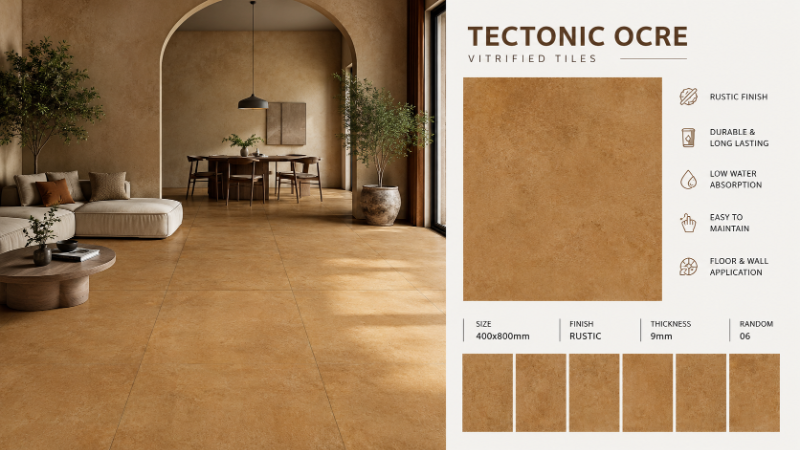
The tectonic ocre variant specifically refers to the tile's color and texture profile. Ocre is an earthy, warm brownish-yellow tone that evokes natural stone aesthetics. The rustic finish adds a slightly textured, aged appearance that mimics the look of traditional or weathered materials. This combination makes these tiles ideal for creating spaces that feel both contemporary and grounded in natural aesthetics.
Key Technical Specifications
When specifying 400 x 800 mm tectonic ocre vitrified tiles (product code 265966) for your project, several technical parameters are important to understand:
Water Absorption: Vitrified tiles typically have water absorption rates below 0.5%, making them suitable for wet areas like bathrooms, kitchens, and outdoor spaces
Hardness: Most vitrified tiles fall between Mohs hardness 7-8, providing excellent resistance to scratching and abrasion
Slip Resistance: The rustic finish provides a textured surface that offers better slip resistance compared to glossy finishes, making them safer for bathrooms and wet areas
Density: Vitrified tiles are denser than ceramic tiles, typically ranging from 2.3 to 2.5 g/cm³
Thickness: Standard thickness for 400 x 800 mm tiles is usually 9-10 mm, though some manufacturers offer 8 mm variants for lighter applications
Why Choose 400 x 800 mm Format for Your Projects?
Advantages of Rectangular Large-Format Tiles
The 400 x 800 mm format offers several distinct advantages over smaller tile sizes. First, the larger format means fewer grout lines, which creates a cleaner, more contemporary aesthetic. This is particularly valuable in commercial spaces where visual continuity is important. The rectangular shape also creates natural sight lines that can make spaces appear larger and more elongated, a property that's especially useful in narrow corridors or compact rooms.
From a practical standpoint, larger tiles require less labor for installation, potentially reducing labor costs on your project. Additionally, the reduced number of grout lines means less maintenance and easier cleaning, which is particularly advantageous in commercial kitchens, healthcare facilities, and high-traffic public spaces across Indian cities like Mumbai, Bangalore, and Delhi.
Aesthetic and Design Benefits
The tectonic ocre color with rustic finish creates a sophisticated, warm aesthetic that works well in both traditional and modern design schemes. This versatility makes it an excellent choice for diverse applications, from residential apartments in Pune to hospitality spaces in Goa. The ocre tone provides a neutral backdrop that complements various interior design styles, from minimalist contemporary to warm, eclectic bohemian designs.
The rustic finish, in particular, adds visual depth and character to spaces. Unlike high-gloss finishes that can feel cold or overly modern, the textured rustic surface creates a more inviting, natural appearance. This makes these tiles especially popular for creating feature walls, accent areas, or spaces where designers want to evoke a sense of warmth and authenticity.
Applications and Use Cases in Indian Construction
Residential Applications
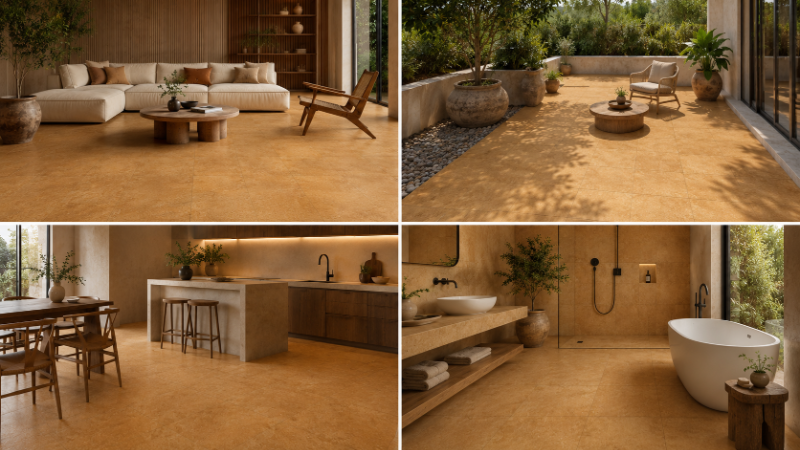
In residential projects, 400 x 800 mm tectonic ocre vitrified tiles are increasingly popular for:
Kitchen Flooring: The rustic finish provides good slip resistance and the ocre tone complements both traditional Indian kitchens and modern, minimalist designs
Bathroom Flooring and Wall Cladding: The vitrified nature ensures excellent water resistance, making these tiles ideal for bathroom applications
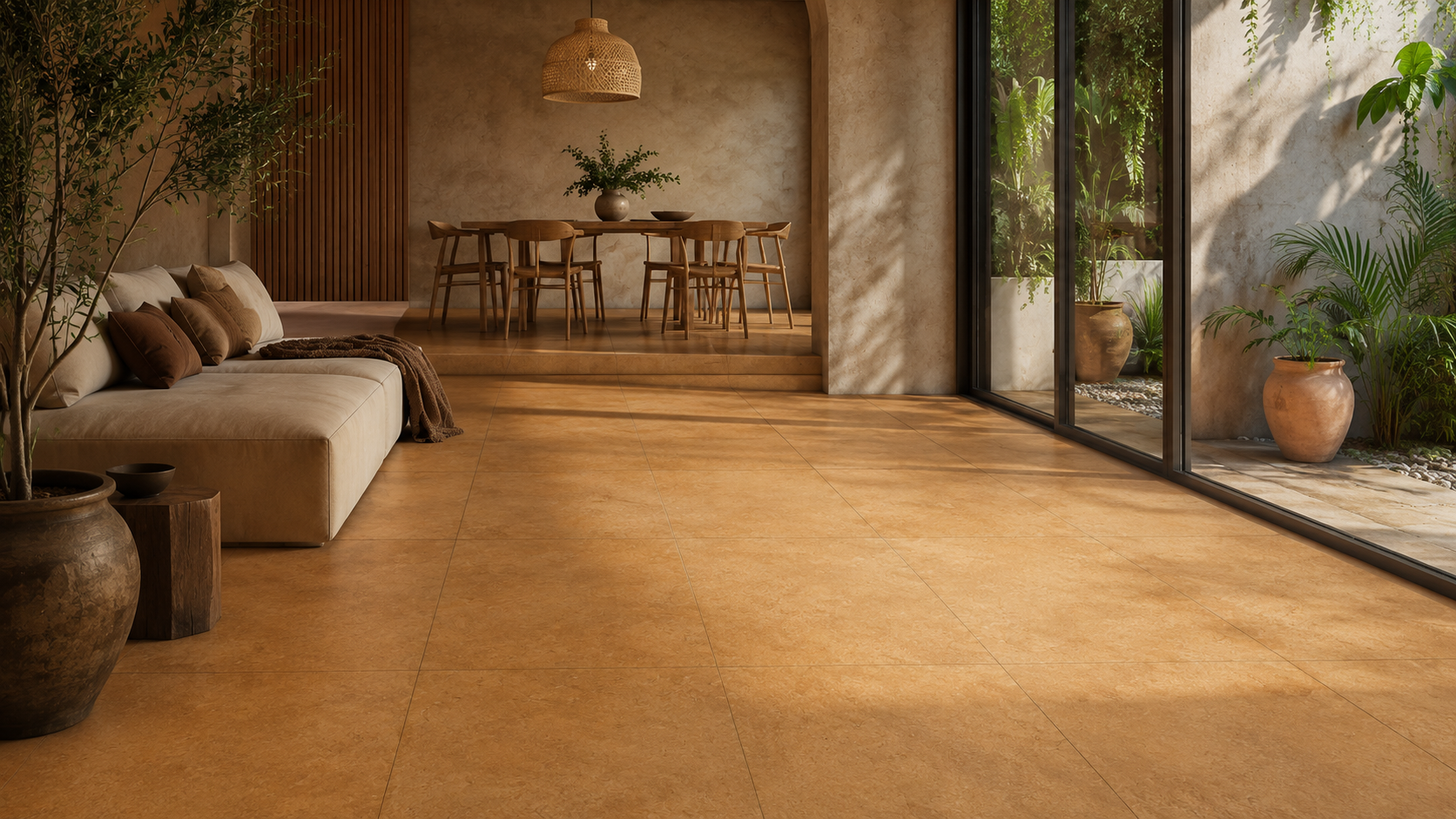
Living Areas: The larger format creates an open, spacious feel in living rooms and dining areas
Entryways and Corridors: The rectangular format naturally guides the eye and creates visual continuity through transition spaces
Outdoor Patios and Terraces: Weather resistance and durability make these tiles suitable for outdoor applications in Indian climates
Commercial and Hospitality Projects
Commercial spaces in India have increasingly adopted large-format vitrified tiles. Hotels, restaurants, and retail spaces in major cities like Bangalore, Mumbai, and Hyderabad frequently specify 400 x 800 mm tiles for their commercial viability. The tectonic ocre finish, in particular, works well in:
Boutique hotel lobbies and corridors
High-end restaurant and cafe interiors
Retail showrooms and boutiques
Corporate office lobbies and common areas
Healthcare facility corridors and waiting areas
Industrial and Institutional Applications
The durability and ease of maintenance of vitrified tiles make them suitable for industrial kitchens, food processing facilities, and institutional buildings. The rustic finish provides adequate slip resistance while maintaining a professional appearance.
Cost Considerations and Pricing in the Indian Market
Tile Pricing
As of 2024, 400 x 800 mm vitrified tiles in the tectonic ocre finish typically range from ₹150 to ₹400 per square foot in the Indian market, depending on the manufacturer and quality grade. Premium brands may command higher prices, while competitive regional manufacturers may offer more economical options. For a typical 1000 sq ft residential project, budget approximately ₹1.5 to ₹4 lakhs for tile material alone.
Installation and Labor Costs
Installation costs in major Indian cities typically range from ₹40 to ₹100 per square foot, depending on local labor rates and project complexity. Cities like Bangalore and Mumbai tend to have higher labor costs compared to tier-2 cities. The rectangular format may slightly reduce installation time compared to smaller tiles, potentially saving 10-15% on labor costs.
Additional Costs to Consider
When budgeting for your project, remember to include:
Adhesive and Grout: Approximately ₹10-20 per square foot
Sealing (for rustic finish): Optional but recommended for enhanced stain resistance, approximately ₹5-10 per square foot
Wastage: Budget 5-10% additional tiles for cutting and breakage
Leveling and Substrate Preparation: May add ₹20-50 per square foot depending on existing conditions
Installation Best Practices
Substrate Preparation
Proper substrate preparation is critical for successful tile installation. The substrate must be:
Structurally sound and capable of supporting the weight of vitrified tiles
Level within 3mm variation over 3 meters (important for large-format tiles)
Clean and free of dust, debris, and loose materials
Properly cured (if using concrete) for at least 28 days before tiling
Adhesive Selection
For 400 x 800 mm tiles, use high-quality, flexible tile adhesive (sometimes called thin-set mortar) that's specifically rated for large-format tiles. In India, brands like Asian Paints, Birla White, and Sika offer reliable products. The adhesive should have good open time and flexibility to accommodate the larger tile size and any minor substrate variations.
Laying Pattern and Grout Lines
The most common laying patterns for rectangular tiles are:
Running Bond (Staggered): Creates a dynamic, continuous pattern that's visually appealing
Straight Lay: Simple, aligned pattern that works well in minimalist designs
Herringbone: More complex but creates striking visual interest
For grout lines, 3-5 mm is standard for large-format tiles. Use epoxy or cement-based grout depending on your application. Epoxy grout offers superior stain resistance and is particularly recommended for kitchens and commercial spaces.
Curing and Sealing
Allow adhesive to cure for 24-48 hours before grouting. After grouting, wait another 48-72 hours before exposing the floor to water or heavy use. For rustic finish tiles, consider applying a penetrating sealer to enhance stain resistance and ease of maintenance.
Maintenance and Care
Daily Cleaning
Vitrified tiles are among the easiest flooring materials to maintain. Daily cleaning involves:
Sweeping or vacuuming to remove dust and debris
Damp mopping with water or mild detergent solution
Immediate wiping of spills to prevent staining
Deep Cleaning and Maintenance
Periodically (monthly or quarterly depending on traffic):
Use pH-neutral tile cleaners specifically designed for vitrified tiles
Clean grout lines with a soft brush to prevent discoloration
For stubborn stains, use specialized tile stain removers
Avoid acidic cleaners that can damage grout over time
Long-Term Care
With proper maintenance, 400 x 800 mm vitrified tiles can last 20-30 years or more. Resealing rustic finish tiles every 2-3 years helps maintain their appearance and stain resistance. In high-traffic commercial spaces, more frequent maintenance may be necessary.
Selecting and Sourcing Quality Tiles
Quality Grades
Vitrified tiles are typically graded as:
Grade A (First Quality): No visible defects, consistent color and finish
Grade B (Second Quality): Minor variations in color or finish, suitable for most applications
Grade C (Third Quality): More noticeable variations, typically used for commercial or industrial applications
For residential projects, Grade A is recommended. For commercial applications, Grade B is usually acceptable and more economical.
Finding Reliable Suppliers
When sourcing 400 x 800 mm tectonic ocre vitrified tiles (product code 265966), work with established tile manufacturers and distributors. Major Indian tile manufacturers like Kajaria, Somany, Nitco, and RAK Ceramics offer quality products with consistent specifications. When evaluating suppliers, request:
Technical data sheets with detailed specifications
Samples for on-site evaluation under actual lighting conditions
Warranty information and after-sales support
Delivery timelines and logistics support
Comparing with Alternative Materials
Vitrified Tiles vs. Ceramic Tiles
Vitrified tiles offer superior durability and water resistance compared to ceramic tiles. While ceramic tiles may be more economical, vitrified tiles provide better performance in demanding applications and have lower maintenance requirements.
Vitrified Tiles vs. Natural Stone
Natural stone (marble, granite, limestone) offers unique aesthetics but requires more maintenance and is more prone to staining and etching. Vitrified tiles with rustic finishes can closely mimic natural stone appearance while offering superior durability and lower maintenance.
Vitrified Tiles vs. Porcelain
Porcelain tiles are a subset of vitrified tiles made from higher-quality raw materials. While porcelain tiles may be slightly more expensive, the difference is often marginal, and both offer excellent performance.
Working with Design Professionals
When planning a project that incorporates 400 x 800 mm tectonic ocre vitrified tiles, collaborate with experienced architects and interior designers who understand tile selection and installation. Professionals listed on AECORD, India's leading B2B2C marketplace for AECO professionals, can provide expert guidance on material selection, design integration, and contractor coordination.
AECORD connects you with verified architects, interior designers, contractors, and tile suppliers across major Indian cities. By using AECORD, you can access a curated network of professionals who have experience with large-format vitrified tiles and can ensure your project meets quality standards and timelines.
Regulatory Considerations in India
Indian Standards
Vitrified tiles in India should comply with IS 15622:2016, which specifies requirements for ceramic tiles. Ensure your supplier provides tiles that meet these standards. Additionally, for commercial projects, check local building codes and regulations in your specific city or state.
Environmental Considerations
Increasingly, projects in India are considering environmental impact. Many modern tile manufacturers have adopted sustainable practices and offer eco-friendly options. When sourcing tiles, inquire about the manufacturer's environmental certifications and practices.
Conclusion
The 400 x 800 mm tectonic ocre vitrified tile with rustic finish represents an excellent choice for diverse applications across residential, commercial, and institutional projects in India. Its combination of aesthetic appeal, durability, ease of maintenance, and reasonable cost makes it a practical option for architects, builders, and homeowners. By understanding the tile's specifications, proper installation techniques, and maintenance requirements, you can ensure successful long-term performance in your projects.
Whether you're planning a residential renovation in Delhi, a commercial project in Bangalore, or a hospitality space in Mumbai, these tiles offer the versatility and quality needed for contemporary Indian construction. To find experienced professionals who can guide your tile selection and installation process, explore AECORD's network of architects, designers, and contractors. Visit AECORD today to connect with verified AECO professionals in your area and ensure your project achieves the highest standards of quality and design excellence.
