

House Construction Cost in India 2026: Complete Cost Breakdown, Materials & Budget Planning Guide
Planning to build a house in 2026? Understanding construction costs is one of the most critical aspects of any residential project in India. Whether you're building in metropolitan areas like Mumbai, Delhi, Bangalore, or in tier-2 cities, construction expenses have evolved significantly and continue to fluctuate based on material prices, labor costs, and regulatory requirements.
This comprehensive guide will help you navigate the complexities of house construction costs in 2026, providing realistic budgeting insights and practical strategies to manage your project efficiently. /blog/house-construction-cost-per-sq-ft-india-2026
Build cost · Bengaluru, May 2026
Current State of Construction Costs in India (2026 Outlook)
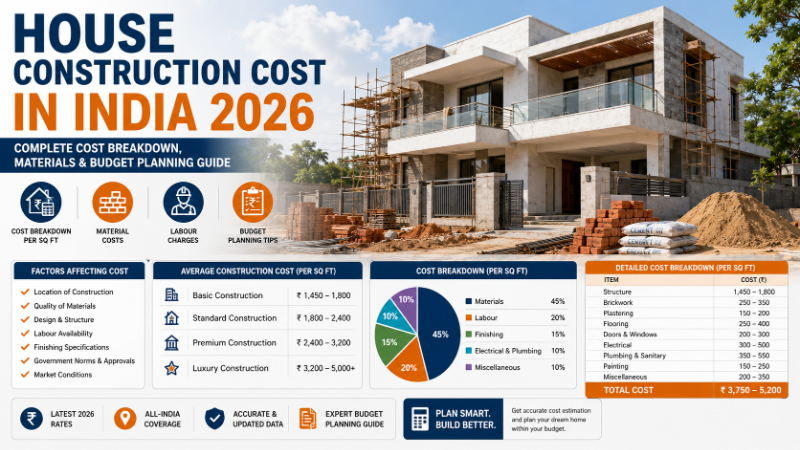
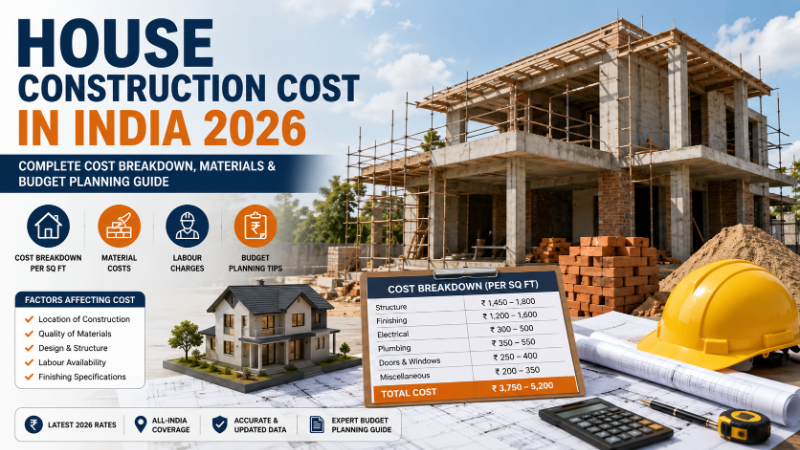
Overall Cost Range and Per-Square-Foot Pricing
As we approach 2026, construction costs in India vary significantly based on location, quality, and specifications. Here's what you can expect:
Metropolitan Cities (Mumbai, Delhi, Bangalore, Hyderabad): ₹2,500 to ₹5,000+ per square foot
Tier-1 Cities (Pune, Chennai, Kolkata): ₹2,000 to ₹3,500 per square foot
Tier-2 Cities (Ahmedabad, Jaipur, Lucknow): ₹1,500 to ₹2,500 per square foot
Semi-urban and Rural Areas: ₹1,000 to ₹1,800 per square foot
These figures represent mid-range construction quality. Premium finishes and specialized designs can push costs significantly higher, while basic construction may fall below these ranges.
Cost Inflation Trends
Construction costs in India have been experiencing an average annual inflation of 5-7% over the past few years. Several factors contribute to this trend:
Rising raw material costs, particularly steel and cement
Increased labor wages across construction sectors
Stricter building codes and environmental compliance requirements
Enhanced safety standards and worker welfare provisions
Logistics and transportation cost increases
When planning your 2026 budget, factor in a 5-6% increase from current 2024-2025 rates to get a realistic estimate.
Frequently asked
Breaking Down Major Construction Cost Components
1. Foundation and Structural Work (20-25% of total cost)
The foundation is the most critical investment in any house construction. In 2026, you should budget:
Soil testing and survey: ₹15,000 to ₹40,000
Foundation excavation and preparation: ₹300-500 per square foot of built-up area
Concrete work: ₹800-1,200 per cubic meter (depending on grade)
Reinforcement steel: ₹60,000 to ₹1,20,000 per ton
The type of foundation (pile foundation, raft foundation, or strip foundation) significantly impacts costs. Difficult soil conditions or flood-prone areas may require specialized solutions, increasing expenses.
2. Materials and Raw Materials (40-50% of total cost)
This is the largest expense component in any construction project. Here's the current pricing landscape for 2026:
Cement: ₹350-450 per 50kg bag (varies by region and brand)
Steel (TMT bars): ₹55,000-70,000 per ton
Sand: ₹2,000-4,000 per cubic meter (river sand is more expensive than manufactured sand)
Aggregates: ₹1,500-2,500 per cubic meter
Bricks: ₹3,000-6,000 per thousand bricks (depends on quality and location)
Tiles (flooring): ₹50-300 per square foot (ceramic to premium porcelain)
Electrical materials: ₹150-300 per square foot of built-up area
Plumbing materials: ₹100-250 per square foot of built-up area
Material costs are highly location-dependent. Building in Bangalore or Hyderabad might be 15-20% more expensive than in Lucknow or Jaipur due to transportation and local market dynamics.
3. Labor Costs (15-20% of total cost)
Labor has become one of the fastest-growing cost components in construction. In 2026, expect:
Skilled workers (masons, electricians, plumbers): ₹600-1,200 per day
Semi-skilled workers: ₹400-700 per day
Unskilled workers: ₹300-500 per day
Labor costs vary significantly by city. Mumbai and Delhi command 20-30% higher wages than tier-2 cities. Additionally, labor shortage in certain regions can lead to premium pricing.
4. Finishing and Interior Work (15-25% of total cost)
This includes painting, flooring, doors, windows, and interior fixtures. Budget allocation depends on your quality preferences:
Basic finishing: ₹300-500 per square foot
Standard finishing: ₹500-1,000 per square foot
Premium finishing: ₹1,000-2,000+ per square foot
Paint costs have increased due to premium eco-friendly options. Standard interior paint ranges from ₹200-400 per liter, while premium brands cost ₹400-600 per liter.
Location-Specific Cost Analysis for Major Indian Cities
Mumbai
As India's financial capital, Mumbai has the highest construction costs. Expect ₹3,500-5,500 per square foot for mid-range construction. Land acquisition costs are astronomical, often exceeding the construction budget. Stringent building regulations and high labor costs contribute to these figures.
Delhi and NCR
Construction costs in Delhi range from ₹2,500-4,500 per square foot. The National Capital Region offers slightly better rates in areas like Noida and Gurgaon (₹2,000-3,500 per square foot). Regulatory compliance with Delhi Building Bylaw 2016 adds to the expense.
Bangalore
Bangalore's construction costs are ₹2,500-4,000 per square foot, reflecting the city's IT boom and high demand. The city's tech-savvy population also drives demand for smart home features, which can increase costs by 10-15%.
Hyderabad
One of the more affordable metro cities, Hyderabad offers construction at ₹2,000-3,500 per square foot. The city's growing infrastructure and relatively lower land costs make it attractive for homeowners.
Pune and Ahmedabad
These cities offer mid-range options at ₹1,800-3,000 per square foot. They're becoming increasingly popular for affordable housing with good infrastructure.
Hidden Costs and Contingency Planning
Regulatory and Compliance Costs
Don't overlook these often-forgotten expenses:
Building approval and permissions: ₹10,000-50,000 (varies by municipality)
Structural stability certificate: ₹5,000-15,000
Occupancy certificate: ₹5,000-10,000
Environmental clearance (if applicable): ₹20,000-1,00,000
Fire safety certification: ₹10,000-30,000
Site Development Costs
Often underestimated, these include:
Site leveling and clearance: ₹100-300 per square foot of land area
Water connection and bore well: ₹50,000-2,00,000
Drainage and sewage system: ₹100-200 per square foot
Boundary wall and fencing: ₹200-500 per running meter
Temporary structures and site office: ₹50,000-2,00,000
Contingency Buffer
Industry experts recommend maintaining a 10-15% contingency buffer for unexpected expenses. For a ₹50 lakh project, this means setting aside ₹5-7.5 lakhs for unforeseen circumstances such as:
Design changes mid-project
Unexpected soil conditions requiring remediation
Material price fluctuations
Labor disputes or delays
Weather-related delays
Strategies to Optimize Your Construction Budget
1. Phased Construction Approach
Consider building in phases to spread costs over time. Complete the basic structure and essential areas first, then add finishing work later. This approach helps manage cash flow and allows you to adjust plans based on actual expenses.
2. Material Selection and Sourcing
Work with experienced contractors and suppliers who understand local market dynamics. Direct sourcing of materials can save 10-15% compared to contractor markups. However, ensure quality standards are maintained.
3. Labor Efficiency
Hire experienced contractors with established teams. While they may charge slightly higher rates, their efficiency reduces overall project duration and associated costs. A project that takes 12 months instead of 18 months saves significantly on overhead.
4. Technology Integration
Modern construction management tools can reduce waste and improve efficiency. Many professionals on AECORD now use project management software that tracks materials, labor, and timelines, helping optimize costs.
5. Standardized Designs
Avoid overly complex architectural designs that increase construction complexity. Simple, functional designs reduce labor costs and construction time. Standard designs are also easier to execute with fewer errors.
Financing Options for 2026 Construction
Home Construction Loans
Most banks offer home construction loans covering 80-90% of construction costs at interest rates ranging from 7.5%-9.5% (as of 2024-2025). Expect these rates to stabilize around 8-9% in 2026.
Government Schemes
Explore schemes like:
Pradhan Mantri Awas Yojana: Provides subsidies for eligible homeowners
CLSS (Credit Linked Subsidy Scheme): Interest rate subsidies for home loans
State-specific schemes: Many states offer tax exemptions or subsidies for residential construction
Working with Professionals: Finding the Right Team on AECORD
Building a house is a complex undertaking that requires coordination between architects, structural engineers, contractors, and various specialists. AECORD connects you with vetted AECO professionals who understand local regulations, market rates, and best practices in your region.
When assembling your team, ensure you have:
An experienced architect who understands local building codes
A structural engineer with expertise in your soil type and climate
A reliable contractor with references and proven track record
Specialists for MEP (Mechanical, Electrical, Plumbing) work
Using AECORD to find these professionals ensures you're working with qualified individuals who understand current market rates and can provide accurate cost estimates.
Timeline and Cost Implications
Construction timelines directly impact costs. A typical 2,000 square foot house takes:
6-8 months: Basic structure and finishing (accelerated timeline, 20-30% cost premium)
10-12 months: Standard timeline (normal costs)
14-18 months: Leisurely pace with design refinements (potential cost savings due to better planning)
Extended timelines increase overhead costs, while rushed timelines incur premium labor charges. Finding the optimal balance is crucial for cost management.
Conclusion: Planning Your 2026 Construction Budget
Building a house in 2026 requires careful planning and realistic budgeting. Based on current trends, expect construction costs to range from ₹1,500 to ₹5,000+ per square foot depending on location and quality. The key to successful project completion within budget is:
Understanding your location's specific cost dynamics
Factoring in all hidden costs and contingencies
Working with experienced, qualified professionals
Maintaining realistic timelines
Regularly monitoring expenses against budget
Start your planning process early, research thoroughly, and don't hesitate to consult with multiple professionals to get accurate estimates. The investment in proper planning will pay dividends throughout your construction journey.
Ready to build your dream home in 2026? Connect with experienced architects, engineers, and contractors on AECORD who can provide accurate cost estimates, manage your project efficiently, and ensure compliance with all local regulations. Browse our network of vetted AECO professionals today and get started on your construction journey with confidence.
Frequently Asked Questions
What is the average house construction cost per square foot in India for 2026?
Construction costs in India for 2026 vary by location: metropolitan cities range from ₹2,500 to ₹5,000+ per square foot, tier-1 cities from ₹2,000 to ₹3,500, tier-2 cities from ₹1,500 to ₹2,500, and semi-urban areas from ₹1,000 to ₹1,800 per square foot. These figures represent mid-range construction quality and may vary based on finishes and specifications.
How much will construction costs increase by 2026?
Construction costs in India have been experiencing an average annual inflation of 5-7% over recent years. When planning your 2026 budget, you should factor in a 5-6% increase from current 2024-2025 rates to account for rising material costs, labor wages, and stricter compliance requirements.
What is the biggest cost component in house construction?
Materials and raw materials represent the largest expense component at 40-50% of total construction costs, including cement, steel, sand, aggregates, bricks, tiles, electrical, and plumbing materials. Foundation and structural work is the second-largest component at 20-25% of total costs.
Why are construction costs rising in India?
Construction costs are rising due to several factors including increased raw material prices (steel and cement), higher labor wages, stricter building codes and environmental compliance requirements, enhanced safety standards, and increased logistics and transportation costs.
How much should I budget for foundation work in house construction?
Foundation work typically accounts for 20-25% of total construction costs and includes soil testing (₹15,000-40,000), excavation (₹300-500 per square foot), concrete work (₹800-1,200 per cubic meter), and reinforcement steel (₹60,000-1,20,000 per ton). The final cost depends on soil conditions and the type of foundation required.