

Understanding 16mm Designer Cement Bonded Particle Board: A Complete Guide for Indian Construction Professionals
The construction and interior design industry in India has witnessed significant evolution in recent years, with engineered materials gaining prominence over traditional options. Among these, cement bonded particle board (CBPB) has emerged as a versatile solution for both structural and aesthetic applications. The 16mm thickness variant with dimensions of 1220mm x 2440mm has become particularly popular in commercial and residential projects across major Indian cities like Mumbai, Delhi, Bangalore, and Pune.
This comprehensive guide explores the specifications, applications, benefits, and practical considerations for using designer cement bonded particle board with murk texture grey finish in your construction projects. Whether you're an architect, contractor, or project manager, understanding this material's characteristics will help you make informed decisions for your next project.
Build cost · Bengaluru, May 2026
What is Cement Bonded Particle Board?
Material Composition and Manufacturing Process
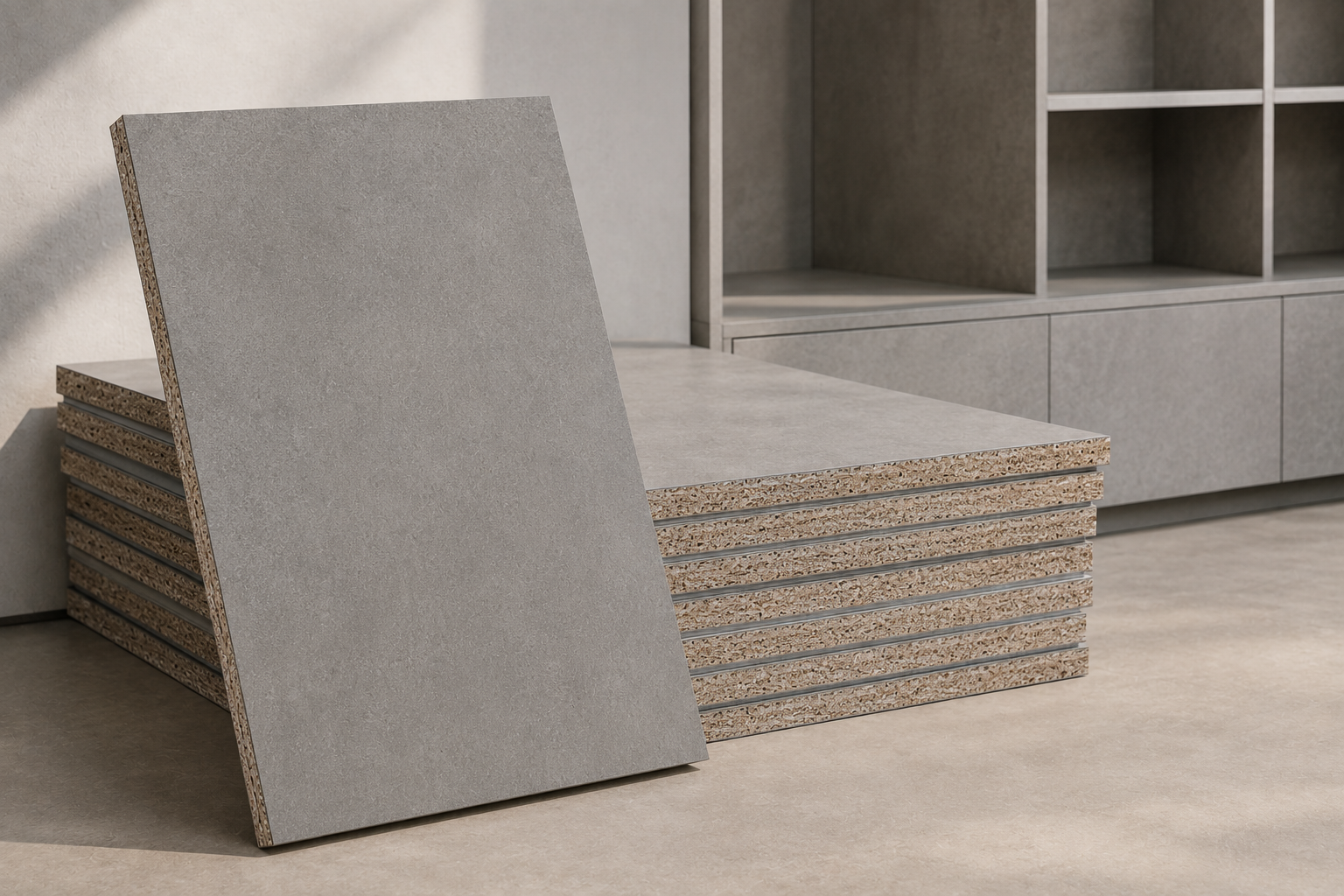
Cement bonded particle board is an engineered composite material manufactured by combining wood particles, Portland cement, and water under controlled conditions. The 16mm thickness variant represents a mid-range option that balances strength with workability, making it ideal for various applications in the Indian construction sector.
The manufacturing process involves:
Raw material preparation: Selection and sizing of wood particles to optimal dimensions
Mixing: Combining particles with cement binder and water in precise proportions
Forming: Creating mats through mechanical or pneumatic processes
Pressing: Applying heat and pressure to achieve desired thickness and density
Curing: Allowing the cement to set and harden
Finishing: Adding texture and surface treatments
Standard Dimensions: 1220mm x 2440mm
The 1220mm x 2440mm dimensions are internationally standardized, making this size particularly convenient for construction applications. This translates to approximately 2.97 square meters per sheet, which aligns well with standard wall heights and modular construction planning in India. The 16mm thickness provides adequate structural integrity while remaining lightweight enough for easy handling and installation.
Frequently asked
Key Properties of 16mm Cement Bonded Particle Board
Physical and Mechanical Characteristics
Understanding the physical properties of this material is crucial for proper application and long-term performance:
Density: Typically ranges from 1100-1400 kg/m³, providing good strength-to-weight ratio
Moisture resistance: Significantly better than plywood, making it suitable for wet areas
Fire resistance: Non-combustible, meeting Indian fire safety standards
Dimensional stability: Minimal expansion or contraction with humidity changes
Durability: Long service life when properly installed and maintained
Sound absorption: Moderate acoustic properties beneficial for interior spaces
The Murk Texture Grey Finish
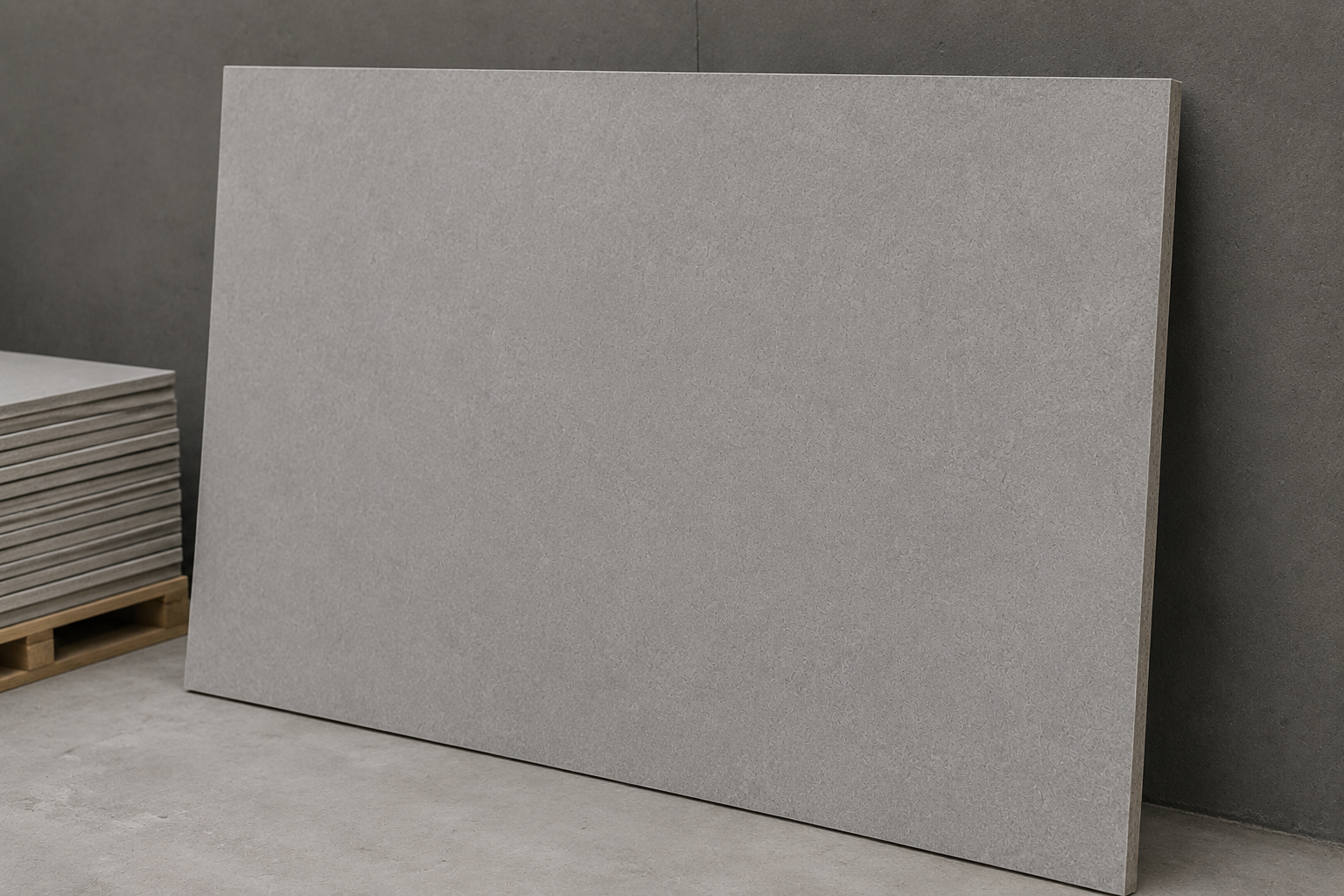
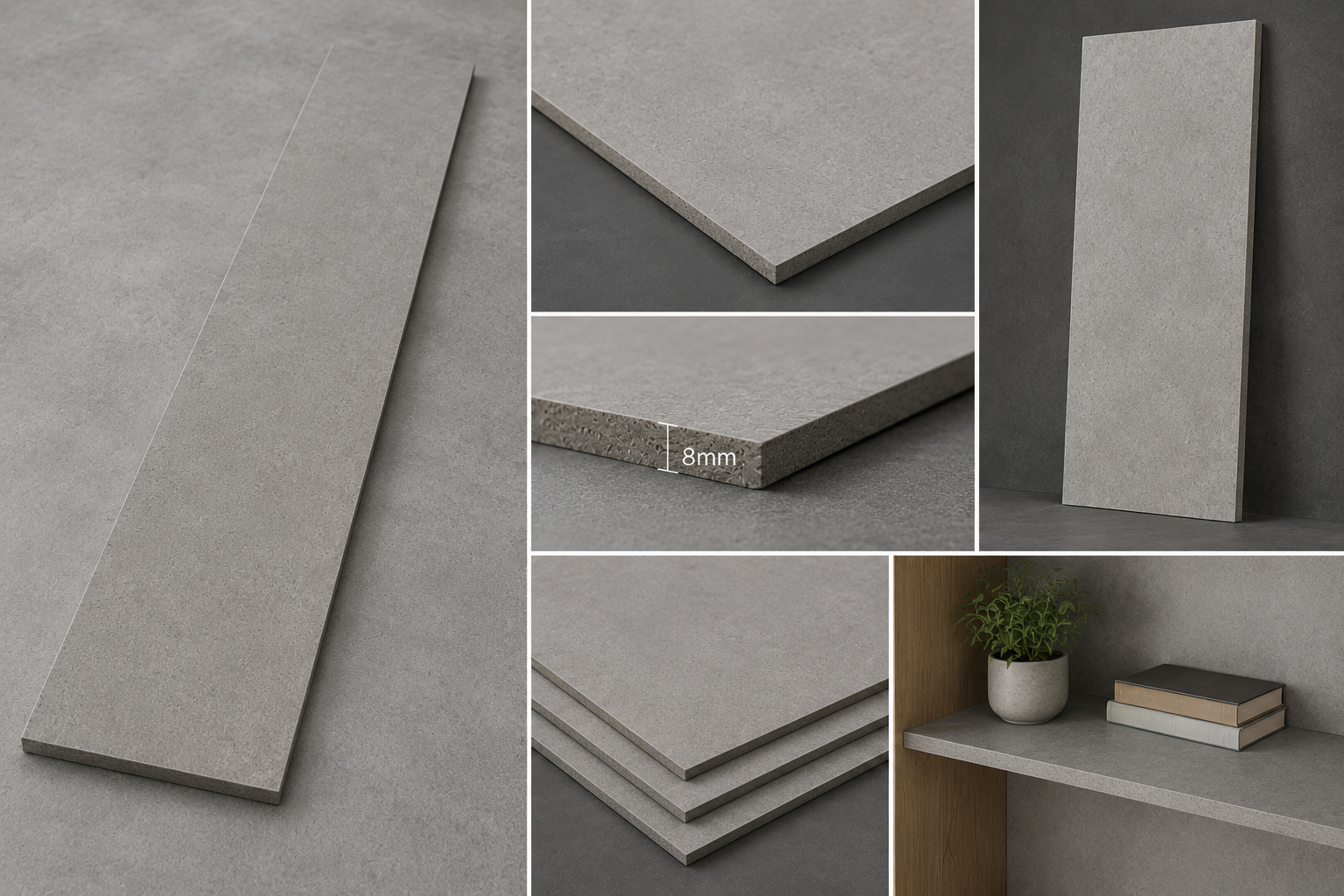
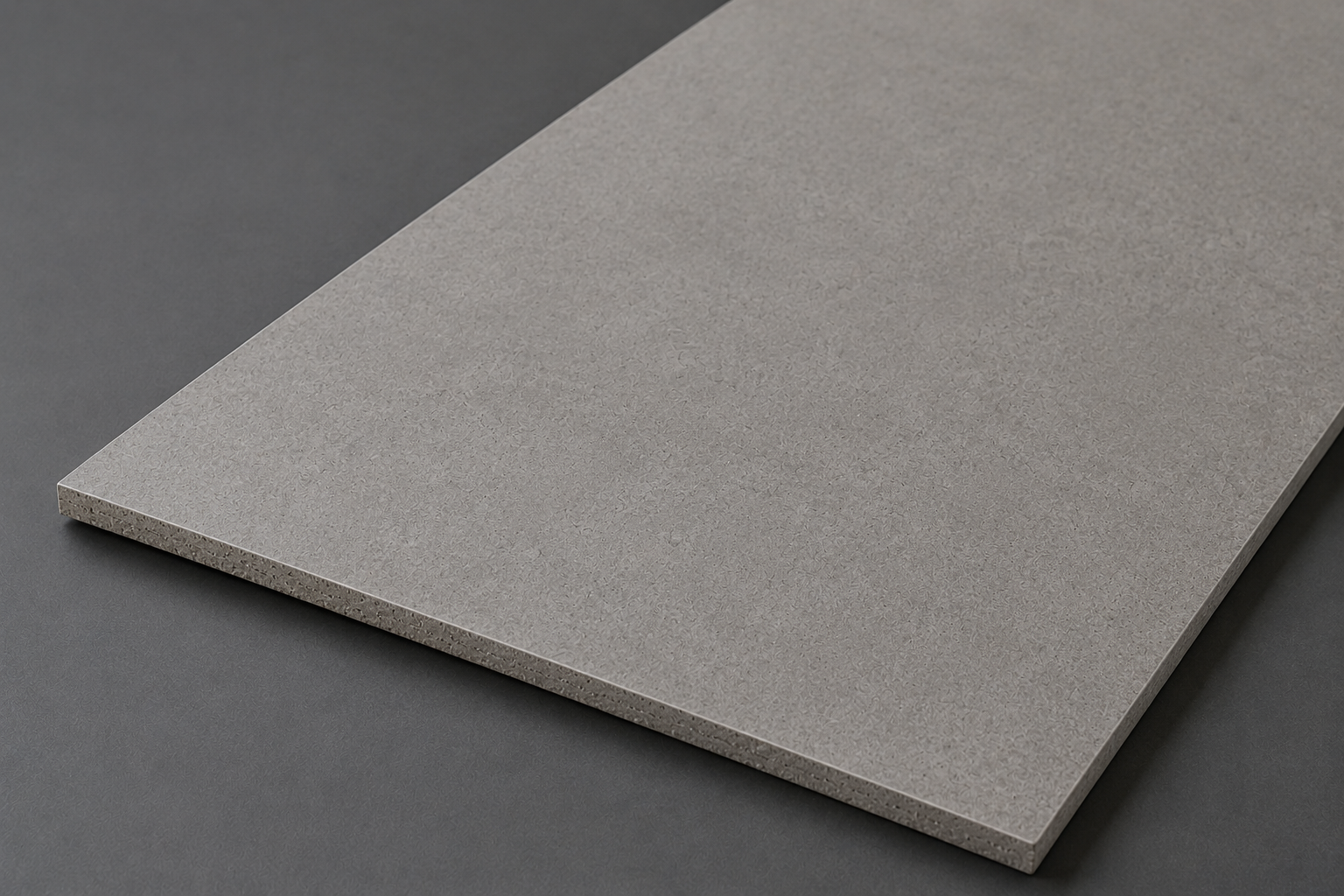
The murk texture grey finish (specification 361746) represents a sophisticated aesthetic choice that combines functionality with visual appeal. This textured surface offers several advantages:
Enhanced aesthetics: The grey color with murk texture provides a contemporary, industrial look suitable for modern interiors
Conceals imperfections: Texture helps hide minor installation variations and surface blemishes
Improved grip: Textured surface provides better friction and handling characteristics
Reduced glare: Unlike smooth finishes, murk texture minimizes light reflection
Design versatility: Works well with various interior design styles and color schemes
Applications in Indian Construction and Design
Residential Applications
In Indian homes, 16mm cement bonded particle board finds extensive use in:
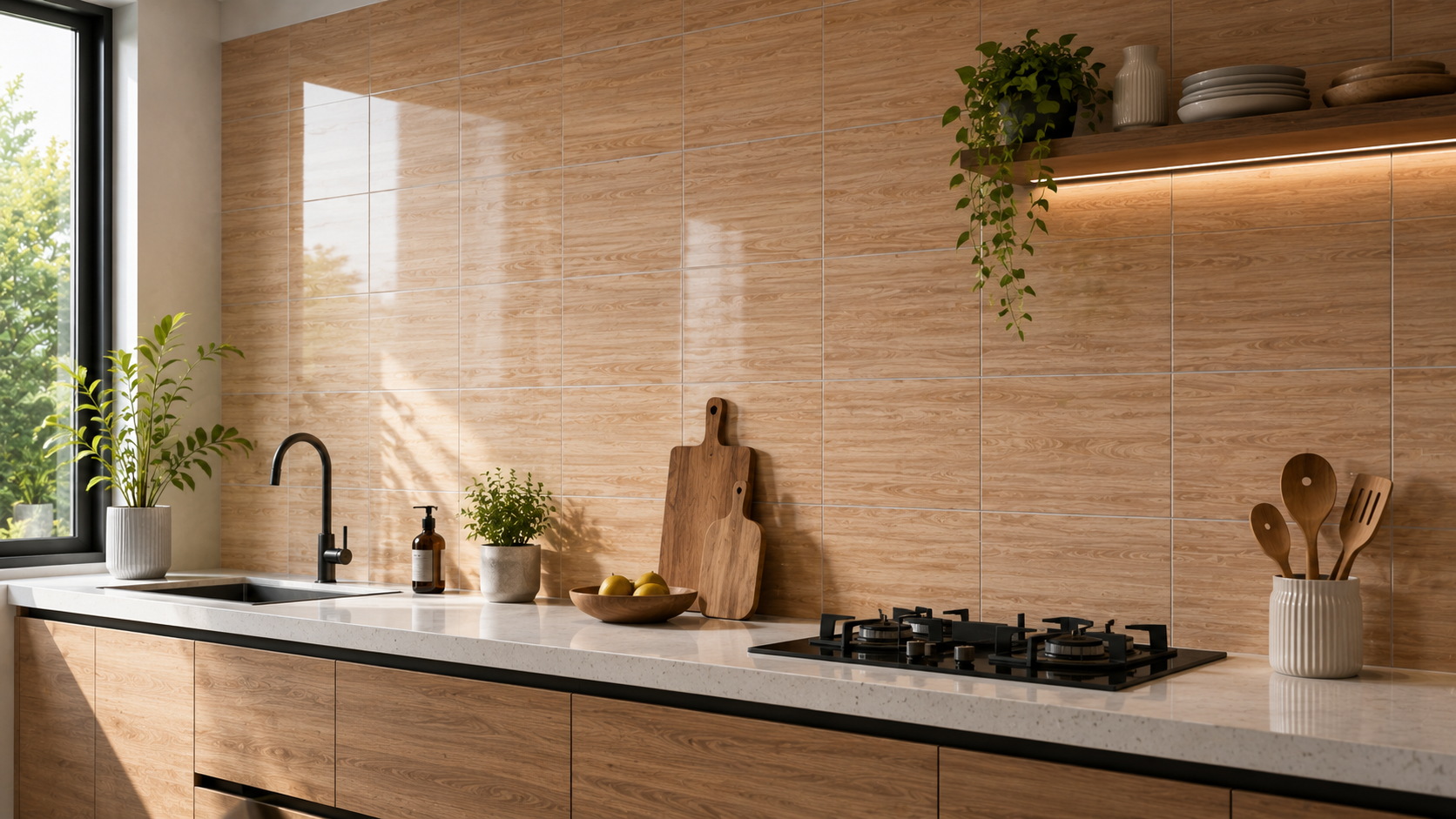
Kitchen backsplashes: Moisture resistance makes it ideal for wet areas
Bathroom partitions: Superior water resistance compared to traditional plywood
Feature walls: The murk texture grey finish creates striking accent walls
Wardrobe interiors: Durable and resistant to warping
Shelving systems: Adequate strength for load-bearing applications
Commercial and Office Spaces
Commercial projects across Delhi, Mumbai, and Bangalore increasingly specify cement bonded particle board for:
Office partitions: Clean aesthetic with good sound dampening
Suspended ceilings: Lightweight yet durable
Display systems: Excellent for retail and exhibition spaces
Modular workstations: Stable and long-lasting
Data center installations: Fire-resistant properties valued in sensitive facilities
Hospitality and Institutional Projects
Hotels, restaurants, and institutional buildings benefit from cement bonded particle board's durability and maintenance characteristics. The material's resistance to moisture and temperature fluctuations makes it particularly suitable for Indian climate conditions, where monsoons and temperature variations are significant factors.
Advantages Over Traditional Materials
Comparison with Plywood
While plywood has been the traditional choice in India, cement bonded particle board offers distinct advantages:
Moisture resistance: Superior performance in wet areas without lamination
Fire safety: Non-combustible versus plywood's flammability
Stability: Minimal warping or cupping over time
Pest resistance: Cement composition deters termites and wood-boring insects
Cost efficiency: Often more economical for large-scale projects
Advantages Over MDF and Particleboard
Compared to medium-density fiberboard and standard particleboard:
Moisture performance: Retains structural integrity in humid conditions
Durability: Longer lifespan, reducing replacement costs
Environmental stability: Better suited to Indian climate variations
Health and safety: Minimal formaldehyde emissions
Installation flexibility: Can be used in areas where other materials would fail
Installation and Handling Guidelines
Pre-Installation Considerations
Before beginning any installation project with 16mm cement bonded particle board, consider these important factors:
Site conditions: Ensure proper ventilation and temperature control during installation
Storage: Keep sheets in a dry location, protected from direct moisture exposure
Acclimatization: Allow material to stabilize to ambient conditions for 24-48 hours
Tools and equipment: Use carbide-tipped tools to prevent chipping and ensure clean cuts
Safety measures: Wear appropriate PPE including dust masks and eye protection
Installation Best Practices
Proper installation ensures optimal performance and longevity:
Support structure: Install on properly spaced supports (typically 400-600mm centers)
Fastening: Use corrosion-resistant fasteners appropriate for cement board
Spacing: Maintain 2-3mm gaps between sheets for expansion
Sealing: Apply appropriate sealants at joints and edges for wet areas
Finishing: Use compatible adhesives and finishes for optimal results
Cost Considerations in the Indian Market
Pricing Factors
The cost of 16mm x 1220mm x 2440mm cement bonded particle board with murk texture grey finish varies across India. As of current market rates, expect to pay approximately ₹800-1,500 per sheet, depending on several factors:
Supplier location: Prices vary between metros and tier-2 cities
Order quantity: Bulk purchases typically offer better pricing
Brand and quality: Established manufacturers command premium pricing
Logistics: Transportation costs impact final pricing, especially in remote areas
Market demand: Seasonal variations affect availability and pricing
Total Project Cost Estimation
When budgeting for a project, consider total installed costs rather than material cost alone. For a typical residential kitchen renovation in Mumbai or Bangalore, factor in:
Material cost: ₹800-1,500 per sheet
Labor: ₹300-600 per sheet for installation
Finishing materials: ₹200-400 per sheet
Contingency: 10-15% for wastage and unforeseen issues
Maintenance and Longevity
Regular Maintenance Practices
Cement bonded particle board requires minimal maintenance compared to traditional materials. Follow these guidelines to ensure long-term performance:
Cleaning: Use damp cloth with mild detergent; avoid excessive water exposure
Sealing: Reapply protective sealants annually in wet areas
Inspection: Check for any signs of damage or deterioration
Ventilation: Ensure adequate air circulation to prevent moisture accumulation
Protection: Avoid direct impact and abrasion in high-traffic areas
Expected Lifespan
With proper installation and maintenance, cement bonded particle board can last 15-25 years or more. This longevity makes it a cost-effective choice for long-term projects, particularly in institutional and commercial settings across Indian cities.
Environmental and Health Considerations
Sustainability Aspects
Cement bonded particle board offers environmental benefits relevant to India's growing focus on sustainable construction:
Raw materials: Often incorporates recycled wood particles and industrial waste
Emissions: Minimal volatile organic compounds (VOCs) compared to synthetic alternatives
Durability: Long lifespan reduces replacement frequency and resource consumption
Recyclability: Material can be recycled or repurposed at end of life
Health and Safety
The cement-based composition ensures better health outcomes for occupants:
No formaldehyde: Unlike MDF, cement board contains no formaldehyde binders
Fire safety: Non-combustible material meets Indian fire safety standards
Mold resistance: Cement composition inhibits mold and mildew growth
Indoor air quality: Contributes to healthier indoor environments
Regulatory Compliance and Standards
Indian Standards and Certifications
When specifying cement bonded particle board for Indian projects, ensure compliance with relevant standards:
IS 12441: Indian Standard for cement bonded particle boards
Fire ratings: Compliance with National Building Code of India (NBC)
Moisture resistance: Testing per Indian Standards for wet area applications
Dimensional stability: Verification of thickness tolerance and flatness
Finding Quality Suppliers and Professionals on AECORD
When undertaking projects involving cement bonded particle board, connecting with experienced professionals is crucial. AECORD, India's leading B2B2C marketplace for AECO professionals, provides a comprehensive platform to find qualified suppliers, installers, and consultants specializing in engineered materials.
On AECORD, you can:
Connect with verified suppliers of cement bonded particle board across major Indian cities
Find experienced installation contractors familiar with local building codes
Consult with architects and designers experienced in cement board applications
Access project references and portfolio reviews from other professionals
Compare quotes and specifications from multiple vendors
Common Challenges and Solutions
Installation Issues
Understanding common challenges helps prevent costly mistakes:
Cracking: Caused by inadequate support or improper fastening; solved through proper spacing and fastener selection
Water damage: Prevented through proper sealing and edge protection in wet areas
Fastener pop-out: Addressed by using appropriate fastening methods and spacing
Surface damage: Minimized through careful handling and protective measures
Future Trends and Innovations
The cement bonded particle board industry continues to evolve with innovations relevant to Indian construction:
Enhanced finishes: New texture options and color variations expanding design possibilities
Improved performance: Better moisture and fire ratings through advanced formulations
Sustainability: Increased use of recycled materials and eco-friendly binders
Smart integration: Development of boards with integrated utilities and smart features
Conclusion
The 16mm thickness cement bonded particle board with murk texture grey finish represents a sophisticated, practical choice for diverse applications across Indian construction projects. Its superior moisture resistance, fire safety, dimensional stability, and aesthetic appeal make it an excellent alternative to traditional materials in residential, commercial, and institutional settings.
Whether you're planning a kitchen renovation in Bangalore, office fit-out in Delhi, or hospitality project in Mumbai, this material offers reliable performance combined with design flexibility. Understanding its properties, proper installation techniques, and maintenance requirements ensures successful project outcomes and long-term satisfaction.
To source quality materials and connect with experienced professionals for your next project, visit AECORD and explore the network of verified suppliers and installation contractors specializing in engineered building materials. With the right partners and proper planning, cement bonded particle board can deliver exceptional results for your construction and design projects across India.
Frequently Asked Questions
What is cement bonded particle board and how is it made?
Cement bonded particle board (CBPB) is an engineered composite material made by combining wood particles, Portland cement, and water under controlled conditions. The manufacturing process involves preparing raw materials, mixing, forming mats, pressing with heat and pressure, curing, and adding surface finishes like texture and color.
Why is 16mm cement bonded particle board popular in Indian construction?
The 16mm thickness offers an ideal balance between structural strength and workability, while the standard 1220mm x 2440mm dimensions align perfectly with Indian modular construction planning and standard wall heights. It's lightweight enough for easy installation yet durable enough for both commercial and residential applications.
Is cement bonded particle board suitable for wet areas?
Yes, cement bonded particle board has significantly better moisture resistance compared to plywood, making it an excellent choice for bathrooms, kitchens, and other wet areas. Its dimensional stability ensures minimal expansion or contraction even with humidity changes.
What are the advantages of murk texture grey finish on cement bonded particle board?
The murk texture grey finish provides a contemporary, industrial aesthetic while concealing minor installation variations and surface imperfections. This textured surface combines visual appeal with practical functionality for modern interior designs.
How does cement bonded particle board compare to plywood in terms of fire safety?
Cement bonded particle board is non-combustible and meets Indian fire safety standards, making it a superior choice compared to plywood for fire-sensitive applications. This material provides enhanced protection in commercial and institutional buildings where fire resistance is critical.