

Understanding 16 mm Designer Cement Bonded Particle Board: A Comprehensive Guide for Indian AECO Professionals
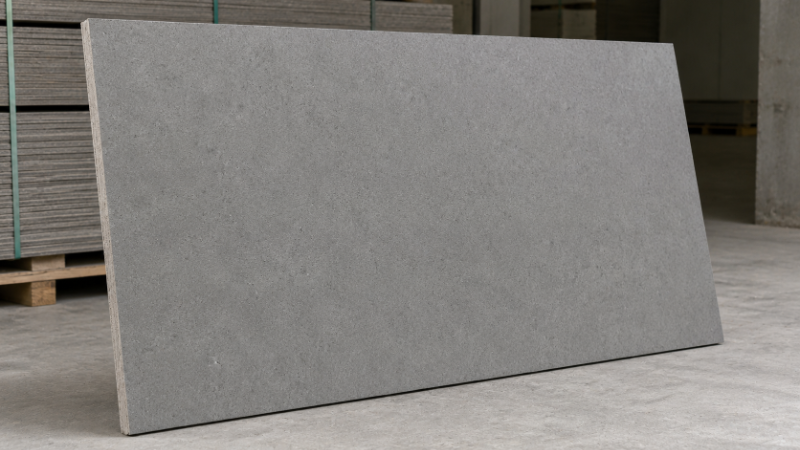
Cement bonded particle board (CBPB) has emerged as one of the most versatile and durable building materials in the Indian construction industry. The 16 mm thickness variant, particularly in the standard size of 1220 mm x 2440 mm with lumber texture and grey finish (specification 361744), represents a significant advancement in material science for architects, engineers, and contractors working across residential, commercial, and industrial projects.
Whether you're designing an office partition in Bangalore, constructing a warehouse in Mumbai, or planning a residential complex in Delhi, understanding the properties and applications of this specific cement bonded particle board is essential for making informed material decisions. This comprehensive guide will help you leverage this material effectively in your projects.
Build cost · Bengaluru, May 2026
What is Cement Bonded Particle Board and Why It Matters
The Composition and Manufacturing Process
Cement bonded particle board is manufactured by combining wood particles with Portland cement and water through a specialized industrial process. The 16 mm thickness variant offers superior strength compared to thinner alternatives, making it suitable for applications requiring enhanced load-bearing capacity and durability.
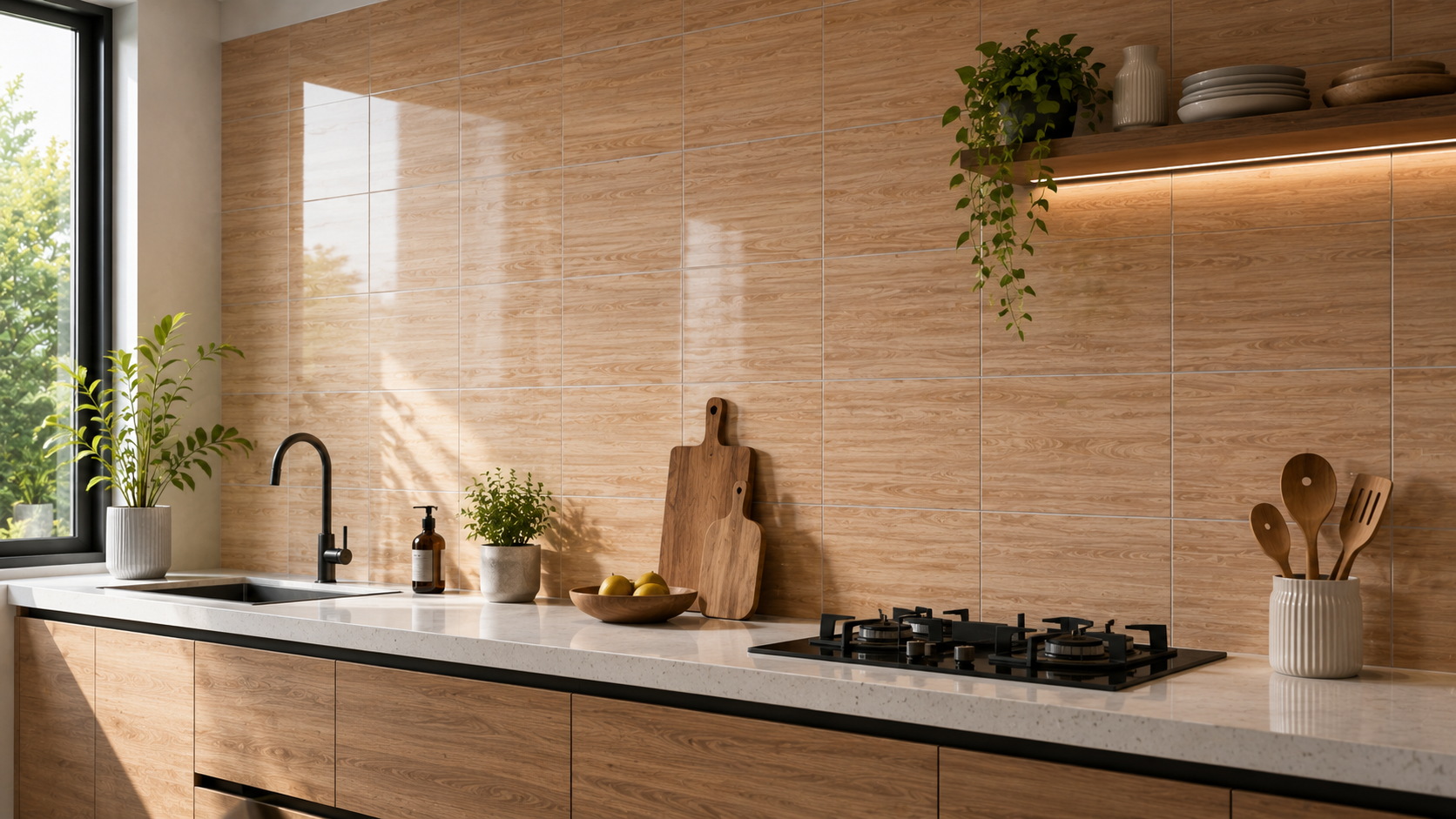
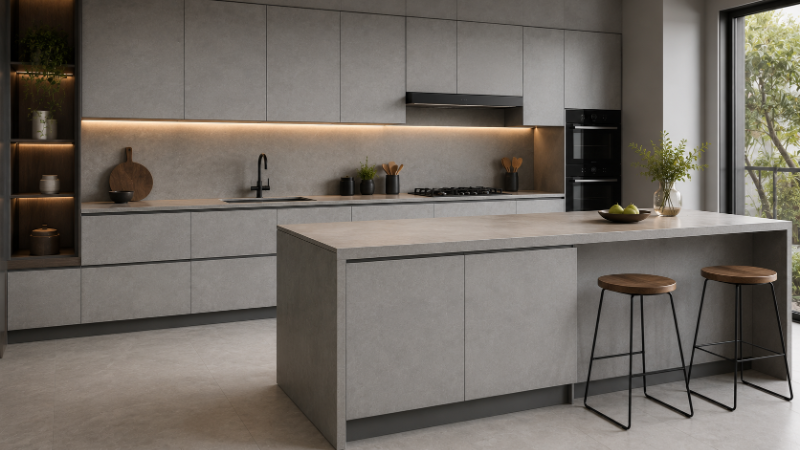
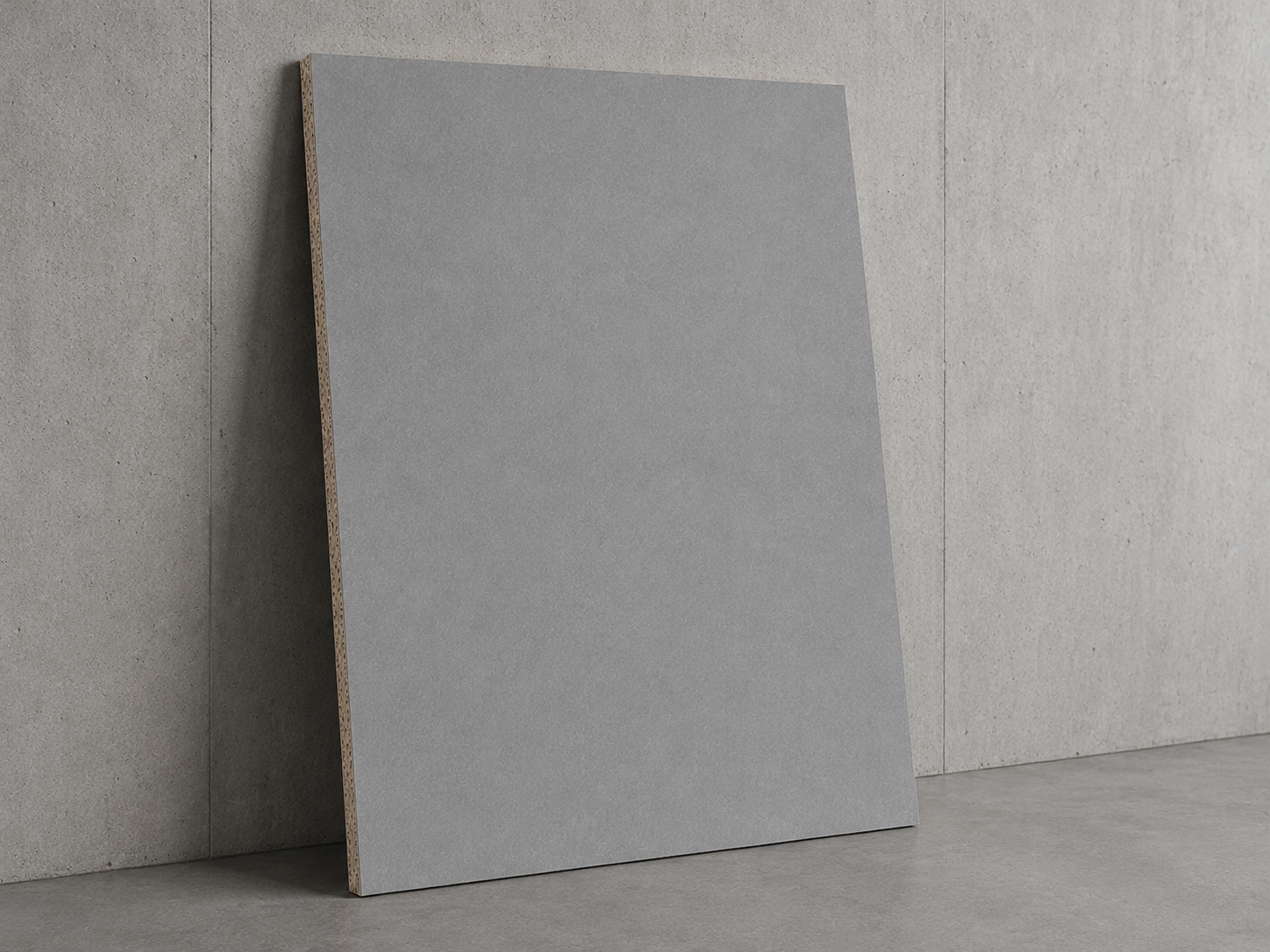
The lumber texture grey finish (specification 361744) adds aesthetic appeal while maintaining the material's functional properties. This specific finish mimics natural wood grain patterns, providing designers with the flexibility to create visually appealing interiors without compromising on material performance.
Key Advantages Over Traditional Materials
Cement bonded particle board offers several advantages that make it increasingly popular among Indian construction professionals:
Moisture Resistance: The cement matrix provides exceptional water resistance, making it ideal for humid climates prevalent across India
Fire Resistance: Non-combustible nature ensures compliance with Indian building codes and fire safety regulations
Durability: With proper installation, these boards can last 25-30 years, reducing long-term maintenance costs
Dimensional Stability: Minimal warping or swelling even in varying temperature and humidity conditions
Pest Resistance: The cement composition prevents termite and insect damage, a critical concern in Indian climates
Cost-Effectiveness: Competitive pricing compared to solid wood or premium composites
Frequently asked
Technical Specifications of 16 mm CBPB (Specification 361744)
Dimensional Standards
The standard size of 1220 mm x 2440 mm (approximately 4 feet x 8 feet) is designed for optimal material utilization and ease of handling on construction sites across India. This size reduces wastage and simplifies logistics, whether you're working in compact urban spaces in Pune or larger industrial areas in Ahmedabad.
The 16 mm thickness provides the sweet spot between structural performance and weight management. A single sheet weighs approximately 45-50 kg, making it manageable for installation while offering sufficient strength for various applications.
Performance Characteristics
The grey lumber texture finish of specification 361744 delivers specific performance metrics:
Compressive Strength: Typically 4-5 MPa, suitable for moderate load applications
Modulus of Rupture: 8-10 MPa, ensuring good bending resistance
Moisture Absorption: Less than 15% after 24 hours of water immersion, demonstrating excellent water resistance
Thermal Conductivity: Approximately 0.20 W/mK, providing moderate insulation properties
Sound Absorption: Effective for acoustic applications due to particle composition
Applications in Indian Construction Projects
Interior Partitioning Systems
One of the most common applications of 16 mm CBPB in India is creating interior partition walls in commercial spaces. The lumber texture grey finish provides an aesthetically pleasing appearance that requires minimal additional finishing. In cities like Bangalore and Hyderabad, where modern office spaces demand both functionality and aesthetics, this material has become increasingly popular.
The material's dimensional stability ensures that partitions remain true over time, preventing alignment issues that plague other materials in India's varying climate conditions.
Flooring and Subflooring Applications
The 16 mm thickness makes this CBPB ideal for subflooring applications in residential and commercial projects. Its moisture resistance is particularly valuable in Indian climates where monsoon rains and high humidity are common concerns. Many builders in Mumbai, Chennai, and Kolkata now specify cement bonded particle board as a substrate layer before installing final flooring materials.
The lumber texture provides adequate grip for workers during installation, improving safety on construction sites.
Wall Cladding and Facade Systems
Architects increasingly use cement bonded particle board for external cladding applications. The grey lumber texture finish offers a contemporary aesthetic that complements modern architectural designs. In projects across Delhi NCR and Gujarat, this material has proven effective for creating weather-resistant external walls when properly sealed and maintained.
The non-combustible nature makes it particularly suitable for high-rise residential and commercial buildings where fire safety regulations are stringent.
Acoustic Panel Applications
The particle composition of CBPB makes it effective for sound absorption. Schools, hospitals, and office spaces across India are increasingly using these boards for acoustic treatment. The grey lumber texture can be left exposed for a contemporary look or covered with fabric for enhanced sound absorption.
Installation Best Practices for Indian Climate Conditions
Pre-Installation Considerations
Before installing 16 mm cement bonded particle board, ensure proper site preparation:
Storage: Keep boards in a dry, well-ventilated area. In humid Indian climates, ensure storage areas are protected from direct rainfall
Acclimatization: Allow boards to acclimatize to site conditions for 24-48 hours before installation
Surface Preparation: Ensure supporting structures are level and properly dimensioned
Tool Readiness: Use carbide-tipped saws and drills for clean cuts without chipping
Installation Techniques
Proper installation is crucial for maximizing the lifespan of cement bonded particle boards:
Fastening: Use corrosion-resistant fasteners (stainless steel or galvanized) to prevent rust staining on the grey surface
Spacing: Leave 2-3 mm expansion gaps between boards to accommodate minor dimensional changes
Support Intervals: Install supports at 400-600 mm intervals for optimal load distribution
Sealing: Apply appropriate sealants at joints and edges, especially in wet areas
Climate-Specific Recommendations for Indian Regions
Different Indian regions require specific installation considerations:
Coastal Areas (Mumbai, Chennai, Kochi): Apply additional protective coatings to prevent salt-induced corrosion. Ensure proper ventilation behind cladding systems.
High Rainfall Zones (Kerala, North-East): Implement comprehensive waterproofing measures. Use sloped installations where possible to promote water drainage.
Arid Regions (Rajasthan, Gujarat): While moisture is less of a concern, ensure protection from dust infiltration and UV exposure through proper sealing.
Cost Analysis and Economic Considerations
Pricing in the Indian Market
As of 2024, 16 mm cement bonded particle board with lumber texture grey finish typically costs between ₹800-₹1,200 per square meter, depending on:
Regional availability and transportation costs
Order volume and supplier relationships
Quality certifications and manufacturing standards
Finish specifications (the grey lumber texture may command a premium)
For a standard 1220 mm x 2440 mm sheet, expect to budget approximately ₹2,800-₹4,400 per sheet in major metros.
Lifecycle Cost Benefits
While initial costs may be higher than some alternatives, the long-term value proposition is compelling:
Minimal Maintenance: Unlike plywood, CBPB requires minimal repairs or replacements
Longevity: 25-30 year lifespan reduces replacement frequency
Labor Efficiency: Easy installation reduces labor costs compared to traditional masonry
Reduced Finishing: The grey lumber texture often requires minimal additional finishing
Compliance with Indian Building Standards
Relevant Indian Standards
Cement bonded particle boards must comply with Indian Standards (IS) codes:
IS 12812: Specification for cement bonded particle boards
IS 1905: Code of practice for fire safety of buildings
IS 4651: Methods of test for wood and wood-based products
Ensure your supplier provides certification confirming compliance with these standards before specifying material for your projects.
Building Code Compliance
The National Building Code of India (NBC) recognizes cement bonded particle board as a compliant material for various applications. However, specific approvals may be required for:
Fire-rated assemblies in high-rise buildings
Load-bearing applications
Wet area installations
Consult with local building authorities in your jurisdiction (Bangalore, Delhi, Mumbai, etc.) for specific approval requirements.
Comparison with Alternative Materials
CBPB vs. Plywood
While plywood is traditional in India, 16 mm CBPB offers superior moisture resistance and fire performance, though it may be slightly heavier and less flexible for curved applications.
CBPB vs. Gypsum Boards
Gypsum boards are lighter but less durable in humid conditions. CBPB's moisture resistance makes it superior for applications in high-humidity Indian climates.
CBPB vs. Solid Wood
Solid wood offers aesthetic appeal but requires extensive maintenance and is susceptible to termite damage—a significant concern across India. CBPB provides similar aesthetics with superior durability at lower cost.
Maintenance and Longevity
Regular Maintenance Requirements
To maximize the lifespan of cement bonded particle board installations:
Inspect sealed joints annually for deterioration
Clean surfaces with mild detergent and soft cloth
Reapply protective coatings every 5-7 years in external applications
Address water leaks immediately to prevent moisture infiltration
Expected Lifespan
With proper installation and maintenance, 16 mm CBPB can provide 25-30 years of service in interior applications and 15-20 years in external applications subject to regular maintenance.
Finding Quality Suppliers and Professionals on AECORD
Sourcing quality cement bonded particle board and finding experienced professionals for installation is crucial for project success. AECORD connects architects, engineers, contractors, and material suppliers across India's AECO sector.
On the AECORD platform, you can:
Browse verified suppliers of cement bonded particle boards in your region
Connect with contractors experienced in CBPB installation
Review project portfolios and client testimonials
Compare pricing and specifications from multiple suppliers
Access professional recommendations based on your specific project requirements
Whether you're specifying this material for a residential project in Pune, a commercial development in Hyderabad, or an industrial facility in Ahmedabad, AECORD helps you find the right suppliers and professionals who understand the nuances of working with cement bonded particle board in Indian climate conditions.
Conclusion
The 16 mm designer cement bonded particle board with lumber texture grey finish (specification 361744) in standard 1220 mm x 2440 mm dimensions represents a mature, reliable material choice for Indian AECO professionals. Its combination of durability, moisture resistance, fire safety, and aesthetic appeal makes it suitable for diverse applications across residential, commercial, and industrial sectors.
By understanding its technical properties, installation requirements, and regional considerations, you can specify this material confidently and achieve superior project outcomes. The key to success lies in proper installation, adherence to Indian building standards, and selection of quality suppliers and experienced professionals.
Ready to specify cement bonded particle board for your next project? Visit AECORD today to connect with verified suppliers, contractors, and design professionals who can help you source and install this material effectively across India.