


Understanding 16mm Bison Laminated Cement Bonded Particle Board: A Complete Guide for Indian AECO Professionals
In the Indian construction and interior design industry, selecting the right materials can make or break a project's success. One material that has gained significant traction among architects, engineers, and contractors is the 16mm thickness Bison laminated cement bonded particle board in the standard 1220mm x 2440mm dimension with beige finish (code 361714). This comprehensive guide explores everything you need to know about this versatile building material.
Build cost · Bengaluru, May 2026
What is Bison Cement Bonded Particle Board?
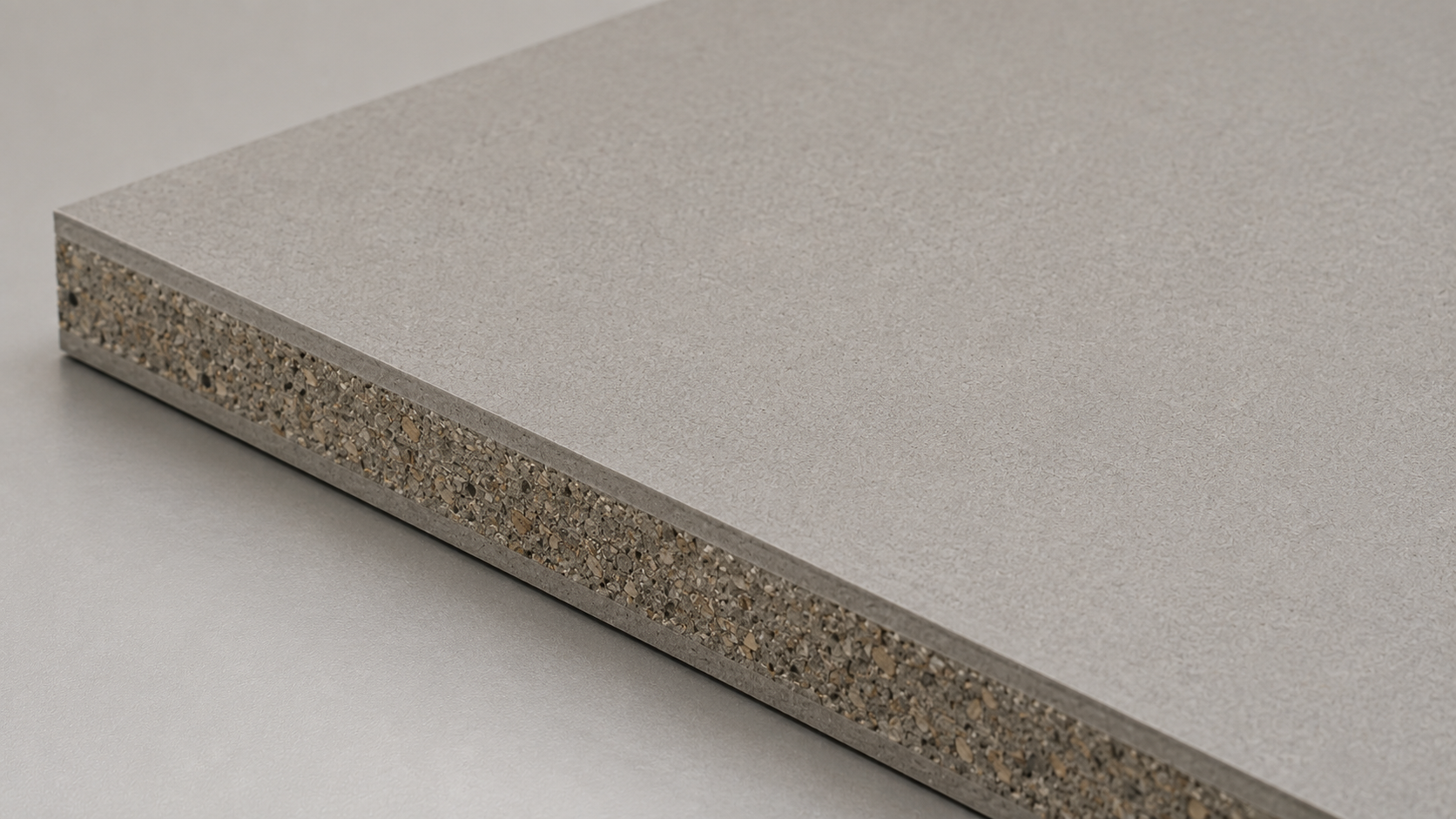
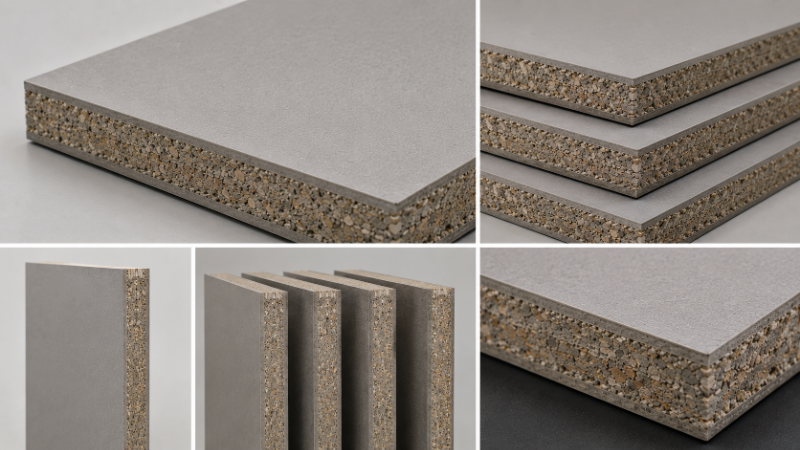
Bison cement bonded particle board is an engineered wood product manufactured by binding wood particles with cement rather than traditional adhesives. This unique composition creates a material that combines the workability of wood with the durability of cement. The 16mm thickness variant offers superior strength and stability compared to thinner alternatives, making it ideal for demanding applications in Indian construction projects.
The beige color (361714) finish provides an aesthetically pleasing neutral tone that works well in modern interior designs while maintaining a professional appearance in commercial spaces. The standard dimensions of 1220mm x 2440mm are optimized for minimal waste during installation and align with common construction specifications across India.
Key Properties and Specifications
Thickness and Durability: The 16mm thickness provides exceptional structural integrity, making this board suitable for load-bearing applications. This thickness is approximately 33% thicker than standard 12mm boards, offering enhanced resistance to warping, sagging, and moisture-related issues—critical factors in India's varied climate zones.
Dimensions: The 1220mm x 2440mm size is the international standard, allowing for efficient cutting patterns and minimal waste. This dimension is particularly useful for creating panels without requiring additional joinery in many applications.
Moisture Resistance: Unlike traditional particle boards, cement-bonded variants exhibit superior moisture resistance. This makes them particularly valuable in Indian regions with high humidity, coastal areas, and during monsoon seasons. The cement binder doesn't absorb water like conventional wood glues, maintaining dimensional stability even in challenging environmental conditions.
Fire Resistance: Cement-bonded particle boards offer inherent fire resistance properties, making them compliant with Indian building codes and safety regulations. This is especially important for commercial projects and public buildings where fire safety standards are stringent.
Weight Consideration: At 16mm thickness, these boards are heavier than standard alternatives, typically weighing around 20-22 kg per sheet. This weight should be factored into structural calculations and installation planning.
Applications in Indian Construction Projects
Residential Construction
In residential projects across major Indian cities like Bangalore, Mumbai, Delhi, and Pune, 16mm Bison boards are increasingly used for:
Interior wall partitions: Creating non-load-bearing walls with superior sound insulation properties
False ceilings: Providing a durable base for suspended ceiling systems
Kitchen and bathroom applications: Offering moisture resistance for wet areas without requiring additional waterproofing in many cases
Wardrobe and storage solutions: Creating built-in furniture systems that withstand regular use
Flooring substrates: Serving as underlayment for tile or wooden flooring installations
Commercial and Institutional Projects
For commercial spaces, the durability and fire resistance of 16mm cement-bonded particle boards make them ideal for:
Office partition systems and modular workstations
Retail store fixtures and display systems
Hospital and healthcare facility interiors
Educational institution construction (schools and colleges)
Industrial facility construction and maintenance
Specialized Applications
The unique properties of this material also make it suitable for specialized applications such as:
Exterior cladding and facade systems (with proper finishing)
Structural sheathing in timber frame construction
Acoustic panel backing in auditoriums and studios
High-traffic flooring systems in commercial establishments
Advantages Over Traditional Materials
Superior to Conventional Particle Board
Traditional particle boards, which use phenol-formaldehyde or urea-formaldehyde adhesives, are vulnerable to moisture damage and have limited lifespan in humid Indian climates. Cement-bonded alternatives eliminate these concerns, offering 20-30 year durability compared to 10-15 years for standard boards. This translates to better long-term value for Indian homeowners and project developers.
Cost-Effective Alternative to Solid Wood
While solid wood offers aesthetic appeal, its cost in India has risen significantly. A 16mm Bison board typically costs ₹800-1200 per sheet, compared to ₹2500-4500 for equivalent solid wood panels. For a 100 sq. meter project, this represents a saving of ₹1,50,000-2,00,000 while providing superior moisture and fire resistance.
Environmental Considerations
Cement-bonded particle boards utilize recycled wood particles and waste materials from timber processing, making them an environmentally responsible choice. This aligns with India's growing emphasis on sustainable construction practices and green building certifications like IGBC (Indian Green Building Council) standards.
Installation and Handling Guidelines
Pre-Installation Considerations
Before installation, ensure that:
Boards are stored in a dry, well-ventilated area for at least 48 hours before use
The installation environment maintains humidity levels between 40-60% for optimal dimensional stability
All structural supports are properly designed to handle the 16mm thickness weight (approximately 20-22 kg per sheet)
Proper ventilation is planned, especially for interior applications in humid regions
Cutting and Finishing
The 16mm thickness requires appropriate tools:
Use carbide-tipped saw blades for clean cuts without chipping
Wear respiratory protection when cutting, as cement dust can be harmful
Sand edges with 120-150 grit sandpaper for smooth finishing
Allow cut edges to be sealed with appropriate primers before painting
For the beige finish (361714), additional staining or painting should use cement-compatible products
Fastening Methods
The cement-bonded composition requires specific fastening approaches:
Screws: Use corrosion-resistant screws (stainless steel or zinc-plated) spaced 150-200mm apart
Nails: Galvanized nails are preferred; cement-bonded boards require slightly longer fasteners than wood alternatives
Adhesives: Use cement-compatible adhesives or epoxy-based products rather than traditional wood glues
Spacing: Maintain minimum 10mm spacing from edges to prevent splitting
Cost Analysis for Indian Projects
Material Costs
As of 2024, pricing for 16mm Bison laminated cement-bonded particle board in India varies by region:
Delhi/NCR region: ₹850-1050 per sheet
Mumbai and Western India: ₹900-1150 per sheet
Bangalore and South India: ₹800-1000 per sheet
Bulk purchases (100+ sheets): 10-15% discount typically available
For a typical 1000 sq. meter commercial project, material costs would range from ₹3,30,000 to ₹4,50,000, representing approximately 8-12% of total construction budget.
Installation Costs
Labor costs for installation vary by region and complexity:
Simple partition work: ₹150-250 per sq. meter
Complex applications with finishing: ₹300-500 per sq. meter
Specialized installations (ceilings, flooring): ₹250-400 per sq. meter
Maintenance and Longevity
Routine Maintenance
Cement-bonded particle boards require minimal maintenance compared to traditional materials:
Regular dusting with a dry cloth prevents dust accumulation
Wipe spills immediately with a damp cloth; the material resists water damage
Avoid prolonged exposure to direct sunlight to prevent color fading
Inspect fasteners annually and tighten if necessary
For painted surfaces, touch up as needed to maintain appearance
Expected Lifespan
With proper installation and maintenance, 16mm Bison cement-bonded particle boards can last 25-30 years in interior applications and 15-20 years in exterior or high-moisture environments. This longevity makes them a cost-effective choice for long-term projects, particularly in institutional and commercial settings.
Compliance with Indian Building Codes
The 16mm Bison laminated cement-bonded particle board complies with several Indian standards:
IS 12823:1989: Code of practice for use of particle boards in building construction
IS 2526:1999: Plywood and veneer specifications
National Building Code of India (NBC): Fire safety and structural requirements
IGBC Standards: Green building requirements for sustainable construction
When sourcing materials for your project, ensure that suppliers provide certification confirming compliance with these standards.
Finding Quality Suppliers and Installation Professionals
Selecting the right suppliers and installation professionals is crucial for project success. When evaluating options, consider:
Manufacturer certifications and product guarantees
Experience with Indian climate conditions and regional variations
References from completed projects in your area
Warranty terms and after-sales support
Understanding of local building codes and regulations
For architects, engineers, and contractors across India, platforms like AECORD provide access to verified suppliers, manufacturers, and installation specialists who understand the nuances of cement-bonded particle board applications. AECORD's network includes professionals experienced with the 16mm Bison boards specifically, ensuring quality installations and reliable material sourcing.
Troubleshooting Common Issues
Warping or Dimensional Changes
While rare with 16mm boards, warping can occur if:
Humidity fluctuations exceed 15% relative humidity changes
Boards are exposed to direct water spray or submersion
Inadequate support structure allows sagging
Solution: Ensure proper ventilation, maintain consistent humidity levels, and verify structural support calculations.
Fastener Loosening
Screws or nails may loosen over time due to vibration or structural movement.
Solution: Use self-drilling screws with washers, and inspect fasteners periodically. Tighten as needed using a power drill with appropriate bits.
Surface Damage or Chipping
Edges may chip during cutting or installation if not properly handled.
Solution: Use sharp carbide-tipped blades, support boards properly during cutting, and seal edges immediately with primer.
Conclusion and Next Steps
The 16mm Bison laminated cement-bonded particle board (1220mm x 2440mm, beige finish 361714) represents an excellent choice for diverse applications in Indian construction projects. Its combination of durability, moisture resistance, fire safety, and cost-effectiveness makes it increasingly popular among AECO professionals across the country.
Whether you're planning a residential renovation in Bangalore, a commercial office fit-out in Mumbai, or an institutional project in Delhi, this material offers reliable performance and value. Understanding its properties, proper installation techniques, and maintenance requirements ensures successful long-term results.
To connect with experienced suppliers, installation professionals, and other AECO experts who specialize in cement-bonded particle board applications, visit AECORD. Our platform brings together verified professionals across India who can guide you through material selection, installation, and project completion. Start exploring qualified professionals in your region today and ensure your project benefits from expert knowledge and quality execution.
