



Understanding 10mm Thickness Designer Cement Bonded Particle Board: A Complete Guide for Indian Construction Professionals
In the evolving landscape of Indian construction and interior design, cement bonded particle board (CBPB) has emerged as a versatile and cost-effective material for numerous applications. The 10mm thickness variant with dimensions of 1220mm x 2440mm, featuring a designer lumber texture in grey (specification 361732), represents a premium option that combines durability, aesthetic appeal, and practical functionality. This comprehensive guide explores everything construction professionals, architects, and interior designers in India need to know about this material.
Build cost · Bengaluru, May 2026
What is Cement Bonded Particle Board?
Cement bonded particle board is an engineered composite material manufactured by combining wood particles, cement, and other additives under high pressure and temperature. Unlike traditional plywood or MDF, CBPB offers superior moisture resistance and durability, making it an ideal choice for both interior and exterior applications in India's diverse climate conditions.
Composition and Manufacturing Process
The manufacturing process involves mixing wood particles with Portland cement and water, then compressing the mixture into boards. The cement acts as a binder, creating a matrix that encapsulates the wood particles. This process results in a material that is:
Fire-resistant and non-combustible
Resistant to moisture and humidity fluctuations
Resistant to termites and fungal growth
Dimensionally stable across temperature variations
Suitable for both wet and dry environments
Specifications of the 10mm Designer Cement Bonded Particle Board
Frequently asked
Dimensions and Thickness
The standard size of 1220mm x 2440mm (approximately 4 feet x 8 feet) is the most common commercial dimension available in Indian markets. The 10mm thickness provides an optimal balance between:
Structural strength and load-bearing capacity
Weight and ease of handling during installation
Cost-effectiveness for various applications
Flexibility in design applications
This thickness is particularly popular for wall cladding, partition systems, and decorative paneling in residential and commercial projects across Indian cities like Bangalore, Mumbai, Delhi, and Hyderabad.
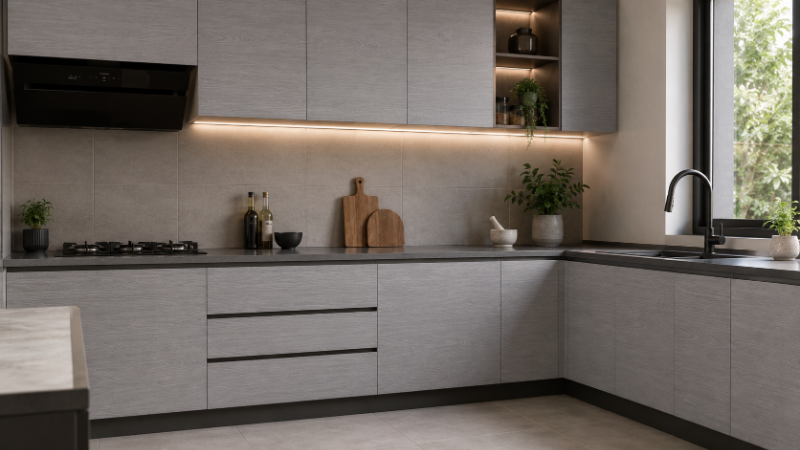
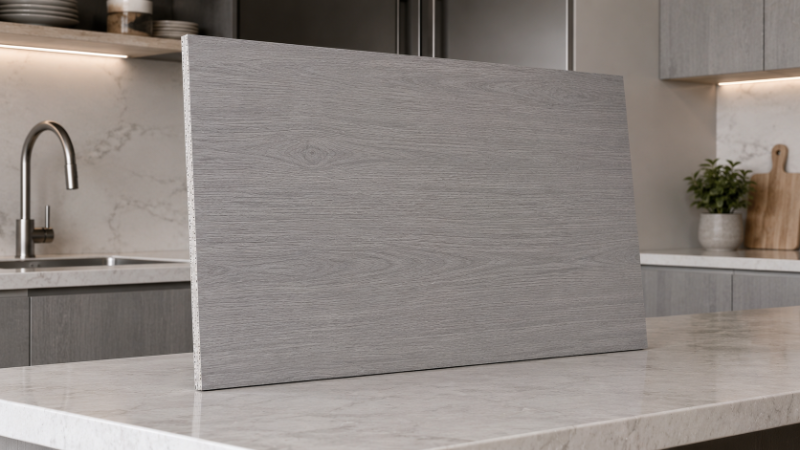
Designer Lumber Texture in Grey (361732)
The specification 361732 refers to a premium finish featuring a designer lumber texture in grey tone. This aesthetic enhancement offers several advantages:
Contemporary Appeal: The grey lumber texture provides a modern, sophisticated look that complements various interior design styles
Versatility: Grey tones work well with both warm and cool color palettes, making them suitable for diverse design schemes
Practical Aesthetics: The texture helps conceal minor imperfections and dust accumulation compared to glossy finishes
Professional Appearance: Ideal for commercial spaces, offices, and upscale residential projects
Key Properties and Performance Characteristics
Moisture Resistance
One of the primary advantages of cement bonded particle board is its exceptional moisture resistance. In India's humid climate, particularly in coastal cities like Mumbai, Goa, and Chennai, this property is invaluable. The material can withstand humidity levels up to 95% without significant dimensional changes or degradation. This makes it suitable for:
Kitchen backsplashes and wet areas
Bathroom wall panels and cladding
Exterior facade applications
Areas exposed to seasonal monsoons
Fire Resistance
CBPB boards are non-combustible and meet stringent fire safety standards. The cement matrix doesn't support combustion, making these boards ideal for commercial buildings, educational institutions, and healthcare facilities in India where fire safety regulations are increasingly strict. The material typically achieves A1 or A2 fire classification, depending on specific manufacturing standards.
Durability and Longevity
When properly installed and maintained, a 10mm cement bonded particle board can last 15-20 years or more, even in challenging environmental conditions. The resistance to termites, fungi, and bacteria means minimal maintenance costs compared to traditional wood-based materials. This longevity translates to better cost-per-year value for Indian construction projects.
Dimensional Stability
The board's dimensional stability is crucial for applications requiring precise fit and finish. Temperature variations across Indian regions—from the cooler climates of Himachal Pradesh to the heat of Rajasthan—won't cause significant expansion or contraction, ensuring that installations remain stable and aesthetically pleasing over time.
Applications in Indian Construction and Design
Interior Wall Cladding and Paneling
The designer lumber texture grey finish makes this board an excellent choice for interior wall applications. Architects and designers across India are increasingly specifying CBPB for:
Feature walls in residential apartments
Office partition systems
Retail store interiors
Hospitality spaces including hotels and restaurants
Corporate office corridors and meeting rooms
The 10mm thickness provides sufficient structural integrity while remaining lightweight enough for installation on standard wall frameworks.
Exterior Applications
In exterior applications, particularly for facade systems and weather-exposed areas, the moisture and weather resistance of CBPB becomes invaluable. Projects in monsoon-prone regions benefit significantly from this material's performance characteristics.
Specialized Construction Uses
Beyond standard applications, cement bonded particle board serves specialized purposes:
Acoustic Panels: When perforated, the boards can be used in acoustic treatment systems for offices and auditoriums
Underlayment: For tile and stone installations in wet areas
Temporary Hoarding: For construction site boundaries and advertising displays
Industrial Applications: In manufacturing facilities requiring fire-resistant, durable wall systems
Cost Considerations for Indian Market
Pricing Structure
As of 2024, the cost of 10mm designer cement bonded particle board in India typically ranges from ₹450 to ₹750 per square meter, depending on:
Quality and brand reputation
Regional availability and transportation costs
Order volume and bulk discounts
Specific finish specifications (like the grey lumber texture 361732)
Local market conditions in cities like Bangalore, Mumbai, and Delhi
Cost-Benefit Analysis
While CBPB may have a higher initial cost compared to standard plywood, the total cost of ownership is often lower due to:
Extended lifespan reducing replacement frequency
Lower maintenance requirements
Reduced need for protective coatings and treatments
Better performance in Indian climate conditions, reducing damage and repairs
Minimal wastage due to superior dimensional stability
Installation and Handling Guidelines
Pre-Installation Considerations
Before installing cement bonded particle board, ensure:
The substrate is clean, dry, and level
All measurements are verified to minimize cutting waste
Proper ventilation is maintained during and after installation
Boards are stored in dry conditions to prevent any moisture absorption
Appropriate fastening systems are selected (stainless steel or galvanized fasteners recommended)
Installation Best Practices
The 10mm thickness boards can be installed using:
Adhesive Systems: Cement-based or polymer-modified adhesives suitable for CBPB
Mechanical Fastening: Stainless steel screws or nails spaced appropriately
Combination Methods: Both adhesive and mechanical fastening for maximum stability
Professionals should allow for expansion joints (typically 3-5mm) to accommodate any minor movement, particularly in large installations or areas with significant temperature variations.
Cutting and Finishing
The boards can be cut using standard woodworking tools, though diamond-tipped blades are recommended for cleaner edges. The designer lumber texture finish typically requires no additional surface treatment, though edge sealing may be beneficial in high-moisture environments.
Environmental and Health Considerations
Sustainability Factors
Cement bonded particle board offers environmental advantages:
Uses recycled and waste wood particles, reducing deforestation pressure
Non-toxic cement binder poses no health risks
Durability means less frequent replacement, reducing overall resource consumption
Fully recyclable at end of life
Indoor Air Quality
Unlike some composite boards that emit volatile organic compounds (VOCs), CBPB is inherently low-emission due to its cement-based binder system. This makes it particularly suitable for healthcare facilities, schools, and residential spaces in India where indoor air quality is increasingly important.
Comparison with Alternative Materials
CBPB vs. Plywood
While plywood is more widely available in India, CBPB offers superior moisture resistance and durability, particularly in challenging environments. However, plywood may be more cost-effective for interior applications in dry climates.
CBPB vs. MDF
MDF is more affordable but lacks moisture resistance and is susceptible to warping in humid conditions—a significant limitation in many Indian regions. CBPB's superior performance in moisture-prone areas makes it the better choice for long-term durability.
CBPB vs. Gypsum Board
Gypsum boards are lighter and easier to install but are not suitable for moisture-exposed areas. CBPB's fire resistance and moisture performance make it superior for wet areas and exterior applications.
Finding Quality Suppliers and Installation Professionals
When sourcing 10mm designer cement bonded particle board with lumber texture grey finish (361732) in India, it's essential to work with experienced professionals. AECORD, India's leading B2B2C marketplace for architecture, engineering, construction, and operations professionals, connects you with vetted suppliers and installation experts across major cities.
Whether you're based in Bangalore, Mumbai, Delhi, Hyderabad, or other Indian cities, AECORD provides access to:
Certified material suppliers with proven track records
Experienced installation contractors
Design professionals who specify appropriate materials
Quality assurance experts
Maintenance and Long-Term Care
Regular Maintenance
To maximize the lifespan of installed CBPB:
Clean surfaces with mild soap and water; avoid excessive moisture
Inspect for any physical damage or fastener issues periodically
Ensure adequate ventilation around installations
Address any water leaks or moisture sources immediately
Avoid direct contact with standing water or continuous moisture
Repair and Replacement
The modular nature of board installations makes repairs straightforward. Damaged sections can be replaced without affecting adjacent areas, reducing overall maintenance costs.
Future Trends and Innovations
The Indian construction industry is witnessing increased adoption of cement bonded particle board as architects and builders recognize its advantages. Emerging trends include:
Integration with smart building systems
Development of enhanced aesthetic finishes beyond the standard grey lumber texture
Improved installation systems for faster, more efficient deployment
Increased local manufacturing reducing costs and availability issues
Conclusion
The 10mm thickness designer cement bonded particle board with lumber texture grey finish (specification 361732) represents a sophisticated, durable solution for modern Indian construction and design projects. Its superior moisture resistance, fire performance, and aesthetic appeal make it an ideal choice for architects, engineers, and construction professionals seeking reliable, long-lasting materials.
Whether you're planning an interior renovation in Mumbai, a commercial project in Bangalore, or an institutional build in Delhi, this material offers proven performance across India's diverse climate zones and application requirements.
Ready to specify or source premium cement bonded particle board for your next project? Connect with qualified suppliers, installation experts, and design professionals on AECORD today. Browse our network of verified AECO professionals across India, compare specifications and pricing, and find the perfect partners for your construction and design needs. Visit AECORD now to discover how we're transforming India's construction marketplace.