

Understanding Window Installation Costs in India
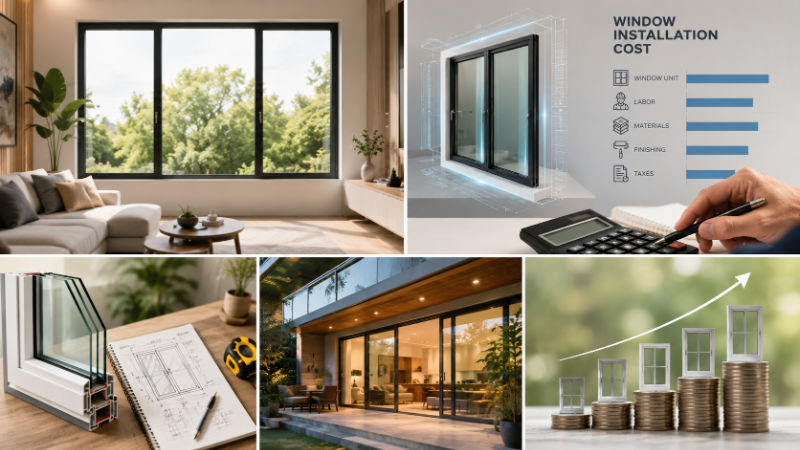
Window installation is a critical investment for any building project, whether you're constructing a new residential property, renovating an existing home, or developing a commercial space. The cost of window installation in India varies significantly based on multiple factors including material type, size, labor rates, and regional pricing. Understanding these cost components will help you budget effectively and make informed decisions for your project.
Whether you're working with architects and engineers through platforms like AECORD or managing your project independently, having a clear breakdown of window installation costs is essential for project planning and cost control.
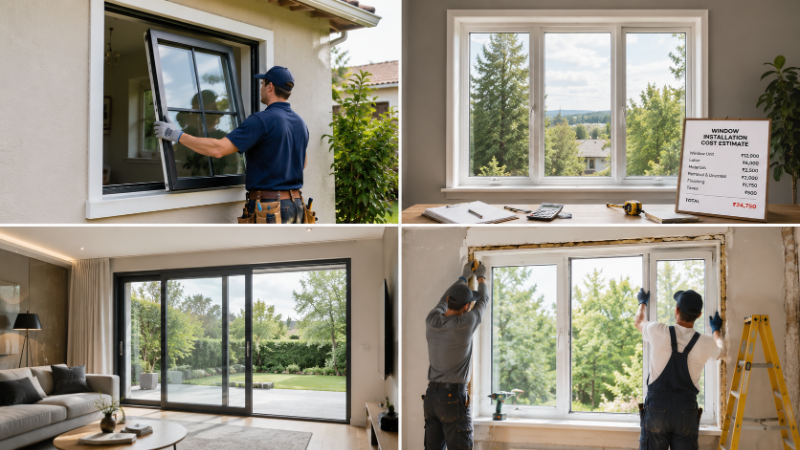
Build cost · Bengaluru, May 2026
Factors Influencing Window Installation Costs
Material Type
The material you choose for your windows is one of the most significant cost drivers in installation expenses. Different materials offer varying levels of durability, aesthetic appeal, energy efficiency, and maintenance requirements.
Aluminum Windows: Aluminum is the most popular choice in India due to its affordability and durability. Standard aluminum window frames typically cost between ₹400 to ₹800 per square foot for the material alone. Aluminum windows are lightweight, corrosion-resistant, and require minimal maintenance, making them ideal for Indian climates. However, they provide poor thermal insulation compared to other materials.
UPVC Windows: Unplasticized Polyvinyl Chloride (UPVC) windows are increasingly popular in India's residential sector. Prices range from ₹600 to ₹1,200 per square foot. UPVC offers excellent thermal and sound insulation properties, making it energy-efficient. These windows are particularly suitable for air-conditioned spaces and are low-maintenance. They're available in various colors and finishes, providing better aesthetic flexibility than aluminum.
Wooden Windows: Traditional wooden windows cost between ₹800 to ₹2,000 per square foot, depending on the type of wood and finish quality. Hardwoods like teak and sal command premium prices. While wooden windows offer superior aesthetics and insulation, they require regular maintenance and are susceptible to termites and moisture damage in humid Indian climates.
Steel Windows: Industrial-grade steel windows typically cost ₹500 to ₹1,000 per square foot. They're strong and durable but require regular maintenance to prevent rust. Steel windows are commonly used in commercial buildings, warehouses, and industrial facilities across Indian cities like Mumbai, Delhi, and Bangalore.
Composite and Hybrid Windows: Premium options combining materials cost ₹1,200 to ₹2,500 per square foot. These windows offer the best of multiple materials, combining aesthetic appeal with superior performance characteristics.
Window Size and Type
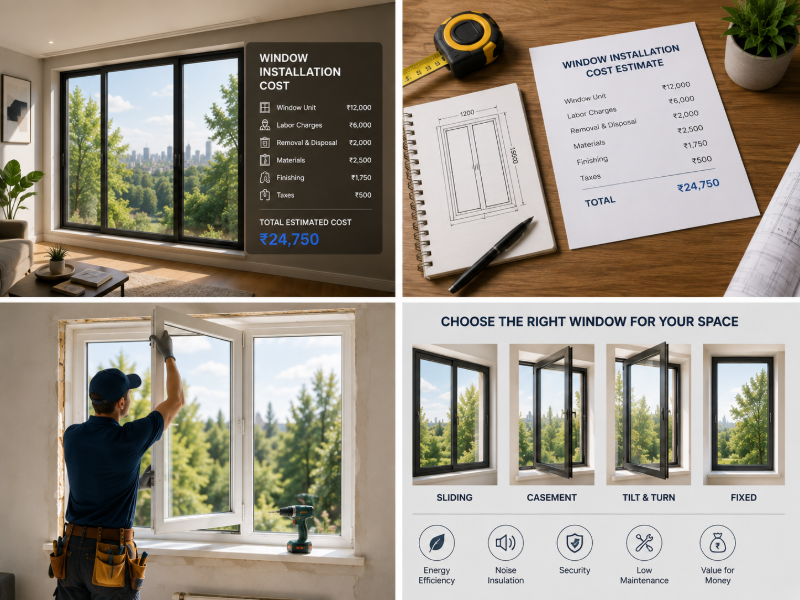
The dimensions of your windows directly impact installation costs. Standard window sizes (such as 3x3 feet or 4x4 feet) are more economical than custom-sized windows. Custom windows can increase costs by 20-40% due to manufacturing and installation complexity.
Different window types also affect pricing:
Single-hung windows: ₹2,000 to ₹5,000 per window (labor + material)
Double-hung windows: ₹3,000 to ₹7,000 per window
Casement windows: ₹2,500 to ₹6,500 per window
Sliding windows: ₹2,000 to ₹5,500 per window
Fixed windows: ₹1,500 to ₹4,000 per window
Bay or bow windows: ₹5,000 to ₹12,000 per window
Frequently asked
Regional Pricing Variations in India
Metropolitan Areas
Major metropolitan centers like Mumbai, Delhi, Bangalore, and Hyderabad typically have higher window installation costs due to increased labor rates and overhead expenses. In Mumbai, for instance, labor costs for window installation range from ₹150 to ₹300 per square foot, significantly higher than in tier-2 cities. The competitive market in these cities also means more options for quality materials but at premium prices.
Delhi's construction sector experiences similar pricing patterns, with labor costs ranging from ₹140 to ₹280 per square foot. The city's strict building codes and regulations also add to installation complexity and costs.
Tier-2 and Tier-3 Cities
Cities like Pune, Ahmedabad, Jaipur, and Lucknow offer more competitive pricing. Labor costs in these regions typically range from ₹80 to ₹180 per square foot. Material availability is generally good, though the selection might be more limited than in metropolitan areas. These cities are increasingly becoming hubs for quality construction services, with many professionals available through platforms like AECORD to help you find the right expertise.
Coastal vs. Inland Regions
Coastal areas in states like Kerala, Goa, and coastal Tamil Nadu often have higher material costs due to transportation expenses. Additionally, the humid climate necessitates corrosion-resistant materials, which are more expensive. Aluminum and UPVC become preferred choices in these regions, driving up costs compared to inland areas.
Labor Costs for Window Installation
Skilled Labor Requirements
Window installation requires skilled labor to ensure proper fitting, sealing, and alignment. The complexity of installation affects labor costs significantly. Simple window replacements in existing structures might cost ₹100 to ₹200 per square foot, while new installations in under-construction buildings might range from ₹150 to ₹300 per square foot.
Factors affecting labor costs include:
Building height: Installing windows on higher floors increases labor costs by 15-30% due to safety requirements and equipment needs
Structural condition: Poor structural conditions or need for additional framing increases costs
Complexity: Curved windows, custom shapes, or specialty installations command premium labor rates
Project timeline: Rush installations typically cost 20-40% more than standard timelines
Finding Qualified Installers
Hiring experienced window installers is crucial for long-term performance. When sourcing professionals, you can connect with vetted contractors and specialists through AECORD, which helps you find qualified installers in your region. Quality installation prevents water leaks, air drafts, and structural issues that could cost significantly more to repair later.
Complete Cost Breakdown Example
Residential Project in Bangalore
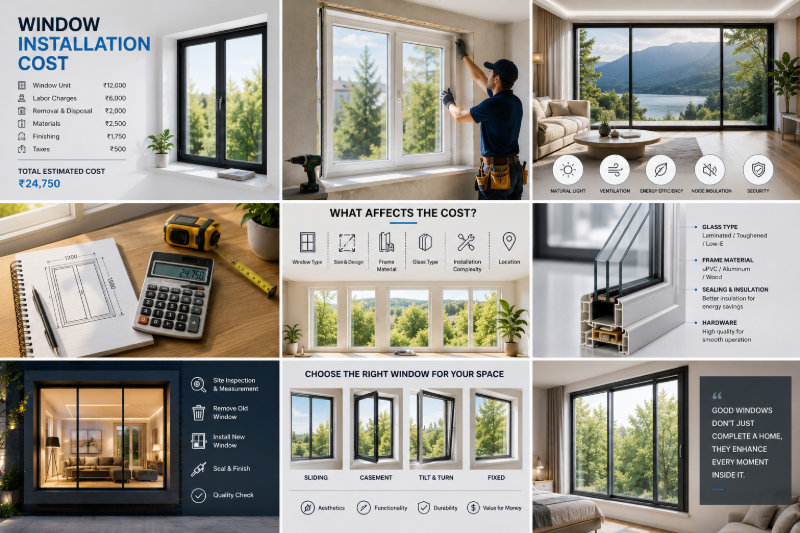
Let's examine a practical example of window installation costs for a typical residential apartment in Bangalore with 12 windows of standard size (4 feet x 3 feet each, totaling 144 square feet).
Material Costs (UPVC Windows):
UPVC frames and glass: 144 sq ft × ₹800 = ₹1,15,200
Hardware, hinges, and fittings: ₹8,000
Sealants and weatherstripping: ₹3,000
Total Material Cost: ₹1,26,200
Labor Costs:
Installation labor: 144 sq ft × ₹200 = ₹28,800
Removal of old windows (if applicable): ₹5,000
Site preparation and cleanup: ₹3,000
Total Labor Cost: ₹36,800
Additional Costs:
Transportation and delivery: ₹4,000
Contingency (10%): ₹16,300
Total Additional Cost: ₹20,300
Project Total: ₹1,83,300 (approximately ₹1,270 per square foot)
Cost-Saving Strategies
Material Selection
Choosing aluminum windows instead of UPVC can save 20-30% on material costs, though you'll sacrifice some thermal insulation benefits. For projects in moderate climates, aluminum remains a practical choice that doesn't compromise quality.
Bulk Purchasing
If you're installing windows across multiple properties or a large residential complex, negotiate bulk discounts with manufacturers. Savings of 10-25% are often achievable for large orders.
Timing Your Project
Window installation during off-season (monsoon in some regions) might offer lower labor rates as contractors have more availability. However, weather conditions must be suitable for proper installation and sealant curing.
Standard Sizes
Using standard window sizes rather than custom dimensions can reduce costs by 15-20%. Standard sizes also have better availability and faster delivery times.
DIY vs. Professional Installation
While some homeowners attempt DIY installation to save labor costs, improper installation can lead to water damage, air leaks, and reduced window lifespan. Professional installation ensures warranty coverage and long-term performance, making it a worthwhile investment.
Energy Efficiency and Long-Term Savings
Thermal Performance
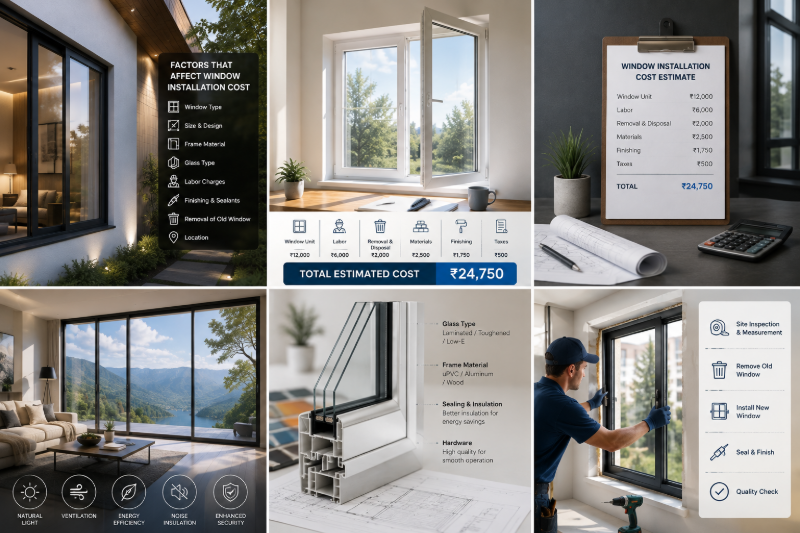
Investing in energy-efficient windows might increase upfront costs by 30-50%, but they significantly reduce cooling and heating expenses. In Indian climates, especially in cities like Delhi and Mumbai where air conditioning is essential, energy-efficient windows can reduce energy bills by 15-25% annually.
UPVC and composite windows with double glazing provide superior thermal insulation, making them cost-effective over a 10-15 year period through energy savings.
Durability and Maintenance
Higher-quality windows require less maintenance and last longer. While UPVC windows cost more initially than aluminum, their low maintenance requirements and longer lifespan (25-30 years vs. 15-20 years for aluminum) justify the investment.
Hidden Costs to Consider
Beyond material and labor, several hidden costs can impact your window installation budget:
Structural modifications: If existing window openings need adjustment, structural work might be required (₹5,000 to ₹20,000 per opening)
Waterproofing: Additional waterproofing measures around window frames cost ₹2,000 to ₹5,000 per window
Permits and approvals: Some municipal corporations require window installation approvals (₹1,000 to ₹5,000)
Painting and finishing: Interior and exterior finishing around windows adds ₹3,000 to ₹8,000 per window
Warranty and guarantees: Extended warranties typically cost 5-10% of window price
Getting Accurate Quotes
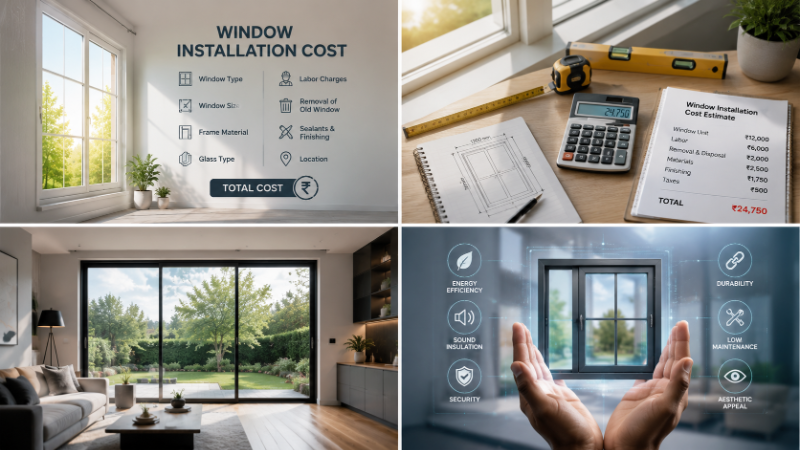
When obtaining quotes for window installation, ensure they include:
Detailed material specifications and quality certifications
Labor costs broken down by task
Warranty terms and conditions
Timeline and project schedule
Site preparation and cleanup responsibilities
Contingency provisions
Getting multiple quotes from different contractors helps you understand market rates and make informed comparisons. Platforms like AECORD connect you with vetted professionals who can provide transparent quotations and help you evaluate options based on quality and value.
Regional Considerations for Installation
Climate Adaptation
Different Indian regions require specific window solutions. Coastal areas need corrosion-resistant materials, monsoon-prone regions require superior waterproofing, and hot-dry regions benefit from reflective coatings and thermal insulation.
Building Regulations
Various state building codes and municipal regulations affect window installation requirements. Delhi, Mumbai, and Bangalore have specific norms regarding window size, safety features, and ventilation. Compliance adds to costs but is legally mandatory.
Conclusion
Window installation costs in India vary widely based on material selection, size, location, and labor rates. A typical residential window installation costs between ₹2,000 to ₹12,000 per window when combining material and labor, with significant variations based on regional factors and specifications.
To ensure you get the best value for your investment, obtain detailed quotes from multiple sources, understand the quality differences between materials, and prioritize professional installation. When planning your window installation project, consider connecting with experienced professionals through AECORD, where you can find qualified contractors, architects, and engineers who can guide you through the entire process and help you make cost-effective decisions tailored to your specific needs and regional requirements.
Whether you're working on a residential renovation in Pune, a commercial project in Hyderabad, or a large-scale development in Mumbai, understanding these cost factors will help you budget accurately and achieve the best results for your construction or renovation project.