

India's tropical and subtropical climate presents unique challenges for flooring selection, particularly in humid regions like Kerala, West Bengal, and coastal areas. High humidity levels can cause traditional flooring materials to warp, swell, and deteriorate rapidly, making the choice of flooring material critical for both durability and aesthetics. This comprehensive guide explores the best flooring options for humid climates in India, helping you make an informed decision for your residential or commercial project.
Understanding Humidity's Impact on Flooring
Before diving into specific materials, it's essential to understand how humidity affects flooring. In India's humid regions, moisture levels can exceed 80-90% relative humidity, particularly during monsoon seasons. This moisture penetration causes:
Warping and cupping: Wood absorbs moisture and expands unevenly
Mold and mildew growth: Organic materials become breeding grounds for fungal growth
Structural damage: Subfloor deterioration compromises floor integrity
Aesthetic degradation: Discoloration, staining, and surface deterioration
Reduced lifespan: Materials degrade faster than their expected warranty period
Understanding these challenges is crucial when consulting with architects and engineers on platforms like AECORD, where professionals can provide climate-specific recommendations for your region.
Build cost · Bengaluru, May 2026
Best Flooring Materials for Humid Climates in India
1. Ceramic and Porcelain Tiles
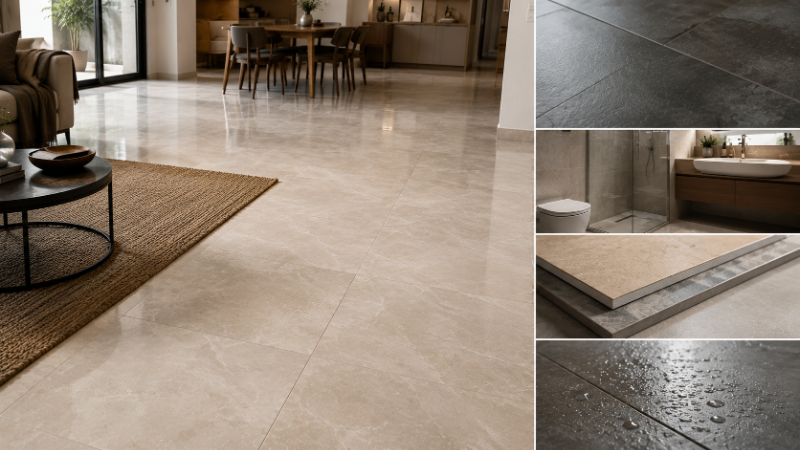
Ceramic and porcelain tiles remain the gold standard for humid climates across India. These materials are non-porous, making them virtually immune to moisture absorption.
Advantages:
Zero moisture absorption (less than 0.5% for porcelain)
Excellent durability lasting 15-20+ years
Easy maintenance and cleaning
Wide variety of designs and finishes available
Cost-effective: ₹100-500 per square foot depending on quality
Naturally cool in hot, humid climates
Disadvantages:
Can feel cold underfoot
Hard surface may cause noise
Grout lines require regular sealing and maintenance
Slippery when wet (use textured finishes for safety)
For humid regions like Kochi, Kolkata, and Mumbai, porcelain tiles with a matte or textured finish are particularly recommended. The investment in quality tiles now prevents costly replacements later.
2. Vitrified Tiles
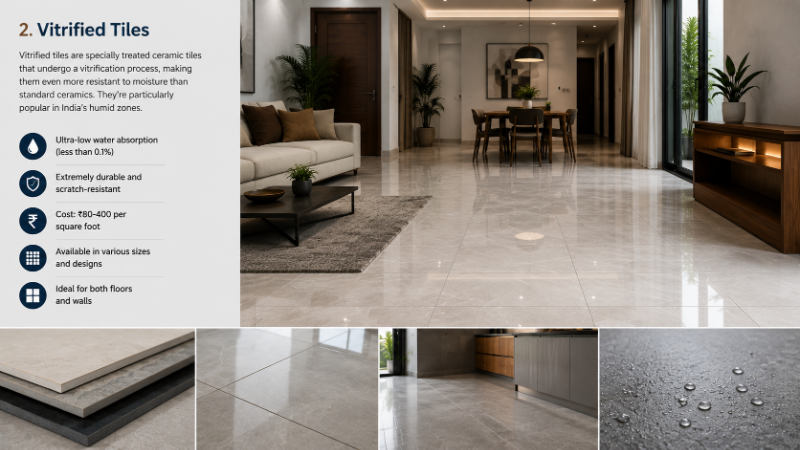
Vitrified tiles are specially treated ceramic tiles that undergo a vitrification process, making them even more resistant to moisture than standard ceramics. They're particularly popular in India's humid zones.
Key Features:
Ultra-low water absorption (less than 0.1%)
Extremely durable and scratch-resistant
Cost: ₹80-400 per square foot
Available in various sizes and designs
Ideal for both floors and walls
Many architects on AECORD recommend vitrified tiles for residential projects in high-humidity areas because they combine affordability with superior performance. They're especially suitable for bathrooms, kitchens, and ground floors where moisture exposure is highest.
Frequently asked
3. Natural Stone (Granite and Slate)
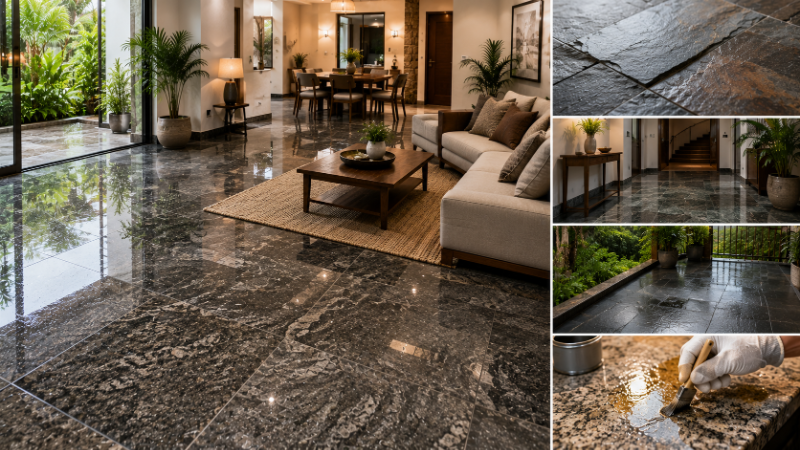
Natural stone flooring offers elegance and durability when properly sealed, making it suitable for humid climates with proper maintenance protocols.
Advantages:
Naturally moisture-resistant when sealed
Premium aesthetic appeal
Excellent longevity (25-30+ years with maintenance)
Increases property value
Unique patterns and variations
Disadvantages:
Higher cost: ₹300-1000+ per square foot
Requires professional installation
Needs regular sealing (every 1-2 years)
Porous nature demands vigilant maintenance
Heavy and requires strong subfloor support
In cities like Bangalore and Hyderabad, granite flooring remains popular for premium residential and commercial spaces. However, the sealing requirement is non-negotiable in humid climates—this is where professional guidance from experienced contractors on AECORD becomes invaluable.
4. Engineered Hardwood
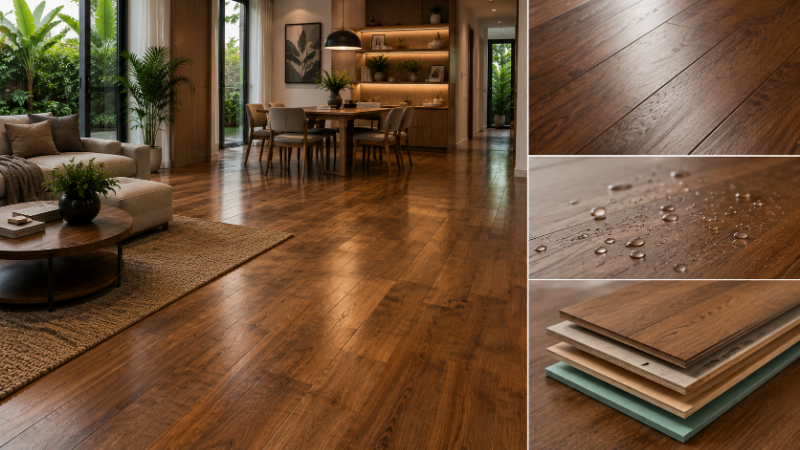
While solid hardwood is unsuitable for humid climates, engineered hardwood offers a viable alternative with improved moisture resistance.
How It Works:
Engineered wood consists of a thin veneer of real hardwood bonded to a plywood base. The cross-grain construction of the plywood provides stability and reduces warping.
Advantages:
Better moisture resistance than solid wood
More affordable than solid hardwood: ₹250-600 per square foot
Authentic wood appearance
Can be refinished (limited times)
Suitable for humid climates with proper underlayment
Disadvantages:
Still requires careful moisture management
Underlayment and vapor barriers are essential
Not recommended for areas with standing water risk
Limited refinishing options compared to solid wood
If you prefer the warmth of wood in humid regions, engineered hardwood with proper installation and vapor barriers is the way forward. Consulting with flooring specialists on AECORD ensures correct installation techniques for your specific climate zone.
5. Luxury Vinyl Plank (LVP) and Luxury Vinyl Tile (LVT)
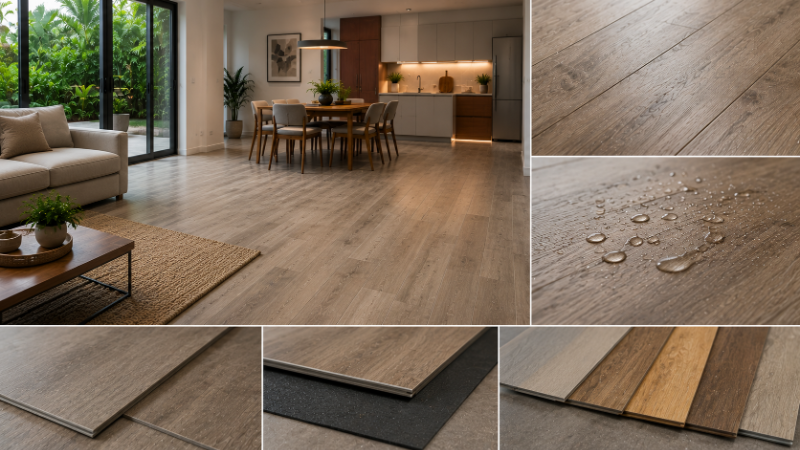
Vinyl flooring has evolved significantly and now offers excellent moisture resistance, making it increasingly popular in humid Indian markets.
Key Benefits:
100% waterproof (no moisture absorption)
Affordable: ₹150-400 per square foot
Realistic wood or stone appearance
Comfortable underfoot
Easy installation and maintenance
Durable: 15-20 year lifespan
Suitable for all room types including bathrooms
Considerations:
Not as premium-looking as natural materials
Quality varies significantly between brands
Requires proper subfloor preparation
Some lower-quality products may off-gas
For budget-conscious homeowners in humid climates across Indian metros, quality LVP and LVT products offer excellent value. Ensure you source from reputable manufacturers and have professional installation to avoid moisture seepage beneath the planks.
6. Bamboo Flooring
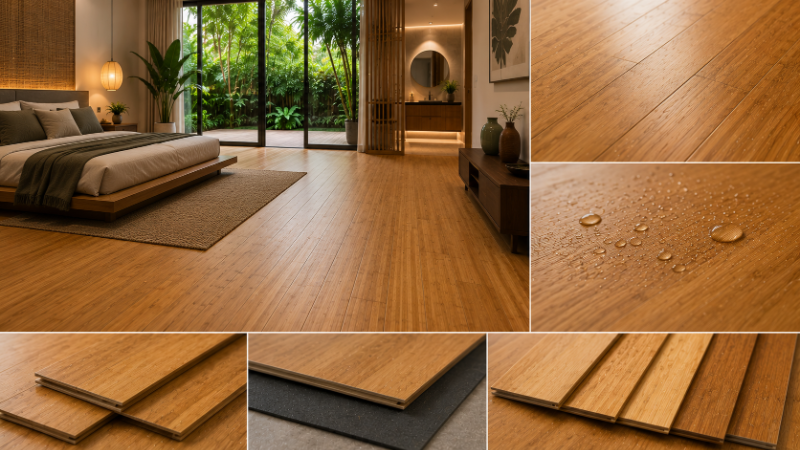
Bamboo is increasingly popular in India due to its sustainability and aesthetic appeal, but it requires careful consideration for humid climates.
Humidity Considerations:
Bamboo is more stable than traditional hardwood but still susceptible to humidity changes. It works better in humid climates than solid hardwood but requires:
Proper acclimation before installation
Effective moisture barriers
Climate-controlled environments (ideally 35-55% humidity)
Regular maintenance and sealing
While bamboo offers environmental benefits and costs ₹200-500 per square foot, it's less ideal than other options for extreme humidity zones. It's better suited for semi-humid areas with controlled indoor climates.
7. Epoxy and Polished Concrete
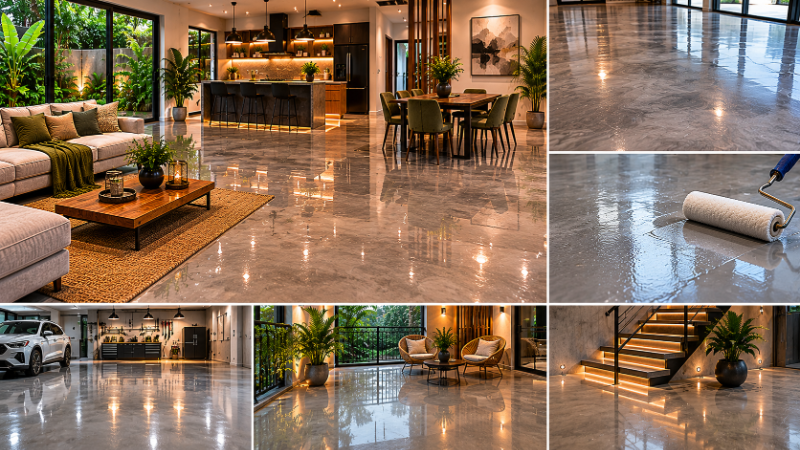
For industrial, commercial, or modern residential spaces, epoxy-coated and polished concrete offers practical moisture resistance.
Advantages:
Completely waterproof and moisture-proof
Extremely durable (20+ years)
Low maintenance requirements
Cost-effective: ₹150-400 per square foot
Modern, industrial aesthetic
Excellent for garages, basements, and workshops
Disadvantages:
Hard and cold surface
Can be slippery when wet
Limited design options
Requires professional installation
In humid Indian cities, polished concrete is gaining traction for commercial spaces and modern residential designs. The durability and maintenance benefits make it particularly suitable for areas with high moisture exposure.
Installation Practices for Humid Climates
Choosing the right material is only half the battle. Proper installation is equally crucial for longevity in humid climates.
Moisture Barriers and Underlayment
Regardless of the flooring material chosen, installing proper moisture barriers is essential in India's humid regions. This includes:
Vapor barriers: Polyethylene sheets beneath the subfloor
Underlayment: Specialized products that prevent moisture from rising
Proper grading: Ensuring water drains away from the building foundation
Ventilation: Maintaining air circulation in crawl spaces and subfloors
Subfloor Preparation
The subfloor must be completely dry before installation. Moisture testing should be conducted using calcium chloride or relative humidity testing methods. Acceptable moisture levels vary by material:
Concrete subfloors: Less than 3-4% moisture content
Wood subfloors: 12-15% moisture content
Tiles and vinyl: Minimal moisture requirements due to material properties
Grout and Sealant Selection
For tile installations, epoxy grout is superior to traditional cement-based grout in humid climates. Epoxy grout:
Resists moisture penetration
Prevents mold and mildew growth
Lasts longer than cement grout
Costs slightly more but provides better long-term value
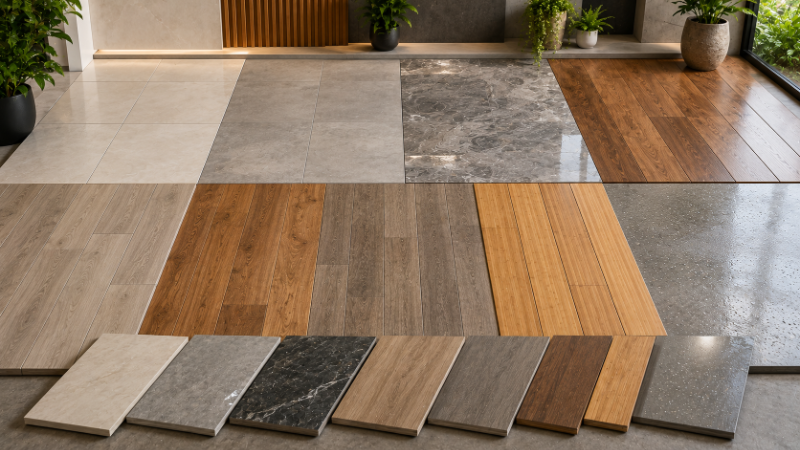
Regional Recommendations for Indian Cities
Different regions of India have varying humidity levels and climatic conditions:
Coastal Cities (Mumbai, Kochi, Chennai, Goa): Porcelain tiles or vitrified tiles with epoxy grout are ideal. Natural stone requires meticulous sealing maintenance. Avoid solid wood entirely.
High-Humidity Zones (Kerala, Assam, West Bengal): Prioritize non-porous materials. Luxury vinyl plank offers excellent affordability and performance. Ensure robust moisture barriers for any installation.
Semi-Humid Areas (Hyderabad, Bangalore, Pune): Greater flexibility exists here. Engineered hardwood with proper underlayment, quality LVP, or tiles all perform well. Natural stone is viable with proper maintenance.
Metropolitan Areas (Delhi, NCR): While less humid than coastal regions, monsoon seasons still demand moisture-resistant flooring. Vitrified tiles and quality engineered wood are popular choices.
Maintenance Tips for Humid Climate Flooring
Once installed, proper maintenance extends flooring lifespan significantly:
Regular cleaning: Sweep daily and mop with minimal water
Moisture control: Use dehumidifiers in particularly humid months
Ventilation: Maintain good air circulation, especially in bathrooms and kitchens
Sealing: Reapply sealers to natural stone and grout as recommended
Prompt spill cleanup: Address water spills immediately
Drainage management: Ensure gutters and downspouts direct water away from the building
Cost Comparison for Humid Climate Flooring
Here's a quick cost reference for popular options in India (per square foot, including installation):
Ceramic/Porcelain tiles: ₹150-600
Vitrified tiles: ₹120-500
Natural stone (granite/slate): ₹400-1200
Engineered hardwood: ₹300-700
Luxury vinyl plank: ₹200-500
Bamboo flooring: ₹250-600
Polished concrete: ₹200-500
These are approximate ranges; actual costs vary based on location, quality, and complexity of installation.
Conclusion: Making Your Decision
For most humid climates in India, porcelain tiles and vitrified tiles emerge as the best combination of durability, affordability, and performance. They require minimal maintenance, resist moisture completely, and offer excellent aesthetic options.
However, the "best" flooring ultimately depends on your specific needs, budget, aesthetic preferences, and the exact humidity level of your location. If you're uncertain about which material suits your project, connecting with experienced flooring professionals and architects on AECORD can provide personalized recommendations based on your specific climate zone and requirements.
Whether you're renovating a home in Kerala, building a commercial space in Mumbai, or constructing a residential complex in Kolkata, choosing moisture-resistant flooring from the start prevents costly replacements and ensures your investment stands the test of time. AECORD's network of verified professionals can help you find the right specialists for flooring selection and installation in your area, ensuring your project succeeds in India's challenging humid climates.
Take the first step toward durable, beautiful flooring by exploring professional recommendations on AECORD today—your future floors will thank you.
Frequently Asked Questions
What humidity levels cause flooring damage in India?
India's humid regions, particularly Kerala, West Bengal, and coastal areas, experience moisture levels exceeding 80-90% relative humidity during monsoon seasons. These levels cause wood to warp and swell, promote mold and mildew growth, and deteriorate subfloors, significantly reducing flooring lifespan.
Is porcelain tile the best flooring for humid climates in India?
Yes, porcelain tiles are considered the gold standard for humid climates in India due to their non-porous nature with less than 0.5% moisture absorption. They offer excellent durability (15-20+ years), easy maintenance, and cost-effectiveness at ₹100-500 per square foot, making them ideal for regions like Kochi, Kolkata, and Mumbai.
What are the advantages of vitrified tiles over ceramic tiles?
Vitrified tiles undergo a special vitrification process that makes them even more moisture-resistant than standard ceramics, with water absorption below 0.1%. They're extremely durable, scratch-resistant, more affordable (₹80-400 per square foot), and particularly recommended by architects for high-humidity areas like bathrooms and ground floors.
Why do wooden floors fail in humid Indian climates?
Wood absorbs moisture in humid conditions, causing uneven expansion and warping. High humidity levels (80-90%) also promote mold and mildew growth on organic materials and compromise subfloor integrity, leading to structural damage and aesthetic degradation far sooner than the material's warranty period.
Can natural stone flooring work in humid climates?
Yes, natural stone like granite and slate can work in humid climates when properly sealed. The sealing process protects the porous stone from moisture absorption and mold growth, making it a viable elegant option for humid regions when maintenance and resealing are performed regularly.