

Learning from Rajasthan's Architectural Legacy: A Blueprint for Modern Urban Planning
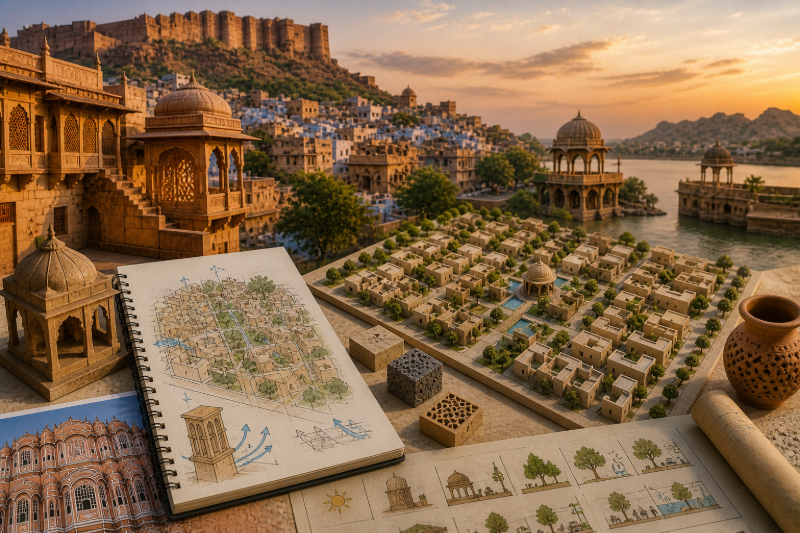
India's architectural heritage offers invaluable lessons for contemporary urban planners and designers. Rajasthan, with its centuries-old cities and distinctive building traditions, stands as a living laboratory of sustainable, climate-responsive design. As Indian cities grapple with rapid urbanization, overcrowding, and environmental challenges, the wisdom embedded in Rajasthan's traditional architecture deserves serious consideration from architects, engineers, and urban planners.
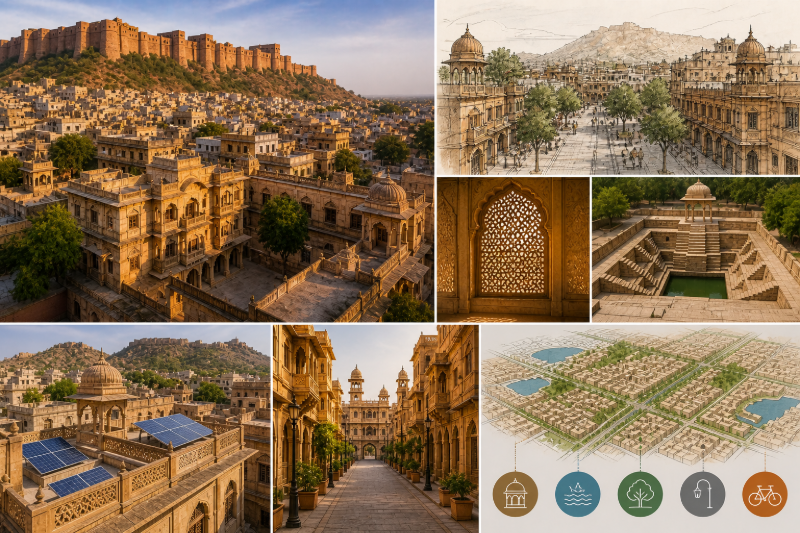
The state's historic cities—from Jaipur's grid-based urban layout to Jodhpur's fortress-integrated settlement patterns—demonstrate how communities successfully adapted to harsh desert climates while maintaining vibrant urban centers. These weren't accidental developments but carefully planned responses to environmental constraints, social needs, and economic realities that remain relevant today.
Build cost · Bengaluru, May 2026
The Passive Climate Control Revolution in Rajasthan's Architecture
Thermal Mass and Natural Ventilation Systems
Rajasthan's traditional architecture excels at temperature regulation without modern air conditioning—a critical lesson as India faces rising energy demands and carbon emissions. The thick stone and mud-brick walls used in structures across Jaipur, Jodhpur, and Bikaner act as thermal buffers, absorbing heat during the day and releasing it at night.
The traditional haveli (mansion) design incorporates several passive cooling strategies:
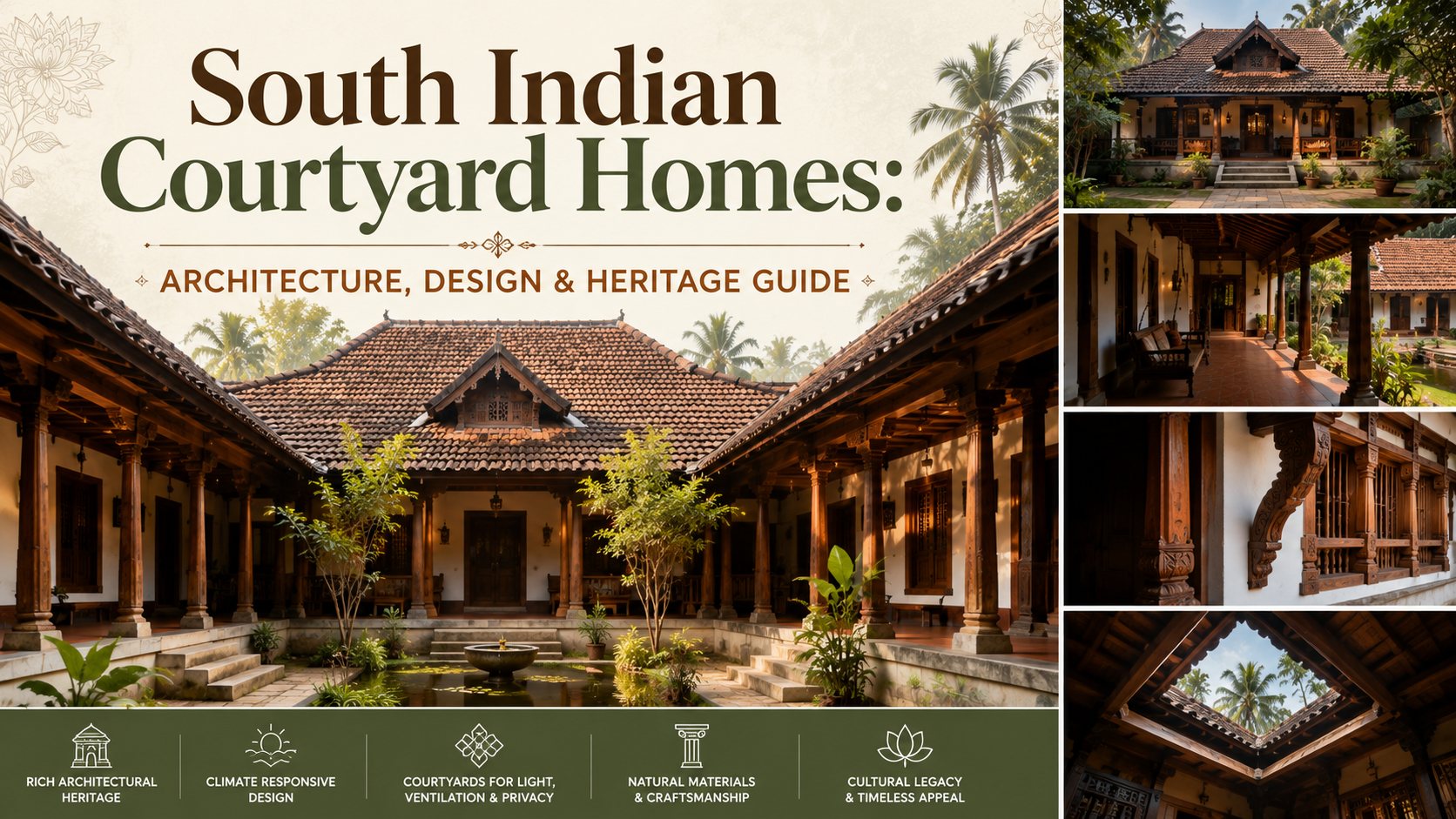
Courtyards: Central open spaces that create natural air circulation and provide cooler microclimates within buildings
Jali screens: Intricately carved latticed windows that allow light and air while blocking direct solar radiation
Wind towers (badgir): Vertical structures that capture cooler air from upper atmosphere and direct it into living spaces
Water features: Fountains and water channels that provide evaporative cooling
Modern urban planners in Indian cities like Bangalore, Pune, and Hyderabad are increasingly recognizing these principles. The Central Public Works Department (CPWD) and various state governments have begun incorporating passive design elements in new government buildings, reducing energy consumption by 20-40% compared to conventional designs.
Material Selection and Local Sourcing
Rajasthan's builders historically used locally available materials—sandstone, limestone, mud, and timber. This approach had multiple benefits that modern sustainable development is rediscovering:
Reduced transportation costs and carbon footprint
Materials naturally suited to local climate conditions
Support for local economies and craftspeople
Ease of maintenance and repair using familiar materials
Today, as construction costs in major Indian cities continue rising—with cement prices fluctuating between ₹300-500 per bag and skilled labor becoming increasingly expensive—architects are exploring cost-effective alternatives inspired by traditional methods. Rammed earth construction, stabilized mud blocks, and locally-sourced stone are gaining traction in sustainable housing projects across western India.
Frequently asked
Urban Layout and Mixed-Use Development: Lessons from Jaipur
The Grid System and Walkability
Maharaja Sawai Jai Singh II's 1727 master plan for Jaipur introduced a revolutionary grid-based layout based on Vastu Shastra principles and practical urban design. The city was divided into nine blocks (representing the cosmic nine), with wide streets, defined markets, and residential areas—a layout that remains largely intact and functional nearly 300 years later.
This design prioritized walkability and mixed-use neighborhoods. Markets, temples, administrative buildings, and residences were interspersed, reducing the need for long commutes. The wide streets (some exceeding 40 meters) provided space for commerce, processions, and disaster management.
Modern urban planners increasingly recognize that Jaipur's layout has inherent advantages:
Average walking distances to essential services remain under 500 meters
Mixed-use neighborhoods reduce vehicular traffic
Street widths accommodate both pedestrians and traditional transport
Clear hierarchical street system aids navigation and emergency response
Cities like Mumbai, Delhi, and Bangalore—facing chronic traffic congestion and pollution—are now studying Jaipur's model to redesign congested areas. The concept of "15-minute cities" (where residents can access essential services within a 15-minute walk) aligns perfectly with principles embedded in Jaipur's historic layout.
Adaptive Reuse and Density Management
Rajasthan's historic cities achieved significant population density without the overcrowding problems seen in modern Indian metros. How? Through vertical development and adaptive architecture. Traditional havelis featured multiple stories, often 4-5 levels, with each level serving different functions—commercial on ground floor, residential above, storage in basements.
This model is particularly relevant as Indian cities struggle with housing shortages. A 2023 study estimated India needs approximately 3.2 crore additional housing units by 2030. Rather than sprawling horizontally, cities could adopt mixed-use, vertically-integrated models similar to Rajasthan's traditional neighborhoods, reducing urban footprint while maintaining livability.
Water Management: Ancient Wisdom for Modern Scarcity
Traditional Water Harvesting Systems
In a state where annual rainfall averages just 500-600mm in many regions, Rajasthan's traditional water management systems are masterclasses in resource efficiency. Historic cities incorporated:
Stepwells (baoli): Structures that accessed groundwater while minimizing evaporation
Tanks and reservoirs: Community water storage systems built with sloped embankments
Johads: Small earthen embankments that captured seasonal runoff
Kunds: Underground cisterns that stored rainwater
These systems weren't merely functional—they were integrated into urban landscapes as public gathering spaces and architectural landmarks. The stepwell in Jodhpur's Thalai Ghat or the elaborate water systems of Udaipur demonstrate how utility and aesthetics combined.
As Indian cities face acute water stress—Delhi, Bangalore, and Chennai have all experienced severe water shortages in recent years—planners are reviving these principles. The National Green Tribunal has mandated rainwater harvesting in new constructions across most Indian cities. Forward-thinking developers are incorporating traditional tank designs and johad-inspired systems into modern residential complexes, reducing dependence on municipal water supplies by 30-50%.
Wastewater Management and Circular Systems
Traditional Rajasthani architecture incorporated natural filtration systems. Wastewater from kitchens and bathrooms was directed through sand and gravel filters before reaching storage tanks, enabling reuse for irrigation. This circular approach is now recognized as essential for sustainable urban development.
Modern implementations inspired by these principles are becoming standard in Indian green buildings. The GRIHA (Green Rating for Integrated Habitat Assessment) rating system, developed by The Energy and Resources Institute (TERI), specifically credits projects that incorporate decentralized wastewater treatment and greywater recycling—concepts directly derived from traditional practices.
Community Spaces and Social Cohesion
The Role of Public Spaces in Urban Life
Rajasthan's historic cities were designed around communal spaces—bazaars, temples, tanks, and courtyards. These weren't residual spaces but intentionally planned gathering points that fostered social interaction and community identity.
The bazaars of Jaipur, Jodhpur, and Pushkar remain vibrant commercial and social hubs, demonstrating how well-designed public spaces sustain economic activity and cultural continuity across centuries. Unlike modern shopping malls that fragment communities into isolated consumer units, these traditional markets integrate commerce, culture, and social interaction.
Contemporary urban planners are increasingly recognizing that successful cities require vibrant public spaces. The 2023 Indian Cities Report highlighted that cities with active public spaces and mixed-use neighborhoods show higher economic productivity, better mental health outcomes, and stronger community cohesion. Rajasthan's historic models offer proven templates for creating such spaces.
Inclusive Design and Accessibility
While not designed with modern accessibility standards, Rajasthan's traditional urban layouts achieved surprising inclusivity. Multiple entry points to markets, various price points for goods and services, and flexible street designs accommodated diverse populations—wealthy merchants, artisans, laborers, and pilgrims.
This principle of inclusive design is now central to modern urban planning frameworks. The Universal Design approach, increasingly mandated in Indian building codes, draws inspiration from how traditional cities served diverse populations without explicit segregation.
Architectural Heritage as Economic Asset
Heritage Tourism and Economic Regeneration
Rajasthan's architectural legacy generates significant economic value. Heritage tourism contributes over ₹2,000 crores annually to the state's economy, supporting hotels, restaurants, craft businesses, and guide services. This demonstrates that preserving and celebrating traditional architecture isn't merely nostalgic—it's economically pragmatic.
Cities like Udaipur and Jodhpur have successfully integrated heritage conservation with modern development, creating economically vibrant centers that attract both tourists and businesses. The "heritage hotel" sector alone employs thousands of people while preserving architectural knowledge and traditional crafts.
Craft Preservation and Skill Development
Maintaining Rajasthan's architectural heritage requires specialized skills—stone carving, traditional plasterwork, jali design, and restoration techniques. Heritage projects provide employment and training opportunities for artisans, preventing loss of traditional knowledge.
The Indian Institute of Architects and various NGOs now recognize heritage conservation as a crucial employment sector. Young professionals interested in sustainable development and cultural preservation find meaningful careers in heritage documentation, restoration, and adaptive reuse projects across Rajasthan.
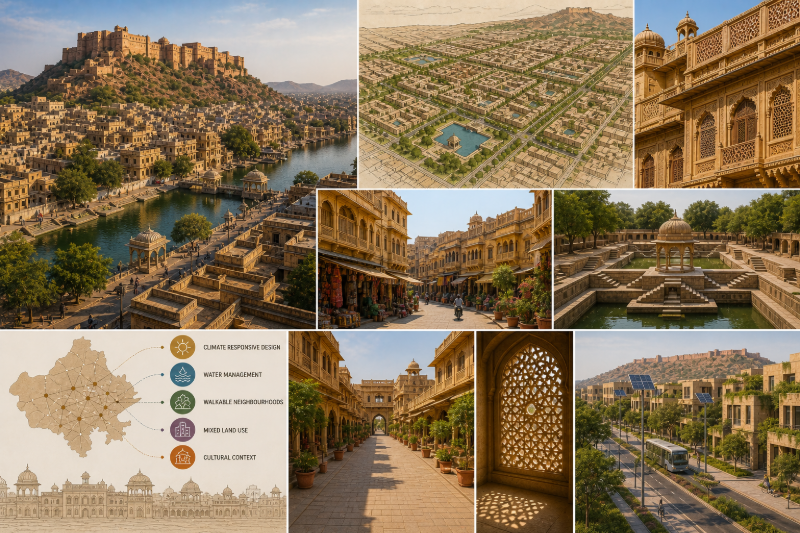
Implementing Rajasthan's Lessons in Modern Indian Cities
Practical Integration Strategies
Modern urban planners need not—and should not—simply replicate historic designs. Instead, they should extract principles and adapt them to contemporary needs:
Climate-responsive design: Use passive cooling strategies in new construction, reducing energy consumption and operating costs
Mixed-use neighborhoods: Encourage development patterns that integrate residential, commercial, and recreational uses within walkable distances
Water security: Mandate rainwater harvesting and wastewater recycling in new projects, reducing municipal water dependency
Public space investment: Prioritize well-designed public spaces and pedestrian infrastructure over car-centric development
Local materials and crafts: Support local economies by sourcing materials regionally and preserving traditional construction techniques
Several Indian cities are already implementing these principles. Pune's heritage district revitalization project incorporates passive cooling in new construction while preserving historic buildings. Bangalore's revised building bylaws now mandate green spaces and water harvesting systems inspired by traditional models. Ahmedabad's heritage conservation efforts have created a template for other cities seeking to balance development with cultural preservation.
Policy and Regulatory Framework
For these lessons to scale across Indian cities, supportive policies are essential. State governments should:
Offer incentives for developers who incorporate passive design principles
Revise building codes to permit traditional materials and construction techniques
Establish heritage conservation funds supporting restoration and adaptive reuse
Develop skill training programs for traditional construction crafts
Create urban design guidelines based on walkability and mixed-use principles
The Ministry of Housing and Urban Affairs has begun promoting these concepts through initiatives like the Smart Cities Mission and Atal Mission for Rejuvenation and Urban Transformation (AMRUT). However, wider adoption requires sustained policy commitment and funding.
Challenges and Realistic Expectations
Modern Constraints and Compromises
Applying historic principles to modern cities isn't straightforward. Contemporary urban centers must accommodate automobiles, modern utilities, larger populations, and different economic structures. Simply copying old designs risks creating picturesque but dysfunctional spaces.
The key is extracting underlying principles—climate responsiveness, mixed-use integration, water security, public space quality—and implementing them through contemporary means. Modern materials, technologies, and construction methods can achieve the same goals as traditional approaches while meeting current safety standards and accessibility requirements.
Conclusion: Bridging Past and Future
Rajasthan's architectural heritage represents centuries of accumulated wisdom about building sustainable, livable cities in challenging environments. As Indian cities face unprecedented growth, resource scarcity, and climate challenges, these lessons become increasingly relevant.
The path forward isn't about nostalgia or historical preservation alone. It's about recognizing that successful urban design principles transcend eras. Climate-responsive architecture, mixed-use neighborhoods, robust public spaces, and community-centered design are as valuable today as they were in 1727 Jaipur or medieval Jodhpur.
Urban planners, architects, and engineers working on Indian cities should study Rajasthan's historic centers not to replicate them, but to understand the principles that made them work. These insights, combined with modern technology and knowledge, can help create cities that are economically vibrant, environmentally sustainable, and genuinely livable.
If you're an architect, urban planner, or engineer looking to incorporate these principles into your projects, or seeking professionals with expertise in heritage conservation and sustainable design, AECORD connects you with qualified specialists across India. Whether you need heritage consultants, sustainable design experts, or traditional craft specialists, AECORD's marketplace makes it easy to find vetted professionals. Explore how AECORD can help you access the expertise needed to build cities inspired by the best of India's architectural past.
Frequently Asked Questions
What passive cooling techniques does Rajasthan's traditional architecture use?
Rajasthan's traditional architecture uses thermal mass walls, central courtyards for air circulation, jali screens to block solar radiation, wind towers (badgir) to capture cool air, and water features for evaporative cooling. These passive design strategies can reduce energy consumption by 20-40% compared to conventional buildings.
How can modern cities apply Rajasthan's urban planning lessons?
Modern cities can adopt Rajasthan's grid-based layouts that prioritize walkability, mixed-use neighborhoods combining markets and residences, and climate-responsive design principles. Jaipur's 1727 master plan demonstrates how strategic urban design remains functional and relevant nearly 300 years later.
Why should modern construction use locally sourced materials like Rajasthan's traditional builders?
Locally sourced materials reduce transportation costs and carbon footprint, are naturally suited to local climate conditions, support local economies, and are easier to maintain and repair. Materials like rammed earth and stabilized mud blocks are increasingly used in sustainable housing projects across western India.
What is a haveli and how does its design improve building performance?
A haveli is a traditional Rajasthani mansion that incorporates passive cooling strategies including courtyards, jali screens, wind towers, and water features. This integrated design approach naturally regulates temperature and air circulation without mechanical air conditioning.
How has India's CPWD adopted Rajasthan's traditional architecture principles?
The Central Public Works Department has begun incorporating passive design elements inspired by Rajasthan's traditional architecture in new government buildings, achieving 20-40% reductions in energy consumption compared to conventional designs.